by KL Desk
The FT podcast examines Prophet Muhammad’s commercial life, early Islamic finance, risk-sharing and market ethics, and debates whether Islamic economic practices influenced European capitalism through medieval Mediterranean trade and exchange.
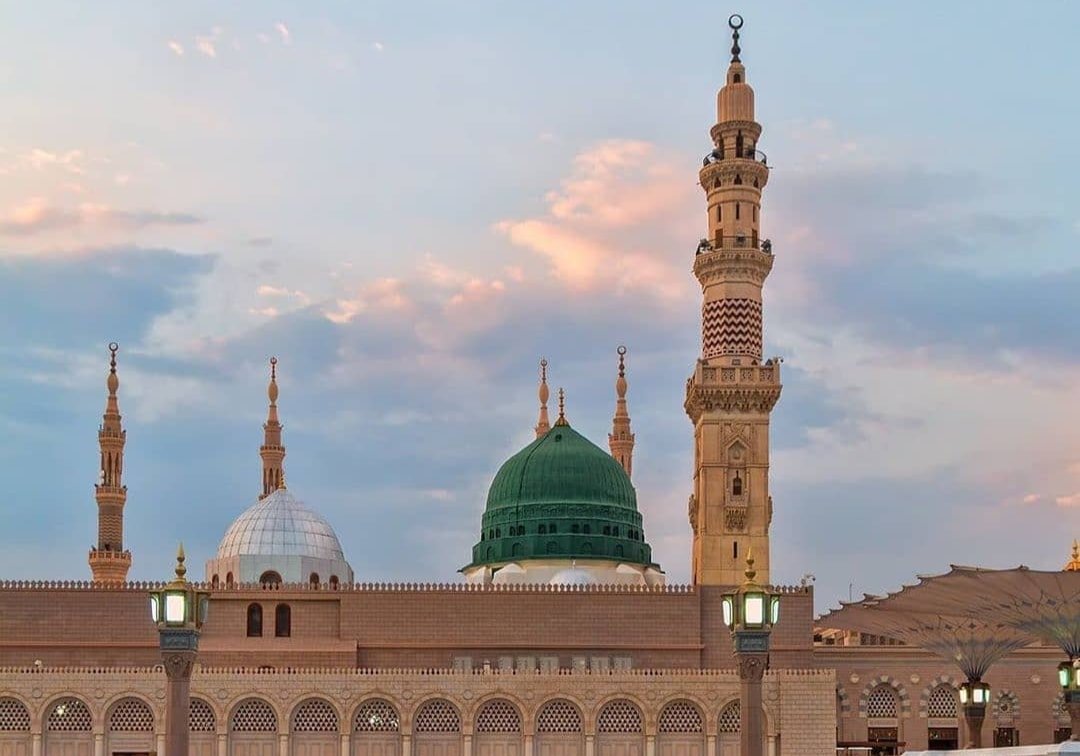
The Financial Times podcast The Story of Money explores an often-overlooked dimension of Islamic history: Prophet Muhammad’s life as a merchant, the commercial principles of early Islam and the possibility that Islamic financial practices helped shape the foundations of European capitalism.
Hosted by FT journalists Robin Wigglesworth and Gillian Tett, the episode features Benedict Koehler, author of Early Islam and the Birth of Capitalism. Through a discussion of caravan trade, risk-sharing, market regulation, philanthropy and commercial trust, the three examine how early Islamic economic ideas developed, and how some of these practices may have travelled across the Mediterranean into Europe.
Koehler advances the argument that early Islam did not simply accommodate commerce but helped build a moral, institutional and financial framework in which trade and risk-taking could flourish. Tett, while recognising the significance of Islamic finance and cross-cultural exchange, questions how much of Europe’s later commercial innovation was directly borrowed from the Islamic world and how much emerged independently.
Meccan Trade
The podcast begins in Mecca in 595 CE, with the marriage of Prophet Muhammad and Hazrat Khadijah, a wealthy merchant whose business interests played a significant role in his early commercial life.
Koehler, a former City of London banker who spent 15 years studying the economics of religion, argues that Prophet Muhammad’s commercial background is essential to understanding the economic ideas that emerged with Islam.
The prophet was born into a prominent family but lost his father, a caravan merchant, before his birth. Raised first by his grandfather and later by his uncle Abu Talib, he was trained in the family trade. Caravan commerce was central to Mecca’s economy, connecting Arabia with wider trading networks that moved high-value goods, including gold, spices and silk.
These ventures required substantial upfront investment, long periods before returns could be realised and the willingness to absorb considerable risk.
Hazrat Khadijah, herself a wealthy businesswoman, invested in caravan ventures by selecting managers to transport goods and sharing in the profits. She sponsored Prophet Muhammad in his early trading career, and the two eventually married.
Koehler describes the financing model as an early form of venture capital. Wealthy investors supplied capital for commercial journeys, while traders managed the operations and shared the returns.
The partnership model, known as qirad, is central to Koehler’s argument that early Islamic commerce developed financial practices that would later find parallels in Europe.
Arabian Networks
The podcast situates Meccan commerce within a distinctive political landscape. According to Koehler, the Arabian Peninsula had resisted incorporation into the major empires of the period, while its tribes relied on private agreements and commercial arrangements.
Mecca’s pilgrimage gatherings also provided opportunities for trade, caravan organisation and business partnerships. Religion and commerce were not separate spheres: the city’s religious significance helped sustain its commercial networks.
Koehler points to the ilaf system, associated with Prophet Muhammad’s great-grandfather Hashim, as an example of how commercial arrangements could replace conflict with mutual benefit. Rather than fighting those who controlled caravan routes, merchants could establish agreements under which goods were carried and settlements made on the return journey.
The arrangement, Koehler argues, helped turn potentially hostile relationships into mutually beneficial trade.
He describes this decentralised commercial world as “a Hayekian world”, invoking economist Friedrich Hayek’s emphasis on voluntary agreements and the limits of centralised authority.
That comparison is Koehler’s interpretation of early Arabian society, rather than a claim that sixth-century Arabia operated according to a modern economic ideology.
Risk Sharing
One of the podcast’s central themes is the relationship between Islam’s restrictions on interest and its encouragement of commercial investment.
Koehler argues that the prohibition on interest was not unique to Islam, noting that Judaism and Christianity also prohibited or restricted interest-based lending. What he considers distinctive is the emphasis in early Islam on risk-taking and investment.
“What’s different about Islam is that it promotes risk-taking and risk investment,” Koehler says.
He argues that these practices were not merely tolerated but actively encouraged within the religious framework. In his interpretation, this helped make Islam a catalyst for capitalist practices.
The qirad partnership exemplified this approach. Rather than lending money at a fixed rate of interest, an investor provided capital for a trading venture and shared in its profits. The arrangement also exposed the investment to commercial risk.
Wigglesworth draws a parallel with modern venture capital, in which investors provide funds upfront in return for a share in the potential gains of a business.
The discussion presents this distinction between equity-like investment and debt as relevant beyond the history of Islam. Wigglesworth argues that the emphasis on risk-sharing has contemporary significance in a financial system burdened by debt and leverage.
Koehler agrees, describing the Islamic financial foundation of “true risk-sharing, with more equity than debt” as compelling.
The conversation does not suggest that modern Islamic finance is identical to early qirad, or that contemporary financial systems can simply be replaced by an early Islamic model. Rather, it identifies risk-sharing as a principle with potential relevance to present-day finance.
Medina Markets
The podcast’s account of Prophet Muhammad’s commercial thinking moves from Mecca to Medina, where Koehler argues that he established a market designed to attract traders through lower costs and fewer restrictions.
When Prophet Muhammad inaugurated the market, Koehler says, he declared: “This is your market and there will be no tax on it.”
Medina already had four markets, making the new arrangement a direct challenge to existing commercial practices. Koehler interprets the zero-tax policy as a deliberate attempt to attract business by reducing the cost of trading.
He also highlights Prophet Muhammad’s response to a famine, when rising food prices prompted calls for government intervention.
According to the account discussed on the podcast, Prophet Muhammad refused to impose price controls, saying: “Prices are in the hand of God.”
Koehler interprets the episode as an early example of price deregulation, arguing that Prophet Muhammad resisted demands to fix prices even during a period of economic distress.
But the podcast also examines the social obligations that accompanied this approach to commerce.
Tett points to zakat, which she describes as a 2.5 per cent levy used to finance a social safety net, alongside sadaqah, or voluntary charity, as mechanisms intended to reduce the gap between rich and poor.
Koehler argues that this social obligation was integral to the economic model, rather than an afterthought.
“He said there should be provision for poor people, and that this should be a requirement on everybody who was Muslim,” he says.
He adds that welfare was expected to be provided through individual contributions, rather than exclusively through government authorities.
For Koehler, the combination of market freedom and social responsibility challenges the idea that capitalism necessarily entails indifference to poverty.
Fair Trading
The podcast also explores the institutional framework that, in Koehler’s account, helped make early Islamic markets function.
Wigglesworth raises the importance of trust and fair-trading rules, drawing a comparison with Adam Smith’s The Theory of Moral Sentiments.
Koehler says early Islamic commercial ethics extended beyond the immediate transaction to the entire supply chain. Muslims could finance businesses with non-Muslims, he explains, but concerns could arise over appointing managers whose commercial activities might involve products prohibited to Muslims, such as alcohol or pork.
The discussion presents this as an early concern with the ethical character of production and trade, not simply the profitability of a business.
It also highlights the role of the muhtasib, a market supervisor responsible for enforcing fair-trading rules.
Among the practices Koehler identifies as prohibited was buying goods from incoming caravans before they reached the market, with the intention of cornering supplies and controlling prices.
The practice, he says, was regarded as irreligious.
Tett adds that Islamic teachings also condemned hoarding when it drove prices higher, illustrating the tension between allowing prices to respond to market conditions and preventing traders from exploiting scarcity.
The podcast’s account therefore presents early Islamic commercial thought as neither an unrestricted free-for-all nor a system of comprehensive state control. Its emphasis is on allowing trade to operate while enforcing rules against manipulation, monopolies and unfair dealing.
European Connections
The most contested part of Koehler’s thesis is his argument that Islamic commercial institutions influenced the development of European capitalism.
In the podcast, he traces a possible route through medieval Mediterranean trade, particularly the Italian trading cities of Venice, Genoa and Pisa.
Venetian and other Italian merchants maintained trading outposts in the Levant and Egypt. Koehler says these communities continued operating after Arab expansion displaced Byzantine authority in parts of the region, giving European traders sustained contact with commercial practices in the Islamic world.
These trading settlements, known as fondaci, provided warehouses, management structures and access to local markets. In Koehler’s interpretation, they also created channels through which financial ideas could travel.
One of his key comparisons is between the Islamic qirad and the Venetian commenda.
Both arrangements involved an investor providing capital for a trading venture, with profits shared after the journey. The difference was largely geographical: the qirad financed caravan trade, while the commenda financed maritime commerce.
“A commenda was therefore venture capital travelling across the Mediterranean by boat, whereas the qirad was venture capital travelling across the sand by camel,” Koehler says.
He argues that the similarities extend beyond the basic structure of the partnerships to a wider commercial vocabulary.
Koehler identifies several European words that he believes reflect contact with Arabic commercial terminology. These include douane, the French term for customs, which he links to Arabic diwan, and aval, a term used in French banking for a guarantee.
He also highlights the word “risk”, arguing that its appearance in European commercial contracts during the 13th century, particularly in connection with Italian trading ventures, points to an Arabic influence.
For Koehler, these linguistic connections are part of a broader historical pattern in which merchants carried not only goods but also financial concepts across the Mediterranean.
He further argues that the Islamic institution of waqf, a form of endowment, may have influenced European trust arrangements. He points to the presence of Franciscans and Knights Templar in the Middle East as a possible channel of transmission.
His wider contention is that the Mediterranean functioned as a connected commercial and intellectual space in which ideas moved between cultures and religious communities.
“In the Middle Ages, the Mediterranean was effectively a single market, an interdenominational, multicultural single market in which ideas travelled from one end to the other and ricocheted across the Mediterranean,” Koehler says.
Historical Debate
Tett, whose doctoral research focused on anthropology and Central Asia, is receptive to the idea that cultures and commercial practices influenced one another. But she remains sceptical about how much of European capitalism can be directly attributed to Islamic models.
She points out that risk-sharing and commercial partnerships had precedents in other societies, including Roman maritime financing and institutions that resembled early corporate arrangements.
Tett argues that the Venetian commenda might have developed even without direct contact with Muslim traders.
“I think human beings are incredibly inventive,” she says, adding that some ideas may have developed independently even as societies were influenced by practices elsewhere.
Wigglesworth also acknowledges that the evidence for direct borrowing is circumstantial and that similar institutions can emerge independently.
Koehler, however, maintains that the concentration of commercial innovations in European centres with close connections to the Islamic world is significant.
His argument is not simply that individual financial practices existed in the Muslim world before appearing in Europe. It is that early Islam brought together a set of commercial principles – risk-sharing, investment, market rules and social obligations – within a religious and institutional framework that encouraged their use.
The podcast leaves the question of direct causation open. It presents Koehler’s thesis as a challenge to conventional accounts of capitalism’s origins, rather than a settled historical consensus.
Modest Wealth
Towards the end of the episode, the discussion returns to Muhammad’s personal life and the contrast between his commercial success and his modest lifestyle.
Koehler describes Prophet Muhammad as someone who moved from a difficult childhood to considerable commercial success, then embarked on a religious mission that transformed his life and the society around him.
Despite acquiring substantial wealth and becoming a political and religious leader, Prophet Muhammad did not, Koehler argues, seek an ostentatious lifestyle. He says Prophet Muhammad accepted that others could accumulate wealth and enjoy it, while choosing not to display riches himself.
Koehler’s account presents Prophet Muhammad as a figure who did not oppose private wealth or commercial success, but placed them alongside personal modesty and social responsibility.
The discussion also acknowledges the personal costs of Prophet Muhammad’s prophetic mission, including the death of his son in childhood and the hardships that accompanied his new religious role.
For Koehler, the significance of Prophet Muhammad’s commercial legacy lies in the combination of entrepreneurial activity, risk-taking, trust, welfare obligations and resistance to excessive government control.
Tett, meanwhile, sees a broader lesson in the exchange of ideas across civilisations.
“No one culture or civilisation has a monopoly on good ideas,” she says, describing mutual respect and cross-cultural learning as among the most meaningful aspects of the discussion.