by Syed Suhail Yaqoob
Kashmir’s apple boom has boosted farm incomes but transformed village landscapes, replacing open fields, tall trees and biodiversity with fenced, high-density orchards, raising concerns about rural life and ecology.
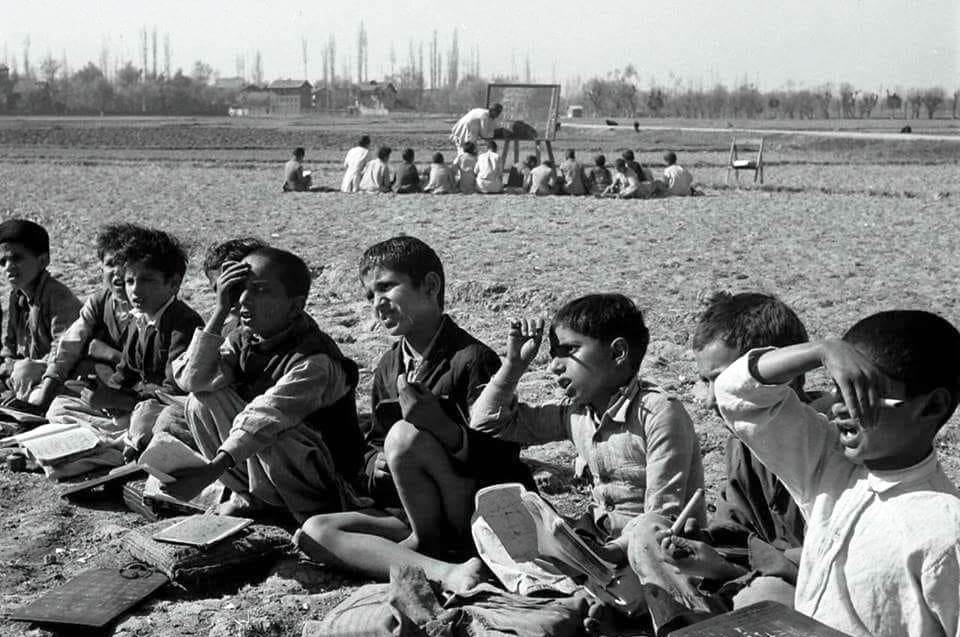
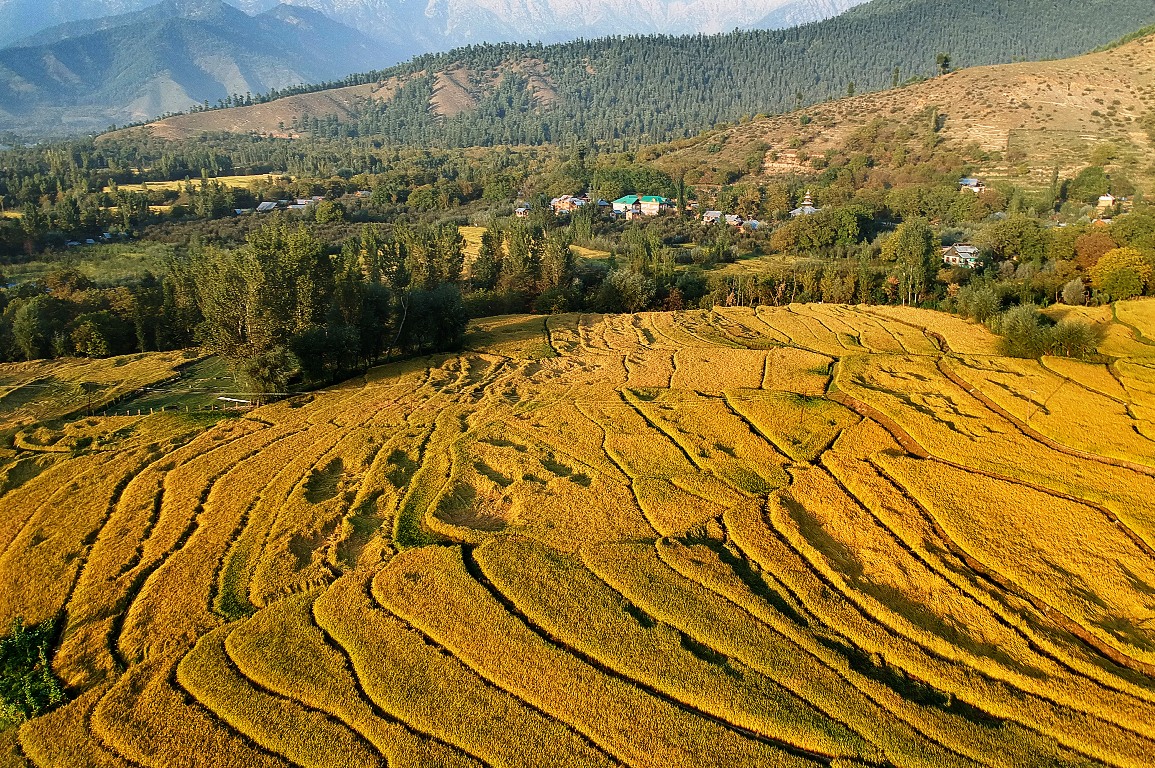
I still remember the golden days of my village, especially the rice fields. They were vast, open and largely unobstructed. After the harvest, village children would play in these fields. Our favourite game was ice-pice, and we would catch insects, especially grasshoppers and dragonflies, which we called ‘helicopters’.
Gradually, these rice fields were converted into orchards, and the vast, open landscapes began to disappear. A recent report in Kashmir Life, Kashmir’s Apple Boom Comes at the Cost of Rice Fields, Raising Food Security Concerns, highlighted this transformation. The report noted that converting paddy fields into apple orchards had increased profit margins but also deepened dependence on rice imports. It warned of growing vulnerability to environmental changes, pests and market pressures.
Rice Deficit
According to the report, Jammu and Kashmir imported 4.86 lakh tonnes of rice, largely from surplus-producing states, particularly Punjab and Haryana, in 2024-25. This compared with 4.36 lakh tonnes in 2023-24 and 3.74 lakh tonnes in 2022-23. By 2030, Jammu and Kashmir is projected to import half of its rice requirements from other states.
The growing deficit in rice production is primarily driven by the decline in the area under paddy cultivation. Jammu and Kashmir is producing more rice per hectare but cultivating far fewer hectares than it did four decades ago. Average rice yield increased from 26.02 quintals per hectare in 2022-23 to 26.78 quintals in 2024-25. However, between 1980-81 and 2023-24, the area under paddy cultivation in the Kashmir division declined by 24 per cent.
The decline in paddy cultivation has coincided with an expansion in horticulture. The sector contributes approximately 10 per cent to the Union Territory’s Gross Domestic Product (GDP) and generates an estimated annual income of around Rs 12,000 crore. Approximately 35 lakh people, comprising nearly 7.5 lakh families, are directly or indirectly associated with horticulture. One hectare of orchard area generates approximately 400 man-days of employment annually, making a significant contribution to rural livelihoods and the wider economy of Jammu and Kashmir.
A Transition
The sector is also undergoing a transition from traditional orchards to high-density plantations, a shift encouraged by government policy. The Jammu and Kashmir Government’s Budget for 2026-27 states that approximately 1,119 hectares had been covered under the High-Density Plantation Scheme between 2017-18 and December 2025, with financial assistance amounting to Rs 139 crore. The government has proposed bringing another 1,455 hectares under high- and medium-density plantations during 2026-27.
The scale of this transition becomes clearer when both high- and medium-density plantations are considered. According to NITI Aayog’s Roadmap for Horticulture Development in the UT of Jammu and Kashmir, 4,023 hectares were brought under high- and medium-density plantations in 2023-24, following 4,776.88 hectares in 2021-22 and 2,540.04 hectares in 2022-23.
While it is heartening to see small farmers earning higher profits from their land, we must not turn a blind eye to the changing landscape of our villages.

In An Orchard
Walk through an apple orchard in Kashmir today, and the transformation is unmistakable. The tall, spreading trees that once defined the Valley’s countryside are steadily giving way to shorter plants trained on wires and planted in closely spaced, orderly rows.
Traditional apple orchards did not fundamentally alter the landscape of villages. A small farmer could tend to livestock in the same orchard, except when pesticides or fungicides were being sprayed. As the trees grew taller over time, their canopies rose beyond the reach of grazing animals. These orchards supported mixed cropping, fodder growth and biodiversity beneath their broad canopies. Children, often accompanied by their elders, would also spend time in these orchards.
High-density orchards present a different picture. The trees are commonly grafted onto rootstocks such as M.9, MM.106 or MM.111, which influence their vigour, growth and eventual size. Their compact canopies and closely managed branches keep much of the fruit-bearing wood within easy reach. Growers bend, tie down or train lower branches horizontally to control vertical growth and encourage flowering and fruiting closer to the ground.
Managing Plants
These trees require careful management and are often more vulnerable to physical damage because of their structure and intensive cultivation systems. Maintaining such orchards also demands specialised knowledge and regular attention. Farming has become more technical and, in some respects, more efficient, but it has also become less intimate.
To protect their plantations from damage by domestic and wild animals, farmers increasingly enclose orchards with metal-sheet fencing. These barriers restrict the movement of people and animals, changing the relationship between villages and the land around them.
The open fields that once connected village spaces are becoming enclosed plots. The landscape is losing its openness, and the traditional village environment is disappearing behind metal barriers.
The change extends beyond orchards themselves. Tall trees, including popular native trees that once stood around these plantations, are becoming less common. There are fewer walnut trees and fewer tall trees offering birds places to nest and breed. With fewer such habitats available in the countryside, birds have fewer places to settle away from village homes. The opportunities for children to explore open fields and experience the natural world are also diminishing.

The transformation is not merely agricultural; it is ecological, social and cultural. The village landscape that once accommodated people, livestock, trees, birds and open fields is increasingly divided into enclosed production units.
Everywhere one looks, there is steel: steel sheets, steel posts and steel barriers. The open village has given way to a landscape of fences and restricted spaces.
The apple economy may be flourishing, but the countryside is paying a price that cannot be measured only in hectares, yields or profits. Our villages are changing in ways that threaten their openness, biodiversity and the everyday experiences that once defined rural life.
They are becoming steel villages.
(The author is an Assistant Professor (Economics), Higher Education, Jammu and Kashmir. Ideas are personal.)