Research in Kulgam finds higher nematode abundance and carbon activity in apple orchards, but warns of declining diversity and greater risk of plant-parasitic infestations
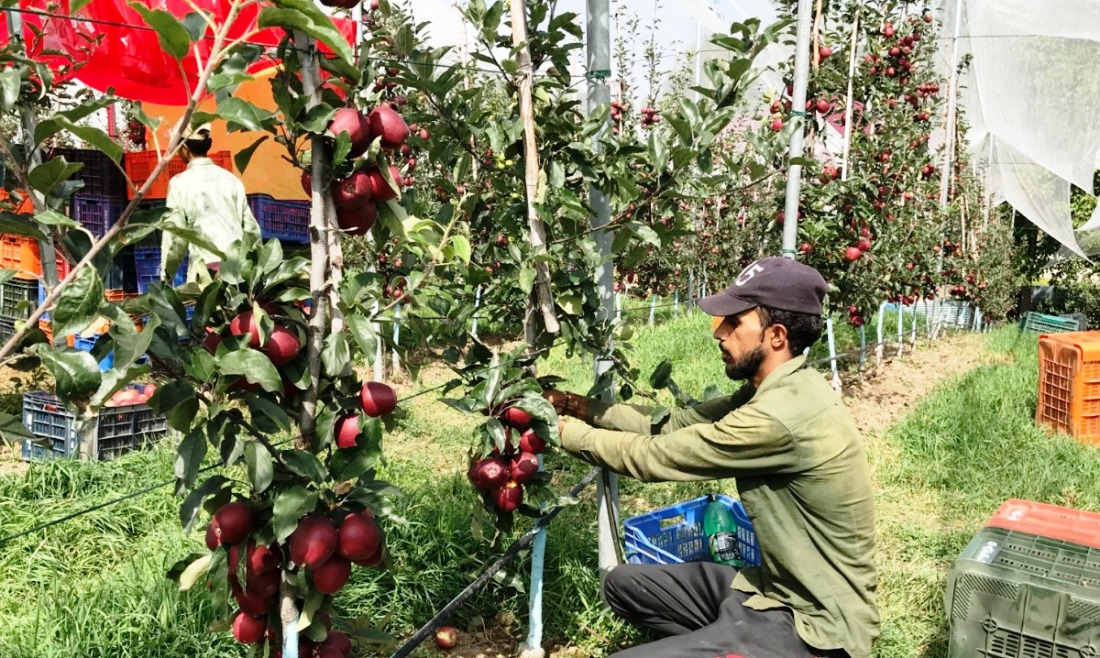
SRINAGAR: The conversion of paddy fields into apple orchards in Kashmir is reshaping soil biodiversity, increasing the abundance of microscopic organisms involved in nutrient cycling and carbon movement. However, it is reducing diversity at certain taxonomic levels and raising concerns about plant-parasitic nematodes, according to a scientific study published in Discover Environment in 2025.
The study, Paddy field conversion to apple orchards reshapes soil nematode communities and ecosystem sustainability in the Kashmir valley, found that conventional and high-density apple orchards supported greater populations of soil nematodes than paddy fields. The researchers also recorded higher nematode biomass and metabolic footprints in orchards, indicating greater carbon allocation through the soil food web.
However, the findings point to a trade-off between ecosystem functioning and biodiversity. Although diversity at the genus and family levels showed no significant overall change in standard diversity indices, diversity at the order level declined significantly in conventional apple orchards. The researchers also found a reduction in the variation of nematode communities across the land-use types.
The paper was authored by Shahid Afzal, Zarrin Imran and Wasim Ahmad of the Nematode Biodiversity Research Lab, Department of Zoology, Aligarh Muslim University, Aligarh.
Soil Shift
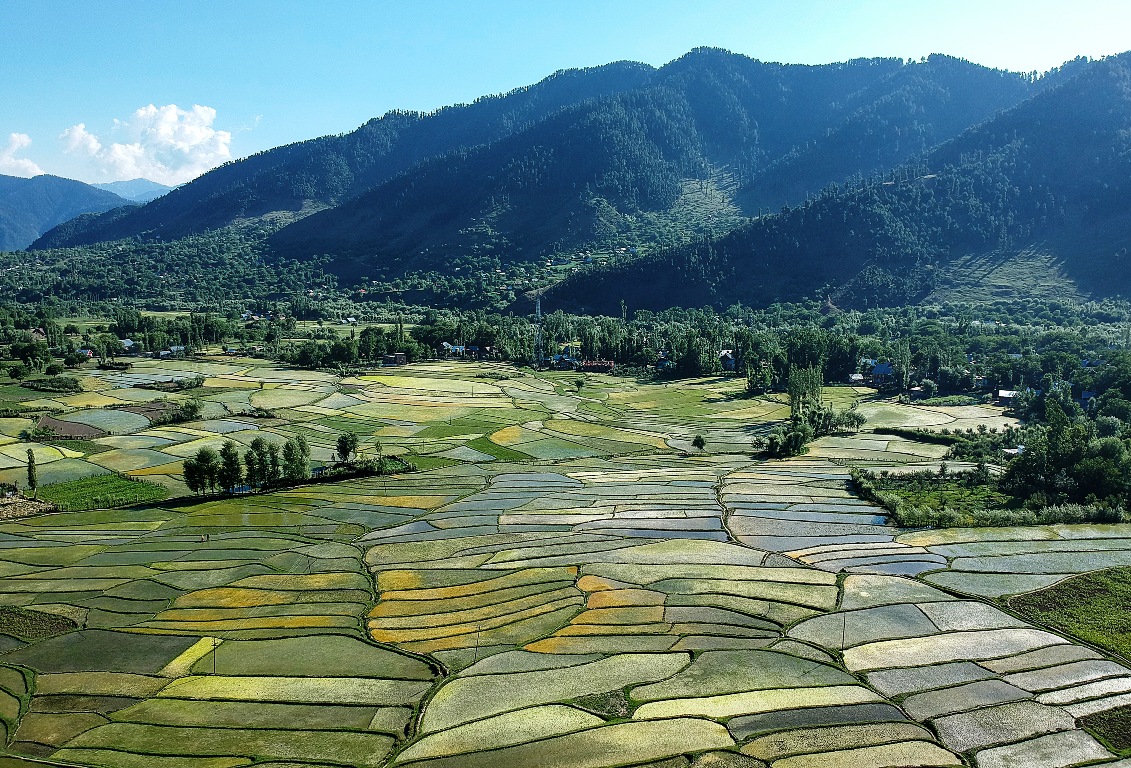
The researchers investigated the ecological consequences of replacing paddy cultivation with conventional apple orchards and high-density apple plantations, a transition that has become increasingly visible in the Kashmir Valley.
The study notes that paddy cultivation in Kashmir has been under pressure from population growth, urbanisation and the conversion of agricultural land to horticulture. Citing government data, the authors report that the area under paddy cultivation in Kashmir division declined by 22,000 hectares between 1996 and 2012, from 163,000 hectares to 141,000 hectares.
Economic returns, inadequate irrigation facilities and subsidies for high-density apple plantations are identified in the paper as factors contributing to the shift.
While the financial attractions of horticulture are evident, the researchers argue that changes in land use also alter the physical, chemical and biological characteristics of soil. Paddy fields are seasonally waterlogged and undergo tillage, whereas orchards provide more persistent vegetation cover and generally better-aerated soil conditions.
These differences can influence the organisms living below the surface, including nematodes, which are used as biological indicators of soil health because their abundance and community composition respond to environmental conditions and agricultural practices.
The study describes nematodes as important participants in soil food webs, where different groups feed on bacteria, fungi, plants and other soil organisms. Their populations can therefore provide insights into nutrient cycling, soil fertility and the effects of land management.
Kulgam Study
Fieldwork was conducted in Kulgam district in south-eastern Kashmir. The researchers compared long-established paddy fields with conventional apple orchards that had been converted from paddy approximately 10 years earlier and high-density apple orchards converted approximately five years earlier.
The conversion histories were provided by local farmers. Soil samples were collected in September 2021, shortly before the harvest period.
The team sampled the upper 15 centimetres of soil at five randomly selected positions for each of the three land-use types. The researchers assessed soil properties and examined nematode abundance, taxonomic diversity, functional groups, biomass and metabolic footprints.
A total of 45 nematode genera were identified across the three land-use types. These represented five feeding groups: bacterivores, fungivores, herbivores, omnivores and predators.
The comparison was designed to establish not simply whether the number of nematodes changed after paddy fields were converted into orchards, but also whether the composition of the soil community and its ecological functions were altered.
The authors describe the research as the first assessment, to their knowledge, of soil nematode communities following the conversion of paddy fields into apple orchards in the Kashmir Valley.
Rising Numbers
The study found that total nematode abundance increased significantly after paddy fields were converted into both high-density and conventional apple orchards. The populations of all five feeding groups also increased, with conventional orchards generally recording the highest abundance.
The researchers attribute this pattern partly to changes in soil moisture and aeration. Soil moisture and clay content declined in both orchard types, while soil pH, organic matter and silt content increased.
The authors suggest that the less waterlogged and better-aerated conditions in orchards provide a more favourable environment for many soil nematodes, most of which are adapted to aerobic conditions.
The results also showed that the conventional orchards supported substantially larger populations of omnivorous and predatory nematodes than the paddy fields and high-density orchards.
The researchers link this difference to variations in management intensity. More intensive agricultural practices can disturb soil food webs, while less disturbed conditions may allow higher-level feeding groups, including predators, to become more abundant.
The findings suggest that the ecological effects of conversion are not uniform across all orchard systems. Conventional and high-density plantations differ in their soil conditions and the composition of the organisms they support.
Diversity Loss
Despite the increase in nematode numbers, the researchers found no corresponding, consistent increase in taxonomic diversity.
Diversity indices at the genus and family levels did not show statistically significant differences among paddy fields, high-density orchards and conventional orchards. However, diversity at the order level declined significantly in conventional orchards compared with paddy fields.
The number of genera recorded within individual land-use types also declined following conversion to both types of orchard.
The study identified 45 genera across the three land-use categories, of which 13 were shared among all three. These shared genera accounted for 28.9 per cent of the total number identified.
The researchers also found that beta diversity — a measure of differences in community composition between habitats — was higher in paddy fields than in either orchard type. This indicates that nematode communities became less varied following conversion, even as their overall abundance increased.
The distinction is important because a larger population of soil organisms does not necessarily mean that the ecosystem supports a greater range of organisms or retains the same ecological characteristics.
The authors conclude that the changes reflect a restructuring of soil communities rather than a simple increase or decrease in biodiversity. They caution that the loss of diversity at certain taxonomic levels could have implications for ecosystem resilience.
Carbon Flow
One of the study’s key findings concerns the metabolic footprints of nematodes, which the researchers used to assess the movement of carbon and energy through the soil food web.
Total nematode biomass increased from 615.39 micrograms per 100 grams of dry soil in paddy fields to 1,326.32 micrograms in high-density orchards and 2,849.15 micrograms in conventional orchards.
The composite metabolic footprint also rose substantially, from 174.73 in paddy fields to 322.21 in high-density orchards and 669.52 in conventional orchards, in the units reported by the study’s analytical framework.
The researchers recorded increases in the enrichment and structural footprints as well as in the footprints associated with herbivores, bacterivores, fungivores and predators.
These indicators suggest that more carbon and energy were being processed through the nematode community in orchard soils. The authors attribute the pattern partly to the availability of plant material and the more persistent vegetation cover associated with perennial plantations.
The enrichment footprint, in particular, is used to assess nutrient mineralisation within the soil ecosystem. Its increase in orchard soils suggests greater activity in the processes through which nutrients become available.
However, the authors’ findings concern nematode metabolic footprints and carbon allocation through the soil food web. They do not constitute a direct measurement of the total carbon stored in orchard soils or establish the net rate of carbon sequestration.
The researchers say further work is needed to clarify the relationship between nematode functional traits and carbon sequestration.
Pest Risk
The increase in nematode abundance was not uniformly beneficial from an agricultural perspective.
The plant-parasitic index rose significantly in both high-density and conventional apple orchards compared with paddy fields. The researchers interpret this as a possible indication of greater vulnerability to root-feeding nematodes and the associated risks to orchard health.
Several plant-feeding genera were prominent in the orchard samples. The conventional orchards recorded high abundances of Xiphinema and Pratylenchus, while Helicotylenchus was particularly abundant in the high-density orchards.
The authors caution that higher plant-parasitic index values may signal an increased risk of infestation, posing potential challenges for apple cultivation.
They recommend management approaches that improve ecological stability and reduce vulnerability to plant-parasitic nematodes. These could include lower fertiliser and pesticide inputs, alongside greater structural complexity within plantations.
The study does not establish the incidence of crop damage or quantify economic losses caused by these organisms. Its findings instead identify a potential risk that warrants further investigation and monitoring.
Soil Stability
The researchers also used nematode-based maturity and food-web indices to assess the condition of the soil ecosystem.
Maturity indices were significantly higher in conventional orchards than in paddy fields, while several functional indices and measures of soil food-web structure also increased following conversion.
The authors interpret these results as evidence that conventional orchard soils supported more mature and, by some measures, more stable nematode communities. High-density orchards, however, showed signs of disturbance in the food-web analysis, including samples associated with conditions of moderate disruption and inadequate nutrient circumstances.
The results underline the importance of distinguishing between different dimensions of soil health. A soil community can show greater biomass and metabolic activity while simultaneously experiencing changes in its taxonomic composition and potential vulnerability to pests.
The researchers also found that soil pH and organic matter were positively associated with nematode abundance and several functional indices, while soil moisture and clay content generally showed negative associations.
These relationships reinforce the role of soil conditions in determining which nematode groups thrive under different agricultural systems.
Wider Limits
Although the findings provide a detailed account of soil nematode responses to land-use conversion, the authors caution against generalising the results to the entire Kashmir Valley.
The study was confined to one district, used a limited number of samples for each land-use category and examined topsoil collected during a single sampling period. It also did not comprehensively assess the effects of different management practices or changes at greater soil depths.
The researchers call for studies across different regions and seasons, alongside further investigation into the relationships between nematode communities, carbon dynamics and soil ecosystem functioning.
They also recommend examining other groups of soil fauna, including microfauna, mesofauna and macrofauna, to develop a fuller understanding of whether apple orchard ecosystems are sustainable over the long term.
The paper concludes that the conversion of paddy fields into apple orchards produces substantial changes in the structure and functioning of soil nematode communities. While the increase in abundance, biomass and metabolic activity points to enhanced functioning in several respects, the loss of diversity at certain levels and the potential rise in plant-parasitic risks remain concerns.
The central implication is that the ecological consequences of Kashmir’s shift from paddy cultivation to horticulture cannot be assessed through productivity or economic returns alone. The long-term sustainability of the transition will also depend on how effectively soil biodiversity, food-web stability and orchard health are maintained.