A study covering 400 households across Ganderbal town finds gaps in recycling, composting and public participation despite improvements in waste collection, with food waste accounting for the largest share of municipal garbage.
SRINAGAR: Waste generation in Ganderbal town increased by 30 per cent between 2012 and 2020, while inadequate recycling facilities, the near absence of composting infrastructure and uneven municipal services continue to undermine waste management, according to a new study examining the town’s 17 municipal wards.
The study, Waste management issues and challenges: a case study of urban town of Kashmir, India, based on household surveys, interviews with officials and community representatives, and geographical mapping, identifies Ganderbal B, Arampora B and Fatihpora A as the three poorly managed wards in the town.
Researchers found that although municipal waste collection covers most areas, significant differences persist in service delivery, waste segregation, public awareness and disposal practices. None of the 17 wards achieved the highest category of waste management performance.
The findings are based on surveys of 400 households and interviews with 25 key informants, alongside municipal records covering 13 years. The researchers used Principal Component Analysis (PCA), statistical clustering and Geographic Information System (GIS) mapping to assess waste management performance and identify areas requiring intervention.
The study was authored by Farooq Ahmad Dar, Gousia Farooq, Mohamad Waseem Naikoo, Imran Khan and Javaid Bashir of the Department of Geography and Disaster Management, University of Kashmir, and Imtiyaz Ahmad Bhat of its Department of Geoinformatics.

Waste Generation Rises
Municipal records examined in the study show that daily waste generation in Ganderbal increased from five tonnes in 2012 to 6.5 tonnes in 2020, representing a 30 per cent rise.
The study attributes the growing pressure on waste management systems to population growth, urban expansion, tourism and industrial activity.
Ganderbal, which serves as a gateway to tourist destinations including Sonamarg, Mansbal Lake and the Amarnath Cave, experiences additional pressure during the summer tourist season.
The study notes that urban areas expanded 1.91 times by 2022, while the town’s population growth between 2011 and 2024 was estimated at 19.46 per cent.
However, municipal records indicate a decline in recorded waste generation after 2020, falling to approximately 3.5 tonnes daily during 2022–2024.
Researchers suggest that improved government initiatives and awareness may have contributed to the decline, although the study does not establish the precise reasons behind the change.
Food Waste Dominates
Food waste emerged as the largest component of municipal solid waste in Ganderbal, accounting for approximately 56 per cent on average, with its share ranging between 35.4 and 60.4 per cent.
Plastic and rubber accounted for an average of 12 per cent, while inert waste, including metals, electronic waste and hazardous materials, constituted approximately 16 per cent in the study’s municipal waste classification.
The researchers identified the high proportion of organic waste as an opportunity for composting but found that the town lacks adequate facilities to process it.
Around 80 per cent of surveyed households reported having no nearby composting facility. The average score for composting infrastructure was just 1.41 on the study’s five-point assessment scale.
The researchers said the absence of composting facilities makes the disposal of large quantities of biodegradable waste difficult and adds pressure on existing disposal sites.
They recommended introducing decentralised composting and vermicomposting systems to process organic waste closer to where it is generated.
Plastic pollution was another concern, particularly in Salora A, Salora C and Arampora A, which were identified as wards with significant plastic waste.
Recycling Remains Weak
Despite relatively encouraging levels of household waste segregation, recycling facilities and processing infrastructure remain inadequate.
The survey found that 33 per cent of respondents reported the availability of recycling facilities, while 45 per cent said such facilities were unavailable and 22 per cent were unaware of their existence.
Only around 40 per cent of households reported regularly recycling their waste, while the study found that informal waste collectors played an important role in recovering recyclable materials.
The researchers also identified gaps in electronic waste management. Around 60 per cent of households reported storing electronic waste, 20 per cent recycled it and 40 per cent said they disposed of it responsibly.
The findings highlight the need for dedicated collection and recycling systems for electronic waste, which can contain hazardous materials if improperly discarded.
Uneven Municipal Services
The study found that 60 per cent of surveyed households received daily waste collection services, while the remaining 40 per cent reported collection every two to three days.
Although door-to-door collection was viewed positively by many residents, service quality varied considerably between wards.
Around 86 per cent of households expressed satisfaction with door-to-door collection. However, residents in Salora B, Salora C, Bamlora and Fatihpora A reported comparatively lower satisfaction.
Public dustbin clearance was another concern. While some areas reported frequent clearance, residents in several wards said bins were emptied only after two to three days or weekly.
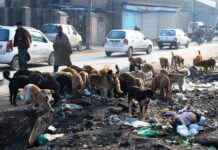
The researchers warned that overflowing bins and improperly disposed waste can attract stray dogs, creating additional public health concerns, including the risk of disease transmission and animal bites.
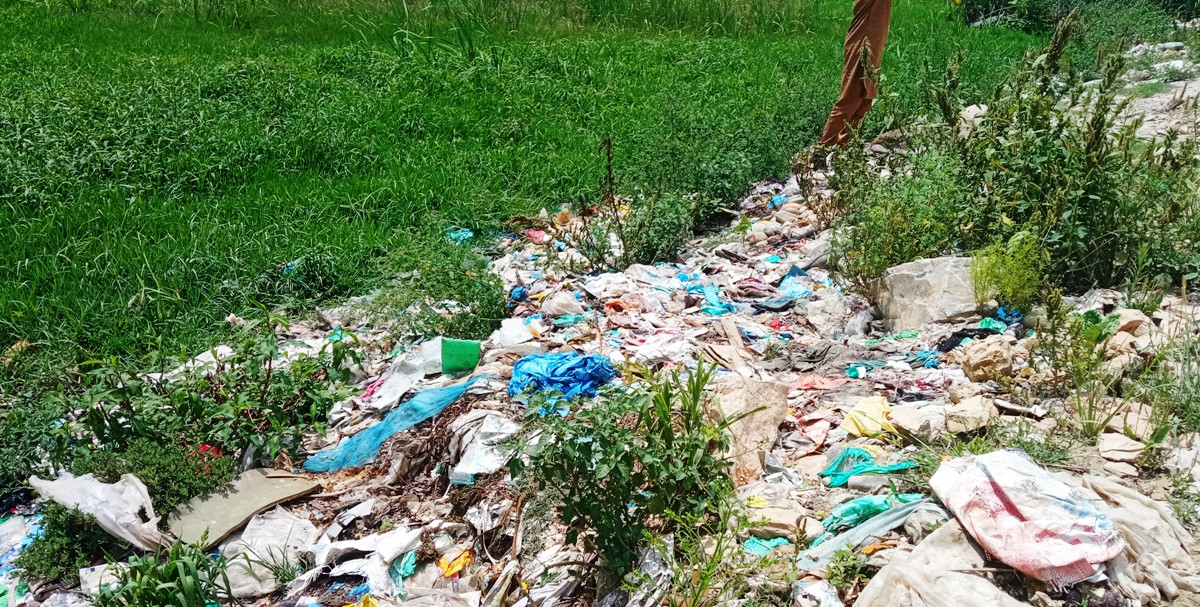
The study also documented continued instances of improper dumping. In Ganderbal B, around 20 per cent of households reportedly disposed of waste at unauthorised sites.
Researchers identified inadequate public dustbins, irregular collection, outdated vehicles and weak monitoring as some of the factors contributing to poor sanitation.
Awareness and Public Participation
The study found that gaps in public awareness and community involvement remain significant obstacles to improving waste management.
Around 58 per cent of respondents identified inadequate awareness as a major challenge, while 25 per cent pointed to insufficient facilities and 12 per cent cited inefficient waste collection.
More than half of the respondents, or 50.6 per cent, considered existing waste management awareness campaigns insufficient.
The researchers also found that residents rarely reported instances of improper waste disposal to municipal authorities, suggesting limited engagement with available grievance mechanisms.
Despite these shortcomings, willingness to participate in waste management initiatives was relatively high, with an average score of 4.35 on the five-point scale.
The findings suggest that greater public participation could improve segregation, recycling and reporting of sanitation-related problems if supported by adequate infrastructure and regular awareness campaigns.
Three Wards Lag Behind
Using a Waste Hazard Index (WHI), researchers assessed the performance of all 17 municipal wards based on 30 indicators covering waste collection, disposal, infrastructure, public awareness, pollution and institutional response.
The index scores ranged from 83 to 113, with an average of 96.6.
Ganderbal B, Arampora B and Fatihpora A were identified as the three poorly managed wards. Common shortcomings included inadequate recycling and composting facilities, insufficient public dustbins, poor street cleanliness, limited awareness campaigns and weak knowledge of colour-coded waste disposal systems.
Beehama Nagri Pora and Duderhama Gousia recorded comparatively better performance, with scores of 113 and 111, respectively.
The assessment classified 14 wards, or approximately 82 per cent, as moderately managed. However, none reached the well-managed category.
The researchers also used statistical clustering to group the wards into three performance categories. Five wards emerged as high-performing areas, seven as moderately performing and five as low-performing, based on similarities in service delivery, infrastructure and public participation.
The findings point to considerable differences in municipal waste management performance within the same town, highlighting the need for ward-specific interventions rather than a uniform approach.
Infrastructure and Policy Gaps
The researchers recommend strengthening waste segregation, expanding recycling facilities and introducing decentralised composting systems to reduce the volume of garbage reaching dumping sites.
They also call for better collection infrastructure, regular clearance of public bins, improved monitoring and stronger enforcement against illegal dumping.
Drawing on waste management initiatives in cities such as Indore, Mysore, Tokyo and Singapore, the study suggests adopting locally appropriate models involving public participation, technological monitoring and resource recovery.
Among the proposed measures are vermicomposting, plastic baling facilities, improved segregation systems and greater use of community-based awareness programmes.
The researchers argue that public participation must be accompanied by reliable municipal services and adequate infrastructure if waste management initiatives are to produce lasting results.
Study Limitations and Recommendations
The study concludes that Ganderbal has made progress in waste collection and household segregation, but weaknesses in recycling, composting, electronic waste disposal and institutional performance continue to limit the effectiveness of its waste management system.
The researchers emphasise that improving waste management requires coordinated action by municipal authorities, local communities and other stakeholders, particularly in wards identified as poorly managed.
They recommend prioritising education and awareness, improving infrastructure, strengthening institutional accountability and expanding waste processing facilities to address the growing environmental and public health challenges.
The study argues that these interventions will be essential as urbanisation, tourism and economic activity continue to place pressure on waste management systems in Ganderbal and other growing towns across Kashmir.