More than 93,000 people in river-dependent occupations reportedly suffer income losses; researchers expose enforcement failures despite thousands of seizures and crores in penalties
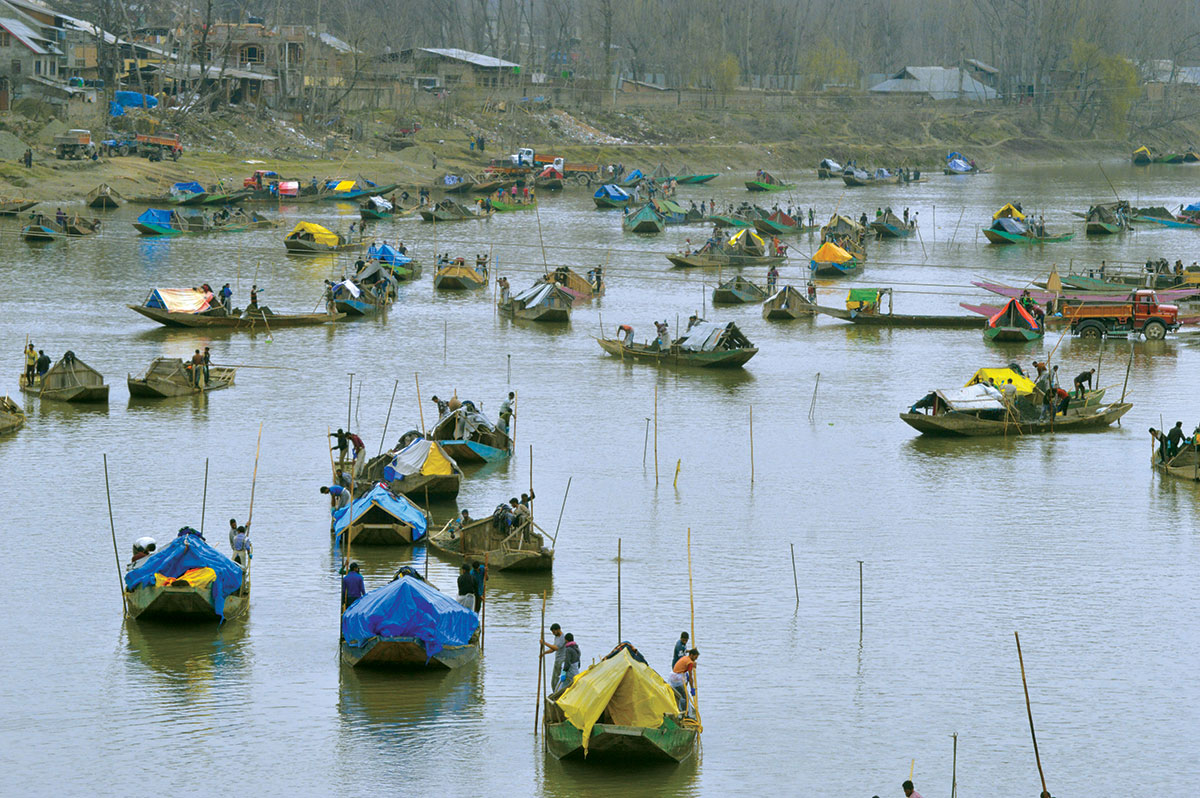
SRINAGAR: The extraction of sand and other riverbed minerals in Jammu and Kashmir more than doubled between 2021-22 and 2022-23, rising from 0.47 million tonnes to 1.14 million tonnes, as commercial mining expanded across the Valley’s river systems, according to a research paper published by the Central University of Kashmir Law Review.
The 142 per cent increase, involving an expansion from 37 designated mining blocks to 72, has coincided with falling groundwater levels, destabilisation of riverbanks, damage to agricultural land and the deterioration of aquatic habitats. The researchers cite groundwater monitoring data indicating that water tables in parts of Budgam and Pulwama declined by more than 1.5 metres between 2020 and 2023.
The study also estimates that around 93,000 people associated with horticulture, fishing, weaving and other river-dependent occupations have suffered substantial income losses over the last five years.
Titled Illegal Sand Mining in River Jhelum in Jammu and Kashmir: Environmental Law and Governance Challenges, the 26-page research paper argues that the transformation of traditional, community-controlled sand collection into mechanised commercial extraction has created an environmental and governance crisis that existing laws have failed to contain.
The paper is authored by Syedah Fatima Zahara Jafri, Assistant Professor, School of Law, Lovely Professional University, Phagwara, Punjab; Syed Irfan Haider Jafri, Assistant Legal Aid Defense Counsel, District Legal Services Authority, Poonch, Jammu and Kashmir; and Mirza Juned Beg, Assistant Professor, Faculty of Law, Integral University, Lucknow, Uttar Pradesh. It was published in Volume 5 (2025) of the Central University of Kashmir Law Review in December 2025.
Extraction Surge
Citing the Jammu and Kashmir Department of Geology and Mining’s Annual Mineral Extraction Report 2022-23, the researchers document a sharp rise in riverbed mineral extraction.
In 2021-22, approximately 0.47 million tonnes of sand and minor minerals were extracted from 37 designated blocks. The volume increased to 1.14 million tonnes in 2022-23, when 72 blocks were put up for auction.
The increase of 0.67 million tonnes represents a 142 per cent rise in just one year.
The paper traces the expansion to growing construction demand, particularly following the widening of the Srinagar-Jammu National Highway, construction of bridges and tunnels, and other infrastructure projects.
It argues that the expansion of public and private infrastructure, combined with liberalised mineral policies, fundamentally changed the nature of riverbed mining in Kashmir.
The researchers identify the early 2000s as a turning point, when JCBs, dredgers, excavators and tipper trucks increasingly replaced manual extraction.
The government had reportedly put more than 100 new minor mineral blocks up for open bidding by 2019-20, with many contracts going to outside contractors.
The authors argue that the auction-based system weakened traditional community control over river resources and encouraged commercial extraction, frequently involving operations outside the conditions of mining leases and environmental clearances.
The demand for construction material was not the only factor. The researchers also identify inadequate monitoring, corruption, informal subletting of mining leases and the influence of organised mining networks as factors enabling illegal operations.

Water Decline
The paper identifies groundwater depletion as one of the most serious consequences of excessive riverbed excavation.
Citing a December 2023 hydrological survey by the Kashmir Water Resources Department, it reports a 15-20 per cent decline in groundwater tables in areas surrounding mining operations.
It separately cites field data from Budgam and Pulwama indicating that groundwater levels in heavily mined areas fell by more than 1.5 metres between 2020 and 2023.
A 2023 survey by the Environmental Policy Group of the University of Kashmir is also cited as documenting a 15-18 per cent groundwater decline associated with deep mechanised excavation in Pulwama and Budgam.
The researchers explain that excessive removal of riverbed material changes sediment transport deepens river channels and disrupts the natural relationship between surface water and underground aquifers.
Riverbeds and their sediment layers play an important role in maintaining groundwater recharge and sustaining the base-flow of rivers during periods of low discharge.
When these layers are excessively excavated, the natural hydrological balance is disturbed. The resulting channel incision can destabilise riverbanks, lower groundwater levels and affect the availability of water for agriculture and domestic use.
The study also reports that traditional wells and springs in Anantnag and Baramulla have been drying up, while farmers dependent on groundwater for irrigation have experienced growing difficulties.
It identifies Arbal Nag in Budgam as one of the traditional water sources affected by excessive extraction.
The environmental damage is not restricted to groundwater. Increased turbidity, changes in sediment distribution, destruction of riparian vegetation and the loss of fish-spawning habitats are among the other consequences identified by the researchers.
The paper specifically refers to damage to fish habitats in the Rambiara and Veshaw rivers, with consequences for aquatic biodiversity and traditional fishing communities.
Flood Vulnerability
The researchers link excessive riverbed excavation to the weakening of riverbanks and increased vulnerability of settlements and agricultural land to flooding.
They argue that the removal of sediment at unsustainable depths deprives riverbanks of their natural support, making them more susceptible to collapse during periods of heavy rainfall and high discharge.
The study cites the August 2023 floods, when the Jhelum and its tributaries, particularly the Veshaw and Rambiara rivers, breached weakened embankments following cloudbursts and heavy rainfall.
According to figures cited in the paper, the flooding damaged 1,200 hectares of agricultural land and more than 500 houses. The researchers say areas previously subjected to illegal extraction suffered particularly severe structural damage.
They also point out that several embankments had not been adequately strengthened or restored following the devastating 2014 Kashmir floods.
A separate incident cited in the paper concerns flash floods in the Korel area of Budgam in November 2023. The researchers refer to reports of damage to more than 40 houses, the collapse of two schools and the displacement of over 500 residents.
The paper argues that the combination of weakened embankments, disturbed river morphology and inadequate maintenance has increased the exposure of rural communities to environmental disasters.
It recommends integrating mining regulation with disaster-risk reduction and riverbank protection rather than treating mineral extraction as an isolated commercial activity.
Livelihood Crisis
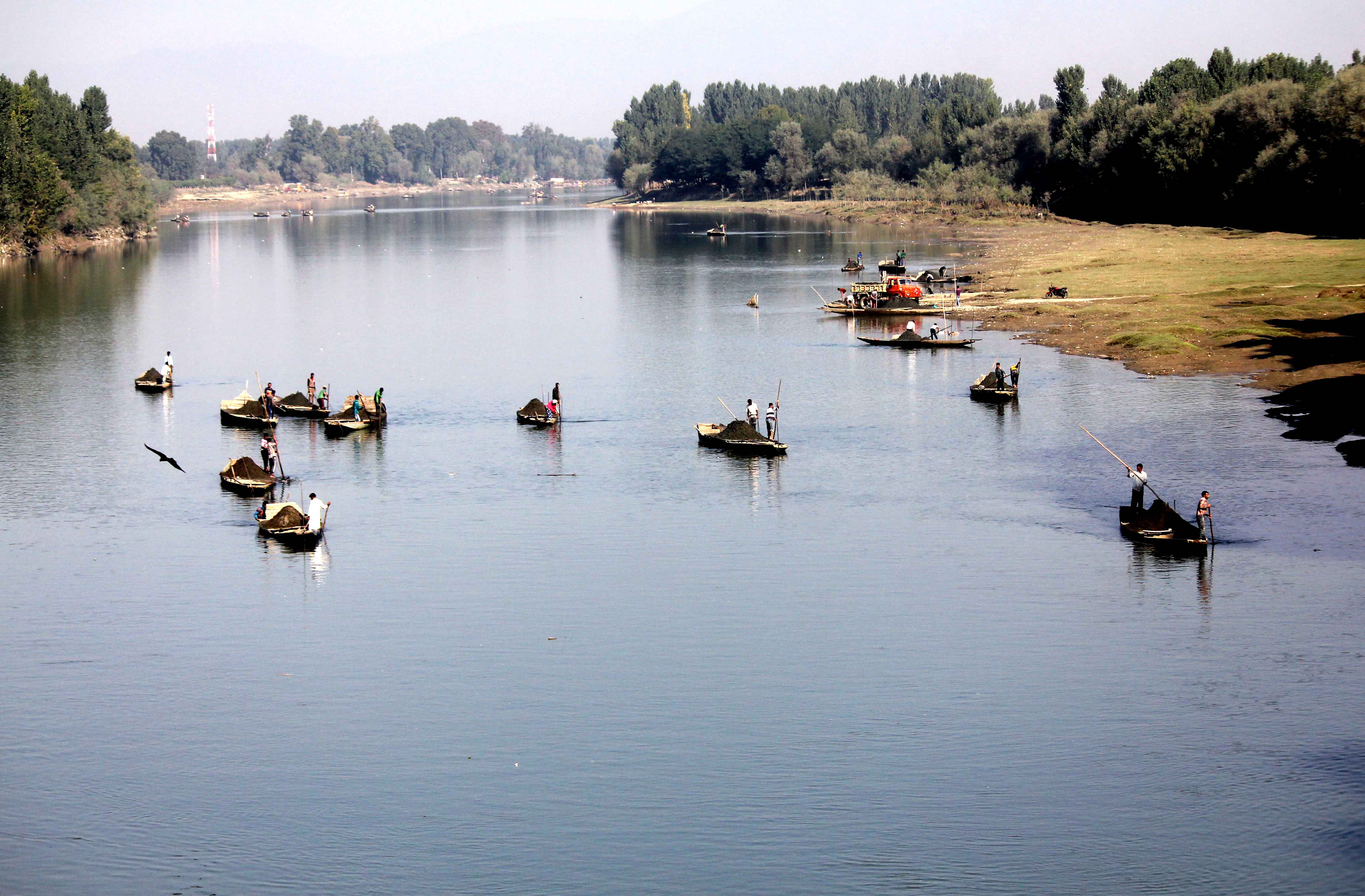
Beyond ecological damage, the researchers identify a substantial economic and social cost for communities dependent on the Jhelum and its tributaries.
The paper estimates that approximately 93,000 people associated with horticulture, fishing, weaving and river-based crafts have reported significant income losses over the preceding five years.
The deterioration of river ecology has affected fish stocks in Wular and downstream wetlands, with consequences for traditional fishing communities in Sopore, Bandipora and Baramulla.
The researchers also identify damage to saffron fields and apple orchards in Pulwama and Anantnag, attributing the difficulties partly to groundwater depletion, siltation and disruption of irrigation channels.
Women-dependent rural livelihoods receive particular attention.
The paper says women-headed households and rural women entrepreneurs involved in vegetable cultivation, basket weaving using river reeds and dairy farming have been disproportionately affected.
In Budgam, Ganderbal and Kupwara, women are reportedly having to travel longer distances to collect water for domestic and livestock requirements as nearby springs dry up.
The researchers also cite a 2023 participatory study by the University of Kashmir’s Centre for Women’s Studies, which reported severe income erosion among women previously earning through fish sales and weaving.
They argue that existing environmental audits and compensation mechanisms have failed to adequately account for these gender-specific consequences.
Enforcement Paradox
One of the central arguments of the research is that the crisis persists despite the existence of an extensive legal framework and substantial enforcement activity.
Citing government figures reported in March 2023, the researchers point out that authorities seized more than 7,000 vehicles and 35 excavators involved in illegal mining during 2021-22. Penalties amounting to Rs 14 crore were also imposed.
However, the authors argue that these actions failed to establish a sustained deterrent, with unauthorised extraction continuing across several river systems.
The study identifies institutional fragmentation as a major weakness. The Department of Geology and Mining, Forest Department, Public Works Department, and Irrigation and Flood Control Department frequently operate without synchronised inspections or shared monitoring systems.
This creates overlapping jurisdictions, delayed responses and gaps that mining operators can exploit.
The researchers also allege that some licensed contractors sublet mining blocks to unregistered operators, who then use heavy machinery in violation of lease conditions and environmental clearances.
They refer to investigative reports and complaints alleging political patronage, bribery, coercion and collusion between contractors and public officials.
The paper also highlights the absence of functional real-time monitoring infrastructure, including GPS-enabled vehicle tracking, automated alerts and drone surveillance.
Without these systems, authorities struggle to identify extraction beyond approved boundaries, excessive excavation and operations conducted during prohibited hours.
 Legal Safeguards
The researchers examine three principal legal instruments governing mineral extraction and environmental protection.
The Mines and Minerals (Development and Regulation) Act, 1957, classifies sand and gravel as minor minerals under Section 3(e). Section 15 empowers the government to regulate their concessions, extraction and transportation.
In Jammu and Kashmir, the regulatory framework is provided by the Jammu and Kashmir Minor Mineral Concession, Storage, Transportation of Minerals and Prevention of Illegal Mining Rules, 2016.
The Environment (Protection) Act, 1986, and the Environmental Impact Assessment Notification of 2006 provide additional safeguards governing mining activities and environmental clearances.
The 2016 rules prohibit the use of heavy machinery, including excavators and JCBs, within 25 metres of riverbanks, embankments and hydraulic structures under Rule 17. Rule 20 prohibits night-time mining operations.
Rule 26 provides for environmental audit requirements, while the rules also envisage GPS-based tracking of mining vehicles and mineral transportation.
The researchers argue that these provisions are routinely violated because of inadequate enforcement and the absence of effective post-clearance monitoring.
They also refer to Section 21 of the MMDR Act, which provides for action against illegal mining, including the seizure of vehicles, equipment and mineral stocks.
Under Section 15 of the Environment (Protection) Act, the paper discusses imprisonment and monetary penalties for violations of environmental provisions.
Tribunal Intervention
The study places particular emphasis on the National Green Tribunal’s intervention in the Doodh Ganga mining controversy.
In Vishwa Jit Sharma v. Union of India, Original Application No. 45/2019, the NGT imposed a Rs 35 crore penalty on the Union Territory of Jammu and Kashmir through its order dated November 15, 2021.
The tribunal found that mining activities had violated environmental safeguards, including buffer-zone requirements, and that mining leases had been granted without the necessary environmental clearances.
The researchers say the tribunal invoked the polluter-pays principle and directed that the penalty money be used for ecological rehabilitation and restoration of affected areas.
They argue that the case exposed the failure of the administration to coordinate the activities of mining, irrigation and pollution-control authorities.
The paper also invokes the Supreme Court’s environmental jurisprudence, particularly the principles established in Subhash Kumar v. State of Bihar and T.N. Godavarman Thirumulpad v. Union of India, to argue that environmental degradation and the loss of access to clean water can implicate the fundamental right to life under Article 21.
It further examines the constitutional responsibilities under Articles 48A and 51A(g), concerning environmental protection as a state directive and a fundamental duty of citizens.
Community Exclusion
The researchers argue that the commercialisation of mining has also displaced an older system of community-based resource management.
Traditionally, sand and gravel were collected manually in limited quantities for road maintenance, brickmaking and local construction.
Village elders and panchayats regulated the practice through customary rules governing the location, timing and quantity of extraction.
The paper says this system helped protect riverbanks, aquatic ecosystems and groundwater recharge areas.
The transition to auction-based mining, however, reduced the role of local communities in decisions concerning river resources.
The researchers refer to protests by villagers in Anantnag and Budgam against mining contracts awarded without adequate local consultation.
They advocate the involvement of panchayats and Gram Sabhas in environmental monitoring, lease decisions and grievance redressal.
The paper also invokes the Panchayats (Extension to Scheduled Areas) Act, 1996, and the Forest Rights Act, 2006, in discussing community participation and resource rights. The precise territorial applicability of these provisions to particular mining locations in Jammu and Kashmir would require separate legal examination.
Lessons Elsewhere
The study compares Jammu and Kashmir’s mining-governance framework with regulatory interventions in Uttarakhand and Kerala.
Uttarakhand, according to the paper, introduced electronic surveillance, drone monitoring, RFID-based entry systems and GPS-enabled vehicle tracking to improve oversight of mining operations.
It also amended its Minor Minerals (Concession) Rules in 2021 to require real-time reporting and CCTV installations at mining sites.
The paper cites official figures indicating a 38 per cent reduction in unlicensed mining cases and a 27 per cent increase in mining revenues between 2020 and 2023.
Kerala is presented as another example, particularly for its emphasis on local-government participation through the Kerala Protection of River Banks and Regulation of Removal of Sand Act, 2001.
The paper says the state has combined decentralised oversight, environmental clearance procedures and financial scrutiny of illegal mining networks.
It cites a 44 per cent decline in illegal mining activity between 2020 and 2023.
The authors suggest that these models demonstrate the importance of combining technology, institutional coordination and community participation.
Reform Agenda
The researchers propose a series of reforms to address the crisis.
They recommend GPS-connected digital logbooks for all sand-extracting equipment, real-time tracking of vehicles and multidisciplinary field inspections involving mining, fisheries, forest and irrigation officials.
Environmental clearances, they argue, should incorporate scientific assessments of hydrology, biodiversity, fisheries, erosion and flood vulnerability. Independent agencies should conduct these assessments, with post-clearance compliance reports made publicly accessible.
The paper also proposes village-level environmental vigilance committees, supported by NGOs and educational institutions, to monitor mining operations and report violations through GPS-enabled applications.
On enforcement, it calls for prompt seizure of illegal machinery, cancellation of leases for repeated violations and criminal prosecution of public officials found colluding with mining operators or neglecting their statutory responsibilities.
It suggests district-level green benches or fast-track environmental courts to accelerate the disposal of mining-related cases.
An additional recommendation is to reduce dependence on natural river sand by promoting manufactured sand, fly-ash bricks and recycled construction materials.
Recognising that traditional and informal miners have also been affected by the transition to commercial leasing, the authors advocate rehabilitation packages involving skill development, microcredit and employment through rural development programmes.
The paper concludes that protecting the Jhelum requires a shift from extraction-centred mineral management to a rights-based system that recognises ecological sustainability, community participation and accountability as essential components of natural resource governance.