Laboratory study identifies five strains of a naturally occurring nematode in North Kashmir, with the most effective killing half the pest grubs using fewer organisms and in less time; field trials are still needed
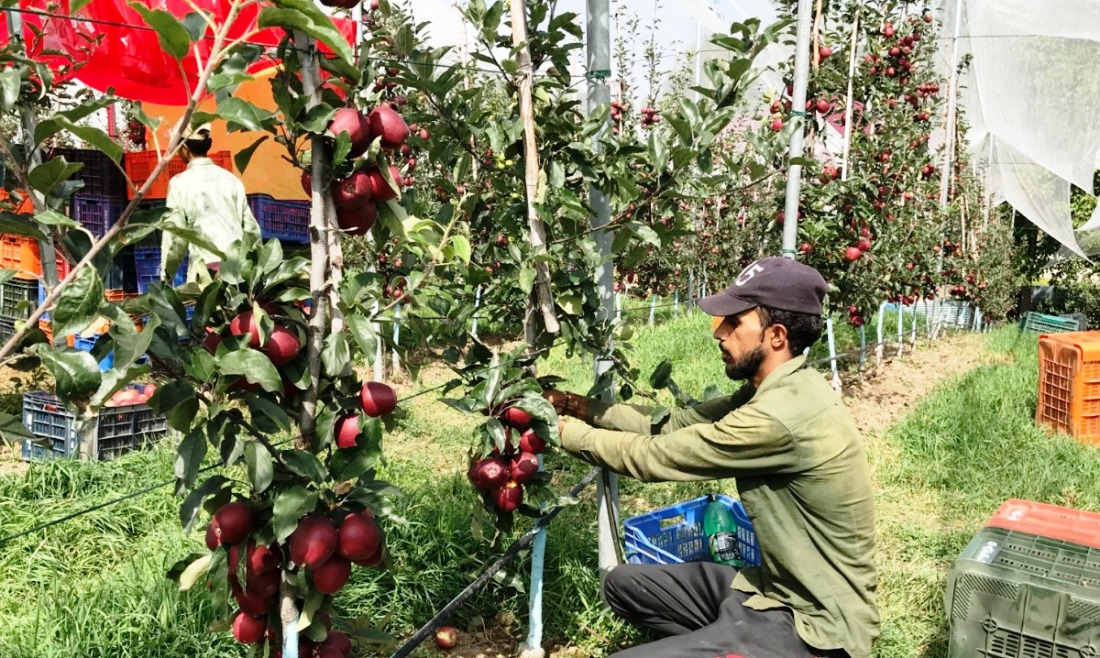
SRINAGAR: A naturally occurring microscopic nematode found in apple orchards in North Kashmir has shown promising potential for controlling the city longhorn beetle, a destructive pest that bores into apple tree trunks and branches, according to a new scientific study.
Researchers isolated five strains of Heterorhabditis bacteriophora from orchard soils in Kupwara and Bandipora and found that one strain, designated PP549990, was more effective than the other four in killing the beetle’s larvae under laboratory conditions.
The study found that the most effective strain required an estimated 471.25 infective juveniles per first-stage grub to kill 50 per cent of the population within 120 hours. The same strain required 667.01 infective juveniles per second-stage grub and 754.08 per third-stage grub over the same period. The results suggest that the nematode could provide a basis for developing a biological alternative to chemical insecticides used against the apple stem borer, although its effectiveness under orchard conditions has yet to be established.
The research, Isolation and efficacy of native Heterorhabditis bacteriophora against Aeolesthes sarta (Coleoptera: Cerambycidae) in North Kashmir apple orchards, was published in 2026 in the Egyptian Journal of Biological Pest Control (volume 36).
The paper is authored by Nusrat Fatimah, Tarique Hassan Askary, Vishal Singh Somvanshi, LW Johnson, Mahfouz Abd-Elgawad, Tajamul Mansoor, Waseem Ahmad War, Suhail Ashraf and Ishtiyaq Ahad.
Fatimah, Mansoor, War and Ahad are affiliated with the Faculty of Agriculture, Sher-e-Kashmir University of Agricultural Sciences and Technology of Kashmir (SKUAST-K). Askary is affiliated with its Faculty of Horticulture. Somvanshi and Johnson are associated with the Division of Nematology at the ICAR-Indian Agricultural Research Institute, New Delhi. Abd-Elgawad is affiliated with the National Research Centre in Dokki, Giza, Egypt, while Ashraf is associated with the Centre for Plant Molecular Biology and Biotechnology at Tamil Nadu Agricultural University, Coimbatore.
Pest Threat
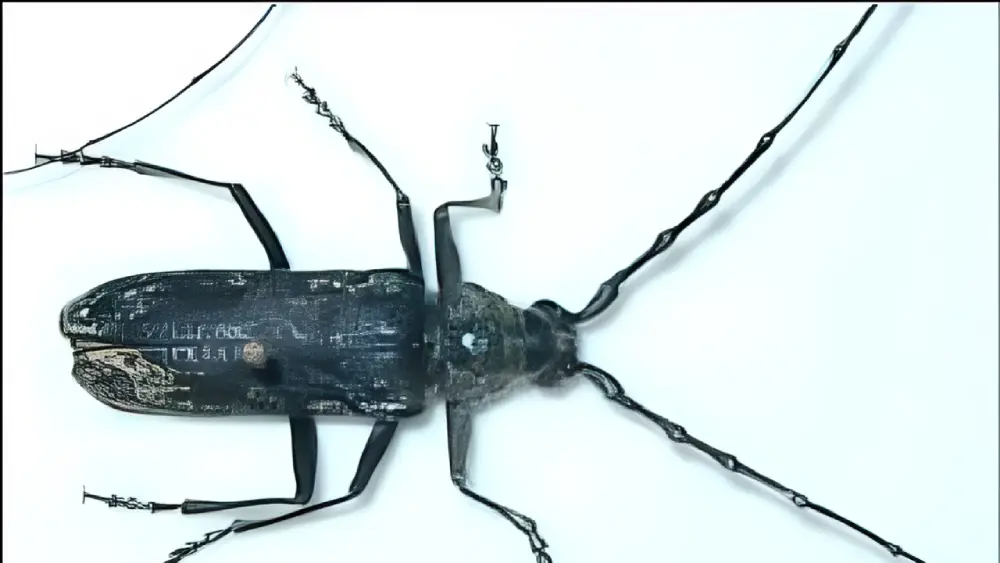
The city longhorn beetle, scientifically known as Aeolesthes sarta, is a serious pest of apple and other trees. Its larvae, commonly called grubs, bore into trunks and branches, damaging the tree’s internal tissues. Severe infestation can cause heavily affected trees to dry up.
The researchers noted that apple growers rely heavily on chemical insecticides to control the pest. However, the cost of chemical treatments and their potential adverse environmental effects have encouraged the search for safer, more economical alternatives.
Entomopathogenic nematodes are microscopic roundworms that infect and kill insects. Species belonging to the genus Heterorhabditis work in partnership with bacteria of the genus Photorhabdus. Once the nematodes enter an insect host, the bacteria multiply and release substances that contribute to the insect’s death, providing a suitable environment for the nematodes to feed and reproduce.
The researchers argued that strains occurring naturally in a particular region could be better suited to its soil and environmental conditions than strains introduced from elsewhere. Such local adaptation may improve their survival, persistence and ability to infect target pests. The study was designed to identify native nematodes in North Kashmir and assess their potential for future use as biological pest-control agents.
Soil Survey
The team collected 450 soil samples from apple orchards in Baramulla, Bandipora and Kupwara. Each district contributed 150 samples, collected from 15 locations, with 10 samples taken at each location. Sampling was conducted during June and July, with soil collected from the root zones of apple trees at depths of 15-20 centimetres.
In the laboratory, the researchers used larvae of the greater wax moth, Galleria mellonella, as bait to detect nematodes capable of infecting insects. Soil samples were examined for evidence of infection, and nematodes emerging from infected larvae were collected for further study.
Only five of the 450 samples, or 1.11 per cent, tested positive for entomopathogenic nematodes. Four positive samples came from Kupwara and one from Bandipora; none was detected in the Baramulla samples.
The five isolates were recovered from Larabal, Batpora, Khanpur and Magam in the surveyed areas, including a positive site at Kehnoosa in Bandipora. The researchers recorded the geographical coordinates and physicochemical characteristics of the positive sites.
The low recovery rate, the paper noted, points to the need for more intensive or targeted sampling. The nematodes may occur in specific ecological niches rather than being evenly distributed across orchard soils.
Species Identification
The researchers used morphological examination, measurements of the nematodes’ physical characteristics and molecular analysis to identify the five isolates. Their DNA was analysed using the internal transcribed spacer region of ribosomal DNA, a genetic marker commonly used in species identification and evolutionary studies.
The isolates were designated PW2, N1, N1S3, WK2 and R1. Their DNA sequences were deposited in the NCBI GenBank database under accession numbers PP549986, PP549987, PP549988, PP549989 and PP549990, respectively.
The molecular analysis confirmed that all five belonged to Heterorhabditis bacteriophora. The sequences showed more than 99.8 per cent identity with several reference isolates of the species. The researchers also compared the isolates with other members of the genus to establish their evolutionary relationships.
The analysis placed the Kashmir isolates in a well-supported genetic group with a reference sequence of H. bacteriophora. The researchers reported no differences in the trimmed DNA sequences among the five isolates and the reference sequence used for comparison.
Morphological and morphometric measurements also corresponded with the established descriptions of H. bacteriophora. The combination of genetic and physical evidence strengthened the identification of the five strains as members of the same species.
Laboratory Tests
To test their effectiveness against the apple stem borer, the researchers conducted two independent laboratory bioassays using first-, second- and third-stage larvae collected from untreated apple trees at SKUAST-K’s Faculty of Agriculture in Wadura.
The nematodes were tested at four concentrations: 1,000, 2,000, 3,000 and 4,000 infective juveniles per grub. The infective juveniles are the nematodes’ life stage capable of locating and entering an insect host.
The researchers placed the larvae in laboratory plates or Petri dishes lined with filter paper and applied measured suspensions of the nematodes. A distilled-water treatment served as the control. There were 12 replicates for each larval stage, and the experiments were repeated twice.
The test units were maintained at 20 ± 2 degrees Celsius, and larval mortality was recorded every 24 hours for up to 120 hours. Dead larvae were subsequently examined to confirm nematode infection.
The team calculated two principal measures of effectiveness: the median lethal concentration, or LC50, which estimates the number of infective juveniles needed to kill 50 per cent of the test population, and the median lethal time, or LT50, which estimates the time required to kill 50 per cent of the population at a given concentration.
Best Strain
Of the five isolates, PP549990, designated R1, consistently performed best in the laboratory tests. It required fewer infective juveniles and less time than the other strains to kill half of the tested grub population.
For first-stage larvae, the estimated LC50 of PP549990 fell from 3,628.68 infective juveniles per grub after 24 hours to 471.25 after 120 hours. For second-stage larvae, the estimate at 120 hours was 667.01, while for third-stage larvae it was 754.08.
The results also showed that the older and larger the larvae, the greater the number of nematodes generally required to kill half the population. At the same time, the estimated concentration needed to achieve that level of mortality declined as exposure time increased.
The strain’s performance was particularly clear when the researchers measured the time required to kill half the grub population. At a concentration of 4,000 infective juveniles per grub, PP549990 achieved the estimated 50 per cent mortality point in 26 hours for first-stage larvae, 32 hours for second-stage larvae and 62 hours for third-stage larvae.
At the lower concentration of 1,000 infective juveniles per grub, the corresponding estimates were 66, 58 and 98 hours, respectively. The findings illustrate the combined influence of nematode concentration and larval stage on the speed of pest mortality.
The other strains ranked behind PP549990 in the researchers’ overall assessment. PP549987 was the next most effective, followed by PP549986, PP549988 and PP549989.
Biological Control
The researchers said the results provide a starting point for developing biological control methods against A. sarta in Kashmir. The nematodes’ partnership with Photorhabdus bacteria is central to their insect-killing capacity. After entering the host, the bacteria multiply rapidly, produce toxins and contribute to the breakdown of the insect’s tissues, ultimately causing death.
The authors said the particularly high virulence associated with strain PP549990 warranted further investigation, including research into its symbiotic bacteria and the mechanisms responsible for its effectiveness.
They also discussed earlier research on microbial pesticides against apple stem borers in Himachal Pradesh. That study had compared fungal and nematode-based treatments, including H. bacteriophora, with chemical insecticides. The authors noted that results had varied between years and that chemical insecticides had performed strongly in the earlier comparison, underscoring the need for further research into biological alternatives.
Field Validation
Despite the promising laboratory results, the authors cautioned against treating the findings as proof that the nematodes are ready for commercial orchard use.
They acknowledged that the relatively small sample size could have affected the precision of some lethal-concentration and lethal-time estimates. In addition, some estimates for third-stage larvae at shorter exposure periods exceeded the highest concentration tested, meaning those figures were extrapolated beyond the experimental range.
The researchers recommended larger experiments, higher concentrations for testing later-stage larvae and further assessment of the nematodes’ viability, infectivity, reproductive capacity and virulence.
Future work, they said, should establish how well the strains adapt to local soil and climatic conditions, develop suitable formulations and sustainable mass-production methods, and examine how the nematodes can be integrated with existing pest-management practices.
The study also calls for field trials across multiple locations and agro-ecological zones in Kashmir to establish whether the laboratory performance can be reproduced under actual orchard conditions.
The authors concluded that the five native isolates represent a promising resource for developing safer and potentially more sustainable management of the apple stem borer. However, their practical value will depend on further testing, refinement and validation under field conditions.