A first comprehensive botanical survey of the 425-sq-km Overa-Aru Wildlife Sanctuary in south Kashmir has documented 397 plant taxa belonging to 76 families, including nine species falling under different International Union for Conservation of Nature (IUCN) threat categories, while warning that more than 85 per cent of the recorded flora remains unevaluated for conservation status.
SRINAGAR: A Kashmir University study documents 397 plant taxa in Overa-Aru sanctuary, identifies nine threatened species and highlights significant gaps in conservation assessments, calling for stronger biodiversity protection and management.
The study, An Annotated Checklist of Flora of Overa-Aru Wildlife Sanctuary, Kashmir Himalaya, provides the first comprehensive scientific documentation of the sanctuary’s plant diversity, establishing a baseline for future biodiversity research and conservation planning.
The research was conducted by Tajamul Islam, Anzar Ahmad Khuroo and Irshad A. Nawchoo, all associated with the Department of Botany at the University of Kashmir, Srinagar.
Islam and Nawchoo are associated with the Plant Reproductive Biology, Genetic Diversity and Phytochemistry Research Laboratory, while Islam and Khuroo are also affiliated with the Centre for Biodiversity and Taxonomy. Khuroo is the corresponding author of the paper.
The paper published on May 31, 2023, in Phytotaxa (Volume 599) published by Magnolia Press.
The inventory comprises 392 species, one subspecies, three varieties and one forma, distributed across 254 genera and 76 botanical families. Angiosperms account for 388 species, representing 97.73 per cent of the recorded flora, while gymnosperms constitute the remaining nine species.
Asteraceae emerged as the dominant botanical family, with 57 species, followed by Rosaceae with 28 and Lamiaceae with 27. At the genus level, Salix and Veronica were the most represented, with seven species each, followed by Artemisia with six.
The researchers point out that the sanctuary’s floral diversity represents 7.86 per cent of the total vascular plant species recorded in Kashmir Himalaya and 4.96 per cent of the 8,044 spermatophytes documented in the Indian Himalayan region.
Threatened Categories
The conservation assessment identified nine species under different IUCN threatened categories. These include Aconitum chasmanthum, Aconitum heterophyllum, Angelica glauca, Atropa acuminata, Dolomiaea costus, Taxus contorta, Trillium govanianum, Ulmus villosa and Ulmus wallichiana.
Of the 58 species assessed against the IUCN Red List criteria, two were classified as Critically Endangered, five as Endangered and two as Vulnerable. Another 45 species were categorised as Least Concern, while four were classified as Data Deficient.
However, the researchers found that 339 species, accounting for 85.39 per cent of the sanctuary’s recorded flora, have not been evaluated under IUCN criteria.
The study describes this as an important gap requiring further research, particularly because several plant species occurring in the sanctuary are already recognised as threatened.
The authors emphasise that the nine threatened species require appropriate conservation strategies and that the remaining unevaluated flora needs systematic assessment to establish its conservation status.
More Herbs
The survey found that herbs dominate the sanctuary’s vegetation, accounting for 307 species or 77.33 per cent of the total recorded flora. Trees constitute 41 species, shrubs 34, climbers 11 and subshrubs four.
The researchers attribute the dominance of herbaceous vegetation to the extensive alpine meadows and diverse understorey vegetation found across the sanctuary.
The lifespan analysis also revealed a strong predominance of perennial plants. Of the recorded taxa, 318, or 80.1 per cent, are perennials, compared with 66 annuals and 13 biennials.
Using Raunkiaer’s life-form classification, the researchers found that hemicryptophytes dominate the sanctuary’s vegetation, accounting for 224 species or 56.42 per cent. Phanerophytes constitute 80 species, while therophytes account for 66.
The study associates the predominance of hemicryptophytes with the region’s higher elevations and temperate climatic conditions. Their underground or ground-level renewal structures enable them to withstand prolonged and harsh environmental conditions.
Alpine Meadows
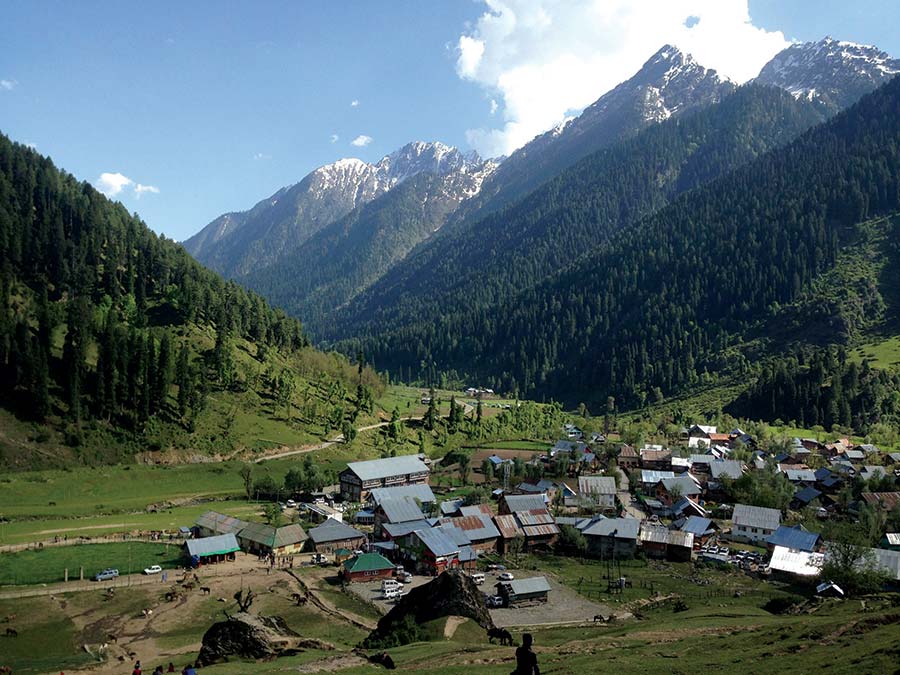
The sanctuary encompasses several ecological habitats, ranging from riparian and coniferous forests to subalpine vegetation and alpine scrub.
The coniferous forests are dominated by Pinus wallichiana, Abies pindrow and Picea smithiana, while Betula utilis and Rhododendron campanulatum characterise the subalpine zones. Alpine scrub vegetation includes Juniperus squamata and Rhododendron anthopogon.
The extensive alpine meadows, locally known as Margs, support a distinctive range of herbaceous plants, including Swertia pahalgamensis, Swertia petiolata, Alchemilla mollis, Aconitum chasmanthum, Geum elatum and Saxifraga sibirica.
The researchers also document the diversity of riparian vegetation, which includes Parrotiopsis jacquemontiana, Sorbaria tomentosa, Aesculus indica, Prunus cornuta and Fraxinus hookeri.
According to the study, the different vegetation types contribute to the sanctuary’s ecological richness and provide habitats for plant species adapted to varying elevations and environmental conditions.
Tourism Dependence
Beyond documenting plant diversity, the researchers have drawn attention to the pressures that could undermine the sanctuary’s ecological integrity.
Human settlements exist within and along the fringes of the protected area, with local communities depending on it, either wholly or partially, for food, fodder, fuelwood, pastures and medicinal plants.
The sanctuary is also a major attraction for tourists and naturalists because of its snow-covered mountains, picturesque landscapes and alpine lakes.
The researchers caution that the increasing influx of tourists could contribute to habitat degradation and threaten the existing biodiversity if the resulting pressures are not adequately managed.
They argue that a reliable floristic database is essential for environmental management decisions and that the inventory prepared through their research can provide a scientific foundation for future conservation planning.
The paper notes that the documentation of plant species, their life-history characteristics and conservation status will help decision-makers develop appropriate management strategies for the sanctuary.
Field Surveys
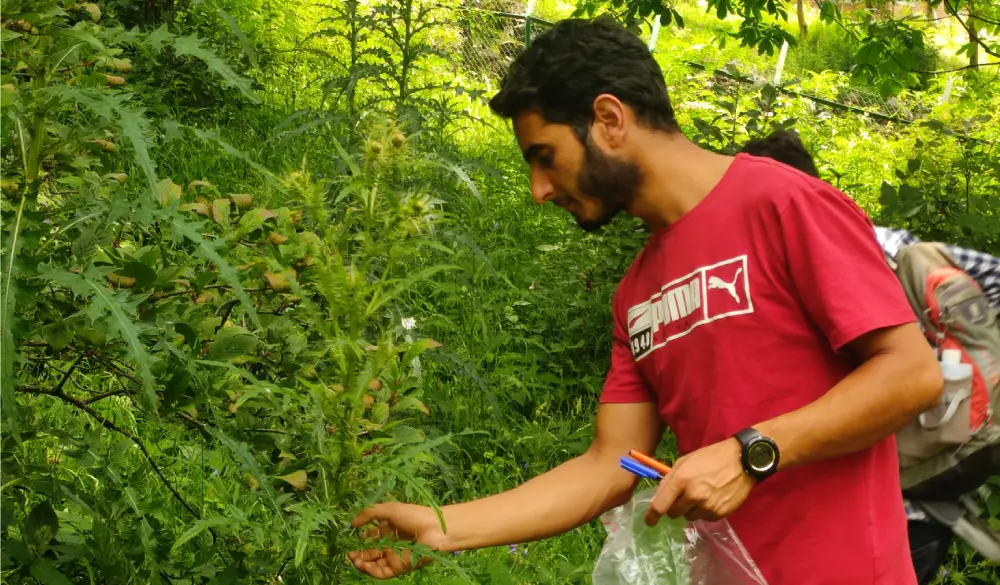
The researchers conducted field surveys between 2020 and 2022, collecting plant specimens across different seasons and vegetation types. The collected material was identified through morphological examination, consultation of established taxonomic literature and comparison with previously deposited herbarium specimens.
The researchers also consulted online botanical databases, including the Flora of India, Flora of Pakistan and Flora of China, to validate plant identifications and update botanical nomenclature.
Specimens were deposited in the University of Kashmir Herbarium, providing a reference collection for future taxonomic research.
For each recorded plant, the researchers documented its scientific name, synonyms, botanical family, growth form, lifespan, life-form category, conservation status and herbarium voucher number.