A new study finds that freshwater trout farming in Kashmir operates on extremely narrow profit margins, with feed accounting for nearly 38 per cent of production costs. Researchers warn that a 10 per cent increase in feed prices could turn the sector unprofitable, calling for local feed production, better market mechanisms and insurance protection for farmers.
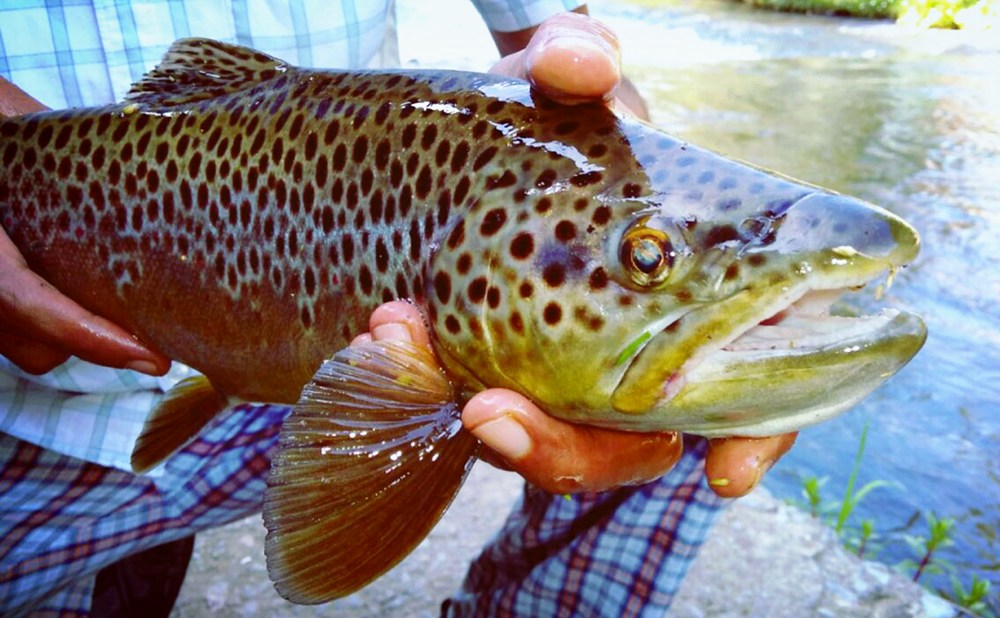
SRINAGAR: Freshwater trout farming in Kashmir, often promoted as a promising avenue for rural livelihoods and economic growth, is operating on razor-thin profit margins, with even a modest increase in production costs capable of pushing farmers into losses, according to a new research study.
The study, published in the journal SN Business & Economics, finds that trout farming in Kashmir is only marginally profitable, recording an average benefit-cost ratio (BCR) of 1.01. This means that for every rupee invested in production, farmers generate only slightly more than a rupee in returns, leaving little room to absorb fluctuations in input prices or market conditions. Ir was authored by Shazia Yousuf and Mushtaq Ahmad Malik of the Centre of Central Asian Studies, University of Kashmir, and Imtiyaz-Ul-Haq of the university’s Department of Economics.
The researchers found that feed is the single largest expense in trout production, accounting for 38.44 per cent of total production costs. Their sensitivity analysis shows that a 10 per cent increase in feed prices could push the industry’s net profit margin into negative territory at -2.84 per cent, while a similar increase in fish selling prices could improve the benefit-cost ratio from 1.01 to 1.11.
The findings raise questions about the long-term financial sustainability of Kashmir’s trout farming sector, particularly as the region has increasingly promoted cold-water aquaculture as an alternative livelihood and a source of income generation.
The research, Economic Viability of Freshwater Trout Farming in Kashmir: A Profitability and Sensitivity Analysis, is based on primary data collected from 91 operational trout farms across Srinagar, Baramulla and Anantnag during 2023–2024. The researchers examined production expenses, revenues, profitability and the potential impact of fluctuations in feed and fish prices on farmers’ financial returns.
Unlike several earlier studies that assessed aquaculture profitability using conventional cost-return calculations, the researchers incorporated both direct and indirect costs, including family labour, the opportunity cost of land and interest on invested capital. This broader accounting approach provides a more comprehensive picture of the actual economic viability of trout farming.
Narrow Margins
The study estimates the average total cost of trout production at Rs 480.64 per kilogram, with variable costs accounting for approximately 65.85 per cent of the total and fixed costs contributing the remaining 34.15 per cent.
Feed emerged as the most significant expense, costing an average of Rs 184.79 per kilogram of fish produced. It accounted for 38.44 per cent of the overall production cost, making farmers particularly vulnerable to fluctuations in commercial fish-feed prices.
Labour was the second-largest operational expense. The researchers estimated labour costs at Rs 95.76 per kilogram, representing approximately 19.93 per cent of total production expenditure. Family labour accounted for 17.21 per cent of total costs, while hired labour contributed 7.97 per cent.
Other expenses included fingerlings, medicines, miscellaneous inputs, land use, depreciation and interest on capital investment. Fingerlings accounted for 4.70 per cent of total costs, while medicines and miscellaneous expenses represented relatively small shares.
The study also highlights the financial burden of land and capital investment, even where farmers operate on their own land. Researchers assigned an imputed rental value to land to account for the income farmers could potentially earn by leasing it out. Land use costs represented 17.56 per cent of total production expenditure, while depreciation accounted for 5.83 per cent and interest on invested capital contributed 10.75 per cent.
By including these indirect expenses, the researchers argue that conventional calculations may overestimate the profitability of trout farming when they exclude unpaid family labour, land opportunity costs and the financial value of invested capital.
Marginal Returns
The profitability assessment reveals how little financial room trout farmers have to absorb unexpected expenses or production disruptions.
Across the study’s estimated production figures, trout farms recorded an annual output of 238,400 kilograms, generating total revenue of approximately Rs 11.57 crore. The estimated gross profit stood at Rs 4.02 crore, while the net return was approximately Rs 11.19 lakh.
The average benefit-cost ratio was calculated at 1.01, indicating that revenues barely exceed total production costs. The net profit margin stood at just 0.97 per cent, despite a gross profit margin of 34.79 per cent.
The difference between the two indicators reflects the substantial burden of costs that remain after accounting for variable production expenses, including land use, depreciation and interest on capital.
The researchers explain that trout farms may appear more financially attractive when assessed from a cash-flow perspective because some costs, such as family labour and the opportunity cost of owned land, do not involve direct monetary payments. However, when these costs are included, the actual economic return becomes considerably smaller.
The study also examined the minimum production and selling prices required for farms to avoid losses. Its break-even analysis estimated that trout farms needed to produce approximately 231,770 kilograms to cover their total costs, compared with the actual estimated production of 238,400 kilograms.
This means that production was only about 2.8 per cent above the break-even threshold, leaving farms with a limited financial buffer against disruptions.
The break-even selling price was estimated at Rs 480.64 per kilogram, almost matching the average production cost. According to the researchers, any increase in input expenditure or decline in market prices could therefore erode the already narrow profit margins.
The study warns that even relatively minor disruptions, including higher feed prices, disease outbreaks or a decline in market demand, could push commercial trout farms into financial losses.
Feed Pressure
To understand how vulnerable trout farming is to changing market conditions, the researchers conducted a sensitivity analysis examining five different scenarios involving changes in feed costs and fish selling prices.
The results show that a 10 per cent increase in feed prices would reduce the benefit-cost ratio from 1.01 to 0.97, taking the sector below the profitability threshold. The net profit margin would fall from 0.97 per cent to -2.84 per cent.
Conversely, reducing feed costs by 10 per cent would improve the benefit-cost ratio to 1.05 and raise the net profit margin to 4.77 per cent. The researchers also examined the impact of changes in the selling price of trout. A 10 per cent increase in fish prices would improve the benefit-cost ratio to 1.11, while the net profit margin would rise to 9.97 per cent.
However, a 10 per cent decline in fish prices would have the opposite effect, reducing the benefit-cost ratio to 0.91 and pushing the net profit margin down to -10.04 per cent.
The analysis suggests that trout farmers are exposed to risks on both sides of the production chain: the rising cost of essential inputs and uncertainty surrounding the prices they receive in the market. The most favourable financial outcome emerged under a combined scenario involving a 10 per cent reduction in feed costs and a 10 per cent increase in fish selling prices. Under this situation, the benefit-cost ratio rose to 1.16, while the net profit margin increased to 13.43 per cent. The findings indicate that improving market prices alongside reducing production expenses could substantially strengthen the financial position of trout farmers.
Production Challenges
The researchers place their findings within the broader context of Kashmir’s growing aquaculture sector, which has benefited from favourable climatic and hydrological conditions for cold-water fish production. The Jammu and Kashmir government has promoted trout farming through subsidies, technical training and infrastructure support, leading to the establishment of small- and medium-scale commercial farms.
However, the study identifies several constraints affecting the sector’s growth, including high input costs, inadequate access to quality seed and feed, marketing inefficiencies and the absence of financial risk-mitigation mechanisms. The researchers also point to the importance of production efficiency, particularly the amount of feed required to produce marketable fish.
The study recorded a feed conversion ratio (FCR) of 1.79, indicating that approximately 1.79 kilograms of feed are required to produce one kilogram of trout. Since feed represents the largest component of production costs, inefficient feed utilisation directly affects profitability. The researchers attribute the relatively high feed requirements partly to trout’s need for high-protein diets, which are more expensive than the feeds used for some other freshwater species.
They also note that trout’s slower growth compared with species such as tilapia can extend production cycles, increasing the overall cost of farming. The study argues that improving feeding practices, feed quality and production management could help farmers reduce costs and improve economic efficiency.
Policy Measures
Based on the findings, the researchers recommend a series of policy interventions aimed at reducing production expenses, improving market access and strengthening the financial resilience of trout farming enterprises.
One of the principal recommendations is to encourage the establishment of local fish-feed production units to reduce farmers’ dependence on costly commercial feed sources. The study suggests that locally produced nutritious feed and feed ingredients could help stabilise input costs while maintaining the nutritional standards required for trout production.
The researchers also recommend contract farming agreements, cooperative marketing initiatives and price-stabilisation mechanisms to protect farmers against fluctuations in the selling price of fish. They argue that ensuring fair and relatively stable market prices is essential because even a 10 per cent decline in fish prices could make trout farming economically unviable under the existing cost structure.
Another recommendation is the introduction of aquaculture-specific insurance programmes. Such schemes, the researchers suggest, could protect farmers against financial losses arising from input-cost fluctuations, disease outbreaks and market volatility. Improved access to institutional credit tailored to aquaculture operations has also been identified as necessary to help farmers manage capital requirements and financing costs.
The study further recommends the adoption of technological interventions, including automated feeding systems and advanced water-management practices, to improve feed utilisation and ensure more efficient use of water resources.
Economic Outlook
The researchers conclude that freshwater trout farming remains an important component of Kashmir’s aquaculture value chain, generating livelihood opportunities beyond fish production itself.
These include activities associated with input supply, transportation, processing, marketing and retail, making the sector relevant to employment generation and rural economic development. However, they caution that the industry’s current profitability levels are insufficient to provide farmers with adequate protection against economic shocks.
The study emphasises that improving the sustainability of trout farming requires more than increasing production capacity. Reducing input costs, improving production efficiency, ensuring remunerative market prices and providing financial protection against risks are equally important.
It argues that a combination of locally available feed resources, better marketing arrangements, institutional credit, insurance and modern farming technologies could improve the long-term economic viability of the sector. The researchers maintain that without addressing these structural constraints, the financial vulnerability of trout farms could undermine the potential of cold-water aquaculture as a sustainable livelihood option in Kashmir.