A study in Srinagar has found widespread gaps in public awareness, inadequate recycling facilities and weak enforcement of e-waste regulations, raising concerns about how discarded electronic devices are handled in Jammu and Kashmir.
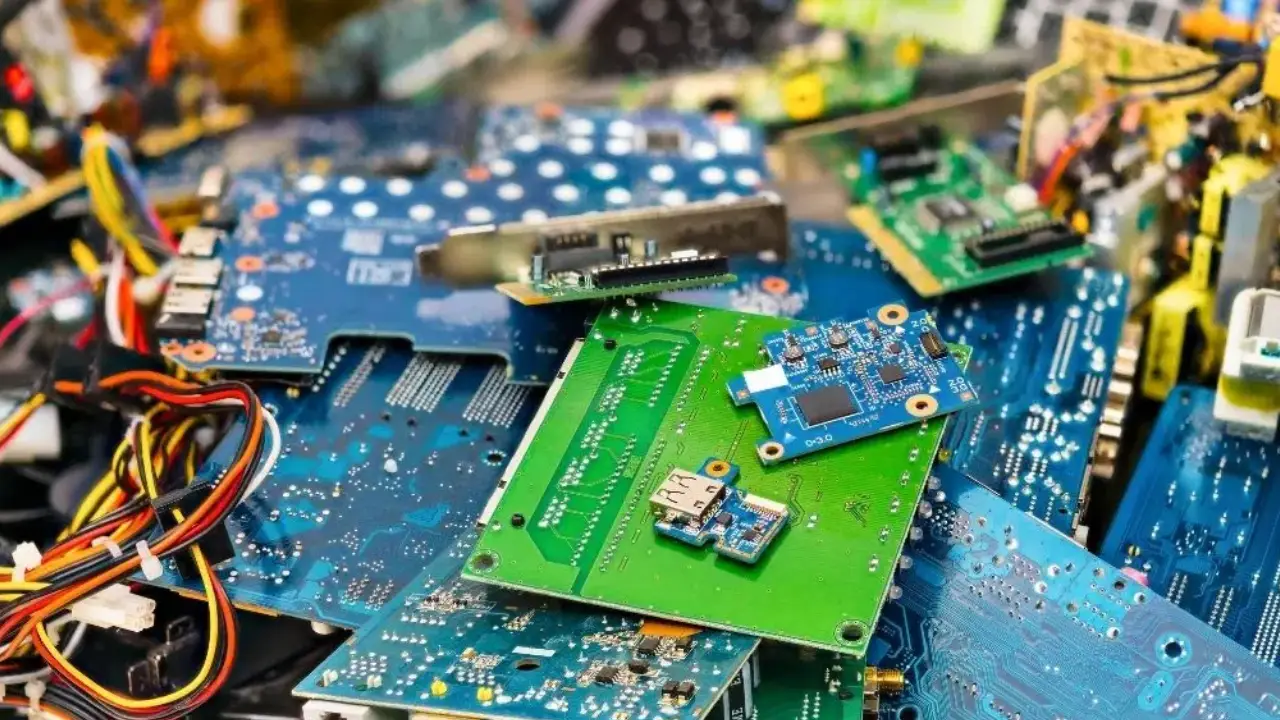
SRINAGAR: Old mobile phones, discarded computers, damaged televisions and other electronic appliances are increasingly becoming an environmental challenge in Jammu and Kashmir, but a lack of awareness and proper disposal facilities is leaving much of the electronic waste outside formal recycling systems.
A study published in the Journal of Informatics Education and Research has found that more than 80 per cent of respondents in Srinagar lacked full knowledge of electronic waste (e-waste) and its potential consequences for human health and the environment. The research also points to poor awareness of government regulations, limited access to recycling facilities and the widespread disposal of electronic products through informal channels.
The findings are based on a survey of 411 respondents drawn from households, universities, banks, information technology companies and government institutions in Srinagar. The researchers distributed 850 questionnaires, of which 430 were returned and 411 were considered suitable for analysis.
The study examines public understanding of e-waste, existing disposal practices, perceptions of health and environmental risks, awareness of government regulations and consumers’ willingness to contribute financially towards proper disposal.
The paper, From Hazard to Resource: Rethinking E-Waste Management in Srinagar, J&K, was authored by Mohammad Iqbal Khan, Syed Irfan Shafi and Shakeel Ul Rehman, all associated with the Department of Management Studies at the Islamic University of Science and Technology (IUST), Awantipora, Pulwama.
Awareness Gap
Although 93.9 per cent of respondents expressed concern about environmental issues, their understanding of electronic waste was considerably weaker.
Only 17.7 per cent of urban respondents and 19.4 per cent of rural respondents reported having full knowledge of e-waste. The remaining respondents either lacked awareness or did not fully understand its implications for health and the environment.
The gap extended to government regulations. Around 83 per cent of respondents reported having no knowledge of government rules governing e-waste management. Only one per cent believed that these regulations were being properly implemented, while the overwhelming majority considered them either poorly enforced or existing largely on paper.
The researchers argue that limited awareness of regulations undermines their implementation, making public education and stronger institutional oversight essential to an effective e-waste management system.
The study also found differences in how rural and urban respondents perceived health risks. While 62.1 per cent of urban respondents recognised health risks associated with electronic waste, the proportion among rural respondents was 38.1 per cent.
Disposal Practices
The study found that the absence of accessible recycling facilities is one of the major obstacles preventing residents from disposing of electronic waste responsibly.
Around 39.9 per cent of respondents said they did not recycle electronic products because recycling facilities were unavailable in their vicinity. Others cited a lack of information, time and space, while some considered recycling unnecessary.
The survey revealed that 28.5 per cent of respondents disposed of electronic waste in the same manner as ordinary household garbage. Only 10.9 per cent said they segregated e-waste before its final disposal, while 21.4 per cent preferred donating electronic products.
Even among those who separated their electronic waste, informal disposal remained common. The researchers found that 53 per cent relied on informal channels rather than seeking formal collection or recycling facilities.
Only 21 per cent of respondents reported using formal mechanisms for e-waste disposal, with the practice largely concentrated among information technology companies.
The study also found that 61.8 per cent of respondents did not know of any individual or institution that collected electronic waste for recycling, reuse or resale.
The researchers identified the informal sector, including local scrap dealers or kabaddiwalas, as a major channel through which discarded electronic products are handled in Jammu and Kashmir. While these collectors provide an informal route for disposing of unwanted goods, the absence of an organised system raises concerns about how electronic components are dismantled, recovered and ultimately discarded.
Health Risks
Electronic waste can contain hazardous substances, including lead, mercury, cadmium and chromium. When electronic devices are dismantled or processed without appropriate safeguards, these materials can contaminate the surrounding environment and expose workers and communities to potential health risks.
The study found that 78.8 per cent of respondents recognised that electronic products contain toxic components. However, 21.6 per cent remained unaware of their potential toxicity.
Around 52.8 per cent associated e-waste with negative health impacts, while 34.8 per cent said they lacked knowledge about its effects.
Although 69.8 per cent supported special treatment for hazardous electronic waste, the findings indicate that awareness of the need for safe disposal has not translated into widespread access to appropriate facilities.
The researchers warn that informal dismantling and disposal can expose people to hazardous substances and contribute to environmental pollution. They argue that proper collection, segregation and recycling systems are necessary to prevent electronic waste from becoming a long-term public health concern.
Willingness to Pay
Despite the gaps in awareness and disposal infrastructure, the study found that more than half of the respondents were willing to contribute financially towards proper e-waste management.
Around 53 per cent said they would pay an additional amount for the safe disposal of electronic products, while 37.5 per cent opposed additional payments.
The researchers view this willingness as an opportunity for the government and manufacturers to develop a sustainable financing mechanism without placing an excessive financial burden on consumers.
They recommend implementing Extended Producer Responsibility (EPR), under which manufacturers take responsibility for collecting and managing electronic products at the end of their useful life.
The study suggests that companies should introduce take-back programmes, allowing consumers to return old devices when purchasing new ones. Manufacturers should also establish recycling and service centres and encourage the repair, upgrading and reuse of electronic products.
Policy Gaps
The research argues that Jammu and Kashmir needs a comprehensive e-waste management framework supported by clearly defined institutional responsibilities, monitoring mechanisms and accessible collection facilities.
It recommends establishing dedicated collection centres across the region, supported by mobile vans and trucks that can collect discarded electronic products from households, offices, banks, universities and other institutions.
The researchers propose that the government initially operate these facilities before gradually allowing private enterprises to participate through public-private partnerships.
They also call for a coordinated administrative mechanism in which a designated government department oversees e-waste management, while municipal bodies and pollution control authorities support monitoring and enforcement.
Among the other recommendations are annual e-waste audits in government and private institutions, stricter enforcement of disposal regulations, and the introduction of penalties for violations.
The study also proposes involving self-help groups, youth organisations and small entrepreneurs in collection and recycling activities, arguing that e-waste management could create employment opportunities for young people.
Circular Economy
Beyond disposal, the researchers argue that reducing the generation of electronic waste requires extending the useful life of electronic products.
They recommend encouraging consumers to repair and upgrade existing devices rather than routinely replacing them, promoting second-hand markets and supporting the donation of functional electronic products.
Academic and technical institutions, meanwhile, have been urged to introduce skill-based courses related to electronic repair, recycling and waste management.
The study also proposes incorporating e-waste management into school curricula from Class 8 to Class 12, alongside public awareness campaigns in local languages.
It recommends that manufacturers provide clear instructions for the safe disposal of electronic products and move towards using recyclable materials and less hazardous components.
The researchers further suggest designating an annual E-Waste Management Day to encourage households, educational institutions and government departments to participate in collection drives and awareness activities.
Data Deficit
An important concern highlighted by the researchers is the absence of updated estimates of e-waste generation in Jammu and Kashmir.
Citing figures attributed to the J&K State Pollution Control Board, the paper notes that e-waste generation was estimated at 492.32 tonnes in 2009-10, with per capita generation of 0.054 kilograms.
For 2012-13, the estimated annual generation had increased to 3,260.4 tonnes, with per capita generation reaching approximately 0.26 kilograms.
The researchers point out that no comparable survey had been undertaken after 2013, leaving a significant gap in understanding the current scale of the problem.
Without updated estimates, the government lacks an adequate evidence base for determining the volume of electronic waste being generated, identifying collection requirements and planning recycling infrastructure.
The study acknowledges that its own findings are limited to Srinagar and do not establish the perceptions or disposal practices of consumers in Jammu and Ladakh. Nevertheless, it argues that the findings underline the need for a broader regional assessment and a coordinated policy response.
The central recommendation is to move away from dependence on informal disposal towards a formal system that brings together government agencies, manufacturers, consumers, academic institutions and private recyclers.