by Shahid Tariq Lone
The modern education system tends to prioritise formal academic degrees over practical competence. Consequently, society frequently undervalues the real-world problem-solving skills and experience demonstrated by skilled tradespeople in favour of institutional titles.
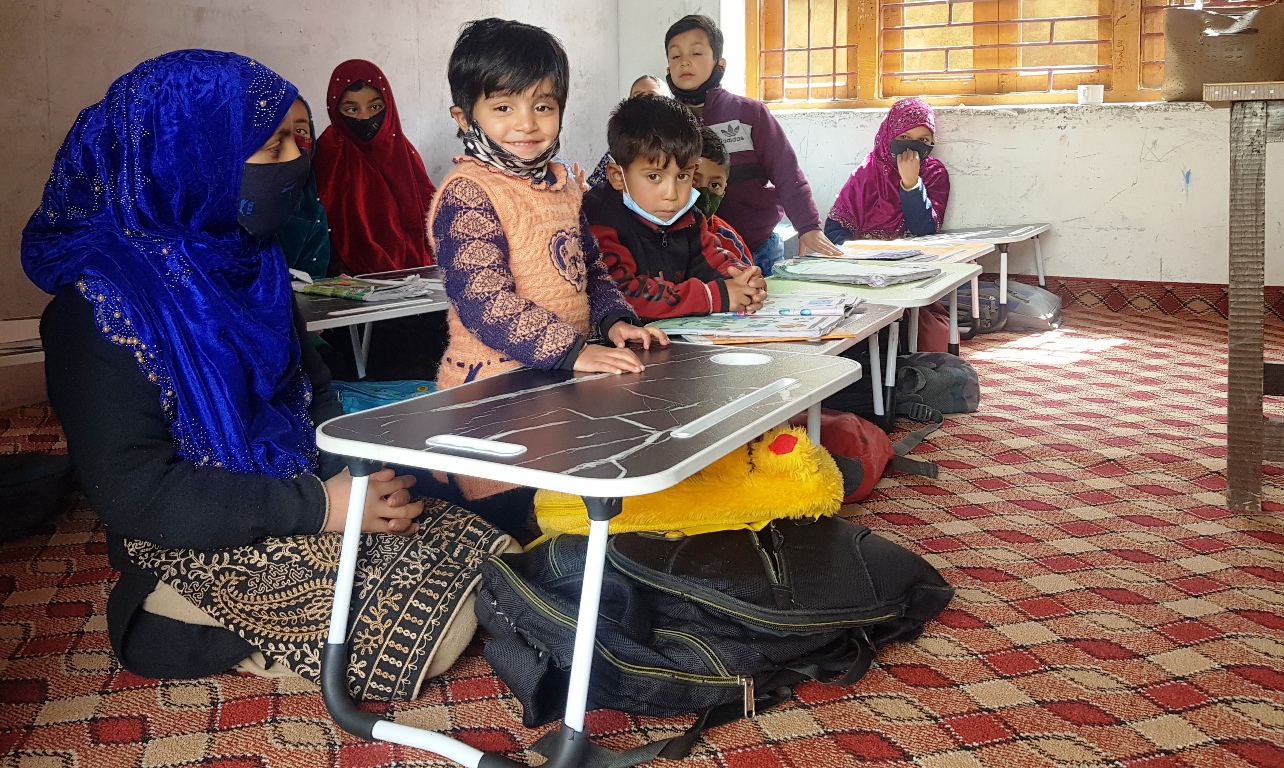
I have been troubled by a simple question for years: what, exactly, is education supposed to produce?
What is the purpose of education? What is the definition of success? We often say that academic success is not ultimately about money. Fair enough. But if money is not the measure, what is? Is it the contribution an academic makes? The impact he creates? The difference he makes in his field?
And what about money? Does it belong somewhere in the equation at the top, somewhere in the middle, or at the very bottom? You probably know better where it stands.
What, then, is the real purpose of education? A degree? A job? A designation? Intellectual growth? The ability to solve problems? The ability to create something?
These questions have been bothering me for years.
There is an argument, supported by economic research, that the relationship between education and earnings is much easier to measure than its relationship with what we loosely call excellence. Education can make earning a livelihood easier and more predictable. The difficulty is that education and excellence are not the same thing.
Excellence requires education, certainly, but it also requires the right environment, resources, mentorship, opportunity, practice, exposure, perseverance and, perhaps most importantly, the opportunity to apply what one has learned.
What are we, exactly, trying to produce through our education system?
People who know? People who can teach? People who can pass examinations? Or people who can do?
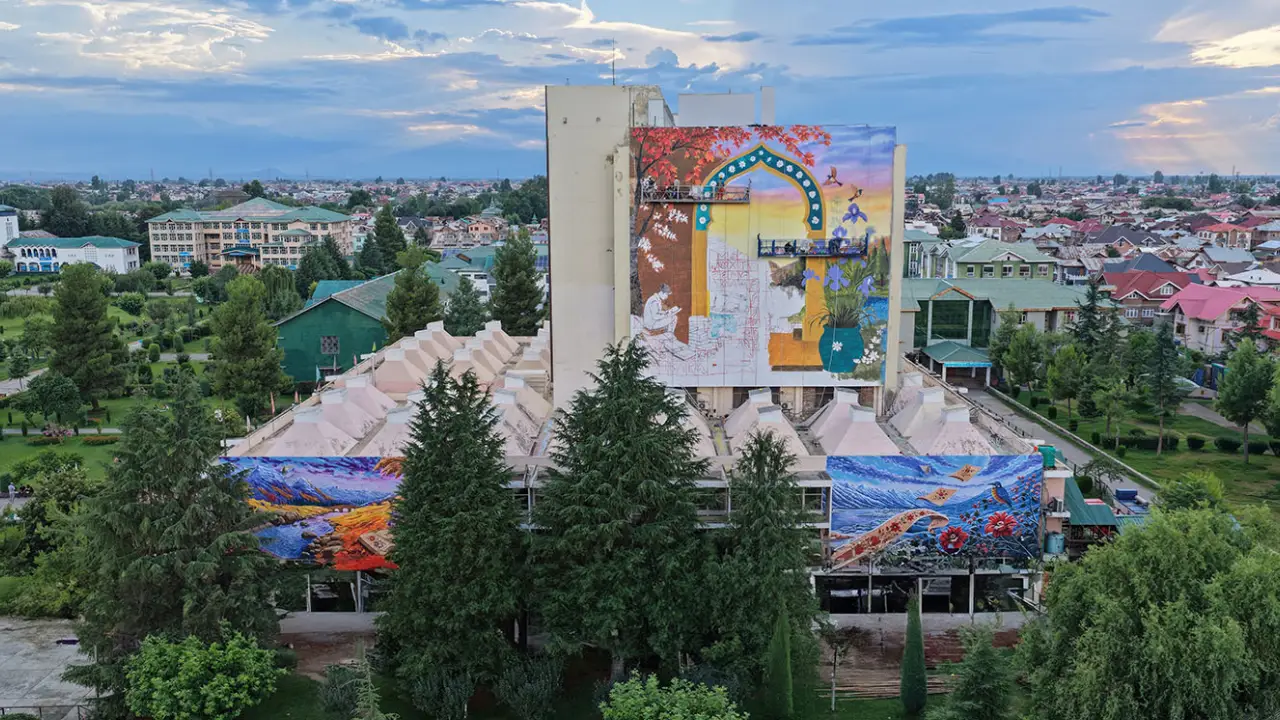
The question I once asked a university registrar
Years ago, when I was trying to join a state university’s teaching system, I remember asking a university registrar something that had been troubling me: How can a person head an entrepreneurship department for twenty years when he has never started a venture himself? How can someone teach sales when he has never earned money through selling?
How can someone teach science and technology without having contributed to, assisted in, or produced even a small breakthrough in the field?
These are uncomfortable questions. But they are legitimate questions. There is a fundamental difference between knowing a subject theoretically and engaging with it in the real world by solving problems.
And yet, in our system, we often treat academic qualification as if it automatically proves practical excellence.
The plumber who understands what the professor teaches
Consider a plumber I know: IK Dar. I would not claim that he understands fluid dynamics better than a trained academic. But in the practical world of, pressure, flow, pipe leaks and fittings , he has something that cannot be acquired merely by reading a textbook. Years of practice makes him the master when it comes to applying the knowledge.
The professor has a degree, designation, library, laboratory, research papers and institutional status. The plumber has his tools and the practical knowledge of many years. Yet the knowledge of the person with a toolbox is often treated as somehow inferior to the knowledge of the person with degree.
One person can spend decades solving real-world problems and still remain academically invisible. Another person can pass examinations, accumulate degrees and enter an institution, and suddenly acquire access to laboratories, libraries, grants, conferences, research infrastructure and institutional authority. The system has its reasons for requiring qualifications. Standards matter. Expertise matters. Formal education matters.
The harder question is whether formal qualification should become the only gateway to knowledge, opportunity and respect.
What about research?
The same question applies to research. Universities spend enormous amounts of public money on research projects, laboratories, conferences, publications and institutional infrastructure. Much of this work is valuable. Some of it may have long-term value that cannot be measured immediately.
But shouldn’t we also ask a simple question: What problem did that research solve? What changed because of it? Who benefited from it? Did it create a product? Did it improve someone’s life or create employment?
Research does not have to produce an immediate commercial product to be valuable. But research that never leaves the boundaries of papers, conferences and institutional reports deserves to be questioned just as much as research that produces tangible results deserves to be celebrated.
Sometimes I wonder whether a plumber solving ten real problems in a month or an electrician keeping an entire network functioning is creating more immediately visible value than a research project whose findings never reach the people who could use them. Asking these questions is not an attack on research. It is a plea for relevance.
The hierarchy of respect
We have built a social hierarchy around titles: Professor Sahib, Doctor Sahib, Principal Sahib. Even a VLW is a Sahib. Adding the word Sahib to a title confers an additional measure of respect, quietly elevating the social status of the people who hold these positions.
But what do we call the person carrying a toolbox ? The electrician? The plumber? The mechanic? The carpenter? The farmer.
They are often treated as though their work is somehow less intellectually demanding. But try solving a problem in the field without a textbook in front of you. Try diagnosing a leak when the entire system is hidden behind a wall. Try finding an electrical fault when there is no diagram. Try repairing a machine with limited tools. Try growing something successfully when the weather refuses to cooperate.
There is intelligence in all these tasks . There is knowledge.There is experience. There is excellence.
The truth is that our social system often rewards the designation more than the demonstrated ability. The respect attached to a degree and the position it brings does not always belong to the degree-holders alone. Their children, too, benefit socially from that status. Questions about their accomplishments may come later, if they are asked at all. For the person with a toolbox, however, the scales of esteem are not evenly balanced. This contradiction should make us uncomfortable.
What I am arguing
I am not against universities, professors or degrees. I am not against research. In fact, I deeply believe in education. But I am against the idea that credentials should automatically become a substitute for competence. A degree should open a door. It should not close the door on everyone who doesn’t have one.
(The author runs vallybazar website. Ideas are personal.)