SRINAGAR: A study of 903 people with a lifetime history of psychiatric morbidity in South Kashmir has found that nearly 30 per cent never sought help, while faith healers were the most common first point of contact for those who did. Published in July 2025, the research also found that fewer than 12 per cent of participants were referred for further psychiatric care, highlighting substantial gaps in mental health identification, treatment-seeking and referral pathways in the region.
The findings are reported in the study, Unveiling the mental health services gap: help-seeking and referral patterns in South Kashmir, India, published in Middle East Current Psychiatry, a journal published by Springer Nature. The research was conducted by Mansoor Ahmad Dar, Rehana Amin, Rasikha Rasool Khan, Nadeem Bashir, Syed Mohammad Zuhare and Aafaq Hyder, all affiliated with the Department of Psychiatry, Government Medical College Anantnag.
Care Gap
The researchers examined how people experiencing psychiatric morbidity first sought help, which agencies they approached and whether they were subsequently referred to psychiatric services. The study was undertaken against the backdrop of a substantial mental health treatment gap, particularly in low-resource settings, where sociocultural beliefs, limited awareness and inadequate access to specialist services can delay professional intervention.
The research was conducted over 10 months, from January to October 2024, at Government Medical College Anantnag, which caters to a population of approximately 2.67 million across five South Kashmir districts.
The researchers initially screened 4,890 consenting adults accompanying patients to different outpatient departments of the teaching hospital. Using the Mini-International Neuropsychiatric Interview (MINI), they identified 903 individuals with a lifetime history of psychiatric morbidity. These participants formed the study population and were interviewed about their sociodemographic characteristics, psychiatric history, first help-seeking agency and subsequent referrals.
The authors noted that the study was designed to examine the pathways through which people with mental health conditions enter, or fail to enter, the healthcare system. Understanding these pathways, they argued, could help identify delays in accessing appropriate treatment and inform possible interventions.
First Contact
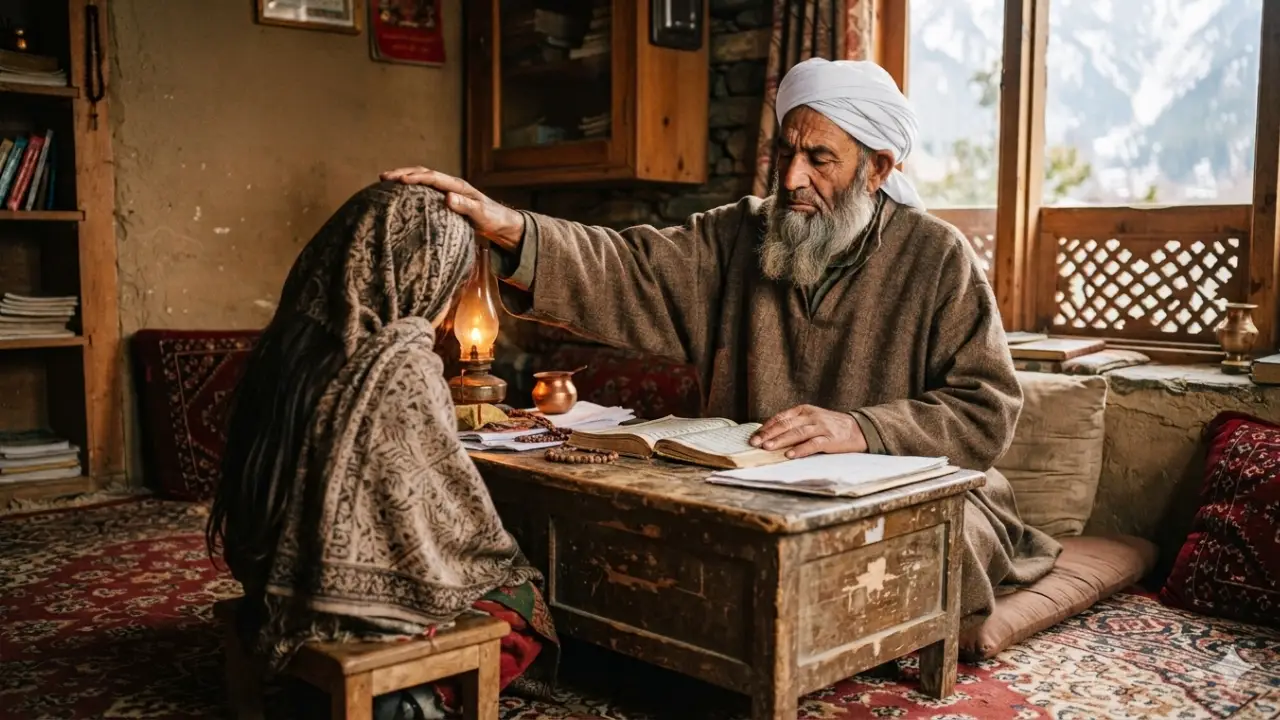
Faith healers emerged as the most common first source of help, accounting for 33 per cent of the 903 participants. General physicians, general practitioners and other specialists were approached by 27.35 per cent, while 29.79 per cent had never contacted a health facility for their psychiatric morbidity.
Only 57 participants, or 6.32 per cent, had consulted a psychiatrist in a private clinic. A further 32, or 3.54 per cent, had sought psychiatric care in a hospital setting.
The findings indicate that formal psychiatric services accounted for a relatively small share of first help-seeking contacts, with many individuals either approaching non-specialist providers or not seeking help at all.
The study also found a difference in the use of private and hospital-based psychiatric services between men and women. Among male participants, 8.48 per cent had consulted a private psychiatrist and 4.74 per cent a hospital-based psychiatrist. The corresponding figures for women were 3.54 per cent and 2.02 per cent.
The researchers found statistically significant associations between first help-seeking behaviour and gender, as well as rural-urban background. Age, employment status and family structure, however, did not show statistically significant associations.

Rural Divide
The study found that rural participants were more likely than their urban counterparts to approach faith healers as their first source of help. Among rural participants, 34.07 per cent sought help from faith healers, compared with 31.39 per cent of urban participants.
Urban participants, meanwhile, were more likely to have had no contact with a health facility. The proportion was 35.28 per cent among urban participants, compared with 26.15 per cent among rural participants.
The authors suggested that these patterns may reflect the influence of traditional and community-based practices, alongside differences in access to psychiatric infrastructure and the role of social and spiritual beliefs.
They also discussed how gender-related stigma, concerns about reputation, safety and family pressure may influence women’s help-seeking choices. However, these explanations were presented as possible interpretations of the observed patterns, rather than factors directly tested by the study.
The researchers cautioned that mental health distress does not necessarily translate into recognition of a psychiatric condition or a decision to seek professional care. Symptoms such as sadness, anxiety and irritability may be attributed to external stressors, family circumstances or spiritual imbalance, rather than being recognised as potentially treatable mental health conditions.
Disorder Patterns
Mood disorders constituted the largest diagnostic group among the 903 participants, affecting 376 people, or 41.63 per cent. Anxiety disorders accounted for 331 participants, or 36.65 per cent, while 96, or 10.63 per cent, had psychotic disorders.
The remaining 100 participants, or 11.07 per cent, were classified under other disorders, including suicidality and substance use disorders.
Help-seeking patterns varied across these diagnostic categories. Among those with mood disorders, 39.09 per cent approached faith healers, while 27.66 per cent sought help from general physicians. A further 25.80 per cent did not seek any help.
Among participants with anxiety disorders, 32.02 per cent did not seek treatment, while 30.82 per cent consulted general physicians and 28.09 per cent approached faith healers.
The study found that 23.75 per cent of participants with psychotic disorders had not sought psychiatric help. Faith healers were approached by 26.04 per cent of this group, while 18.75 per cent consulted general physicians.
The findings for suicidality and substance use disorders also revealed substantial reliance on non-specialist care or an absence of treatment. Among those with a history of suicidality, 42.11 per cent approached faith healers, while 17.54 per cent consulted a hospital psychiatrist. Among participants with substance use disorders, 52.18 per cent did not seek treatment, and 26.09 per cent were managed by general physicians.
The authors said the variations across diagnostic groups underline the need to understand how different psychiatric conditions are recognised and managed along the pathway to care.
Referral Failure
One of the study’s central findings was the low rate of referral for further psychiatric care. Of the 545 participants who had approached either physicians or faith healers as their first helping agency, only 64, or 11.97 per cent, were actually referred to a psychiatrist.
Faith healers referred 38 of the 298 people who approached them, representing a referral rate of 12.75 per cent. Physicians, general practitioners and other specialists referred 26 of the 247 people who approached them, a rate of 10.53 per cent.
The difference was statistically significant, with faith healers referring a slightly higher proportion of those who first sought their assistance.
Referral patterns also differed by diagnosis. Faith healers were more likely than physicians to refer people with mood disorders and anxiety disorders. The referral rate for mood disorders was 15.65 per cent among faith healers, compared with 10.57 per cent among physicians. For anxiety disorders, the respective rates were 12.05 per cent and 8.82 per cent.
For psychotic disorders, however, physicians referred a higher proportion of patients than faith healers, 16.6 per cent compared with 8 per cent. A similar pattern was observed for other disorders, including substance use and suicidality, although the difference was not statistically significant for this category.
The authors identified inadequate referral as a major concern, particularly when people with serious or complex psychiatric conditions remain outside specialist care. They also noted that primary care physicians may continue to manage some mild-to-moderate or first-episode conditions, partly reflecting the limited availability of psychiatrists.
Faith Healing
The study places faith healing at the centre of South Kashmir’s mental health help-seeking landscape. The authors observed that faith healers often occupy trusted positions in local communities and may be approached by people who understand psychiatric symptoms through spiritual or supernatural explanations.
They argued that cultural beliefs, stigma surrounding mental illness and the accessibility of faith healers may all contribute to their role as a first point of contact.
Rather than treating this established practice as separate from the healthcare system, the researchers suggested that traditional and faith healers could potentially be included in public health education initiatives, with appropriate monitoring of their practices.
The authors proposed that such engagement could offer a pragmatic approach to bridging treatment gaps in settings where specialist mental health resources are limited. They also highlighted the need for greater awareness of psychiatric symptoms and appropriate referral pathways, particularly for people experiencing severe mental illness.
The paper does not suggest that faith healing can replace psychiatric treatment. Its discussion instead focuses on how the existing help-seeking network might be better connected to professional mental health services.
Systemic Barriers
The researchers identified several possible barriers between experiencing psychiatric distress and seeking professional care, including stigma, fear of being labelled mentally weak, financial constraints, inadequate facilities, poor awareness and a low perceived need for treatment.
They also discussed the possibility that people may normalise emotional distress or regard it as a temporary phase, delaying recognition of a condition that may require professional intervention.
The paper notes that although more than 35 per cent of participants had sought some form of treatment, fewer than one in 10 had consulted a psychiatrist. Among those who did, private clinics were preferred over hospital-based psychiatric services.
The authors suggested that privacy, reduced stigma, flexible consultation hours and easier appointment systems may help explain the preference for private psychiatric clinics. They also noted that private consultations in Kashmir remain relatively affordable, despite the region’s low-income profile.
The researchers stressed that general physicians remain an important first point of contact, but the low referral rate raises questions about whether people who need specialist care are reaching it in time. They called for continued education and stronger collaboration between primary care providers and mental health professionals.
Study Limitations
The authors acknowledged that the study relied on participants’ recollections of past help-seeking experiences, making the findings vulnerable to recall bias.
Its hospital-based design also limits how far the results can be generalised to the wider population of South Kashmir, particularly people who do not visit hospitals. The researchers said a community-based study would have captured a broader cross-section of people with psychiatric morbidity.
The study also did not directly investigate why individuals chose particular sources of help. Factors such as cost, accessibility, stigma, awareness and personal preferences were not separately analysed, leaving important questions about the motivations behind help-seeking behaviour unanswered.
Reform Priorities
In their conclusion, the researchers called for improved mental health infrastructure, stronger referral systems and sustained public education to address the gap between psychiatric distress and professional care.
They said the findings point to the need for systemic reforms, particularly in underserved regions where shortages of psychiatrists and inadequate referral pathways can delay access to appropriate treatment.
The authors also recommended larger, prospective studies to examine how cultural, structural and demographic factors shape pathways to care and treatment outcomes. Such research, they argued, could help develop culturally sensitive interventions and improve referrals across public and private healthcare settings.