A SKUAST-K-led study has found that replacing 20 per cent of fishmeal with acid-fermented chicken intestinal waste improves rainbow trout growth, feed efficiency and health indicators, while maintaining 100 per cent survival.
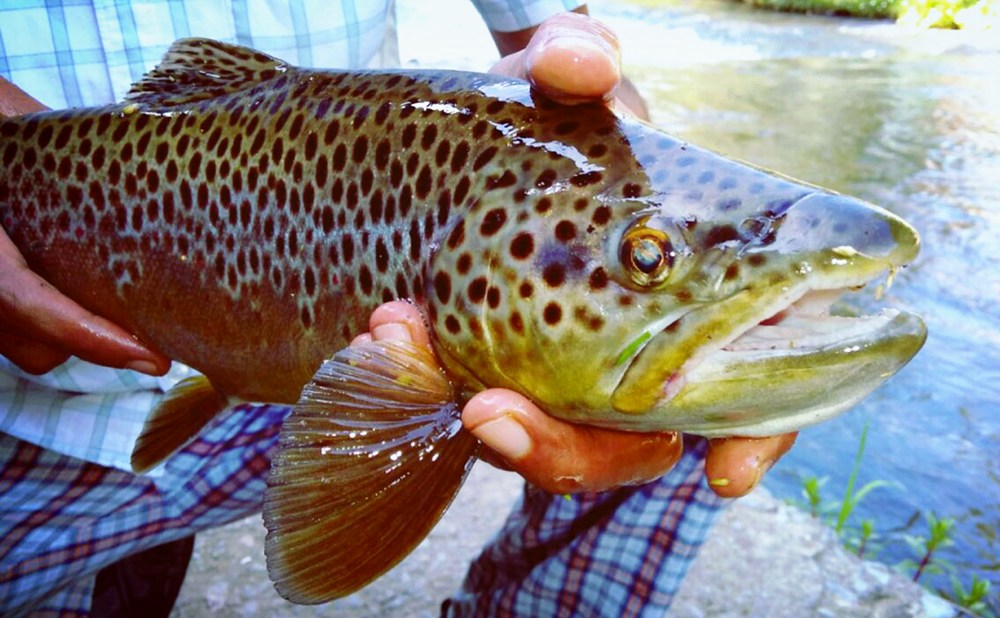
SRINAGAR: A 90-day experiment conducted by SKUAST-Kashmir found that replacing 20 per cent of conventional fishmeal with acid-fermented chicken intestinal waste silage significantly improved rainbow trout growth, feed efficiency and blood-health indicators, while maintaining 100 per cent survival across all experimental groups. The study recorded the highest final fish weight of 797.68 grams and the lowest feed conversion ratio of 1.73 at the 20 per cent replacement level. Researchers, however, found that increasing the replacement to 30 per cent led to a decline in growth performance and some health indicators.
The findings offer a potential alternative to conventional fishmeal, an expensive ingredient in aquaculture feed that depends heavily on marine resources. The researchers suggest that poultry-processing waste, when properly fermented and processed, could be converted into a valuable protein source for fish farming while addressing waste-management concerns.
The paper, Partial replacement of fishmeal with acid-fermented chicken intestinal waste silage in the diet of rainbow trout, Oncorhynchus mykiss fingerlings to ascertain growth, survival and haemato-biochemical parameters, was published in the journal Green Technology, Resilience, and Sustainability, published by Springer Nature, in 2026.
The research team comprised seven authors from institutions in India and Bangladesh. The research was conducted by a team led by Ubaid Shakeel Wani and Faisal Rashid, with contributions from researchers at Sher-e-Kashmir University of Agricultural Sciences and Technology of Kashmir (SKUAST-K), the ICAR-Central Institute of Fisheries Education, Mumbai, Chattogram Veterinary and Animal Science University, Bangladesh, and Rani Lakshmi Bhai Central Agricultural University, Jhansi.
Ubaid Shakeel Wani, Oyas Ahmad Asimi and Kawkabul Saba are affiliated with the Division of Fish Nutrition and Biochemistry, Faculty of Fisheries, SKUAST-K, Rangil, Jammu and Kashmir. Faisal Rashid is associated with the Division of Post-Harvest Technology, Faculty of Fisheries, SKUAST-K, while Mansoor Ahmad Rather works in its Division of Aquaculture. Gowhar Iqbal is affiliated with the ICAR-Central Institute of Fisheries Education, Mumbai. Khandakar Zakir Hossain is from the Department of Marine Bioresource Science, Faculty of Fisheries, Chattogram Veterinary and Animal Science University, Bangladesh, while Girija Behere is affiliated with Rani Lakshmi Bhai Central Agricultural University, Jhansi, Uttar Pradesh.
Growth Results
The experiment established that replacing one-fifth of the fishmeal in rainbow trout diets with acid-fermented chicken intestinal waste silage produced better growth than conventional feeding and the other replacement levels tested.
At the end of the 90-day trial, trout receiving the 20 per cent replacement diet recorded an average final weight of 797.68 grams, compared with 677.35 grams in the control group, which received conventional fishmeal without chicken waste silage.
The fish in the 20 per cent replacement group recorded an average body-weight gain of 576.25 grams, against 456.2 grams in the control group. Their weight-gain percentage was 260.25 per cent, compared with 206.27 per cent in the control group.
The specific growth rate, another important measure of fish development, was also highest in the 20 per cent replacement group at 1.15, compared with 1.01 in the control group.
The researchers reported that the differences in growth performance among the dietary treatments were statistically significant.
The study tested four feeding formulations: a control diet containing no chicken intestinal waste silage, and three experimental diets in which 10, 20 and 30 per cent of fishmeal was replaced.
The 20 per cent replacement group consistently outperformed the other groups, establishing it as the most effective level under the experimental conditions.
Feed Efficiency
The researchers also found that the 20 per cent replacement diet improved the efficiency with which rainbow trout converted feed into body weight.
The feed conversion ratio (FCR) was 1.73 in the 20 per cent replacement group, compared with 2.18 in the control group. A lower FCR indicates that less feed is required to produce a unit of fish weight, making it an important indicator of feed efficiency and production economics.
The 10 per cent and 30 per cent replacement groups recorded FCR values of 1.95 and 1.91, respectively.
The paper also reports that protein efficiency ratio and feed efficiency ratio were significantly higher in the 20 per cent group.
The researchers observed that the benefits did not continue to increase with higher inclusion levels. At 30 per cent replacement, the final average weight declined to 738.62 grams, while body-weight gain fell to 518.55 grams.
Discussing the results, the researchers noted that higher inclusion levels could exceed the fish’s capacity to digest and metabolise poultry-derived proteins efficiently. They also suggested that palatability issues or reduced feed intake might contribute to the decline.
Blood Health
The experiment examined the effects of the alternative feed on the haematological parameters of rainbow trout, including haemoglobin, red blood cell count, white blood cell count and haematocrit.
The results showed that haemoglobin levels increased from 6.22 grams per decilitre in the control group to 9.18 grams per decilitre in the 20 per cent replacement group.
Similarly, the red blood cell count rose from 1.10 million per cubic millimetre in the control group to 1.45 million in the 20 per cent group.
Haematocrit, which measures the proportion of blood volume occupied by red blood cells, increased from 31.40 per cent to 37.32 per cent.
These improvements were not sustained at the 30 per cent replacement level. Haemoglobin fell to 6.26 grams per decilitre, while the red blood cell count declined to 1.13 million per cubic millimetre. Haematocrit also dropped to 30.12 per cent.
The study found that white blood cell counts declined across the experimental groups, including at the 20 per cent replacement level. The researchers cautioned against interpreting this decline as direct evidence of immune suppression, noting that white blood cell levels in fish can vary with physiological and environmental conditions.
They suggested that the increase in haemoglobin and red blood cell counts up to the 20 per cent level could be associated with the nutritional composition of chicken intestinal waste silage, potentially including iron and other micronutrients necessary for red blood cell formation.
Liver Indicators
The study also examined changes in serum biochemical parameters to understand the effects of the alternative feed on fish metabolism and liver-related indicators.
The total protein concentration increased from 2.27 grams per decilitre in the control group to 3.75 grams per decilitre in the 20 per cent replacement group. Glucose levels also increased, from 1.86 to 2.51 millimoles per litre.
The researchers recorded a decline in two liver-associated enzymes, alanine aminotransferase (ALT) and aspartate aminotransferase (AST), as the inclusion of chicken intestinal waste silage increased up to the 20 per cent level.
ALT declined from 33.10 units per litre in the control group to 25.04 units per litre in the 20 per cent group. AST fell from 76.16 to 61.01 units per litre.
The researchers interpreted these reductions as suggesting a potential hepatoprotective effect of the silage.
However, the experiment also identified an increase in cholesterol and triglyceride concentrations, particularly at the 30 per cent replacement level.
Cholesterol increased from 27.09 milligrams per decilitre in the control group to 35.45 milligrams in the 20 per cent group and 42.19 milligrams per decilitre in the 30 per cent group.
Triglycerides rose from 15.23 milligrams per decilitre in the control group to 22.06 milligrams at 20 per cent replacement, reaching 39.15 milligrams per decilitre at 30 per cent.
The researchers attributed the increase potentially to the higher lipid content of chicken intestinal waste silage. They said the long-term implications of elevated lipid levels for fish health required further investigation.
Waste Conversion
The research explored the possibility of converting poultry-processing waste into a useful ingredient for aquaculture feed.
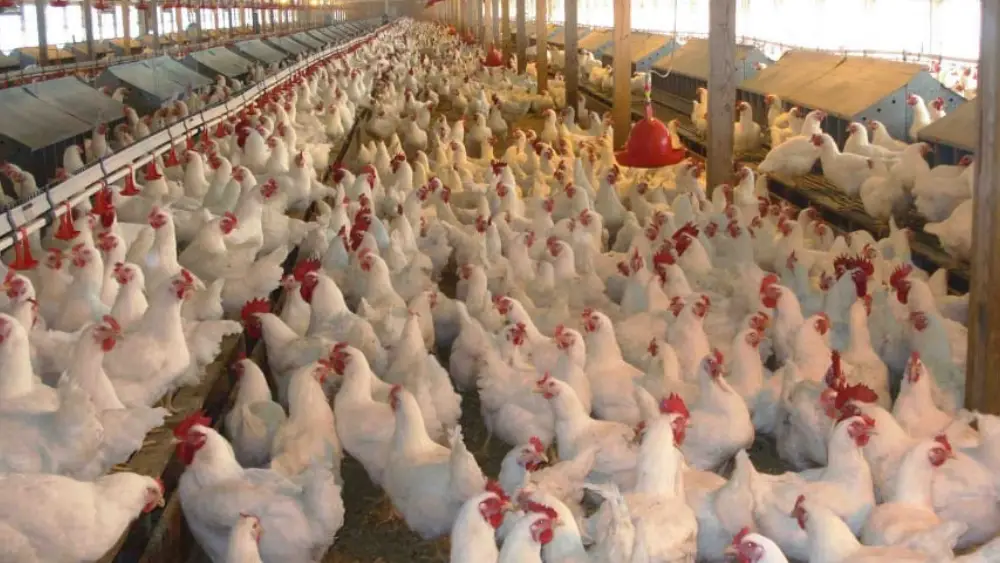
Chicken intestines, which are generated as a by-product of poultry slaughter, contain proteins and lipids that can potentially be utilised in animal nutrition. The researchers observed that their conversion into silage could address two concerns simultaneously: the disposal of poultry waste and the growing dependence of aquaculture on conventional fishmeal.
For the experiment, chicken intestines were collected from a nearby market immediately after slaughter. The tissues were cleaned, chopped and stored in a freezer until processing.
The researchers added formic acid at three per cent by weight to the chopped material and maintained the mixture at a pH of four. Under acidic conditions, enzymes in the chicken waste break down the tissues, producing a nutrient-rich liquid material.
The silage was subsequently dried in a hot-air oven at 30 degrees Celsius until a constant weight was achieved.
Its nutritional composition was assessed through laboratory analysis. The dried material contained 30.01 per cent crude protein, 13.2 per cent fat, 3.8 per cent ash and 12.3 per cent moisture.
The processed silage was then incorporated into experimental feed formulations, replacing different proportions of fishmeal.
The researchers said the fermentation process could help conserve nutrients, improve digestibility and extend the shelf life of the material.
Experimental Design
The experiment was conducted at the hatchery unit of the Division of Aquaculture, Faculty of Fisheries, SKUAST-K, at Rangil in Ganderbal district.
The research work was carried out over 90 days, from April 15 to July 14, 2023.
A total of 205 rainbow trout fingerlings were initially procured from the Trout Fish Farm at Khag in Budgam. After a seven-day acclimatisation period, 160 uniformly weighed fingerlings were selected for the experiment.
They were randomly distributed among 16 fibre tanks, each with a capacity of 100 litres. Each tank contained 10 fingerlings, with four experimental treatments and four replicates for each treatment.
The four diets were formulated to contain approximately 40 per cent crude protein. The control diet contained no chicken intestinal waste silage, while the other three diets replaced 10, 20 and 30 per cent of fishmeal with the processed poultry waste product.
The fish were fed twice daily, at 9 am and 5 pm, at a rate of five per cent of their body weight. Uneaten feed and waste were removed through siphoning, and approximately 50 per cent of the water was exchanged daily.
Water quality parameters, including temperature, pH and dissolved oxygen, were monitored throughout the experiment.
The researchers reported that these parameters remained within acceptable ranges for rainbow trout culture during the trial.
The collected data were analysed using R-language and SPSS version 23. One-way analysis of variance (ANOVA), followed by Duncan’s multiple range test, was used to establish statistically significant differences between the treatments.
Survival Rate
One of the notable findings was that all experimental groups recorded 100 per cent survival during the 90-day trial.
This included the group in which 30 per cent of conventional fishmeal was replaced with chicken intestinal waste silage.
The study therefore found no difference in survival rates among the four dietary treatments, although growth and several physiological indicators varied significantly.
The researchers attributed the high survival rates potentially to the fermentation and preservation processes used during silage preparation, which may have reduced pathogen loads.
They also reported that the inclusion of the processed material did not adversely affect water quality during the experiment.
Sustainable Feed
The researchers placed their findings in the context of the wider challenge facing aquaculture, which increasingly depends on alternative protein sources as conventional fishmeal becomes more expensive and marine resources face growing pressure.
Traditional trout feeds rely heavily on fishmeal sourced from marine resources. According to the paper, the rising cost and limited availability of these ingredients have intensified the search for alternatives that are economically viable and environmentally responsible.
Plant proteins, microorganisms and insect-derived ingredients have been explored as substitutes. The researchers argue that poultry by-products offer another possible source of protein.
They described the approach as consistent with circular economy principles, under which materials previously regarded as waste are converted into useful products.
The paper concludes that acid-fermented chicken intestinal waste silage can replace fishmeal at an inclusion level of up to 20 per cent without compromising rainbow trout growth, feed efficiency, water quality or survival under the conditions tested.
However, the authors emphasised that further research would be necessary before the approach could be adopted on a larger scale.
They specifically called for investigations into the long-term effects on fish physiology, the nutritional quality of the fish flesh and the economic feasibility of the alternative feed.