Researchers from SKUAST-K and Saudi Arabia’s University of Tabuk found that compounds from two Himalayan medicinal plants showed anticancer activity against lung and prostate cancer cells in laboratory experiments, warranting further investigation.
SRINAGAR: Researchers from Sher-e-Kashmir University of Agricultural Sciences and Technology of Kashmir (SKUAST-K) and the University of Tabuk in Saudi Arabia found that two natural compounds from Himalayan plants showed significant activity against lung and prostate cancer cells in laboratory experiments.
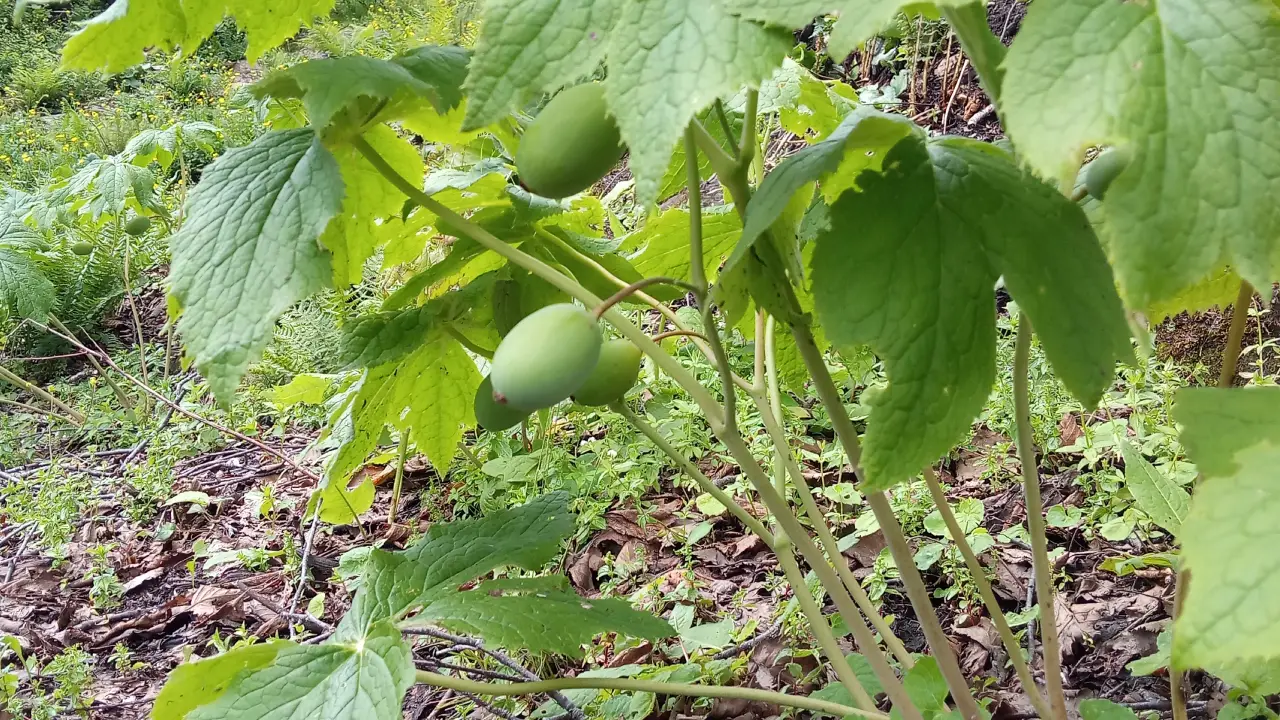
Podophyllotoxin, extracted from Himalayan mayapple, proved particularly potent, inhibiting cancer cells at concentrations at which the commonly used chemotherapy drug doxorubicin was less effective.
The findings offer a promising direction for further cancer research using compounds found in Himalayan medicinal plants. However, the researchers emphasised that the results are preliminary and that further studies, including experiments in living organisms, are needed before the compounds can be considered for cancer treatment development.
The research, Targeting IL-1R1 and Androgen Receptor Using Natural Compounds from Aconitum heterophyllum and Podophyllum hexandrum: An In Silico and In Vitro Study, was published in October 2026 in Frontiers in Pharmacology, an international scientific journal.
The research was conducted by five authors: Mir Muskan Un Nisa, Parvez Ahmad Sofi, Peerzada Ishtiyak Ahmad, Rashid Mir and Talib Bashir Bhat.
Muskan, Parvez and Peerzada are affiliated with the Division of Forest Products and Utilisation, Faculty of Forestry, Sher-e-Kashmir University of Agricultural Sciences and Technology of Kashmir (SKUAST-K), Srinagar. Rashid Mir is affiliated with the Prince Fahd Bin Sultan Chair for Biomedical Research, Department of Medical Laboratory Technology, Faculty of Applied Medical Sciences, University of Tabuk, Saudi Arabia. Talib Bashir Bhat is affiliated with the Division of Natural Resource Management, Faculty of Forestry, SKUAST-K, Srinagar.
Three Compounds
The researchers examined three compounds extracted from two Himalayan medicinal plants: atisine and linoleic acid, obtained from the tuberous roots of Aconitum heterophyllum, commonly known as atis, and podophyllotoxin, extracted from the fruits of Podophyllum hexandrum, known as Himalayan mayapple.
The study tested their effects on two established human cancer cell lines: A549, representing lung cancer, and LNCaP, representing prostate cancer. The researchers also compared the compounds with doxorubicin, a widely used chemotherapy drug, to assess their relative effectiveness in killing cancer cells.
Strong Results
Podophyllotoxin emerged as the most effective of the three natural compounds. The researchers found that it could inhibit 50 per cent of cancer cell viability at a concentration of just 0.04 micromolar in both lung and prostate cancer cells.
This compared favourably with doxorubicin, which required concentrations of 0.25 micromolar for lung cancer cells and 0.22 micromolar for prostate cancer cells to achieve the same level of inhibition.
In simple terms, the laboratory experiments indicated that podophyllotoxin could achieve the same inhibitory effect at a substantially lower concentration than the reference chemotherapy drug.
The study measured this using a test known as IC50, which indicates the concentration of a substance required to reduce the viability of cancer cells by half. A lower IC50 generally indicates greater potency in that particular laboratory test.
Atisine also demonstrated anticancer activity, although it was less potent than podophyllotoxin. Its IC50 values were 2.1 micromolar against lung cancer cells and 2.3 micromolar against prostate cancer cells.
Linoleic acid, on the other hand, showed comparatively weak activity, with an IC50 exceeding 100 micromolar in both cancer cell lines.

Lasting Effects
To determine whether the compounds could also prevent cancer cells from multiplying over a longer period, the researchers conducted another experiment known as a colony formation assay.
In this test, surviving cancer cells were allowed to grow over seven to ten days to see whether they could multiply and form colonies. This helped establish whether the compounds had effects beyond their immediate ability to kill cells.
Podophyllotoxin again produced the strongest results, substantially reducing the number and size of colonies formed by both lung and prostate cancer cells.
Atisine also reduced colony formation, although its effects were moderate compared with podophyllotoxin. Linoleic acid produced only a slight reduction, which was not statistically significant.
The researchers concluded that podophyllotoxin had the strongest long-term ability to suppress the multiplication of cancer cells, followed by atisine.
Molecular Targets
Beyond laboratory testing, the researchers investigated how the compounds might interact with two important biological receptors associated with cancer progression.
The first, known as Interleukin-1 Receptor Type 1 (IL-1R1), plays a role in inflammation. Prolonged inflammation can create conditions that encourage tumour growth, the development of new blood vessels supplying tumours, and the spread of cancer.
The second is the Androgen Receptor (AR), a protein that responds to male hormones and plays a central role in the development and progression of prostate cancer.
The researchers explored whether the natural compounds could interact with these receptors and potentially interfere with the biological processes that support cancer development.
Their computer-based analysis suggested that podophyllotoxin had the strongest interaction with the androgen receptor, while atisine showed the strongest predicted interaction with IL-1R1.
The researchers explained that these interactions could make the compounds useful in investigating two different aspects of cancer progression: hormone-driven growth and inflammation-related tumour development.
Computer Analysis
The study also employed advanced computer-based techniques to examine how the compounds might behave when interacting with proteins inside the human body.
One of these techniques, known as molecular docking, predicts how a chemical compound fits into a particular protein, rather like a key fitting into a lock. It helps researchers estimate whether a compound could attach to a biological target and how strongly it might bind.
Another technique, molecular dynamics simulation, was used to observe how these interactions might behave over time. The researchers conducted simulations lasting 100 nanoseconds, equivalent to one ten-billionth of a second, to examine whether the compounds remained stably attached to their respective targets.
The analysis indicated stable interactions between podophyllotoxin and the androgen receptor, and between atisine and IL-1R1.
The researchers also examined 133 biological targets shared between the compounds and cancer-related databases. They identified several important genes, including SRC, EGFR and AKT1, which are associated with cellular growth, survival and cancer-related signalling.
Further analysis identified the PI3K-Akt pathway, among others, as a significant biological pathway potentially influenced by the compounds. Such pathways regulate how cells grow, survive and respond to signals.
Drug Potential
The researchers also assessed whether the compounds possessed properties that could make them suitable for eventual development into medicines.
This assessment, known as ADMET analysis, examines how a potential drug might be absorbed, distributed through the body, metabolised, eliminated and whether it could produce toxic effects.
Both atisine and podophyllotoxin showed encouraging predicted drug-like properties. However, the analysis also identified limitations that would need to be addressed before either compound could be developed into a treatment.
For instance, the researchers found that both compounds had predicted low absorption through the human intestine, which could restrict their effectiveness if administered orally.
Podophyllotoxin also showed high binding to blood proteins, potentially reducing the amount of the compound available to act freely in the body.
The paper notes that the known clinical application of podophyllotoxin has historically been constrained by systemic toxicity and a narrow therapeutic range. The researchers suggest that modifications to its chemical structure and improved drug-delivery methods could help address some of these challenges.
Further Research
The researchers have cautioned that the findings should not be interpreted as evidence that either compound can currently treat cancer in humans.
The experiments were conducted using cancer cells grown under laboratory conditions, and the proposed molecular mechanisms have not yet been directly confirmed through additional biological tests.
The paper specifically acknowledges that techniques such as quantitative real-time polymerase chain reaction (qRT-PCR), Western blotting, ELISA and RNA sequencing were not undertaken to establish how the compounds affect the predicted molecular targets.
The researchers have recommended further experiments involving cells and living organisms to establish whether the observed effects can be reproduced under biological conditions and whether the compounds are safe and effective.
In its conclusion, the study describes atisine and podophyllotoxin as promising preliminary candidates for further investigation and optimisation in the development of potential anticancer drugs.