Genome analysis of 142 rice varieties identifies cold-tolerance genes and distinctive grain-quality traits in Kashmir’s indigenous rice, opening avenues for climate-resilient crop breeding

SRINAGAR: Kashmir’s traditional rice varieties carry genetic signatures linking them to temperate japonica rice from Northeast Asia, while many modern varieties cultivated in the region are more closely associated with indica lineages from subtropical India, according to a new genomic study.
The research suggests that traditional rice adapted to the Himalayan highlands likely after 1500 BCE, carrying genetic variations associated with cold tolerance. It also identifies distinctive genetic profiles linked to grain quality, aroma and other agricultural traits, providing a scientific resource for developing rice varieties better suited to changing climatic conditions.
The study, Re-sequencing 142 rice genomes reveals the fine-scale population structure and phylogenetic affinities of landraces of Kashmir Valley: Evidence from domestication and adaptive signatures, was published in 2026 in The Plant Genome, a journal published by Wiley Periodicals LLC on behalf of the Crop Science Society of America.
The research was led by Asif Bashir Shikari and V Shasi Kiran Reddy, who contributed equally to the study. Both are affiliated with the Division of Genetics and Plant Breeding at Sher-e-Kashmir University of Agricultural Sciences and Technology of Kashmir (SKUAST-K), Wadura Campus, Sopore.
Besides, the study was authored by Raheel Shafeeq Khan and Noor ul-Ain of SKUAST-K’s Division of Genetics and Plant Breeding, Wadura Campus; Gazala H Khan, Najeeb-ul-Rehman Sofi and GA Parray of the university’s Mountain Research Centre for Field Crops, Khudwani Campus, Anantnag; Zahoor A Dar of its Dryland Agricultural Research Station, Srinagar; and Nazir A Ganai of the Division of Agricultural Biotechnology, Shalimar Campus, Srinagar.
The other authors were RK Salgotra and Manmohan Sharma of the School of Biotechnology at Sher-e-Kashmir University of Agricultural Sciences and Technology of Jammu, Chatha Campus, Jammu, and AK Singh of the Division of Genetics at the Indian Agricultural Research Institute, New Delhi.
Genetic Origins
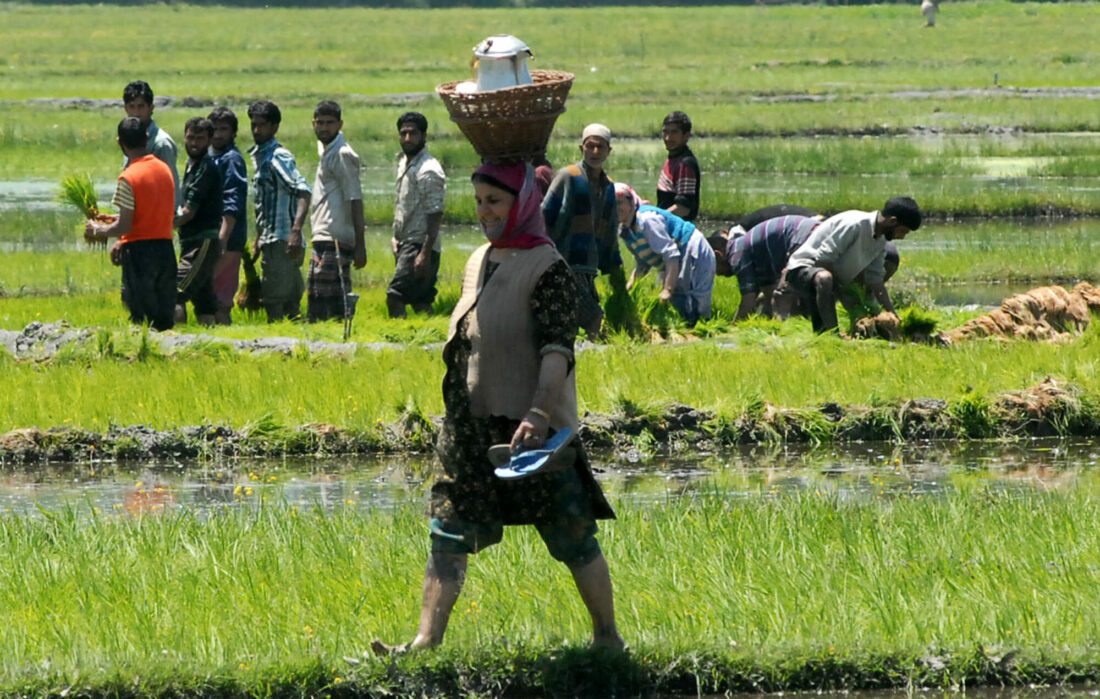
The findings provide a genetic perspective on the history of rice cultivation in Kashmir, where archaeological evidence has established the crop’s antiquity but left important questions about its origins and arrival routes unresolved.
The researchers examined 142 rice germplasm lines, including traditional landraces, modern varieties, breeding material and accessions from other regions. They compared the genetic data with the international 3000 Rice Genomes Project database to establish how Kashmir’s rice varieties relate to the wider diversity of cultivated rice.
The analysis found that Kashmir’s traditional landraces predominantly carry genetic signatures associated with temperate japonica, a group adapted to cooler environments. The researchers traced these affinities to Northeast Asia and proposed that rice reached the Himalayan highlands through trans-Himalayan routes.
In contrast, many modern varieties cultivated in the region showed stronger associations with indica-derived genetic lineages originating in subtropical India.
The distinction is important because the genetic history of a crop can help explain how it adapted to local environmental conditions. It also provides breeders with information about which inherited traits may be useful when developing varieties for specific climates.
The researchers, however, do not claim to have established an exact date or definitive route for rice’s arrival in Kashmir. Their proposed chronology is a genetic inference that must be considered alongside archaeological evidence.
Genome Mapping
To investigate these relationships, the team used whole-genome re-sequencing, a technique that examines genetic information across an organism’s genome rather than focusing on a limited number of markers.
The study generated approximately 820.28 gigabases of high-quality sequencing data from the 142 rice genotypes. The average sequencing depth was 13.6-fold, and stringent filtering reduced the initial set of variants to 3,939,768 high-confidence single-nucleotide polymorphisms, or SNPs.
SNPs are variations at individual positions in DNA. Comparing them across plants allows researchers to identify genetic similarities, distinguish populations and investigate variations associated with particular traits.
The team used these variations to map the relationships between traditional Kashmir landraces, modern regional varieties and rice populations from elsewhere in the world. The researchers also examined 21 genes associated with 12 traits, including domestication, grain quality, plant architecture and adaptation to environmental stress.
The resulting dataset constitutes the first comprehensive genomic resource of its kind for rice germplasm from the Kashmir Valley, according to the authors. It can support further investigations into the genetic basis of traits important to farmers and consumers.
Two Lineages
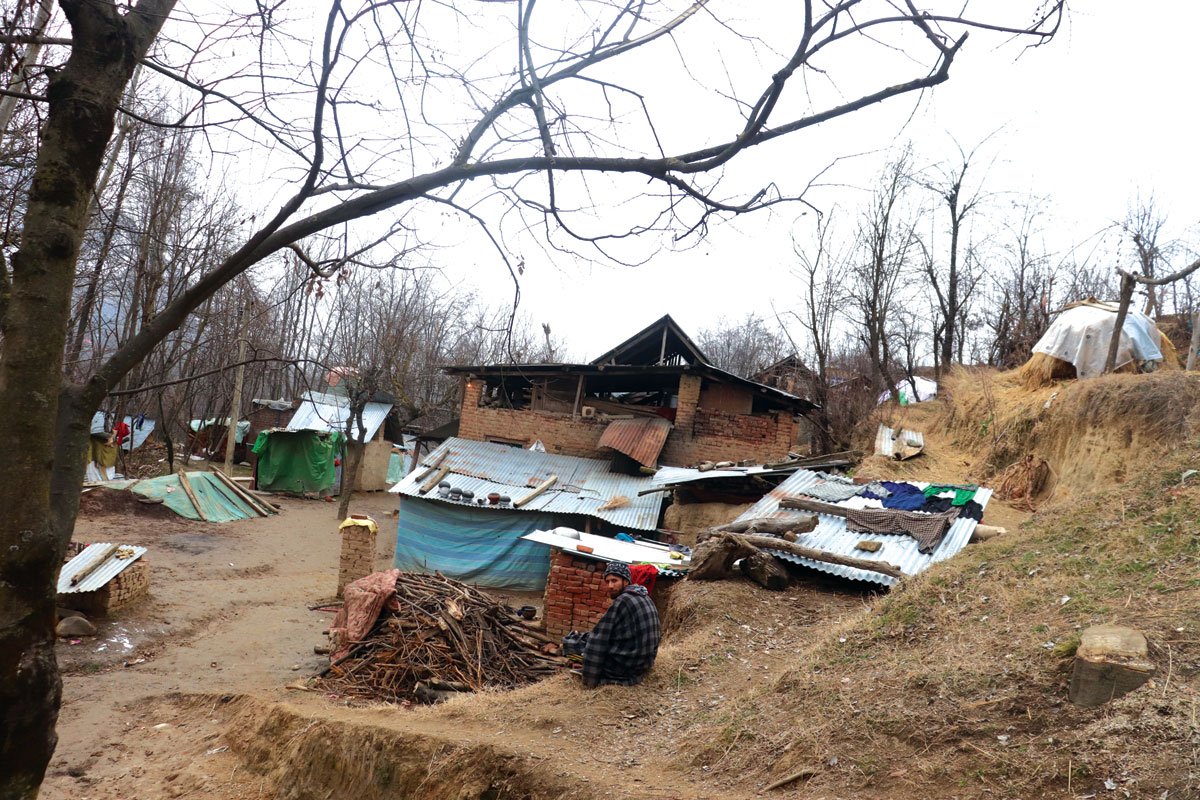
The population analysis revealed two major genetic groups, alongside varieties showing mixed ancestry. The researchers identified a broad division corresponding to japonica- and indica-related genetic backgrounds.
Within the japonica group, Kashmir’s traditional landraces were associated with temperate-adapted material. Varieties such as Mushq Budji, Kamad, Begum, Bata Baber and Nun Beoul featured among the traditional lines examined in the study.
Some landraces, including Ram Hall, Kew, Zag, Sig Safed, Ratta Ranjha, PRC-1 and Kaw Kreer, were placed in a subgroup with evidence of mixed japonica ancestry. Other traditional varieties, including Mushq Budji, Kamad, Begum, Bata Baber and Nun Beoul, clustered with temperate japonica references.
The indica-related group contained a more diverse collection of improved varieties, traditional material and breeding lines. Varieties associated with intermediate or subtropical parts of Jammu and Kashmir, including Bansali, Daggu and Giza-14, appeared in this group alongside modern varieties.
The researchers said the two major gene pools were genetically distinct but partially interconnected. This combination of differentiation and shared ancestry could help breeders select parents for crossing, retain useful genetic diversity and design conservation strategies for traditional varieties.

Cold Tolerance
One of the study’s most significant findings concerns the genetic characteristics that allow rice to grow in cooler environments.
The researchers examined five genes associated with cold tolerance: HAN1, CTB4a, COLD1, bZIP73 and COLD6. These genes contain variations previously associated with rice adaptation to low temperatures.
Most Kashmir landraces examined in the study, along with the reference variety Koshihikari, carried the favourable alleles at the five selected cold-tolerance loci. Some traditional varieties showed alternative alleles at one or two of these locations.
The findings suggest that the ability of Kashmir’s traditional rice to withstand cooler conditions is reflected in its genetic makeup, rather than being merely a consequence of farming practices or environmental exposure.
The researchers also identified diversity at genes associated with grain characteristics and consumer preferences. These included Wx, which influences starch properties and cooking characteristics; ALK, associated with starch gelatinisation; and BADH2, linked to aroma.
Such variation could be valuable in breeding programmes seeking to combine cold tolerance with desirable grain quality. The study does not, however, establish that every landrace performs better than modern varieties under field conditions; the genetic findings identify useful candidates for further evaluation.
Historical Evidence
The researchers placed their genetic findings alongside the archaeological record of rice cultivation in Kashmir.
Earlier archaeological studies have reported evidence of rice in the region during the second millennium BCE. The paper discusses evidence from Gufkral, where rice cultivation has been reported around 1700 BCE, and from Burzahom, where rice appears in later archaeological layers, around 1000 BCE.
The authors argue that the genetic affinity between Kashmir’s traditional landraces and temperate japonica is consistent with the introduction of rice through broader exchanges connecting the Himalayan region with areas to its east.
They also discuss the role of East Asian crops in the region’s early agricultural history, in contrast to wheat and barley, which have stronger West Asian associations.
The proposed timeline draws particular attention to CTB4a, a gene associated with cold adaptation. The researchers note that an estimated age of approximately 3,200 years for a relevant mutation is compatible with rice cultivation in Kashmir developing after 1500 BCE, during the expansion of japonica rice into temperate environments.
The authors nevertheless acknowledge that the origins and precise routes of rice diffusion into Kashmir remain uncertain. They point out that direct accelerator mass spectrometry dating of rice grains and phytoliths has not been undertaken in the evidence discussed, leaving the chronology incomplete. The biological identity of the earliest rice remains unresolved as well.
The genomic evidence therefore adds a new line of inquiry to the archaeological record rather than settling the question conclusively.
Grain Quality
Beyond cold tolerance, the study examined genes linked to grain length, starch properties, aroma, flowering time, plant architecture and other characteristics shaped by domestication and subsequent selection.
The researchers identified distinctive haplotypes, or combinations of genetic variants inherited together, in traditional landraces. These variations may help explain differences in cooking quality and aroma among Kashmir’s rice varieties.
The study also examined genes such as GS3, associated with grain length, and genes involved in flowering and plant architecture. Such characteristics matter because rice varieties must combine environmental adaptation with the grain attributes preferred by farmers, traders and consumers.
The authors argue that traditional landraces retain genetic diversity that may have become less common in modern cultivars. Preserving and studying these varieties could therefore offer opportunities to recover traits that are useful for future crop improvement.
The findings are particularly relevant to varieties such as Mushq Budji, which is valued for its aroma, and other locally maintained rice types whose distinct characteristics may have both cultural and agricultural importance.
Breeding Potential
The researchers said the genomic resource could support the development of improved rice varieties by helping breeders identify and combine desirable genetic traits.
The identification of cold-tolerance alleles could inform efforts to develop rice suited to cooler growing environments. Similarly, the diversity found at grain-quality genes could help breeding programmes retain desirable cooking properties while improving adaptability and other agronomic characteristics.
The study also identified genetic patterns associated with selection and population history. Genome-wide analysis showed predominantly positive Tajima’s D values, a measure of genetic variation that can reflect population structure, historical demographic changes and balancing selection. Some local genomic regions showed negative values consistent with directional selection or other evolutionary processes.
The authors caution, in effect, that these patterns reflect several possible influences rather than a single explanation. Nevertheless, the results provide a foundation for more targeted investigations of genes that may contribute to adaptation and crop improvement.
The work could also guide the conservation of traditional germplasm by identifying varieties with distinctive genetic profiles. Such conservation is important because the loss of local varieties can mean the loss of genetic combinations that may prove useful as growing conditions change.