Shift from paddy cultivation to horticulture and population growth are reshaping Kashmir’s water requirements, research finds

SRINAGAR: The Upper Jhelum Basin in Kashmir could face a cumulative shortfall of 7.336 billion cubic metres of domestic water by 2100 if population growth remains high and living standards rise, according to a new academic study that projects the basin’s future water requirements under five socioeconomic scenarios.
The study, published in Applied Water Science, a Springer Nature journal, estimates that cumulative domestic water demand between 2021 and 2100 could reach 58.23 billion cubic metres under the high-population-growth and high-living-standards scenario. Under a high-population-growth scenario alone, cumulative demand is projected at 42.566 billion cubic metres, with 3.323 billion cubic metres remaining unmet. Under the reference scenario, the corresponding estimates are 26.547 billion cubic metres of demand and 494 million cubic metres of unmet demand.
The findings highlight how demographic change and the transformation of Kashmir’s agricultural landscape are altering the region’s water requirements. Between 1981 and 2020, annual water demand for agriculture fell from 716 million cubic metres to 246 million cubic metres, while horticultural demand increased from 110 million cubic metres to 434 million cubic metres. Domestic consumption rose from 74 million cubic metres to 245 million cubic metres over the same period.
The authors caution that the projections are indicative planning estimates rather than precise forecasts. The modelling assumes stationary climatic conditions and does not incorporate future climate-change projections, a significant limitation for a glacier-fed Himalayan basin.
The paper, Projecting water demands under various socioeconomic scenarios in the upper Jhelum basin, Indus using WEAP model, is authored by Ain us Saba Qazi and Shakil Ahmad Romshoo.
Qazi is affiliated with the Department of Geoinformatics at the University of Kashmir, Srinagar. Romshoo is affiliated with the same department, the Centre of Excellence for Glacial Studies in the Western Himalaya at the University of Kashmir, and the Islamic University of Science and Technology, Awantipora. The study was published in Applied Water Science (volume 16) in September 2026.
Changing Demand
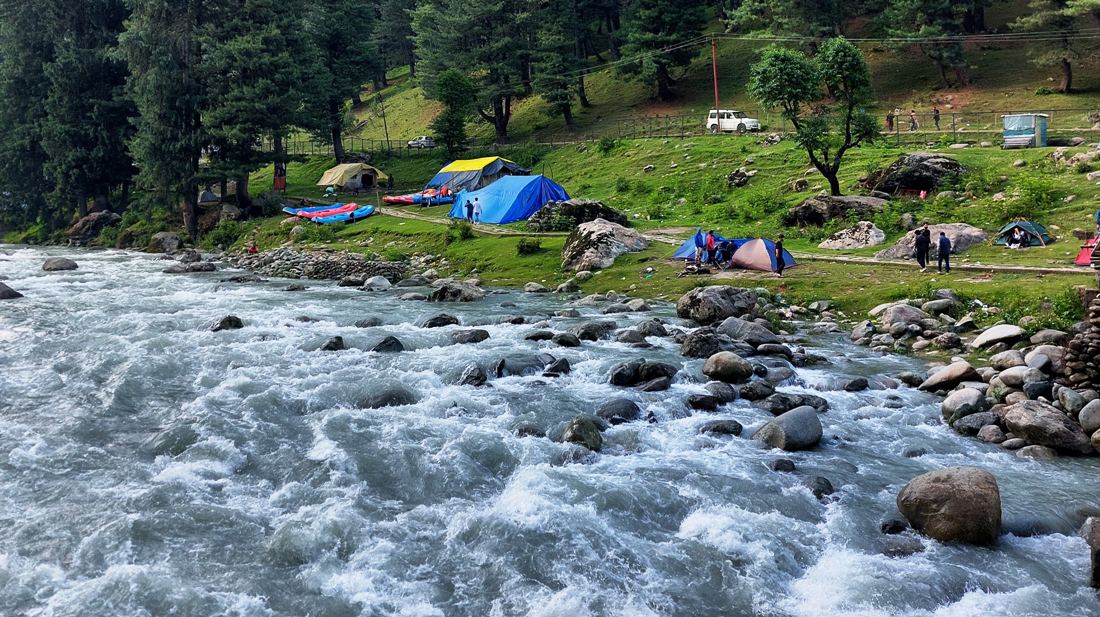
The Upper Jhelum Basin is a major sub-basin of the Indus River system and encompasses five watersheds: Lidder, Kuthar, Bringi, Sandran and Vishav. Covering approximately 3,663 square kilometres, it is drained by the Jhelum and includes glacier-fed streams and high-altitude glacial lakes.
The basin’s population increased from 0.67 million in 1981 to 1.96 million in 2020, nearly tripling over four decades. Over the same period, the area under horticulture expanded from 165 square kilometres to 641 square kilometres, almost a fourfold increase.
The authors argue that these changes have fundamentally restructured the basin’s water demand. The shift from paddy-dominated agriculture towards horticulture has reduced the water requirements associated with flooded rice cultivation while increasing the demand for irrigation in expanding orchard areas. At the same time, population growth and the expansion of piped water supply have increased domestic consumption.
The study estimates that the basin’s cumulative water demand across domestic, agricultural and horticultural uses reached 35.972 billion cubic metres during 1981–2020. Agriculture accounted for 19.751 billion cubic metres, horticulture for 10.481 billion cubic metres, and domestic use for 5.740 billion cubic metres.
The annual total, however, changed relatively little over the period, rising from approximately 899 million cubic metres in 1981 to 925 million cubic metres in 2020. This apparent stability masks a major change in the composition of demand.
Agriculture accounted for 55 per cent of annual water demand in 1981, while horticulture accounted for 12 per cent. By 2020, horticulture’s share had risen to 47 per cent, reflecting the conversion of agricultural land into orchards.
Agricultural Decline
The study attributes the decline in agricultural water demand primarily to the contraction of cultivated land, much of which was used for paddy cultivation.
Cultivated land fell from 991 square kilometres in 1981 to 361 square kilometres in 2020, a reduction of approximately 630 square kilometres. Annual agricultural water demand consequently declined by about 66 per cent, from 716 million cubic metres to 246 million cubic metres.
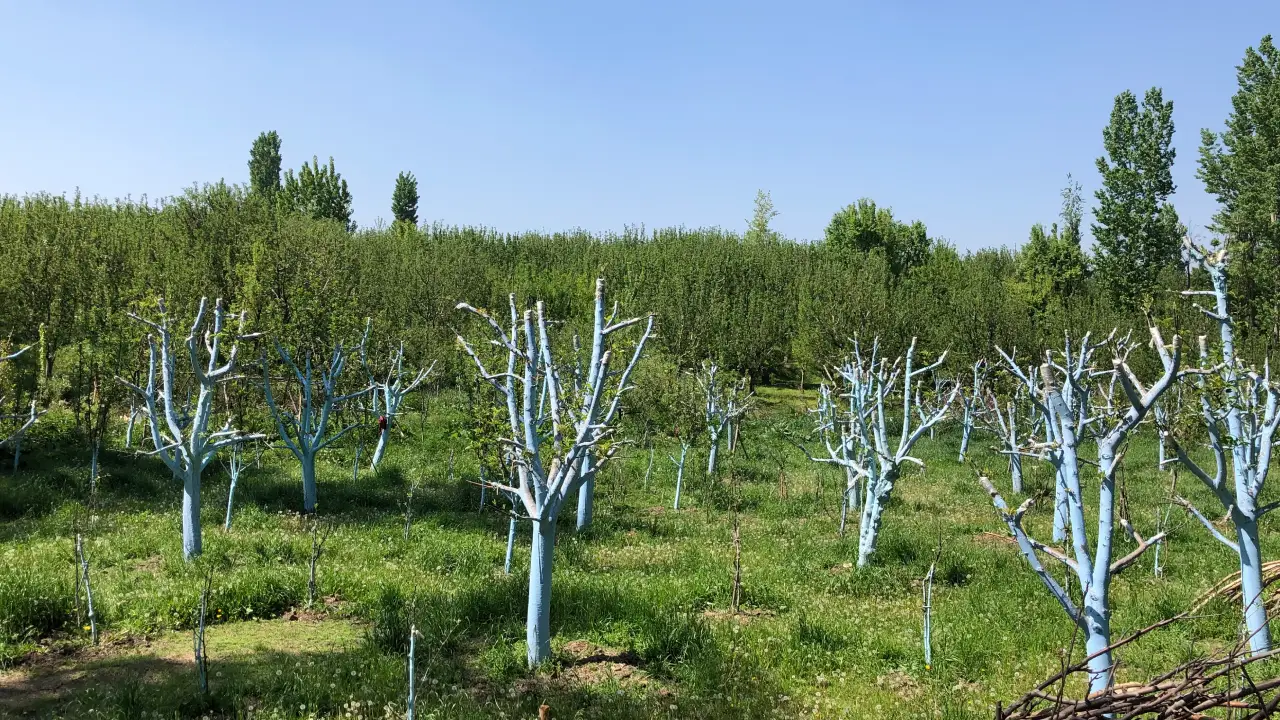
The authors explain that paddy is a water-intensive crop because fields are generally flooded for substantial portions of the growing season. When paddy land is converted into orchards or built-up areas, much of this irrigation requirement disappears from the agricultural demand profile.
The study also notes the economic incentives favouring horticulture, which it describes as five to six times more attractive economically than paddy cultivation. This shift, the authors argue, makes a return to the basin’s former levels of agricultural water demand unlikely in the short term.
The Vishav watershed recorded the highest cumulative agricultural water demand during 1981–2020, at 6.713 billion cubic metres. It was followed by Lidder at 4.589 billion cubic metres, Bringi at 3.598 billion cubic metres, Sandran at 3.023 billion cubic metres and Kuthar at 1.828 billion cubic metres.
The persistence of paddy cultivation in the lower-elevation, relatively flat parts of Vishav helps explain its comparatively high agricultural demand.
Orchard Expansion
While agricultural water demand declined, horticultural demand increased from 110 million cubic metres in 1981 to 434 million cubic metres in 2020. The expansion of orchard land from 165 to 641 square kilometres was the principal driver.
The study uses crop water requirements derived from earlier research that applied the FAO-56 Penman–Monteith method, which estimates crop water requirements using meteorological observations and crop-specific coefficients across different growth stages.
Apple cultivation requires water throughout the growing season, with important requirements during bud break, flowering and fruit development. The paper notes that apple orchards in Kashmir require approximately 900–1,200 millimetres of water annually through rainfall and supplementary irrigation.
Unlike flooded paddy fields, orchards increasingly depend on targeted irrigation drawing on streams and groundwater. This can intensify pressure on available water during the drier summer months, particularly from August onwards, when snowmelt-driven streamflow begins to decline.
The Vishav watershed recorded the highest cumulative horticultural water demand during the study period, at 4.927 billion cubic metres. Lidder followed with 1.725 billion cubic metres, Bringi with 1.516 billion cubic metres, Sandran with 1.231 billion cubic metres and Kuthar with 1.082 billion cubic metres.
The authors argue that the expansion of horticulture makes efficient irrigation increasingly important. They recommend a transition towards water-saving systems, including drip and sprinkler irrigation, rather than relying on less efficient irrigation practices.
Domestic Pressure
Domestic water demand more than tripled between 1981 and 2020, rising from 74 million cubic metres to 245 million cubic metres. The increase reflects both population growth and the expansion of piped water infrastructure.
The study estimates domestic demand using a minimum requirement of 300 litres per person per day. It also cites the Jammu and Kashmir Water Resources (Regulation and Management) Act, 2010, which indicates average domestic water usage of 350 litres per person per day, while acknowledging that requirements vary according to circumstances.
The authors explain that households moving from traditional sources such as springs and streams to piped supplies may increase their water consumption. The growth of the population, meanwhile, increases the number of households requiring water for drinking, cooking, sanitation and other domestic purposes.
The Vishav watershed recorded the highest cumulative domestic water demand during 1981–2020, at 2.060 billion cubic metres. Lidder followed with 1.088 billion cubic metres, Bringi with 1.077 billion cubic metres, Sandran with 797 million cubic metres and Kuthar with 719 million cubic metres.
The study identifies the Vishav and Lidder watersheds as important areas for future water management because of their population, settlement patterns and rising demand.
Modelling Method
To estimate future requirements, the researchers used the Water Evaluation and Planning model, commonly known as WEAP, to simulate water supply and demand across the five watersheds.
The model incorporated four decades of satellite-derived land-use and land-cover data, demographic information, meteorological observations and streamflow records. Inputs included precipitation, temperature, wind speed, humidity, cloud cover and snow depth.
Streamflow records from 1981 to 1990 were used to calibrate the model, while an independent period from 1991 to 2010 was used for validation. The researchers compared simulated and observed flows using statistical measures, including the coefficient of determination, Nash–Sutcliffe Efficiency, Kling–Gupta Efficiency, percentage bias and root mean square error.
The paper reports satisfactory to very good model performance across the five watersheds, although performance varied by location and measure. The authors say these results support the use of the model for the scenario analysis.
The assessment covered three demand sectors: domestic use, agriculture and horticulture. Industrial water demand was not modelled as a separate sector.
The five scenarios were designed to explore how different demographic trajectories and changes in living standards could influence future demand. They are structured “what if” cases rather than predictions of what will necessarily happen.
Five Scenarios
Under the reference scenario, which assumes annual population growth of one per cent, cumulative domestic water demand from 2021 to 2100 is estimated at 26.547 billion cubic metres. The projected unmet demand is 494 million cubic metres.
Under the high-population-growth scenario, which assumes annual growth of two per cent, cumulative domestic demand rises to 42.566 billion cubic metres, with 3.323 billion cubic metres unmet.
The low-population-growth scenario assumes annual growth of 0.50 per cent. It projects cumulative domestic demand of 21.333 billion cubic metres and unmet demand of 198 million cubic metres.
The very-low-population-growth scenario, based on annual growth of 0.30 per cent, produces the lowest cumulative domestic demand: 19.614 billion cubic metres, with 142 million cubic metres unmet.
The most demanding case combines high population growth with higher living standards. In the high-population-growth and high-living-standards scenario, per-capita water demand rises from 109 cubic metres a year to 150 cubic metres a year. Cumulative domestic demand reaches 58.230 billion cubic metres, with 7.336 billion cubic metres unmet.
The difference between the very-low-growth and worst-case scenarios is particularly significant. Projected cumulative unmet domestic demand rises from 142 million cubic metres to 7.336 billion cubic metres, a difference of approximately 52 times.
The authors say this range provides planners with a framework for assessing infrastructure requirements under contrasting demographic conditions rather than relying on a single forecast.
Watershed Disparities
The projections also show that future demand will not be distributed evenly across the basin.
Under the reference scenario, Vishav has the highest projected cumulative domestic demand, at 9.116 billion cubic metres, followed by Bringi at 5.180 billion cubic metres, Lidder at 5.070 billion cubic metres, Sandran at 3.684 billion cubic metres and Kuthar at 3.497 billion cubic metres.
Under the high-population-growth and high-living-standards scenario, Vishav’s projected cumulative domestic demand rises to 19.996 billion cubic metres. Bringi follows at 11.362 billion cubic metres, Lidder at 11.120 billion cubic metres, Sandran at 8.080 billion cubic metres and Kuthar at 7.671 billion cubic metres.
Vishav also records the highest projected unmet domestic demand under the most demanding scenario, at 2.766 billion cubic metres. Kuthar follows at 1.666 billion cubic metres, Sandran at 1.460 billion cubic metres, Bringi at 1.223 billion cubic metres and Lidder at 221 million cubic metres.
These differences reflect variations in population, settlement patterns, terrain and land use. The Vishav watershed includes relatively flat, lower-elevation areas where paddy cultivation and population density have historically been concentrated. The higher-elevation and steeper Kuthar and Sandran watersheds have comparatively limited agricultural and horticultural activity.
The study identifies the watershed-level estimates as useful for prioritising investments in water supply, groundwater recharge and demand management.
Planning Priorities
The researchers recommend a scenario-based approach to water resource planning, with infrastructure that can be expanded or adjusted as demographic and economic conditions change.
Under high-growth assumptions, planners may need to prepare for substantial increases in domestic demand. Under lower-growth scenarios, the pressure on water supplies would be reduced, although the authors caution that demographic change is not the only determinant of future water requirements.
The paper recommends improving irrigation efficiency, promoting drip irrigation and rainwater harvesting, protecting agricultural land from unsuitable conversion, and adopting water-saving technologies. It also calls for better water governance through measures such as metering, leakage control and public awareness campaigns aimed at reducing wasteful consumption.
The authors identify population growth as a major driver of future domestic demand and suggest that population-management measures could help limit pressure on water supplies. They also recommend tailored strategies for individual watersheds rather than a uniform approach across the basin.
However, the researchers stress that these measures must be considered alongside the study’s assumptions and limitations. Agricultural and horticultural requirements were calculated using fixed water-demand values per unit of land, without fully accounting for possible changes in cropping patterns, irrigation efficiency or farmers’ responses to changing conditions.
Climate Limitation
A central limitation is that the model assumes climatic conditions remain stationary through 2100. It does not incorporate future climate-change projections, even though the basin depends on glacier melt, snowmelt and precipitation for its water supply.
The authors acknowledge that warming could increase evapotranspiration and crop irrigation requirements. Changes in the timing of snowmelt and accelerated glacier retreat could also reduce water availability during the summer, when agricultural and horticultural demand is high. Greater variability in precipitation could further complicate water planning.
The paper therefore warns that the unmet-demand estimates should not be interpreted as definitive measures of future water scarcity. Under realistic warming scenarios, actual supply shortfalls could be higher than those calculated by the model.
The researchers recommend integrating the socioeconomic scenarios with climate projections from the Coupled Model Intercomparison Project Phase 6 (CMIP6), using combinations of Shared Socioeconomic Pathways and Representative Concentration Pathways. They also suggest coupling WEAP with other modelling systems to improve the assessment of groundwater–surface water interactions and the relationship between water and energy requirements.
The study concludes that demographic change, urbanisation, higher living standards and the shift from paddy cultivation to horticulture will remain central to the basin’s water demand. It argues that long-term planning must account for a range of possible futures and combine supply infrastructure with demand reduction and more efficient water use.
The authors emphasise that the projections are intended to guide the prioritisation of interventions, not to serve as precise quantitative forecasts. For the Upper Jhelum Basin, the central planning challenge is to accommodate the changing needs of households and a transforming agricultural economy while managing water resources in a glacier-fed Himalayan system whose future hydrological conditions remain uncertain.