by Bilal Ahmad Mir
Kashmir is witnessing flash floods, droughts, heat waves, forest fires and biodiversity loss, as urbanisation, deforestation, transport emissions and changing consumption patterns intensify pressure on its fragile ecosystems.
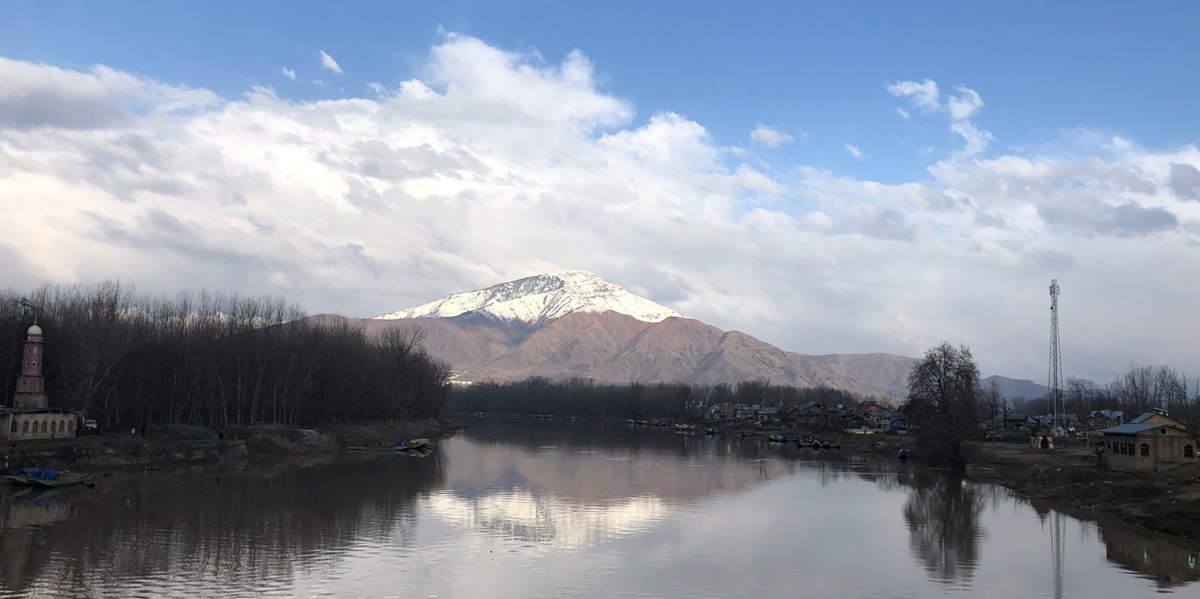
Jammu and Kashmir is witnessing visible changes in its climate and environment. The region has experienced an increased frequency of flash floods, droughts, unseasonal snowfall and prolonged spells of high temperatures. These changes are affecting forests, wetlands, biodiversity, water resources, agriculture and human health, raising concerns about the long-term ecological stability of the Himalayan region.
Forests are vital carbon sinks that absorb carbon dioxide from the atmosphere. Road construction, urban expansion and the felling of trees directly affect biodiversity while reducing the region’s natural capacity to absorb carbon emissions.
The loss of forest cover therefore creates a double challenge: it contributes to increased carbon emissions while simultaneously reducing the ecosystem’s ability to absorb carbon dioxide.
Poor air quality is not, in itself, a direct cause of climate change, but emissions from vehicles and other sources have become a significant local health and environmental concern. The increasing number of vehicles and growing dependence on fossil fuels add to atmospheric pollution and greenhouse-gas emissions.
Rising temperatures are altering the distribution of flora and fauna. Some plant species are being pushed towards higher altitudes, while changing climatic conditions threaten the delicate biodiversity of the Himalayan ecosystem.
Species that are adapted to particular temperature and precipitation ranges may face increasing pressure as these conditions change.
Changes in river-flow patterns, particularly reduced water availability during dry periods, can affect hydropower generation. Since Jammu and Kashmir has significant dependence on its rivers for hydropower, changes in the timing and volume of water flows could have implications for energy generation.
Wetlands are vital ecosystems supporting a large share of the region’s biodiversity. Changes in the hydrological cycle can adversely affect these ecosystems, contributing to the shrinkage and degradation of wetlands and reducing their ecological functions.
Drier conditions in forest ecosystems can increase the risk of wildfires. Forest fires destroy habitats, reduce vegetation cover and threaten biodiversity. Repeated fires can further weaken ecosystems and reduce their capacity to store carbon.
The increasing frequency and intensity of heat waves, together with other environmental changes, pose growing risks to public health. Changes in temperature, air quality, water availability and the prevalence of climate-sensitive diseases can create additional pressures on communities.

Causes of Climate Change
The growing use of private vehicles, particularly those running on petrol and diesel, contributes to greenhouse-gas emissions. Earlier, the number of private vehicles in Jammu and Kashmir was considerably lower. Today, many households own two-wheelers or four-wheelers, increasing the consumption of fossil fuels.
The transport sector therefore contributes significantly to carbon dioxide emissions. As the number of private vehicles continues to rise, so does fuel consumption and the release of heat-trapping gases into the atmosphere.
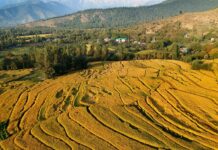
Rapid urbanisation and changing lifestyles are placing additional pressure on the region’s fragile environment. Orchards and agricultural land are increasingly being converted for housing, commercial establishments, shopping complexes and other development.
Agriculture once formed the principal livelihood of large sections of the population while also maintaining considerable green cover. The movement of people towards urban centres and the expansion of built-up areas have changed land-use patterns and increased pressure on natural resources.
Unplanned urban expansion can also increase waste generation, reduce open and green spaces and alter natural drainage systems, making settlements more vulnerable to flooding and other environmental hazards.
Deforestation and road widening are closely linked environmental challenges in the fragile Himalayan terrain of Jammu and Kashmir. Major infrastructure projects, including highway widening and the construction of new roads, can require the diversion of forest land and the removal of trees.
The consequences can include loss of green cover, fragmentation of wildlife habitat, soil erosion, disruption of natural drainage, increased landslide risks, slope instability and siltation.
The loss of forest cover also reduces the ecosystem’s capacity to absorb carbon dioxide.
Road construction in mountainous terrain involves cutting, blasting and the use of heavy machinery and transport, all of which generate emissions. Cutting into mountain slopes can also alter their natural stability. Tree roots help bind soil and vegetation can slow surface runoff. When slopes are stripped of vegetation, intense rainfall can produce rapid runoff, severe soil erosion and flash flooding.
Recent incidents involving cloudbursts, flash floods and landslides in different parts of Jammu and Kashmir have highlighted the vulnerability of settlements and infrastructure in such terrain.
Fast fashion refers to the rapid production and consumption of inexpensive clothing designed to follow frequently changing trends. Although Jammu and Kashmir is not a major global centre of textile manufacturing, consumers in the region participate in the global fast-fashion supply chain through the purchase, use and disposal of clothing.
The environmental footprint of the fashion and textile industry extends across production, transportation, consumption and disposal. The United Nations Environment Programme estimates that the sector contributes approximately 2–8 per cent of global greenhouse-gas emissions and has significant impacts on water consumption, chemical pollution and waste generation.
Textile production and consumption also contribute to microplastic pollution, particularly through synthetic fibres such as polyester, nylon and acrylic.

In Jammu and Kashmir, the increasing consumption of inexpensive and frequently replaced clothing can contribute to growing textile waste and place additional pressure on existing solid-waste-management systems. Poor disposal practices can also result in the accumulation of waste in terrestrial and aquatic environments.
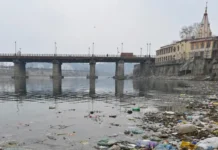
The issue is particularly significant in a region containing sensitive ecosystems, including forests, wetlands, lakes, rivers and mountain environments. Waste entering water bodies can obstruct drainage and, where accumulated in river channels, potentially reduce their carrying capacity and aggravate local flooding.
Fast fashion is therefore not simply a question of changing clothing trends. It represents a wider global pattern of production, consumption and disposal whose environmental consequences can reach even ecologically fragile regions such as Jammu and Kashmir.
(The author is a student of Forestry, Sher-e-Kashmir University of Agricultural Sciences and Technology of Kashmir. Ideas are personal.)