by Aruba Qayoom
Women deserve safe, respectful mobility through public transport and driving, while society must challenge harassment, stereotypes, and gender-based discrimination.

Harassment may last only a few moments, but its psychological effects can remain for years. Fear, anxiety, and emotional trauma often continue long after the incident. Sadly, many women and girls experience harassment through unwanted comments, staring, intimidation, eve-teasing, or behaviour that makes them feel unsafe. Such actions can leave lasting emotional scars.
I would particularly like to speak about the harassment women face while using public transport. Many girls and women depend on buses, trains, and shared vehicles to travel to school, university, or work. Public transport is often a necessity, yet an ordinary daily journey can become a source of fear and distress.
After speaking with several women, I was deeply moved by what they shared. One university student described how she travelled by local bus every day to attend classes. During those journeys, she experienced behaviour that left her shocked and distressed. Although she was an educated adult, she could not immediately process what was happening or decide how to respond. If a mature university student can feel so overwhelmed, imagine how difficult it must be for a young schoolgirl to understand or cope with such an experience.
This is not the heartbreaking story of one woman alone. It is the story of many women around us—our classmates, friends, sisters, colleagues, and relatives. No speech can capture every experience. Sharing one example is simply meant to remind us that harassment is a painful reality for many women. I chose to speak about public transport because it is something I have personally experienced and heard about from women around me. Many young girls lack the confidence or emotional maturity to explain what they are facing. They may fear blame, disbelief, embarrassment, or restrictions on their freedom. As a result, they often carry the burden in silence.
What can be done?
The first step is to reject the mindset that views women as inferior. Islam teaches the dignity and honour of women, and every major religion emphasizes respect, compassion, and justice. Men and women share the same humanity. Neither is inherently superior to the other; both possess equal human dignity.
The Qur’an states: “Their Lord responded to them, saying, ‘I will never let the work of any worker among you be lost, whether male or female. You are of one another.'” (Qur’an 3:195)
The words “you are of one another” remind us that men and women share the same human origin and are equally deserving of dignity.

Awareness should begin at an early age. Even in kindergarten, children should be taught respect, empathy, consent, personal boundaries, and appropriate behaviour. Schools should reinforce these values through education and character-building. Boys must be taught that harassment is not humour, courage, or masculinity. It is an abuse of another person’s dignity and freedom.
Families also have an essential role. Homes should allow daughters, sisters, mothers, and wives to speak about their experiences without fear of blame, dismissal, or misunderstanding. Women should never be held responsible for the behaviour of those who harass them.
Another important issue is the prejudice faced by women who drive. In many regions, women behind the wheel are still treated as if they do not belong on the road. When someone sees a slow or inexperienced driver, people often say, “It must be a woman driving.” Such stereotypes are unfair. Every new driver, male or female, needs time, practice, and confidence. When women are constantly judged, stared at, mocked, or discouraged, they may hesitate to practise and gain experience. Society then criticizes them for lacking confidence while denying them the environment needed to develop it. Although attitudes are changing in many cities, such perceptions still exist.

This creates a serious contradiction. If women are made to feel unsafe on public transport and are also discouraged from driving, their freedom of movement becomes unfairly restricted. Their education, employment, healthcare, and independence are affected. A woman driving is not an alien behind the wheel. She is simply a person exercising her right to move safely and independently.
Creating an environment in which women can travel confidently by public transport or by driving is a shared responsibility. Transport systems need effective complaints procedures, trained staff, proper lighting, and swift action against harassment. Bystanders should not ignore unacceptable behaviour.
India’s first Prime Minister, Jawaharlal Nehru, is often quoted as saying:”You can tell the condition of a nation by looking at the status of its women.”
Society’s progress is closely connected to women’s dignity, safety, education, and empowerment. When women are respected and free to thrive, the entire nation moves forward.
Allama Iqbal also celebrated the grace and importance of women in Zarb-e-Kalim:
وجودِ زن سے ہے تصویرِ کائنات میں رنگ
اسی کے ساز سے ہے زندگی کا سوزِ دروں
شرف میں بڑھ کے ثریّا سے مشتِ خاک اس کی
کہ ہر شرف ہے اسی درج کا درِ مکنوں
These verses express that women fill the universe with colour and give life warmth and emotional depth. Iqbal presents women not as secondary participants, but as central to society’s beauty, vitality, and moral strength.
I hope these reflections encourage us to examine our attitudes and actions. Every woman deserves to live, study, work, drive, and travel with dignity, free from fear and intimidation. Our responsibility extends beyond respecting women alone. We must respect every human being, regardless of gender, background, or identity. A compassionate society is built upon empathy, justice, accountability, and mutual respect.
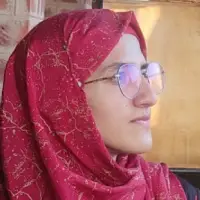
(The author is a final-year student of the integrated BSc–MSc in Biotechnology at Central University of Kashmir.)