by Sri Varshith Kumar Reddy E
Jammu and Kashmir’s investment is rising, but job creation is weakening as capital-intensive industries dominate. The trend highlights a growing disconnect between industrial incentives and employment generation.
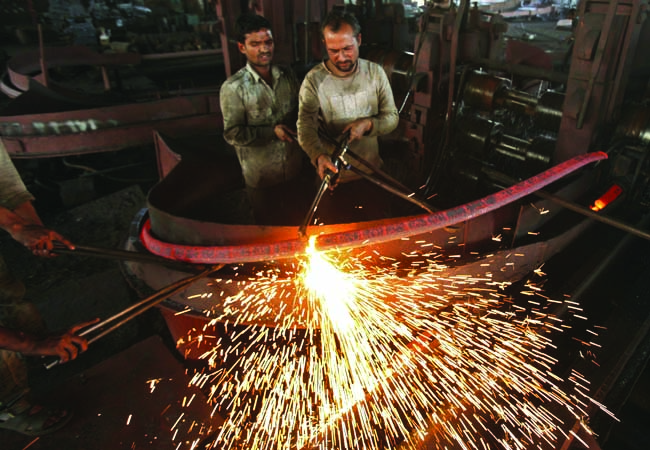
India’s factories are running harder this year, at least by the numbers coming out of Delhi. Industrial production grew 5.1 per cent in May 2026, with manufacturing alone expanding 5.5 per cent, continuing a run of headline growth that policymakers have cited as evidence of a genuine industrial revival.
The Periodic Labour Force Survey’s monthly bulletin for June 2026 recorded total employment growth of 4.5 crore workers over the preceding thirteen years, with the employment rate holding steady at 50.4 per cent through the July-September quarter projection. Rural employment data from the January-March 2026 quarterly bulletin showed agricultural work continuing to shrink while manufacturing and services expanded to fill the gap, a trend the government has read as confirmation that India’s long-promised structural transformation out of farm labour is finally underway.
The manufacturing sector’s own hiring signals tell a more cautious story. The June 2026 manufacturing PMI slipped to a three-month low of 54.5 from 55.0 the previous month, and the accompanying survey noted that employment grew at its weakest rate so far in 2026 even as output expanded. Private sector growth more broadly cooled to a three-month low in June, with services PMI falling to a seventeen-month trough. Growth continues, in other words, but the rate at which that growth is pulling new workers into factories has slowed even as investment announcements keep multiplying. Jammu and Kashmir offers a close-up view of exactly this divergence, playing out at a scale small enough to track project by project.
Jammu and Kashmir has attracted Rs 14,948 crore in private investment since 2022-23, generating employment for 64,515 people across four years, according to figures the Deputy Chief Minister gave the Legislative Assembly this year. Broken down by year, the pattern shifts sharply. In 2022-23, 629 units brought in Rs 2,153 crore and created 15,719 jobs. The following year, a smaller batch of 234 units attracted more capital, Rs 3,389 crore, yet generated fewer jobs, 29,969 falling short of the earlier ratio once adjusted for scale. By 2024-25, 405 units drew Rs 4,145 crore but produced only 11,396 jobs, and in the nine months through December 2025-26, 184 units attracted Rs 5,260 crore while creating just 7,431 positions.
A Widening Gap
Set those four years side by side and the trend line is unmistakable. Capital invested per unit has climbed steadily, from roughly Rs 3.4 crore per unit in 2022-23 to nearly Rs 28.6 crore per unit in the most recent nine-month period. Jobs created per unit have moved in the opposite direction, falling from about 25 workers per unit in the earliest cohort to roughly 40 in the latest, a ratio that looks marginally healthier only until it is weighed against the much larger capital base each new unit now represents. Fewer, bigger, costlier projects are replacing the earlier wave of smaller ones, and each rupee of that larger capital base is buying proportionally less employment.
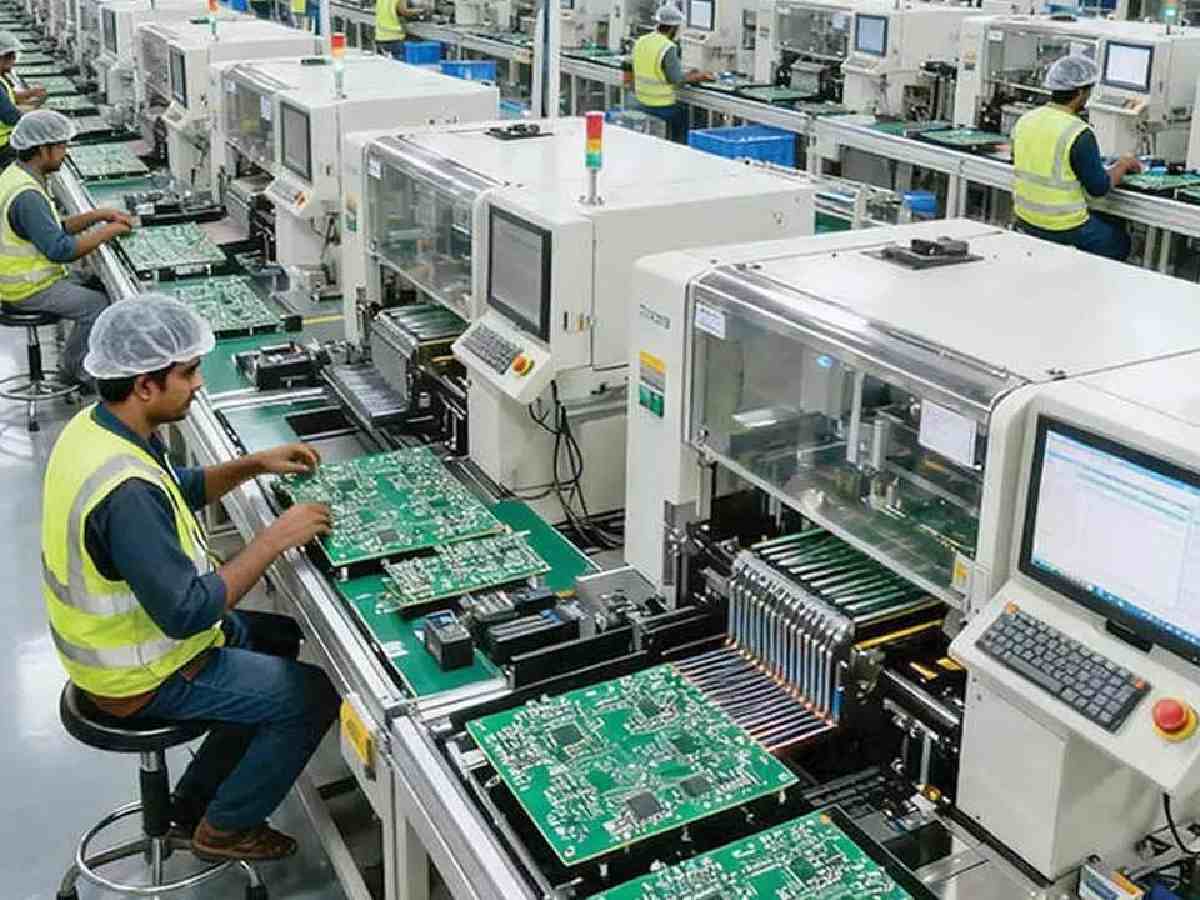
Part of the explanation lies in what these later-stage units actually make. Investors targeting cement, aluminium processing, polyfilms, and beverage bottling, the sectors dominating J&K’s recent project pipeline, are drawn to production processes that rely on automated lines rather than large shop floors. J&K’s own incentive schemes reinforce that choice. The New Central Sector Scheme, operational from April 2021 to September 2024, offered a full subsidy on generator installation, additional subsidies for automation and pollution control equipment, and turnover-linked incentives for existing units, none of which carry any condition tied to headcount. A firm automating away half its potential workforce collects the same automation subsidy as one that does not, since the subsidy formula rewards the machinery purchase itself rather than the jobs forgone or preserved.

Policy Design
The clearest gap sits in the mismatch between what the incentive structure rewards and what officials say they want. Deputy Chief Minister Choudhary told the Assembly this year that investors setting up units in J&K would be required to employ local youth, framing local hiring as a condition of doing business in the Union Territory. No published mechanism ties that stated requirement to actual subsidy disbursement, and the investment data through December 2025-26 shows employment intensity declining even as the requirement has presumably been in effect. A stated hiring expectation without an enforcement or disbursement link functions as guidance rather than policy.
Sectoral allocation adds a second layer to the shortfall. Tourism, handicrafts, and food processing, sectors with a track record of absorbing large numbers of workers relative to capital deployed, have drawn a fraction of the subsidy attention directed at polyfilms, aluminium, and cement units. Skilling investment tied to the scheme has concentrated on operating new industrial machinery, leaving a gap for the trades that labour-intensive sectors would actually need if investment were redirected toward them. Building bye-law reforms, single-window clearances, and labour law rationalisation, all cited by Deputy CM as recent achievements, have made it easier and faster to set up a capital-intensive plant, but none of these reforms address which kind of plant gets built in the first place.
Realign Incentives With Jobs
A subsidy formula weighted toward jobs created per crore invested, layered onto the existing capital and automation incentives rather than replacing them outright, would give investors a genuine financial reason to weigh labour-intensive processes against automated ones. Tying a defined share of disbursement to verified local hiring, rather than treating hiring as a one-time approval condition, would prevent firms from qualifying for subsidies while employment intensity keeps falling year over year. Redirecting a portion of the automation and DG-set subsidy pool toward tourism infrastructure, craft-cluster working capital, and agro-processing cold chains would target the sectors J&K’s own data suggests generate more employment per rupee than the current pipeline. Expanding skilling programmes beyond machine operation to cover hospitality, craft production, and food processing would match training to where labour-intensive growth is realistically achievable, rather than to the machinery already being installed.
The Wider Test

Jammu and Kashmir’s population of young job seekers continues growing faster than 7,431 jobs in nine months, however welcome, can absorb, a shortfall that has already pushed skilled Kashmiri youth toward employment in the Gulf and other Indian states. National figures point to the same tension at greater scale. Manufacturing PMI data through June 2026 shows employment growth at its slowest pace this year even as output keeps expanding, suggesting the gap J&K illustrates in sharp relief is present, if less visible, across India’s broader industrial base. Whether India’s industrial policy can be rebuilt around labour absorption before automation locks in the current trajectory remains an open question, and Jammu and Kashmir’s investment scheme, now past its original 2024 window and running under successor policies through 2030, offers a live test of whether that redesign happens in time.
(The author is a pracademic working on government policy and public institutions. Ideas are personal.)