by Meraj Zargar
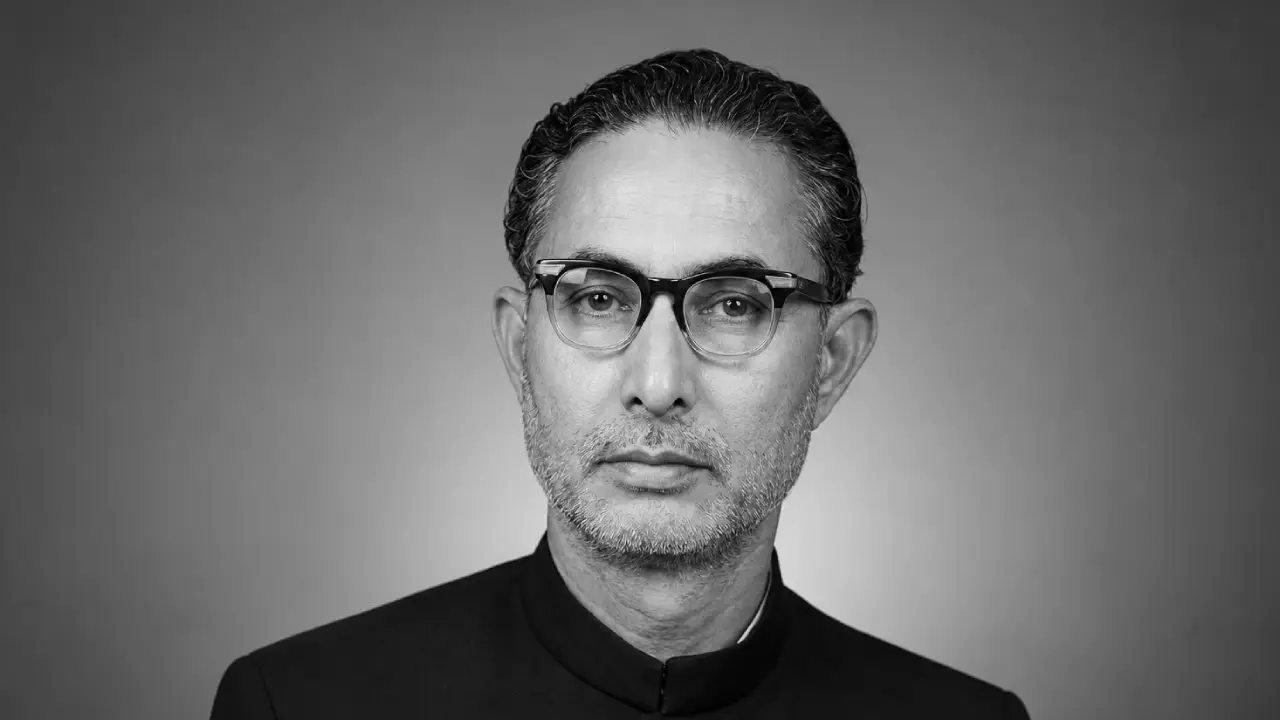
Late Abdul Khaliq Tak Zainagiri was a visionary Kashmiri social reformer, government official, and Sahitya Akademi Award-winning linguist who founded the Jammu & Kashmir Yateem Trust to serve orphans and the underprivileged.
Among the countless distinctions that human beings have sought throughout history, like wealth, power, knowledge, fame, and status, none has proved more enduring or more transformative than the spirit of selfless service. Civilisations rise not merely on the strength of their rulers, armies, or institutions, but on the sacrifices of those men and women who dedicate their lives to the welfare of others. The true measure of a society is not how it treats the powerful, but how it cares for the weak, the orphaned, the poor, and the marginalised.
Volunteerism and social service are, in essence, manifestations of a higher moral consciousness. They emerge when an individual transcends the narrow confines of personal interest and begins to perceive the pain, hopes, and aspirations of others as his own. Such a person ceases to live merely for himself; he becomes a source of comfort for the distressed, a refuge for the vulnerable, and a beacon of hope for those abandoned by circumstance.
In the Islamic worldview, service to humanity occupies an even more profound position. Islam does not view worship as being confined to rituals alone. Prayer, fasting, and pilgrimage attain their true meaning when they produce compassion, justice, and concern for fellow human beings. The Holy Qur’an repeatedly emphasises kindness towards orphans, the needy, travellers, and those facing hardship. Likewise, the life of the Prophet Muhammad ﷺ presents a living example of mercy, service, and concern for humanity. The Prophet ﷺ declared that the most beloved people in the sight of Allah are those who are most beneficial to others. Thus, in Islam, service to creation is inseparable from devotion to the Creator.
بہ تسبیح و سجادہ و دلق نیست
عبادت بجز خدمتِ خلق نیست
History bears witness that the greatest reformers, saints, and visionaries were those who transformed their spiritual insights into practical service. They recognised that feeding the hungry, educating the ignorant, sheltering the orphan, and defending the oppressed were not merely charitable acts but sacred responsibilities. Their legacy endured because they invested themselves in human welfare rather than personal advancement.
Kashmir, with its rich spiritual and cultural heritage, has also produced many such noble souls whose lives embodied compassion, sacrifice, and public service. Among these distinguished personalities, the name of Late Abdul Khaliq Tak Zainagiri shines with exceptional brilliance. He was not merely a social worker, nor solely a government officer, poet, linguist, or philanthropist. Rather, he represented a rare synthesis of all these qualities. His life stands as a testament to the transformative power of faith-inspired service and the enduring impact of selfless dedication to humanity.
It is difficult to understand the story of modern social welfare in Jammu and Kashmir without acknowledging the remarkable contribution of Abdul Khaliq Tak Zainagiri. Through his vision, determination, and unwavering commitment to the neglected sections of society, particularly orphans and vulnerable children, he laid the foundations of an institutional legacy that continues to benefit thousands. His journey from a humble village background to becoming one of the most respected social reformers of the region is not merely the biography of an individual; it is the story of a life devoted to the service of God through the service of humanity.
Late Abdul Khaliq Tak Zainagiri, one of the most distinguished social reformers of Jammu and Kashmir and the founder of the Jammu & Kashmir Yateem Trust, was born in 1924 in the village of Harda Shooras, situated about eleven kilometres from Sopore. He belonged to a poor yet educated family. His father was a tailor by profession and simultaneously served as the unpaid Imam of the village mosque. Being the eldest among four brothers, Abdul Khaliq Tak grew up in an environment steeped in learning and moral values.
Since his father was a devout scholar of Arabic and Persian, he received his early education in these languages at home. He later studied up to the eighth standard in the village school and subsequently passed the matriculation examination under Lahore University in 1940 with distinction from a school in Sopore. He earned the distinction of being the first matriculate from the entire Zainageer region.
Civil Service
Although he was an exceptionally talented student, family responsibilities and economic hardships compelled him to seek government employment. He joined the Revenue Department as a Patwari during a period when land settlement operations were in full swing across the state. The work required officials to serve in remote areas under extremely difficult climatic conditions.
His early postings were in Lolab and Handwara. During the initial years of service, he discharged his duties diligently and honestly. Simultaneously, he came into contact with scholars, saints, and spiritual personalities. According to his son, Mr Zahoor Ahmad Tak, a chance meeting with a mystic known as Munawar Sahib profoundly transformed his life. Thereafter, he became increasingly contemplative, reserved, and spiritually inclined.
Although he was already knowledgeable in religious matters, this spiritual awakening deepened his concern for human suffering. He also benefited from the guidance of respected spiritual figures such as Kausar Sahib Bandipora, Mama Sahib Kupwara, and Mirak Shah Kashani.
This transformation made him acutely sensitive to the plight of the poor and marginalised. Consequently, he frequently found himself at odds with colleagues and officials who exploited ordinary people or engaged in corrupt practices. He fearlessly challenged injustice, questioned administrative excesses, and often confronted even senior officers regarding matters affecting disadvantaged sections of society. Complaints against him occasionally reached ministers and senior authorities, yet he continued his struggle on behalf of the poor. Attempts were even made to malign his reputation through conspiracies, but these ultimately failed, and the truth prevailed.
Public Career
He was later promoted as Girdawar and served in Sopore, Charar-e-Sharif, Kulgam, and other regions. His extensive travels throughout Kashmir exposed him to a wide range of social issues, further strengthening his commitment to public welfare.
His literary interests flourished alongside his professional career. In addition to writing poetry, he authored an award-winning work on Kashmiri dialectology, which established him as a respected literary figure. During his service, he also passed the examinations for Munshi, Adeeb Urdu, and Honors qualifications.
After qualifying in departmental examinations, he was appointed Naib Tehsildar in 1965 and posted to Drass, Kargil during the Indo-Pak war. Despite the difficult circumstances of war, he continued to perform his official responsibilities with dedication. In 1967, he was transferred to the Revenue Training School, Srinagar, where he served as Vice Principal under Dr Aziz Ahmad and trained Patwaris in revenue administration and land settlement procedures.
Recognising his literary contributions, the government later appointed him Editor of the Kashmiri Section in the Cultural Academy. From 1968 to 1972, he rendered valuable services in promoting Kashmiri language and literature. He subsequently returned to the Revenue Department, serving as Naib Tehsildar and later as Reader to the Financial Commissioner and Deputy Commissioner, Srinagar.
However, after founding the Jammu & Kashmir Yateem Trust in 1972, his attention increasingly shifted towards social and literary work. Finding little fulfilment in bureaucratic life, he voluntarily retired from government service in 1977 and dedicated himself entirely to humanitarian service.
Literary Legacy
History remembers only a handful of individuals who excel simultaneously in multiple fields and leave behind a distinctive and enduring legacy. Late Abdul Khaliq Tak Zainagiri was one such remarkable personality. Alongside being a responsible government officer and an outstanding social worker, he was also a respected writer, poet, and linguist.
His literary inclination emerged early in life. Growing up in a household where Arabic and Persian learning was valued, he naturally developed a deep appreciation for language and literature. Though financial constraints prevented him from pursuing higher formal education, his intellectual curiosity never diminished.
He possessed a profound love for poetry, music, and spiritual expression. During his service years, he had the opportunity to interact with prominent writers and literary personalities. He listened to the poetry of Mahjoor and occasionally shared his own compositions. He remained deeply attached to the works of Kashmiri Sufi poets and frequently recited or sang their verses.
His poetic temperament, combined with his contemplative nature and spiritual experiences, led him to begin writing seriously around 1956. Within a short period, he published three volumes of Meyon Aalaw (میون اۤلو).
Political Drama
Because of his close interaction with ordinary people, particularly in rural areas, he witnessed firsthand the suffering, exploitation, and bureaucratic neglect faced by the common masses. As a compassionate and sensitive individual, he constantly struggled against administrative inefficiency and social injustice.
This inner and outer conflict culminated in his famous poetic drama, Azich Kasheer (“Today’s Kashmir”). Through this allegorical work, he sharply criticised the prevailing political and administrative system. The book was considered so bold and provocative that it was banned by the government of the time.
Azich Kasheer remains a rare example of literary resistance, demonstrating extraordinary courage on the part of a serving government employee who dared to challenge the establishment and stand with the oppressed.
Major Work
Perhaps his most significant literary accomplishment was the groundbreaking research work Kashriyouk Ilaqah Waar Pheur (کـاشریوک علاقِہ وار پھیور), a monumental study of Kashmiri dialects and linguistic variations. He devoted nearly seven years of relentless effort to this project under the supervision of the eminent scholar Professor Mohiuddin Hajni.
For this research, he travelled extensively throughout Jammu and Kashmir, including the Kashmir Valley, Jammu region, Ladakh, and even parts of Azad Kashmir. Remarkably, he carried out much of this painstaking fieldwork at his own expense.
After the pioneering linguistic studies of Sir George Grierson, this work is widely regarded as one of the most important contributions to Kashmiri linguistics. Its scholarly value earned national recognition, and in 1970 it was honoured with the prestigious Sahitya Akademi Award. The book also received several state-level awards, including recognition from the Jammu & Kashmir Cultural Academy.
Kashriyouk Ilaqah Waar Pheur remains a landmark contribution to linguistic studies and continues to serve as an invaluable resource for students, researchers, and scholars of Kashmiri language and literature. At a time when Kashmiri faces increasing pressures from dominant regional and global languages, the book stands as a beacon for preserving linguistic identity and cultural heritage.
Cultural Contribution
As Editor of the Kashmiri Section of the Cultural Academy, he made substantial contributions to the promotion and preservation of the Kashmiri language. He played an important role in compiling a Kashmiri dictionary and worked extensively on collecting and documenting Kashmiri folk tales and folk songs.
Throughout his life, he remained a devoted servant of Kashmiri language, culture, and heritage. Despite his achievements, he lived with remarkable simplicity, spending much of his life in rented accommodation. He never allowed fame or recognition to distance him from his roots.
Enduring Impact
Late Abdul Khaliq Tak Zainagiri wrote in nearly every major poetic genre. Although he was not a prolific writer, the quality and depth of his work secured him a lasting place in Kashmiri literature. His collected poetry was published in 2011 by Advocate Abdul Rashid Hanjura under the title Sab Rang.

The central figure in his poetry is the poor and marginalised Kashmiri, sometimes a seeker of truth, sometimes a victim of oppression, and sometimes a voice crying out against injustice. His poetry reflects spirituality, mysticism, social consciousness, and, in some of his ghazals and quatrains, elements of modernist thought.
In essence, Abdul Khaliq Tak Zainagiri was not merely a successful social reformer or an honest government officer; he was also a distinguished writer, poet, linguist, and visionary humanitarian. His literary and social contributions constitute a priceless legacy for the people of Kashmir.
(The author is a Tral-based Urdu writer, columnist, social worker, and author of two books, with over two decades of literary and humanitarian work. Ideas are personal.)