Civilisations flourish through truthful perceptions of reality, combining wisdom, ethics, science, and spirituality to build compassionate, just, and enduring societies.
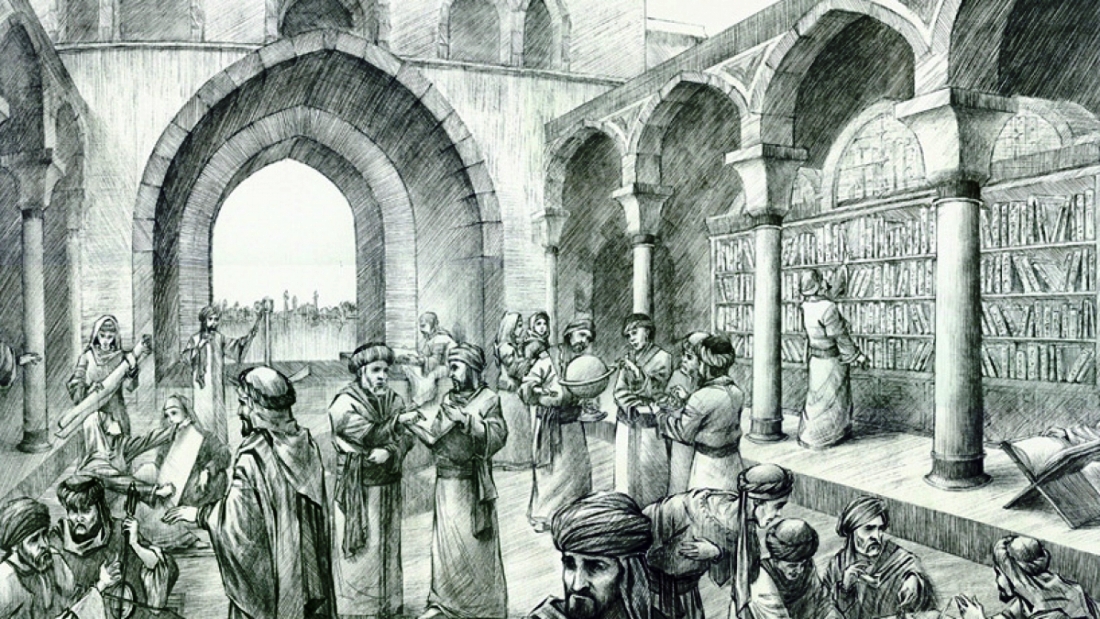
Almost 1200 years ago, Baghdad hosted the House of Wisdom, an academy of knowledge, for nearly half a millennium and it was crucial in the continuation of the knowledge from earlier civilisations to the rest of the world. It was the world’s most vital translation centre. A sketch by 1001 Inventions.
بیدل بجلوہ گاہِ حقیقت کہ می رسد
ما غافلانِ تصورِ امکانیِ خود ایم(بیدل
Who can attain the luminous sanctuary of Reality?
We remain imprisoned within the imagined horizons of our own minds.
غوطہ ہا زد در ضمیرِ زندگی اندیشہ ام
تا بدست آوردہ ام افکارِ پنہاں شما ( اقبال)
My thought has plunged into the deepest soul of life,
There to unveil the hidden truths abiding within you.
گہر از رایتِ شاہانِ عجم بر چیدند
بعوض خامۂ گنجینہ فشاںم دادند(غالب)
The precious pearls that once adorned the crowns of Persia’s kings were taken away; in their place, I was entrusted with a pen that scatters the enduring treasures of wisdom.
Every enduring civilisation is ultimately shaped not by the abundance of its wealth, the sophistication of its technology, or the reach of its power, but by the depth of its understanding of reality. Long before a society determines what it ought to build, defend, celebrate, or reform, it has already answered-whether consciously or unconsciously-a more fundamental question: What is ultimately real? From that quiet yet decisive answer arise its vision of truth and justice, freedom and responsibility, beauty and goodness, education and progress, human dignity and the purpose of life itself. A civilization’s view of reality is thus its unseen constitution-the moral and intellectual horizon that silently shapes its institutions, nourishes its culture, guides its imagination, and ultimately determines its destiny.
The defining crises of our age-ecological decline, technological disruption, social fragmentation, loneliness, consumerism, polarization, and the erosion of public trust-are not merely political, economic, or technological failures. At their deepest level, they are crises of perception. Humanity has acquired an unprecedented capacity to transform the external world while increasingly struggling to understand the inner meaning of existence. We possess more information than any previous generation, yet often find ourselves impoverished in wisdom; we have multiplied our means without always clarifying our ends. The challenge before us is therefore not simply to know more, but to see more deeply-to recover a vision of reality capacious enough to illuminate both the wonders of the universe and the dignity of the human person.
This insight belongs to no single civilisation, faith, or philosophical tradition. It is one of humanity’s oldest and most enduring discoveries. Across continents and centuries, the wisest minds have recognized that the quality of human life is inseparable from the quality of human vision. Plato’s allegory of the cave portrays the human journey as a gradual awakening from illusion to truth. Aristotle sought the first principles that give coherence to all knowledge. The Upanishads invite seekers to look beyond fleeting appearances toward abiding reality. The Buddha located the roots of suffering in distorted perception and taught that liberation begins with seeing things as they truly are.
Confucius understood that lasting social harmony grows from moral self-cultivation rather than coercive power. The Qur’an repeatedly calls humanity to contemplate the āyāt-the signs woven throughout nature, history, and the human soul-affirming that existence is neither random nor meaningless, but intelligible, purposeful, and morally significant.
Ibn Sina united scientific inquiry with philosophical reflection, Al-Ghazali harmonised reason with spiritual experience, Ibn Rushd defended the companionship of revelation and philosophy, Ibn Arabi contemplated the profound unity underlying the diversity of existence, while Muhammad Iqbal envisioned the human being as a creative moral agent entrusted with participating in the continuous unfolding of creation. Though these traditions differ in language, method, and doctrine, they converge upon a timeless conviction: civilizations are renewed when human perception is renewed.
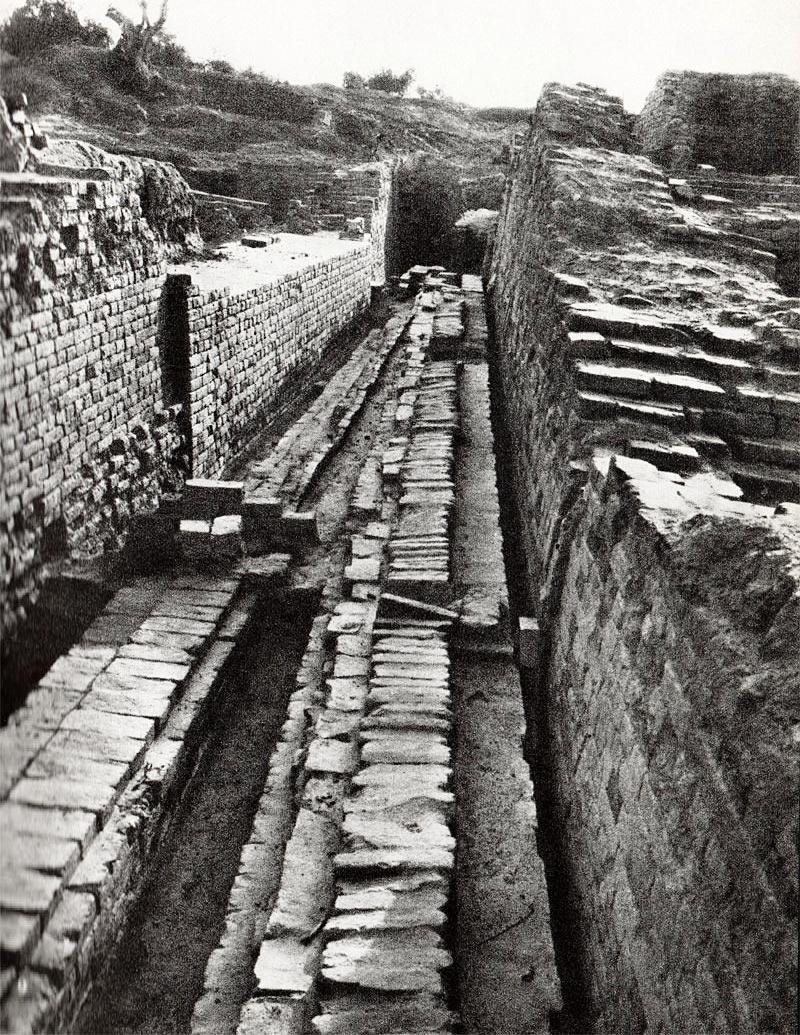
A Mohanjodaro street with drains. It was the key city of the Indus Valley civilization that falls in Pakistani Sindh.
Across civilizations, humanity’s enduring search for reality has been illuminated by Laozi, Zhuangzi, Nāgārjuna, Śaṅkara, Ramanuja, Maimonides, Thomas Aquinas, Nicholas of Cusa, Blaise Pascal, Baruch Spinoza, Immanuel Kant, G. W. F. Hegel, Henri Bergson, Edmund Husserl, Martin Heidegger, Alfred North Whitehead, Simone Weil, Rabindranath Tagore, Sri Aurobindo, Ananda K. Coomaraswamy, Sarvepalli Radhakrishnan, Jiddu Krishnamurti, Frithjof Schuon, René Guénon, Toshihiko Izutsu, Wilfred Cantwell Smith, Huston Smith, and Raimon Panikkar; enriched by the literary genius of Homer, Dante Alighieri, William Shakespeare, Johann Wolfgang von Goethe, Friedrich Hölderlin, William Wordsworth, Samuel Taylor Coleridge, Walt Whitman, Emily Dickinson, W. B. Yeats, Rainer Maria Rilke, Leo Tolstoy, Fyodor Dostoevsky, Victor Hugo, Herman Melville, T. S. Eliot, C. S. Lewis, J. R. R. Tolkien, Jorge Luis Borges, Pablo Neruda, Octavio Paz, Chinua Achebe, Wole Soyinka, Naguib Mahfouz, Toni Morrison, and Seamus Heaney; and embodied in the moral witness of Albert Schweitzer, Jane Addams, Rachel Carson, E. F. Schumacher, Paulo Freire, Václav Havel, Parker J. Palmer, Jane Goodall, Thich Nhat Hanh, the 14th Dalai Lama, Desmond Tutu, Abdul Sattar Edhi, and Pope Francis. Though separated by centuries, cultures, languages, and traditions, they converge in a shared conviction: that the deepest revolutions begin with transformed vision, and that enduring civilizations are sustained not by power or prosperity alone, but by the relentless pursuit of truth, beauty, goodness, wisdom, compassion, and the common good.
Modern philosophy has enriched rather than exhausted this conversation. Realists affirm that reality exists independently of human consciousness; idealists remind us that the mind participates in the constitution of experience; phenomenologists illuminate the richness of lived reality; existentialists emphasize freedom, responsibility, and authenticity; process philosophers understand reality as creative becoming rather than static substance; scientific naturalists reveal the extraordinary explanatory power of empirical investigation; while religious metaphysics point toward dimensions of meaning that transcend material explanation. These perspectives need not be imprisoned within rigid opposition. Each offers a distinctive window onto the mystery of existence while inviting intellectual humility before a reality that invariably exceeds every conceptual framework.
Modern science deepens rather than diminishes this wisdom. Cosmology reveals a universe of astonishing order and beauty; ecology uncovers the profound interdependence of life; neuroscience shows that perception is actively shaped by memory, expectation, and belief.
The natural sciences deepen this humility still further. Cosmology unveils a universe whose immensity inspires awe rather than arrogance. Evolutionary biology reveals the profound kinship of life across time. Ecology teaches that forests, rivers, oceans, climates, and communities flourish only through intricate webs of interdependence. Neuroscience demonstrates that perception is not a passive mirror of the world but an active process shaped by memory, expectation, and experience. Cognitive psychology uncovers the subtle biases that quietly influence judgment, while behavioral economics reminds us that human beings are often less rational than they imagine themselves to be. Far from diminishing wonder, these discoveries enlarge it. They remind us that reality is richer than immediate appearances and that genuine wisdom begins with the humility to recognize the limits of our own understanding.
Yet no accumulation of empirical knowledge alone can answer humanity’s deepest questions. Science can explain the mechanisms by which stars are born, but not why beauty moves the human heart; it can map neural pathways, but not determine why justice is preferable to injustice or compassion nobler than cruelty. For these questions humanity turns also to philosophy, ethics, literature, theology, and the arts. Shakespeare explores the tragic consequences of ambition without conscience; Dostoevsky probes the mysteries of freedom, guilt, and redemption; Tagore celebrates the unity of humanity through beauty and imagination; Toni Morrison restores forgotten histories to moral memory; Rumi transforms ordinary moments into invitations to transcendence. Great literature does more than entertain-it enlarges the moral imagination, allowing readers to inhabit lives beyond their own. Beauty itself becomes a mode of knowing, awakening dimensions of reality inaccessible to calculation alone.
Contemporary research increasingly affirms insights long cherished within these wisdom traditions. Positive psychology consistently associates enduring well-being with gratitude, purpose, compassion, meaningful relationships, and service rather than material accumulation alone. Longitudinal studies reveal that loving relationships remain among the strongest predictors of a flourishing life. Moral psychology demonstrates that empathy, fairness, and cooperation are essential to healthy communities. Educational research confirms that critical thinking, ethical reasoning, emotional intelligence, and intercultural understanding are indispensable for democratic citizenship. Leadership studies repeatedly conclude that institutions thrive under women and men distinguished not merely by technical competence but by integrity, humility, courage, and long-term vision. Ancient wisdom and contemporary evidence thus converge upon a common truth: to perceive reality more truthfully is often to live more wisely and more humanely.
The urgency of this insight becomes especially apparent amid the modern crisis of meaning. Material abundance has not banished loneliness, anxiety, or despair. Consumer culture often measures success by possession rather than contribution, while the digital economy increasingly competes for human attention itself. Artificial intelligence now generates language, images, and ideas with astonishing sophistication, raising profound questions about creativity, authenticity, responsibility, and truth. Algorithms increasingly shape what individuals encounter, remember, and believe, fragmenting the shared realities upon which democratic life depends. Hannah Arendt warned that when societies lose confidence in truth itself, freedom becomes precarious because public judgment loses its common foundation. The challenge before humanity is therefore not merely technological innovation but moral and intellectual renewal-a recovery of discernment, humility, dialogue, and responsibility capable of sustaining both liberty and truth.
History offers abundant testimony that worldviews shape civilisations. The translation movement of Abbasid Baghdad flourished because knowledge was regarded as a universal trust rather than the possession of a single people. Medieval Córdoba demonstrated the creative possibilities of intellectual exchange across religious traditions. The European Renaissance drew nourishment from encounters with Greek, Islamic, and classical learning. The abolition of slavery reflected an expanding recognition of universal human dignity. South Africa’s Truth and Reconciliation Commission revealed that justice need not exclude forgiveness. Bhutan’s pursuit of Gross National Happiness challenged purely material measures of national success, while Finland’s educational achievements testify to the transformative power of trust, equity, and respect for teachers. These examples, diverse though they are, point toward a common lesson: institutions ultimately embody the realities that societies choose to honour.
The same truth shines through the lives of history’s great visionaries. Socrates preferred truth to popularity. The Buddha sought liberation from illusion rather than mastery over others. Gandhi united political resistance with moral discipline. Martin Luther King Jr. grounded civil rights in the conviction that justice reflects the moral order of reality itself. Nelson Mandela refused to allow suffering to extinguish reconciliation. Abdul Sattar Edhi recognized every vulnerable human being as infinitely worthy of care. Wangari Maathai understood that planting trees could heal both landscapes and communities. Their enduring influence arose not chiefly from extraordinary authority but from extraordinary clarity of vision. They perceived possibilities where others saw only obstacles and recognized human dignity where others perceived division.
No mature worldview, however, should fear criticism. Nietzsche challenged inherited moral complacency; Marx exposed structural injustice; Freud explored the hidden depths of the human psyche; Foucault examined the subtle relationship between knowledge and power; Derrida cautioned against simplistic certainties; Dawkins and Dennett invited renewed examination of religious claims through the lens of evolutionary science; Peter Singer expanded ethical concern beyond conventional boundaries. Such critiques, approached with fairness rather than defensiveness, refine understanding by compelling every tradition to distinguish enduring truth from historical limitation. Likewise, thinkers such as Charles Taylor, Alasdair MacIntyre, Martha Nussbaum, Amartya Sen, Seyyed Hossein Nasr, Jonathan Sacks, Viktor Frankl, and Michael Sandel remind us that societies cannot be sustained by markets, technologies, or institutions alone. They endure only when nourished by deeper moral, cultural, and spiritual horizons.
The practical implications are both personal and public. Education must aspire not only to cultivate skilled professionals but also wise and compassionate citizens. Economic life should be evaluated by its contribution to human flourishing as well as material prosperity. Scientific innovation must remain accountable to ethical responsibility. Artificial intelligence should amplify rather than diminish human dignity. Religious communities should embody compassion, intellectual openness, and service. Governments should strengthen justice, truth, and the common good. Media institutions should prize integrity above sensationalism. Individuals, in turn, are called to cultivate habits of reflective reading, contemplative silence, respectful dialogue, ecological stewardship, lifelong learning, gratitude, generosity, and civic responsibility. The future of civilization depends less upon extraordinary heroes than upon ordinary people who choose each day to perceive reality with honesty, humility, courage, and hope.
Shabeer Ahmad Lone
The deepest question, therefore, is not merely What is reality? It is What kind of human beings does our understanding of reality invite us to become? If reality is reduced to competition alone, societies inevitably reward domination. If reality is understood as relationship, responsibility, and shared dignity, societies nurture justice, cooperation, creativity, and compassion. Our vision of reality shapes our vision of humanity; our vision of humanity shapes our institutions; and our institutions shape the future we bequeath to generations yet unborn.
To recover a truthful vision of reality is not to withdraw from the world but to enter it more fully-with clearer minds, gentler hearts, steadier courage, and deeper responsibility. It transforms information into wisdom, knowledge into character, power into service, diversity into dialogue, and existence itself into an enduring invitation to wonder, gratitude, and hope.
The civilisations that will endure are unlikely to be those possessing the greatest wealth or technological sophistication alone, but those that cultivate women and men capable of uniting scientific curiosity with ethical integrity, critical reason with contemplative depth, cultural diversity with shared humanity, and freedom with responsibility. To see reality more clearly is already to begin living more wisely; to live more wisely is already to begin building a civilization worthy of the highest aspirations of the human spirit.
(The author is an educator, researcher and writer. Ideas are personal.)