by Dr G M Khan
A reflective essay on estrangement from nature, childhood memories rooted in the earth, and a daughter’s wonder that revives forgotten attentiveness.
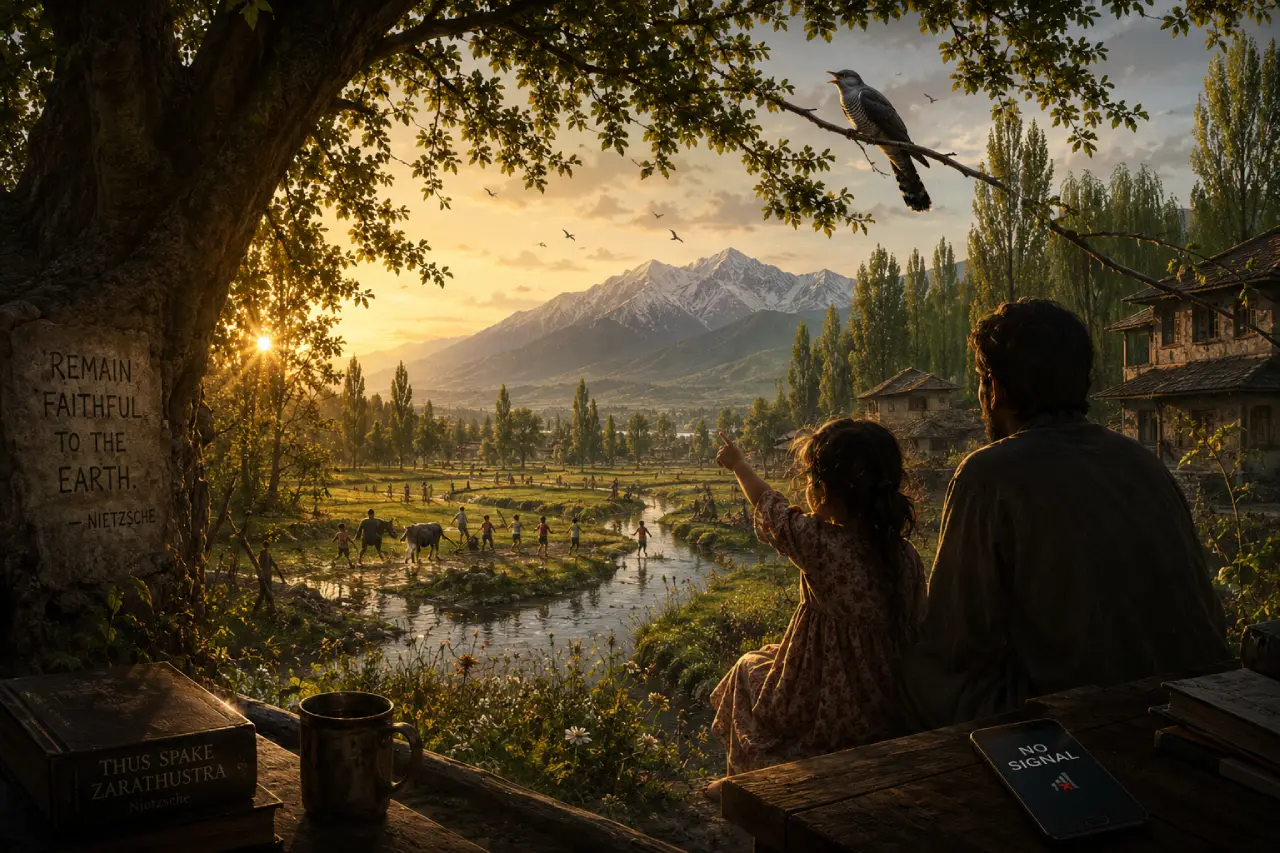
Nietzsche’s Thus Spake Zarathustra opens with an idea that remains highly relevant today. When Zarathustra descends after ten years of solitude in the mountains to speak to mankind, he urges the townspeople to reclaim the earth from which they have been alienated by those “despisers of life,” whose arrows of longing are aimed at other shores. Nietzsche’s command echoes through the ages: “Remain faithful to the earth.”
Yet what is painful to see, for those who have eyes to see, is how far we have drifted from the earth, from nature. While Zarathustra’s despisers of life turned away from the earthly for their own reasons, our estrangement has grown far more complex and far more atrocious.
Our sad disconnect from nature has become unsurprisingly normal, so much so that writing about it did not come from nature itself calling upon my senses again, nor from Nietzsche reminding me of my distance from the earth.
Surprisingly, it came from my five-year-old daughter. For several mornings in this late spring, she has forced me to wake up and show her the source of the unrelenting cuckoo’s cooing. I would take her outside, but the dense groves of poplars and willows, nearly cocooning every household in our mohalla, made it impossible to point exactly to the bird. She would then burst into tears. To reassure her, I would say that every single tree coos the sound.
Yet as Rachel Carson once wrote, “If a child is to keep alive his inborn sense of wonder, he needs the companionship of at least one adult who can share it, rediscovering with him the joy, excitement, and mystery of the world we live in.”
I was offering comfort, not companionship, and certainly not truth. She refused to give up. So I would loudly produce cooing sounds myself, and then the cuckoos would stop, perhaps sensing the unreal imitation. This would cause the bird hiding in the nearby grove to flutter and shift to another branch, and in that moment, my daughter would finally see it. I assure you, upon seeing the bird, the laughter with which she erupted would bring tears to my eyes. Then suddenly, we would both become conscious of the diverse chorus of birds and insects that filled the pristine, heavenly yet earthly morning. And I would think about how deeply disconnected we are from all this.
I would now feel ashamed, because the sounds woke my little daughter and not me. Her desperation to glimpse the hidden, cooing bird should be the most unforgettable and unforgivable thing for a parent who had such melodious sounds all around, yet walked about with ears as if chopped off. As John Burroughs once said, “I go to nature to be soothed and healed, and to have my senses put in order.” But my senses had failed me. It took a five-year-old to remind me what I had stopped hearing.
This disconnect has been so slow that it has become almost unnoticeable. What happens slowly endures for a long time. It would not sound new to say we should return to nature and restore our severed connections, for this plea has been made over and over. Some would argue that every generation romanticises the past. Yet just as Nietzsche’s ideas remain relevant today in transformed ways, the call to return to nature will always stand relevant, because certain slow erosions of our bond with the earth demand renewal again and again.
The reasons are few but urgent. A human being is merely a small part of the greater body of nature and cannot truly exist outside it. To remain disconnected will only deepen the harm. Throughout history, the more harmonious and friendly our association with nature, the safer and happier we have been. When that natural fabric is torn, it brings only torment and suffering. As the naturalist John Muir wrote, “When we try to pick out anything by itself, we find it hitched to everything else in the universe.” We have forgotten our hitchings. To remember them is not nostalgia; it is survival.
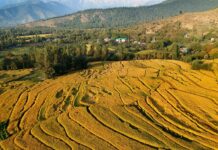
Most of our happiest memories from the past are intertwined with nature. Childhood itself is nature made flesh: free-flowing, abundant, and untamed. In our part of the world, when we were young, our mirth, our laughter, and our purest happiness sprang directly from the earth around us. We would go in boisterous bunches into the woods near Wular Lake and search the scattered mulberry trees on the banks and plains, then pounce on them like hungry wolves. We would knock down raw walnuts with stones, sticks and then get caught, our hands and lips left stained red from their tender peels. We would run, barefoot and breathless, through the muddy fields when rice planting was near. We would bathe and swim in the canals and rivers, then bask naked on their small sandy shores, feeling the sun dry our skin.
We would steal cucumbers from vegetable gardens in small, giggling squads. We would glean the leftover dried beans and rice panicles in the open fields after harvest. We would go in groups to pick wild berries in distant meadows, our fingers purple by noon. We would play hide and seek behind haystacks scattered across the golden fields. We would steal apples and sometimes receive a beating when caught by the orchard keeper, yet the thrill of the theft outlasted the sting. We would hunt for icicles and play cricket on the frozen river, our feet numbed but our hearts on fire. On school picnic days, we would pay a wandering photographer for his camera and shoot pictures in front of the landscapes and flowers we loved the most.
I remember the smell of the first rain on the dry dust of a huddled street near our home. We would run out bareheaded, letting the fat drops hit our faces, and then gather the running rivulets falling from the roof eaves into our cupped palms to drink. No bottle of water ever tasted as sweet.
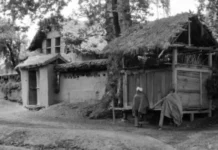
And I remember the sound of my father’s plough, which he mended with the reverence of a priest tending a sacred flame, a deep wooden groan with each turn as it broke the earth. That sound has stopped now. The plough is a broken skeleton leaning against a forgotten wall.
I remember the feel of mud squelching between my toes after the rice transplant. I remember holding freshly plucked bunches of wild mint (pudina) still dripping with morning dew. I remember afternoons spent catching cicadas from the willow barks, their frantic buzz vibrating against my small palms.
I could go on, but the point is clear: every memory of happiness we carry came from nature. All other memories somehow blur and fade into non-existence, like mist over the very fields we once ran through. As the poet William Wordsworth wrote, “Let Nature be your teacher.” She was ours, though we did not know it then. And now that I have seen my daughter awaken to the cuckoo’s call, I wonder if I have forgotten too much of what she taught me.
Our disconnect from nature has been very sad and painful. This cannot be dismissed as merely a requirement of the times. A modern generation may differ from its predecessors in countless ways, but its fundamental connection and equation with the earth should remain the same. Yet something that ought to come naturally has now reached a point where it needs to be taught.
We stand at a moment in place and time when we must teach ourselves, not just our children, how sweet it is to listen to the birds singing in the trees, to the rivers gushing down in an eternal murmur, to the flowers sprouting in the garden, to the earth that slowly buds in the spring and pleases the heart, the soul, and the eye. We must relearn how to feel the cool shade of the chinar and willow trees in the summer, and how to walk and run through the meadows and fields where life-sustaining produce grows. Because without these things, we are lost.
We have become drones, disconnected from the very body that nourishes us. As Henry David Thoreau once wrote, “I went to the woods because I wished to live deliberately, to front only the essential facts of life.” We no longer go to the woods. We no longer know what is essential.
If my daughter had not cried for the cuckoo, I might have slept through spring itself. That should shame us all into waking up.
(The author is an Assistant Professor at HKM Government Degree College, Bandipora. Ideas are personal.)