A Kashmiri moto-vlogger set out alone to circle the globe, only to find himself riding through a Middle East in flux. In Iran, as war broke out and missiles streaked overhead, he pushed on, even stitching his own wounds without anaesthesia after being injured. What he witnessed, endured, and carried back from the road has altered him irreversibly, reports Babra Wani
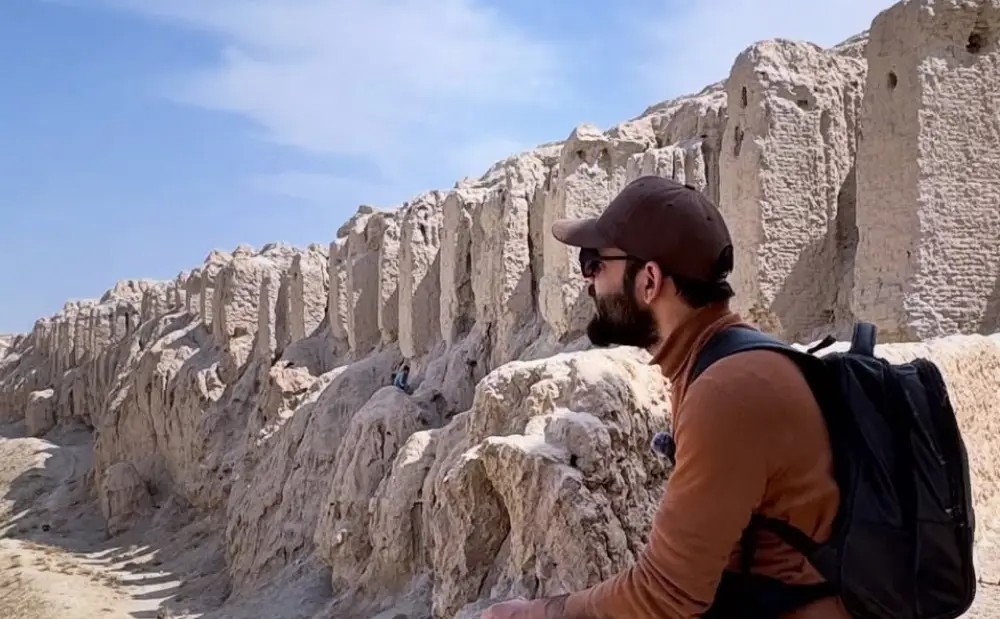
The missiles came without warning. One moment, Umar Wani was riding through Iran on his BMW GS Adventure motorcycle, camera mounted, and documenting ordinary life in an extraordinary country. Next, the sky above him was at war.
The 27-year-old was alone, a long way from his Saimoh village in Kashmir’s Tral. “There was a war. I saw it. I shared it in a video. I also recited the Kalima,” he said in a long telephone conversation with this correspondent. “I thought this was my end. I did not know,” his voice still carrying the weight of that moment.
Umar had not gone looking for the conflict. Iran was simply the only option left. Turkey required his visa to be processed back in India, a logistical impossibility for a man travelling entirely by motorbike with no plans to double back. So, for almost 20 days, he presented himself at the Iranian embassy, morning and evening, until they relented. “Even then, there was no war,” he recalled. “After entering Iran, the war started.”
When the shelling intensified, Umar did not flee. He moved towards the rubble to help with rescue efforts. Inside the debris, a piece of metal struck his shoulder. There was no hospital within reach. No anaesthetic and no one to assist. “I self-stitched myself. Without any local anaesthesia, it hurt so much that I had to put a tripod in my mouth and complete the stitching,” he said.
That image, a young Kashmiri alone in a warzone, gripping a camera tripod between his teeth to bear the pain of self-suturing, is perhaps the most arresting of his entire journey.
Yet Umar insisted it was not his worst moment. More difficult, he said, was the question that played on a loop in his mind as he lay injured in a country at war: not whether he would survive, but how his body would reach home if he did not.
“I thought today may be the last day. If I have to die, it is fine, but the thought of how my body will go home? lingered in my mind for a very long time,” he said. “I remembered my friends. I thought they would not leave my body there. They would take it home.”
That feeling was the result of a loss he suffered years before he ever left Kashmir, a loss that set everything else in motion.
Loss and the Long Road
To understand why Umar Iqbal was in Iran at all or why he was on the road at all, one has to go back to 2018. A young man living far away from home and failing to even say goodbye to his mother.
She had suffered a sudden heart attack at home with no prior complications. The local hospital lacked proper facilities. By the time she was referred to SKIMS, a second attack had her. Umar was not home. “I could not even see my mother’s face for the last time,” he regretted. “And that is the only incident that has shaped me and made me so accepting that I do not fear death anymore.”
Then, he was 19 and had just completed Class 12. He belonged, he explained, to a very middle-class family; simple, close-knit, just him and his father and a sister who was by then married. The loss detonated something in him.
“When I was in Iran, and it was a war there already, people used to ask me: you are witnessing death so closely and upright, are not you scared?” he said. “I used to tell them, Why would I be scared. I have seen and witnessed death back in 2018. There is no bigger sorrow than the sorrow of losing one’s mother.”
Soon after, Umar fell into a spiral of depression. He did not seek medical help. “I did not take any medicine or anything else. I just motivated myself and started vlogging,” he asserted, “initially as a time-pass, not a means of career. Later, since it went about well, I started taking it seriously enough.”
The vlogging alone was not enough, not at first. He turned to the mountains. He began hiking solo into the Kashmir peaks, camping in the silence, meditating at altitude. He began to write poetry and prose, always about nature. “It brought me peace to be in proximity with nature. I used to enjoy the silence and find myself again,” he revealed. “It increased with time and, finally, resulted in me getting inclined towards travelling.”
Before 2018, he said he was a normal, merry-go-happy boy, with zero sense of responsibility. “I was not into anything. I was a free bird,” he said. His mother’s death changed him 360 degrees, he asserted. Responsibility arrived the same morning as grief. “I know I belong to a middle-class family, even if we have lands and orchards, but I do not see it as a sustainable means of livelihood. I am happy and grateful, though, that Allah gave me this chance to be responsible.”

One Vlog at a Time
The transformation from grieving son to moto-vlogger with over 600,000 YouTube subscribers was deliberate and methodical. Umar did not simply pack a bag and leave. He spent years building himself up to it, testing his endurance incrementally, treating Kashmir as a training ground before turning to the world.
In 2023, he set himself the first proper task: document every corner of Kashmir on his bike, a Himalayan 4N adventure motorcycle, in both winter and summer. The winter rides drew the most attention, and not always the admiring kind. “Anyone who saw me in the winters, travelling on a bike, all the safety gears on, they were all like, ‘Is he crazy? Who is he?” he recalled those initial days. “Only a few people recognised me because of my vlogs. Mostly, people were like, “Is he insane?” When he went to Gulmarg on the bike, he slipped and fell in the snow. He got up and kept going.
By 2024, he had turned his attention to the whole of India, covering every state save two or three, which he planned to combine with a later trip towards Bangladesh since the route overlapped. Again, the conditions were chosen deliberately. “All India travel was in summer because I wanted to test my limits and strengths,” he said. “I thought if I could survive the summers of India, I could survive anything in the world.”
In December 2024, he left his home. He had his bike shipped from Mumbai to Dubai. In January 2025, after performing Umrah in Saudi Arabia, visiting Makkah, Madinah and Taaif, he began his world journey in earnest, on two wheels, northward and then east.
Funding the Trip
The finances, he said, are entirely his own. From whatever his channel earns, he spends on the journey. There is no corporate sponsor, no institutional backing, no crowd-funding. What sustains him emotionally, he said, is a network of people who hold things together in his absence.
“When I decided to travel the world, it was my family and friends who supported me the most. My biggest supporter right now is my father. He motivates me. He trusts me a lot,” admitted Umar. “He is always happy and content with the type of work I do. And I am blessed with some amazing friends, who in my absence go to my home and see to things there. Counting on my friends, I left for the journey. They always have my back.”
The trust of his father, he adds, is not something he takes for granted. “I have earned it. I have always worked to earn his trust. I have always respected him, valued him.”
A Passport Stamped in Feeling
Umar has now travelled through Saudi Arabia, the United Arab Emirates (UAE), Jordan, Iraq, Iran and Afghanistan. He describes each country not in tourist-brochure terms, but in the language of feeling, a single word or image that captures what it gave him.
The UAE, where he spent 20 days, left him cold in the emotional sense. “UAE is time pass,” he bluntly said. “There is no feel. UAE is for your tour, normal, enjoy, and chill. But there is no feel.”
Saudi Arabia occupies a different register entirely. Makkah and Madinah, he said, need no words. He performed Umrah there in March 2025. He fasted through both Ramazans on the road, even on long riding days, making fewer videos in those weeks deliberately: “I did not want to miss anything about Ramzan because of documenting a video.”
Jordan is memory. It is where he met Saddam, a Jordanian multi-millionaire businessman who, on meeting a Kashmiri stranger on a motorbike, invited him home for a week. He bought Umar what he needed, introduced him to his family, unusual in Arab homes, Umar noted, where outsiders are rarely permitted near the women of the household. “Even though Arab people are very strict, my relationship with his family was very comfortable and strong. I met his family, his kids and a great friendship blossomed.” Saddam is now waiting for Umar to complete the journey and return to Kashmir so that he can visit with his family.
Iraq symbolises peace. This surprises people, Umar acknowledges, given how the country is depicted. But he stayed there for two months across two separate visits, attended a wedding, drank tea in homes where no one ever charged him a single dinar. “The kind of people I met there, I failed to meet anywhere else. Even though I met some of the most amazing people through this journey, Iraqi people are different,” he said. “It is my second home now.”
Crossing into Iraq from Jordan means passing through Ramadi, notorious for violence, a region that the army escorts through for 450 kilometres. Even in that tense corridor, not one person approached him with malice or demand. “No one has ever come to me and asked for money. No one wanted to do something with me. Nothing like that has ever happened.”
Near the Palestinian borders, he managed to enter refugee camps that were formally closed to outsiders. He stayed, filmed and documented lives that the world rarely sees.
“Even though nobody is allowed there, I somehow managed and stayed with them. I documented their lives and the means of their living,” Umar remembered. “Even though it was very risky, I thought to myself, if I am getting this opportunity, I should not let it go to waste.”
When viewers wrote to him asking for bank account details so that they could donate, he refused. “I did not want to get into any stuff that would lead people to speculate that I was taking their money.” Everything he did to help the families, building roofs, buying clothes and shoes for children, was funded from his own pocket and from the contributions of friends, including a man from Mumbai named Zeeshan, who gave generously.
“Their lives are really miserable. The children did not have proper clothes or shoes. This experience prompted a thought of gratitude in me. I was like, Umar, be grateful for where you are in your life.”
Jordan also gave him one of the most striking moments of the journey, not a dramatic one, but an instructive one. In a street market, he came across a young woman running her own food stall. She was confident, self-reliant and respected. “I was shocked. She had developed it so well. I do not know why we feel ashamed to do such work here in Kashmir.”

Iran, Again
Iran, visited twice, offered two entirely different experiences. The first revealed a beautiful country with warm people and places worth exploring at length. The second revealed war. He is careful to separate the two.
“Iran is a great country, and people are really nice there.” He also visited Karbala twice during his time in Iraq, a journey that carried personal significance. “I had a vision to go to Iraq and Karbala. It was already in my mind. My name is Umar, and I visited Karbala.”
Umar said he prayed alongside both Shia and Sunni communities, describing it as a deliberate attempt to bridge divides, and remained firm in his conviction that Ahlul Bayt belong to all Muslims and should not be claimed by any single group.
Now he is in Afghanistan, and the same pattern repeats itself: families with whom he shares no language, yet with whom bonds form all the same. “Even here, I met families with whom I have no common language. Neither do they understand what I say, nor do I understand what they are saying. But the connection and bonding are such that it all makes sense, and we have become really close.”
The Language of the Road
There is a philosophy that Umar has developed, not from books or classrooms but from border crossings, visa queues, language barriers and shared meals with strangers. Riding, he said, is like the language of the unknown, but understanding through the heart. “When I went to Iraq on my bike, I met friends there. Even though we had language barriers, we used to lean on each other and understand each other through our hearts,” he said. “No words are needed; it is just a gesture, a glance, which does the magic.”
Borders, he said, are the hardest part of the journey, harder than the riding itself, harder than the heat or the cold. Every crossing demands composure under sustained questioning.
“There is questioning that you need to answer perfectly with calm and composition. Travelling by air is way easier than travelling on the bike,” he said. The motorbike adds an extra layer of scrutiny: the luggage boxes, the camera equipment, the spare gear, and every item invites inspection. “A person alone is perfect. But when you go by bike, there are boxes, there are bags. Border crossing becomes very tough.”
The visa process has been no less trying. In countries such as Iraq, Jordan, Iran and Afghanistan, obtaining clearance often required days of waiting and contingency planning. “It often becomes difficult to get visas. Sometimes I sit next to a passport holder from another country, who gets the visa, and I do not. It feels bad,” he said, a tinge of frustration that he quickly softens.
Once on the road, the physical demands are relentless. “You have to cover 500, 700, sometimes 800 kilometres in one day to reach the destination. Only after reaching, you feel the result.” But the hard days, he said, have always eventually yielded to good ones. He came out of wartime Iran and rode directly into Afghanistan, and there was beauty waiting. “After every difficult journey, you see a good journey. There is no bad phase forever. When we try to come out of the bad phase, then comes a good phase.”
On the road, the identity that once felt essential has dissolved. He used to care about clean clothes, a presentable appearance, and a comfortable place to sleep. Now he will stay in a tent, a good hotel, or a place he would once not have looked at. On Eid 2026, he wore an Afghan traditional dress and ordinary shoes. People were quick to point it out. He shrugged: “Yes, if a person walks dirty and wears torn clothes, that is wrong,” he said. “But normally we should take it easy.”
Uploading his videos in countries with poor digital infrastructure is its own sustained ordeal. Afghanistan, Iraq and Iran have no 5G, sometimes only 3G. “It takes 24 hours to upload one video. I upload all night. Sometimes the video uploads on the third day.” He handles every stage himself, shooting, editing, uploading, and makes no apology for the pace. “It depends on discipline. Every minute is precious for me.”
A Kashmiri
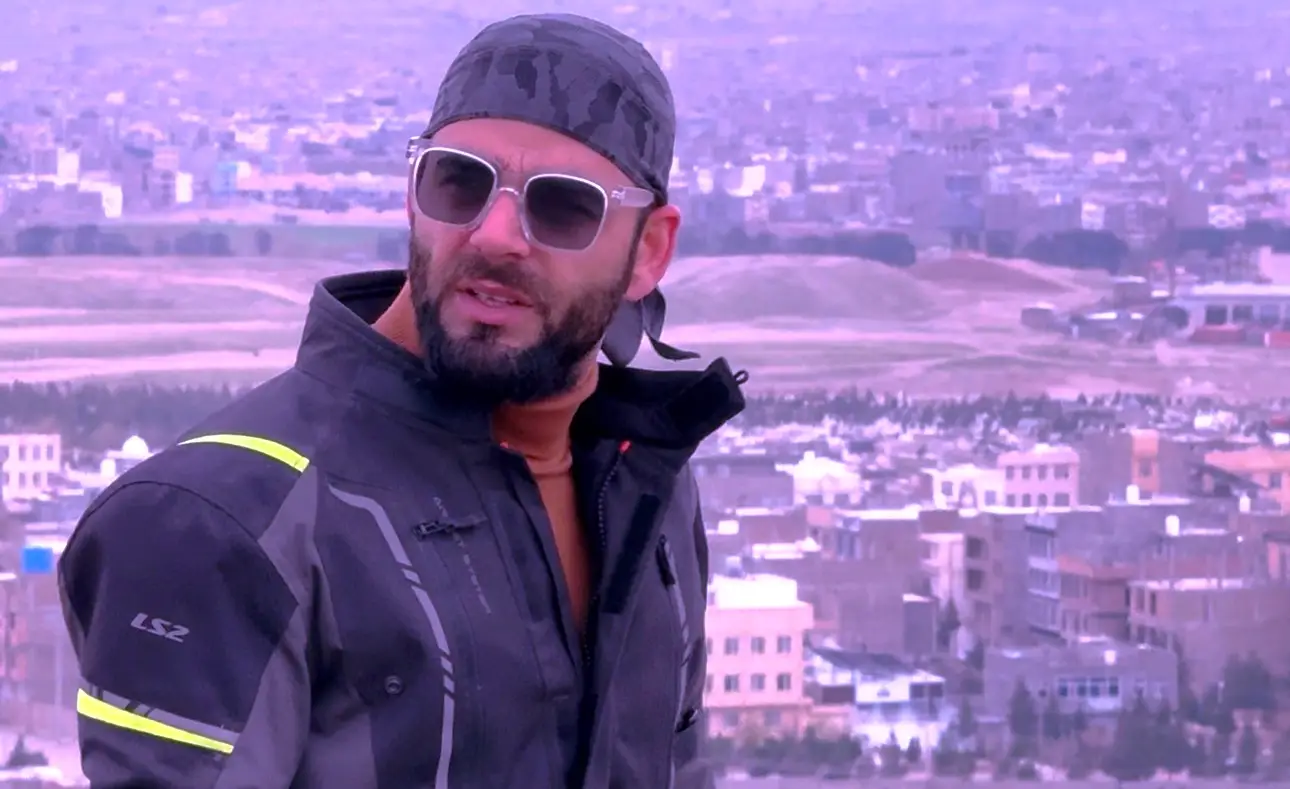
Wherever he goes, Umar introduces himself the same way. “I say I am from Kashmir, India. I am happy to represent my Kashmir,” he said.
The responses have quietly surprised him. Through subtitles on his videos, people who had never heard of Kashmir have begun searching for it. Some write to say they plan to visit. “Some people comment that they heard of Kashmir for the first time because of my videos. Now they search it on Google. Some even say they wish to visit. That is my purpose,” he said. “I am currently acting as a representative from Kashmir, who wants to present his homeland in a very positive light.”
Umar is tender about his home but candid about what he sees as its failures. Kashmiris, he said, have developed a habit of pulling each other down. “We are just putting each other down; that has become our culture, pulling each other down and highlighting the flaws of others.”
He sees it most clearly in the comments section of his own channel, where the sharpest criticism comes, he notes, from Kashmiris themselves. They have written that he has gone abroad merely to earn money, as though that were somehow shameful. “Even if I have gone to earn money, I have not come to your house. Do not watch my video if you do not like it. You have an option.”
Umar’s frustration extends to a broader concern about ambition, or its absence. In Kashmir, he said, there is educated unemployment, PhDs, Master’s degrees, years of study, and then no work to match them. His answer is not more degrees but different thinking. “I did not want a job where I earn Rs 50,000 and spend my life paying bank loans. What will I do with that salary? Build one wall of the house and finish?” He feels the same frustration when he sees that mechanics, carpenters and technicians across Kashmir are invariably non-native. “Why don’t we do this ourselves? Why do we feel ashamed?”
The kindness of his viewers, however, sustains him across the difficult days. When he receives a message telling him that someone’s mother is praying for him, it moves him deeply. “First of all, Kashmiris love me a lot. They pray for me. I am alive because of them, or I would have died in Iran.” These messages, he said, are an emotional time. He is thankful for them in a way that he finds hard to articulate.
On the road, Umar was repeatedly urged by friends and followers to abandon the journey and come home, particularly when the conflict in Iran intensified. “Everyone said, Umar, come home, take a flight,” he recalled. He refused. “Giving up is not in my dictionary. Even when death was in front of me, I didn’t give up.”
Going Home, Then On Again
When asked what drives him, what has driven him since that December morning in 2024 when he rode away from Saimoh and pointed the bike towards the world, Umar does not hesitate. It is not subscriber counts. It is not an adventure for its own sake. It is not even the freedom of the open road, though he loves that too. “My mother,” he said softly. “She taught me to accept death. After she passed away, all responsibilities came to me. That is my motivation.”
The journey has reshaped him in ways he is still discovering. He used to care about what is clean, what to wear, and where to stay. “Before travelling, I was a completely different man. I did not even pick up things, but now everything has changed. I have become a different version of myself. I have started caring less. Nothing bothers me. Not opinions, not judgements, not perceptions, nothing.” Comfort, once essential, has become secondary. “My life has changed.”
Some things remain constant, however. He misses Kashmir when it rains anywhere in the world. He misses it when a landscape reminds him of home. He observed two Ramazans on the road without breaking his fast, even on long riding days, and he prayed in mosques across six countries.
He plans to complete the Asian leg of his journey, return to Kashmir, upgrade his bike, and then leave again, this time for Europe. He will meet, as he puts it, more versions of himself and of other people. He will continue filming, editing through the night on a 3G connection, uploading on the third day if necessary, and representing, frame by frame, a valley that most of the world could not previously have placed on a map.