The Voluntary Medicare Society has evolved into Kashmir’s premier rehabilitation centre for persons with severe disabilities, built on the vision and commitment of a dedicated generation. It now requires a clear and forward-looking roadmap to advance to the next level, reports Afreen Ashraf
At the digital literacy lab of the Voluntary Medicare Society (VMS) in Bemina, Srinagar, a young boy named Saqib sits attentively with a keyboard placed in his lap, listening closely to verbal instructions. Saqib has been visually impaired since birth and cannot clearly see the computer screen, yet he is steadily learning how to navigate digital tools with the help of assistive technology and guided training.
“I want to become an IAS officer and serve the society,” he said, with the sort of conviction that can turn aspiration into a route map.
Saqib is one among several students at the centre who are being introduced to digital literacy despite visual challenges. For him and others like him, these are not merely lessons in computers. They are a route to inclusion in a digital world that too often assumes sight, speed and ease of access. With consistent support and structured guidance, he is gradually building the confidence to use technology in ways that can help him pursue education, access opportunities, and work towards his ambitions.
Not far from there, Imran, an adult patient at the VMS, works in the skill development unit, creating products from scrap materials to support himself during his treatment. He has been admitted to the physiotherapy department for the past two months after a fall from a walnut tree during the harvest season.
“When Imran first came to VMS, he was confined to his bed,” said VMS Director, Dr Bashir Ahmad Lone. “After two months of therapy, he can now move around independently in a wheelchair, and he is hopeful that he will be able to walk again soon.” However, he cannot continue his previous work due to his current medical condition, so the VMS is focusing on rehabilitating him, giving him the skills and support he needs to live independently.
These are not isolated stories. They are part of a larger, quieter transformation taking place behind the gates of one of Kashmir’s most significant rehabilitation institutions. For decades now, the VMS has been more than a treatment centre. It has been a place where people arrive in crisis and, with time and support, begin to reclaim dignity, movement, learning and purpose.
A Vision Takes Shape
The VMS was founded on the simple but powerful principles of dignity, opportunity and inclusion. It emerged at a time when rehabilitation services for persons with disabilities were extremely limited in the region, and when those with severe physical or sensory impairments were often left to manage on their own.
Dr Mir Mohammad Maqbool, who founded the organisation in 1993, understood that medical treatment alone could not meet the full burden of disability. People needed a centre that addressed the everyday realities of dependence, loss of mobility, exclusion and uncertainty.
He approached the government, and they were willing to understand the cause so they leased out almost 47 kanals of land.
That vision gave birth to an institution that would steadily grow from a modest charitable initiative into a multi-service medico-social organisation. In the early years, the focus remained on basic medical and rehabilitation support. Over time, however, the work expanded into education, skill development and long-term assistance aimed at helping people live more independently alongside treatment.
Today, the society operates from its main campus in Bemina, Srinagar, where it serves people with spinal cord injuries, visual impairments, neurological conditions and developmental delays among children. Its purpose is not limited to one stage of recovery. It seeks to take a person from diagnosis and treatment through rehabilitation and, ultimately, to social reintegration. That broad mandate has made it one of the most important support systems for families across Jammu and Kashmir.
The scale of the work is significant. Over the years, the organisation has helped more than 70,000 patients, many of whom have regained mobility or improved their quality of life. VMS has also extended its reach beyond Srinagar, with sub-centres in Kargil, Leh, Kupwara and Baramulla, allowing it to serve people in remote and peripheral areas who might otherwise have little access to such services.
At the heart of all this lies a simple idea: healthcare should not be a privilege reserved for the few. “Patients from below the poverty line categories receive treatment completely free of cost. For others, we charge only minimal fees. Our goal is service,” Dr Lone added. In that philosophy, VMS has built something more enduring than a hospital. It has built trust.
The Malik Influence
If Dr Maqbool gave the institution its founding purpose, Khurshid Ahmad Malik gave it one of its most profound human dimensions. His was a life shaped by public service, personal tragedy and extraordinary perseverance. A former IAS officer, Malik became a wheelchair user after a devastating road accident in 1987. The accident caused a severe spinal cord injury, ending his ability to walk but not his commitment to work, family or society.
Before that turning point, he had already built a distinguished career. Born in Srinagar in 1948, Malik was educated at the Tyndale Biscoe School and later graduated from Sri Pratap College. He qualified for the Kashmir Administrative Service (KAS) in 1972 and was later inducted into the IAS based on his seniority.
Then came the accident on March 19, 1987, during a road journey from Jammu to Srinagar for the annual Darbar Move. The crash claimed the lives of his brother-in-law and niece and left Malik with a spinal injury that would keep him immobile for the rest of his life. For many, such an injury might have marked the end of an active public life. For Malik, it became the beginning of another kind of service.
With an adapted hand-controlled vehicle brought from the United Kingdom, Malik returned to independent life in a manner that was both practical and pioneering. The vehicle, described as the first of its kind in India with Japanese technology, helped him move around independently and continue his work. In time, he became a model for many other people with spinal cord injuries, showing that disability need not erase agency, routine or purpose.
His own rehabilitation journey deepened his understanding of what others with similar injuries were facing. He had lived the frustration, the dependency and the social barriers that follow a life-changing injury. That experience made his work at VMS more than administrative involvement. It gave it moral force.
A Spinal Injury Vertical
Khurshid Ahmad Malik joined VMS with a clear intention: to help build a rehabilitation centre that would ease the suffering of persons with severe disabilities and make affordable support available to them. He became a strong pillar in the institution, especially in developing the spinal injury vertical that remains, even today, the only facility of its kind in Kashmir.
This vertical is particularly important because spinal cord injury brings profound physical and social consequences. Patients often need prolonged rehabilitation, mobility aids, counselling and support in rebuilding their daily lives. At VMS, that process is treated not as a narrow medical intervention but as a long-term human project.
The spinal injury rehabilitation programme focuses on clinical rehabilitation, physiotherapy, assistive devices, counselling and community integration. It aims to help patients not only regain movement where possible, but also adapt, participate and live with dignity. For many who have nowhere else to go, it has become the only viable pathway to recovery.
Malik’s influence extended beyond programme design. He helped create a culture of purpose within the institution. His own example, disciplined, punctual, practical and unafraid of visible disability, shaped the ethos of the place. He believed deeply in self-respect and in ensuring that people with disabilities were not treated as burdens, but as individuals with rights, abilities and aspirations.
Lives Rebuilt
Among patients was a man in his forties, describing VMS as a place he has returned to time and again. He first began visiting the centre nearly a decade ago for a separate health concern. Then, he found the support helpful, but recently, after suffering a brain haemorrhage that left the left side of his body paralysed, he once again turned to VMS for help. With regular therapy and guidance, he has started to notice gradual improvement in his condition.
What has left a deep impact on him is not just the treatment, but also the staff behind it. He speaks with emotion about the dedication of the staff, acknowledging the care, patience, and encouragement they provide every day. For him, the centre is more than a place of recovery. It is a source of strength and reassurance during one of the most difficult periods of his life.
The centre treats approximately 80 patients daily, receiving them both through direct consultation and referrals from hospitals and other institutions.
Inside the Campus
Director Dr Lone revealed a well-organised system that supports a patient at every stage of recovery. The VMS is structured in such a way that different units work together to provide complete care.
The physiotherapy room is one of the most important and often visited sections. Patients recovering from injuries or living with long-term conditions receive guided exercise sessions under trained professionals. Next to it is the assessment unit, where each patient is carefully examined, and a personalised treatment plan is prepared.
The campus also includes dedicated rehabilitation units for long-term care. Separate wards are available for male and female patients to ensure comfort and privacy. In addition, there is a mental health centre that focuses on the psychological well-being of patients, recognising its importance in the overall recovery process.
“We aim to stabilise mental health alongside physical recovery,” Dr Bashir said. “Healing is incomplete without emotional strength.”
The facility also has a fitness centre with separate timings for men and women. Here, patients gradually rebuild their strength and mobility, often after long periods of physical limitation.
“We do not just treat a condition. We look at the person as a whole – what they need to recover, to live independently, and to regain confidence.”
Prosthetic and Orthotic Centre
Among the most impactful services at VMS is its Prosthetic and Orthotic Centre, where customised limbs, braces, splints, and callipers are made free of cost, giving patients a chance to regain mobility and independence.
“We customise each item carefully to meet individual needs; however, due to heavy demand, there is often a waiting list,” asserted the director. “Even though other institutions also produce such aids, VMS handles a significant share of the demand across Kashmir.”
Another key facility within the centre is the dialysis unit, which is equipped with 13 machines operating in three shifts each day. Like many of the organisation’s services, dialysis is provided free of cost.
Besides, the neuro-rehabilitation unit provides specialised care for patients recovering from neurological conditions. Through targeted therapies and structured support, the unit focuses on helping individuals regain lost functions.
Early Intervention
The early intervention unit has produced some of the centre’s most striking stories. One mother described her gratitude after her four-year-old son began walking, having missed that milestone for three years. Born with a weak left side due to birth complications, the child was admitted to the unit at the age of three. After three months of physiotherapy and guided exercises, he regained the ability to walk.
“When we first received him, he could not move his left side and was unable to walk. He used to crawl on his bottom and had multiple injuries,” his treating doctor from the unit. “Now, he walks on his feet, and although he still limps, we are determined that he will soon start running.”
This kind of progress may seem small from a distance, but within a family it is momentous. It changes routines, hopes and the emotional climate of a home. It also demonstrates how early support can shape a child’s life trajectory.
VMS has discharged more than 1,000 children after positive responses to the programme, according to Dr Lone.
That figure matters not just as a statistic, but as a reminder that rehabilitation can produce real, measurable change. In a setting where families often carry the burden of disability alone, the centre offers structure, reassurance and practical help.
Work and Independence
Perhaps one of the most distinctive features of VMS is the way it links rehabilitation with livelihood. The skill development unit helps patients, especially those with chronic conditions or those unable to continue their previous work, learn practical skills while they are still in treatment. Through this approach, patients can prepare for a more stable life after discharge.
In partnership with Mumbai-based organisation Karman, VMS offers training in tailoring and handicrafts. Patients produce items such as tote bags, laptop sleeves and other products, often using recycled materials. Karman provides project consultation and supplies work that patients can take on. The model gives patients hands-on experience and a chance to earn while they recover.
This is important because disability can often lead to financial vulnerability. When illness or injury interrupts a person’s work, the consequences ripple through the household. A rehabilitation model that includes livelihood training, therefore, does more than heal the body. It protects dignity, reduces dependence and restores a sense of contribution.
Digital Access
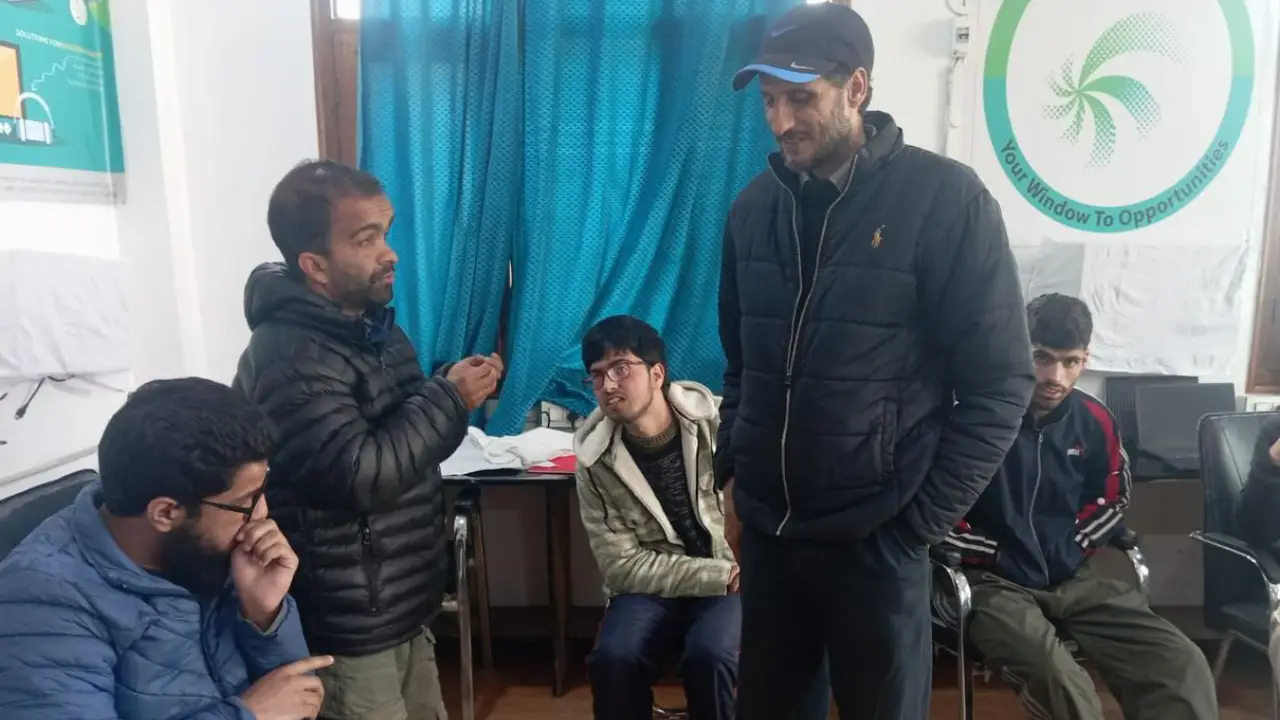
The digital literacy lab is another example of the institution’s forward-looking approach. It trains visually impaired individuals in computer skills using assistive technologies, ensuring that people who cannot see or write manually can still participate in exams and assessments independently online.
Some of the trainers themselves are visually impaired, which gives the unit a special depth. Haneef Sahab from Baramulla is completely blind, yet he navigates technology with confidence.
“It may take me more time than others to complete a task, but I assure you I will do it and in a better format,” he said. He has worked as a digital literacy trainer at VMS for two years and has also helped coordinate programmes. “I love learning new things and helping others learn them,” he said. “I can do it too.”
That statement captures the spirit of the lab. It is not simply about teaching software or devices. It is about changing assumptions. When a visually impaired trainer teaches visually impaired students, the message is clear: disability does not erase expertise. It can coexist with it.
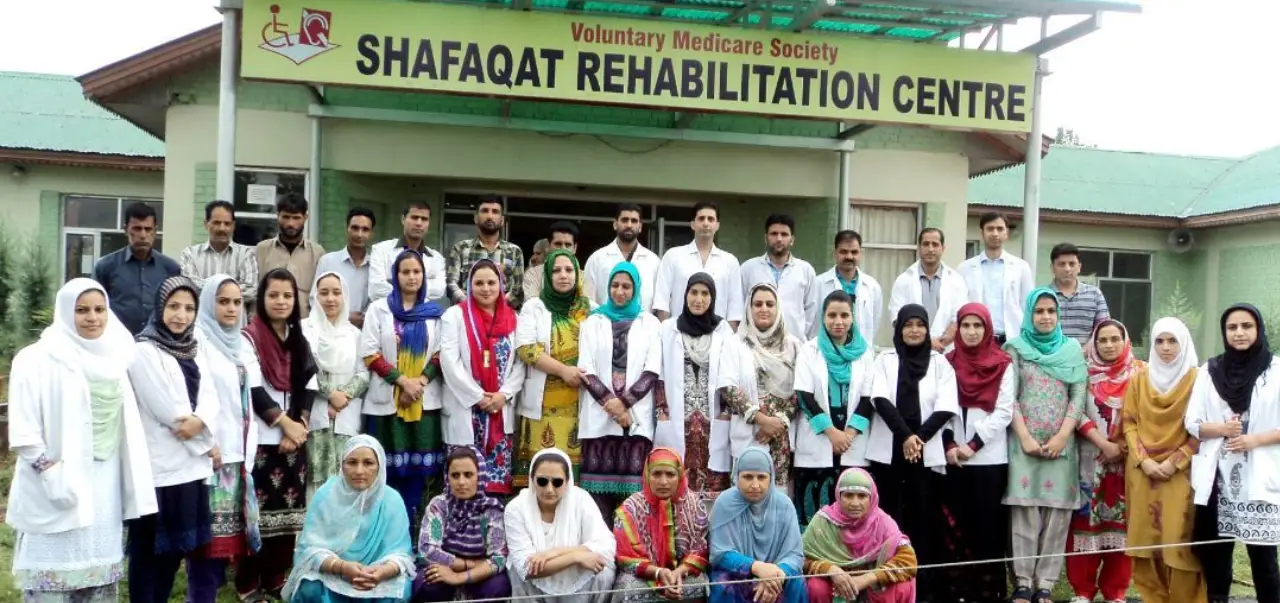
Each digital literacy course trains about 16 students in one group. In 2025, VMS expanded this work further as part of the nationwide See A Million Campaign. In collaboration with EnAble India, it organised the #SeeAMillion Solutions Week, an exhibition featuring assistive devices, inclusive technologies and accessibility solutions for persons with visual impairment.
The event highlighted tools that help people read, write, communicate, navigate and live independently. Besides, it placed lived experience at the centre, with visually impaired individuals sharing stories of how assistive technology changed their education, work and daily lives. That kind of public visibility matters. It moves disability from the margins into the main conversation.
The Special School
One of the most important components of the institution is its school for children with special needs, where nearly 2,000 students are currently enrolled. Named Shafqat Special School, this school was established in 2000. It provides not only education but also a nurturing environment in which children can learn without stigma. It is divided into special and inclusive sections, allowing students to be placed in settings better suited to their abilities.
The school has also taken a significant step by enrolling students for state board examinations. This year, four students appeared and passed successfully, a development that reflects both academic progress and institutional confidence. For children who might otherwise have been excluded from mainstream education, such milestones carry enormous significance.
Ayub Bhat, administrator and therapist at the school, stressed the importance of early intervention. He urged parents to bring specially-abled children forward as soon as possible, pointing out that many arrive late, sometimes after the age of five, when the chances of improvement are lower.
“Education can transform their lives,” he said. “If children are received at an early age, we can achieve remarkable results.”
Apart from school, it also has a rehabilitation centre. The school’s model is holistic. It combines therapy, education and personal development so that each child receives care tailored to individual needs. It is not simply a place where lessons are taught. It is a space where confidence is built, stigma is challenged, and the foundations of independence are laid.
Shabnam, a caretaker at the special school, said she feels deeply honoured to serve the children and promises to continue with the same dedication. Her words mirror the ethos of the wider institution, where service is not treated as duty alone but as a form of companionship.
Looking Ahead
Looking ahead, VMS plans to expand its infrastructure to meet the rising demand for its services. In collaboration with the Jammu and Kashmir Hope and Health Foundation (JKHHF), it is developing a new multi-speciality block with advanced treatment facilities, additional rehabilitation units, and dedicated spaces for education and skill development. The expansion is intended to improve access, strengthen capacity, and enable the institution to manage more complex cases while maintaining its focus on inclusive care.
The project, however, entails substantial financial commitments. Prof Masooda Yasin, Vice President of VMS, said the initiative requires not only funding but sustained community engagement. “We don’t just need funds,” she said. “We need people to stand with us, volunteer, support, and help raise awareness about our work.”
Health, Mobility and Sport
VMS has also recognised the role of fitness and sport in rehabilitation. Its gym facilities, separate timings for men and women, and wheelchair basketball training show that the institution values not just recovery from injury, but the rebuilding of strength, identity and confidence.
For wheelchair users, sport is often more than recreation. It is a way to re-enter movement, community and self-belief. It is also a reminder that bodies live in multiple registers at once, medical, social, emotional and physical. The same applies to fitness training, which can restore stamina and independence after long periods of limitation.
The dialysis unit forms another important strand of VMS’s work. Equipped with 13 machines and operating in three shifts, it provides free dialysis for patients in need. Alongside this, the neuro-rehabilitation unit supports people recovering from neurological conditions through targeted therapies and structured care.
A Legacy
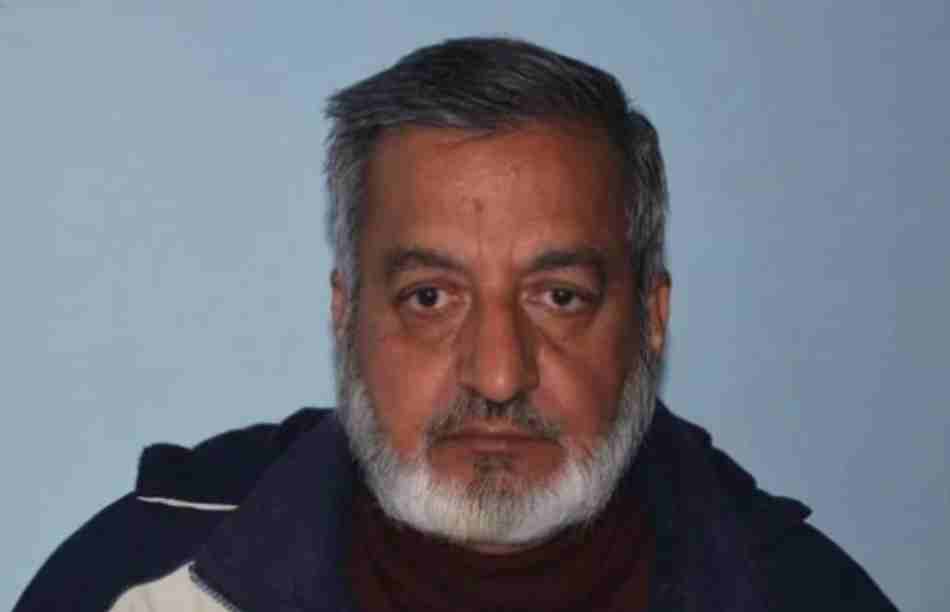
The VMS was created by Dr Maqbool, currently in advanced age, and was later joined by Malik, his relative, especially after he met a devastating road accident. The latter passed away on October 16, 2024. He was 77. While the two had a vision and craved to work for a section of people who did not form the priority of the society within and outside the governance circuit, there was a crowd of volunteers who were at their beck and call. They would be on this public project for years, when it lacked an identity and profile.
That is why the future of VMS matters so deeply. The institution cannot remain only a tribute to the past. It must continue to grow, respond and serve with the same clarity of purpose that guided its two drivers.
The disability sector in Kashmir still needs stronger rehabilitation pathways, greater public awareness and more sustained support.
The lesson of VMS is that disability is not inability. It is a condition that demands infrastructure, patience, skill and social commitment. When those elements come together, lives change. Children walk. Adults work. Students study. Patients recover. Families breathe easier. Confidence returns.
The same model needs to be adopted by VMS for itself. As the two leaders fade away after exceptional tenures, the Society needs to have more enablers, possibly from the flock that work for it when VMS lacked a profile. The best tribute to its founders is to ensure VMS continuity as a public institution and not a family set-up.