As drowning deaths continue to claim young lives across Kashmir, questions grow louder about whose responsibility it is to make the water’s edge safer, reports Asrar Syeed
From Ramban to Shopian, the distance is measurable. The grief is not. Two families, one in the mountains of Ramban and another from the Pulwama plains, spent many days in April waiting by the water for the bodies of those they loved. Both lost. Both found. Both buried.
The stories are different in their causes and their details. But they share a shape: a moment of disaster, days of desperate searching, and the quiet, devastating weight of an absence that will not lift.
Tanveer Ahmad Chopan was 22 years old and worked as a truck driver. He was the only son in a family of four sisters and ageing parents. On the day he died, he was doing what he did for a living: carrying cows in his truck along the Jammu Srinagar National Highway (NH 44).
According to a member of the QRT Ramsoo rescue team, what happened next unfolded in two stages. A group identifying themselves as Gau Rakhshaks, cow vigilantes, first stopped Tanveer at Digdol. He was allegedly beaten, but he managed to escape. They then got into two vehicles and gave a chase. They caught up with him again at Magarkote.
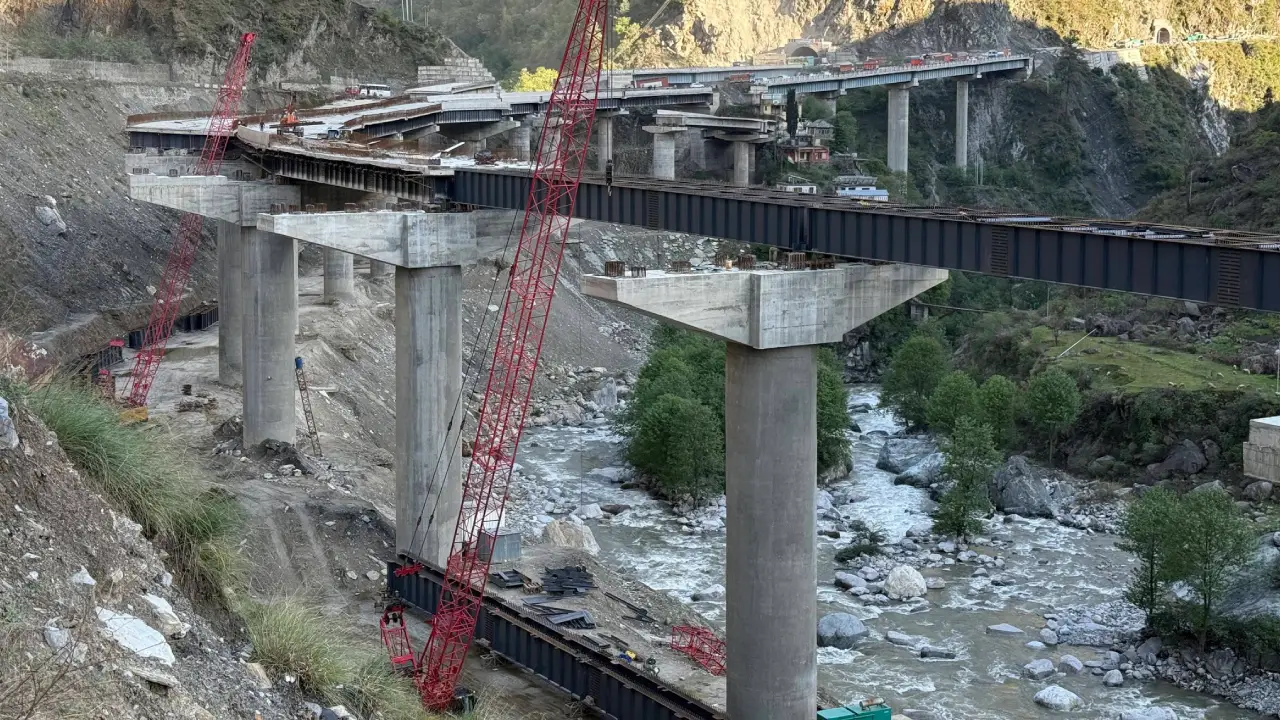
He ran toward the Bishlari, a tributary of the Chenab River. That day, the water level was high. He was trying to cross. The men above were throwing stones. Tanveer drowned. “These people were throwing stones from above, which unfortunately led to Tanveer’s drowning,” a QRT member said.
Ramban Police filed FIR no 26/2026 at Ramsoo Police Station. Four men, Surjeet Singh, Sandeep Singh, Digvijay Singh, and Keval Singh, all residents of Ramban district, were arrested. The police stated that CCTV footage had been obtained and that the matter remained under investigation.
On April 13, hundreds gathered near Magarkote and blocked NH-44. Protesters raised slogans demanding that the culprits be hanged. They alleged that these peculiar attacks were not new.
While the protests moved and the slogans echoed, Tanveer’s family sat near the tributary. Waiting for the body for a decent burial of the sole bread earner
Days of Searching
A large search operation was launched almost immediately. Police, local volunteers, the National Disaster Response Force, the Army, and QRT Ramsoo all joined in. But as the days passed and the body did not surface, the intensity declined. Organisations began pulling out of the search one by one.
“Only the QRT Ramsoo team kept the search mission ongoing,” said one of its members. During the early stages, their team had found Tanveer’s trousers. Some began saying the boy had never jumped into the water at all, that he had gone into hiding. “But a worker at a nearby construction site had seen a body moving in the stream.”
The body was eventually found near Kraalnag Khooninalla, three to four kilometres downstream from where Tanveer had entered the water. His condition, the team member noted, had not suffered excessive damage. He was handed over to his family that evening and buried in his village.
A Loss at Picnic
As Kashmir was still absorbing the news of Tanveer’s death, four-year-old Mohammad Hunzala slipped into Rambiara Nallah near Dubjan bridge in Shopian district. His family had come from Tiken in Pulwama for a picnic. They had spent some time by the stream. They went closer to take photographs. And then he was gone.
The rush of the water made an immediate rescue impossible. By the time authorities arrived and began a search operation, the weather had turned. It rained all morning. The water rose with each passing hour.
Hamza Sheikh, a veteran of many such operations, respected by his colleagues for his willingness to risk his life, led the search in Shopian. Videos of his efforts circulated on social media. Residents of Shopian hailed him. But it took five days.
“We have already searched the upper portions of the stream,” Hamza said during the search, “but due to the light weight of the body, it has flowed ahead.”
On the morning of May 1, locals retrieved Hunzala’s body from a downstream location along Rambiara Nallah. Five days after he had fallen in. For five days, his parents had spent waiting. The body was handed over to the family after formalities. Hundreds gathered in Tiken for the funeral procession.
Cruel Crowds
In all of these incidents, another pattern repeats. When tragedy strikes, crowds routinely gather. They take pictures of the site. When bodies are recovered, they photograph those too. On May 1, when Hunzala’s body was found, images and videos of the four-year-old’s lifeless form were uploaded across social media platforms. His parents saw them.
This is its own kind of violence, quieter than the one that killed Tanveer, less dramatic than a flooded stream, but real in its harm to people already broken by loss.
In Mundkhal in Ramban, Tanveer’s parents, who had one son, live now with four daughters and an absence. In Tiken in Pulwama, Hunzala’s parents live with the memory of an afternoon by the water that became something they will spend their lives trying to understand.
Both families are learning, slowly, to live with what cannot be undone.