When Kashmir’s child care institutions close their doors at eighteen, young residents are left without aftercare, skills, or safety nets, reports Afreen Ashraf
When Arfa lost her father to a sudden heart attack, she was left behind with a family of four: herself, her mother, a housewife, a married sister, and an elder brother who is partially blind. With no stable source of income, the family continued struggling to sustain their daily lives. Immediate relatives, neighbours, and a few well-wishers offered financial assistance, helping them manage their day-to-day survival. However, this support came with a significant limitation; it was far from sufficient to cover the expenses of Arfa’s education.
A New Home
Arfa had completed her schooling up to Class 8 at a local school before moving to a government high school. Like many young girls her age, she harboured the ambition of becoming a doctor, a dream she clung to despite her family’s financial uncertainty.
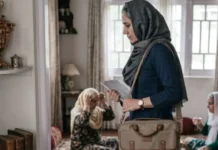
In 2020, she was admitted to a Child Care Institution (CCI) in Chadora so that she could continue her higher secondary education. For the next two years, the institution provided both shelter and a support system, enabling her to focus on her studies without the constant worry of financing her education. However, that support proved to be temporary.
Soon after she completed her Class 12 board examinations, Arfa, along with several other girls, was told to pack her bags and leave. Having crossed the formal age limit for residing in a CCI, they were required to move on.
“I was told to move out and make my own way from then,” Arfa recalled the administration telling her.
Unlike many others, Arfa had a family to return to. Yet her future still felt deeply uncertain. “I had a shelter and a family where I could go,” she said. “But I knew that I was going to become a burden on my mother, who was already struggling to support my brother.”
With no other options, Arfa returned home and began helping with household responsibilities. The sudden transition from the institution’s structure and security to an uncertain life was difficult to process. “It took me more than a year to stabilise,” she remembers. Eventually, when circumstances became more favourable, she decided to continue her education. She appeared for the entrance examination for the General Nursing and Midwifery (GNM) programme and is now pursuing the course in Bakhshi Nagar. But the dream of becoming a doctor remains unfinished. “Maybe if the CCI had kept me until I could have prepared for NEET, I would have become a doctor,” she regrets.
A Widespread Reality
Arfa’s case is not isolated. Across the Kashmir Valley, several children raised in orphanages and charitable institutions face similar uncertainty when they reach adulthood.
As of September 30, 2021, Jammu and Kashmir had 101 Child Care Institutions registered under the Juvenile Justice (Care and Protection of Children) Act, 2015, according to official data from the Ministry of Women and Child Development. Government figures for 2020-21 show that 759 children were living in CCIs across the region.
Several non-governmental organisations, including Chinar Kashmir, Rahat Manzil, and Yateem Foundation, provide care to many of these children. They offer shelter, education, and basic support to children who have lost their parents or come from economically weaker backgrounds.
For years, these institutions have functioned as homes for such children. But once they reach a certain age, the support system that sustained them throughout childhood disappears abruptly, leaving them suddenly responsible for their own lives, often without any preparation. This comes so abruptly that they lack any experience of navigating the life around.
Starting Over
Around the same time that Arfa was struggling to sustain her ambitions, a similar situation was unfolding in another CCI in Kashmir. A group of girls had just passed their Class 12 board examinations and, as per institutional rules, were preparing to leave.
Among them was an abandoned girl who had no immediate family at all. She had spent her entire childhood growing up within the institution. Although her academic performance was not particularly strong, she carried aspirations of building a life of her own; she hoped to pursue vocational training and do something meaningful. However, having crossed the permissible age limit, the institution could no longer formally support her. She was allowed to stay for a short additional period, but with limited resources, the institution could not sustain her for long.
With no family to return to, she faced the risk of being left entirely without support. Eventually, the institution arranged her marriage. Today, she lives with her husband and has started a family of her own. “Today she has a family she once did not have, but not the dream she once hoped to pursue,” said a former student who narrated her story.
Struggles of Care Leavers
Rayees, a former CCI resident himself, managed to continue his education after leaving care and eventually completed his postgraduate studies. Today, he volunteers to support children currently living in CCIs. In a conversation with Kashmir Life, Rayees said that a fellowship programme supported by Udayan Care and UNICEF played an important role in helping him sustain life after leaving institutional care. The fellowship gave him exposure and helped him understand the challenges faced by care leavers across different parts of the country. As part of the programme, fellows were required to visit various institutions and maintain records of children living there.
“That is when I realised how many talented young people are struggling,” he explained. “There are so many students with the potential to achieve great things, but their opportunities disappear once they leave the institution.”
During one of his visits to Srinagar, Rayees interacted with a group of girls living in a CCI. “They were very ambitious,” he remembers. “But when I asked them what they planned to do in the future, they told me they didn’t know. They didn’t have any plan.”
Those girls were uncertain whether they would even be able to continue their education after leaving the institution. For children like Arfa and many others, the transition period is filled with uncertainty.
When Institutions Become Home
Institutions caring for orphaned or economically vulnerable children have long been an important part of Kashmir’s social support network. Across the Valley, many children live in government-run and non-governmental organisations that provide shelter, education, and basic care. For these children, such institutions become far more than temporary shelters; they become home.
Hajira, another former care leaver, vaguely remembers the fear she felt when she first entered a CCI right after her father’s sudden death. “When I first arrived there, I was very scared,” she recalled. “It felt like I had been placed in a strange and unfamiliar place.”
Over time, however, the institution began to feel like a place of comfort. “I stayed there for more than a decade,” she said. “I made friends there, and it became like a family. That place became a second home to me.”
Transition to Independence
Amir Choppan, a volunteer with the Care Leavers Advocacy Network and a former CCI resident himself, has spent years studying the experiences of care leavers. He notes that for many young people, CCIs become a comfortable environment they grow dependent on.
“I have spoken to several students and realised that most of their basic decisions were made by the institution, and they simply followed them,” he explained. “But when they reach a critical point in life and have to make choices that shape their future, they are asked to leave.” That shift, he explains, is sudden and harsh. “That abrupt transition makes their lives far more difficult than if they had been left on their own from the beginning,” he added.
Choppan also shared the case of a young person who wanted to pursue a professional course but was forced to settle for a diploma instead because the resources were not available. “Young people leaving care often lack family networks, financial resources, and social support,” he said. “Without structured support, they may struggle with housing, education, and employment.”
Laws That Promise Support
The challenges faced by care leavers are recognised under Indian law. The Juvenile Justice (Care and Protection of Children) Act, 2015, provides for aftercare services meant to support young people transitioning out of child care institutions. Section 46 of the Act provides financial and other assistance to help care leavers integrate into society. To translate this into action, Rule 25 of the Juvenile Justice (Care and Protection of Children) Model Rules, 2016 directs state governments to establish aftercare programmes through district administrations and District Child Protection Units.
These programmes are intended to assist in education, skill development, job placements, and financial support. The rule also allows institutions to extend a young person’s stay up to the age of twenty-three in exceptional cases, particularly for those who have not completed their education or who lack safe accommodation.
Despite such legal provisions, implementation on the ground remains inconsistent. Zahoor Ahmed Taak, Chairperson of the Jammu and Kashmir Yateem Trust, explains that most CCIs operate with limited funding and staff, with their primary focus on providing necessities such as food, clothing, shelter, and schooling. “Preparing children for independent life after leaving care requires additional resources that many institutions simply do not have,” he said. “As a result, many care leavers leave without essential life skills such as financial literacy, decision-making abilities, communication skills, and time management.”
A 2019 study conducted by Udayan Care found that nearly 67 per cent of surveyed care leavers were unaware of the aftercare provisions available to them. Those surveying institutions encountered a troubling gap in awareness even among officials, raising the question of how children are expected to seek help when those responsible for them are themselves uninformed.
“There is a huge gap between policy and implementation,” said Zahoor Ahmed. “Our institute previously supported children until they completed Class 12, but due to financial limitations, we now provide services only up to Class 10.”
He further noted that most facilities are designed exclusively for minors: once a child turns eighteen, legally, they cannot remain. Nevertheless, his organisation has attempted to maintain informal relationships with former residents, helping them apply for scholarships or find employment. He has also established a shelter home that currently supports 55 girls who have left institutional care, funded through donations from well-wishers.
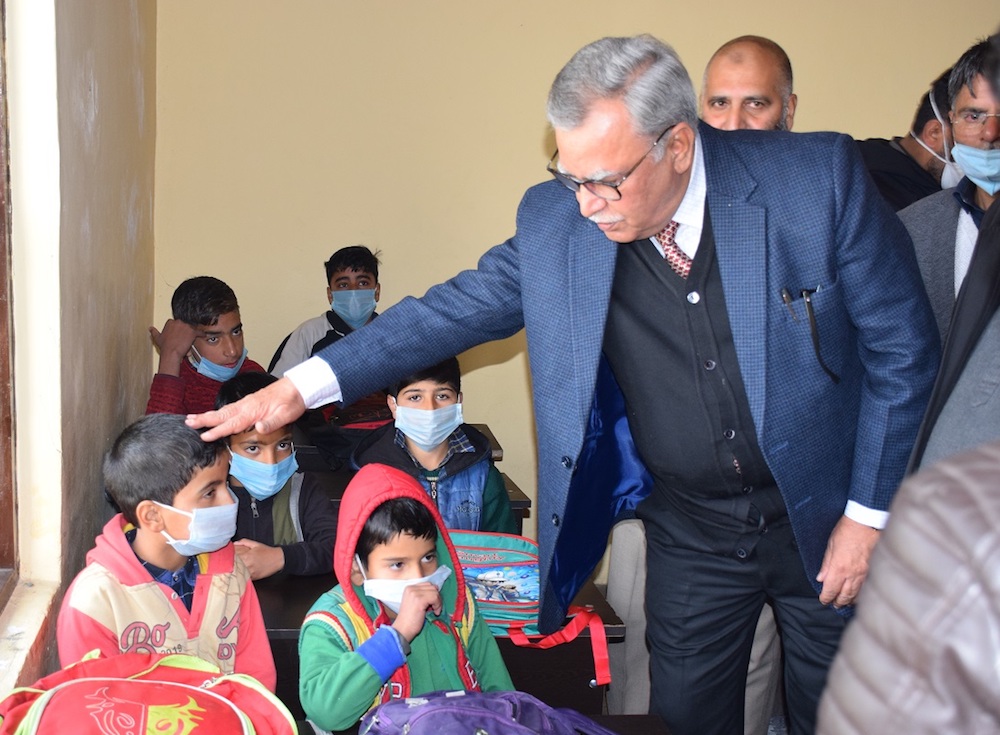
“I had some girls in front of my eyes who were talented and had almost no resources to sustain their lives while continuing to study,” he said. “I thought I could help them.” Admission to such facilities, however, is limited, often based on academic performance and discipline.
Another CCI, the Yateem Foundation, also offers an aftercare fund for academically strong students who wish to continue their studies after Class 12. “Right now, one of our students is studying at NIT, with his education supported by the institution,” Javad Javed said. However, he added, this facility is not available to everyone.
Other organisations provide modest financial assistance. Administrators at Rahat Manzil said they deposit small monthly savings into bank accounts for children in their care, which are handed over upon departure. But the system varies from one institution to another. Arfa, for instance, did not receive such assistance from the institution where she stayed.
When the Doors Close
Experts working in child protection argue that the transition from institutional care to adulthood should be gradual rather than abrupt. Some states in India offer care leavers additional support, including temporary housing, mentorship, and financial assistance into their early twenties, provisions that officials believe could significantly improve outcomes for children leaving care in Jammu and Kashmir.
Arfa’s story reflects a larger reality for children raised in institutions across Kashmir. When the doors of these homes close at eighteen, many are left to navigate adulthood without the support, guidance, or resources they once relied on. Some, like Arfa, have families to return to. Others face a future filled with insecurity and difficult choices. Without structured aftercare, even the most determined young people can struggle to build the lives they hope for.
The real question is: when these doors close, who will be there to catch them? Who will hold them, like a mother guiding a child taking their first steps, letting go slowly only when they are ready to walk on their own? For many children leaving care, that support simply doesn’t exist, and the world they step into can feel uncertain and harsh.
(Some names have been changed to protect the identity of the people who spoke to us.)