In Srinagar, Kral Arts and Kralpora’s remaining potters spearhead a modest revival of Kashmir’s traditional earthenware, blending heritage, entrepreneurship and health-conscious appeal, reports Asrar Syeed
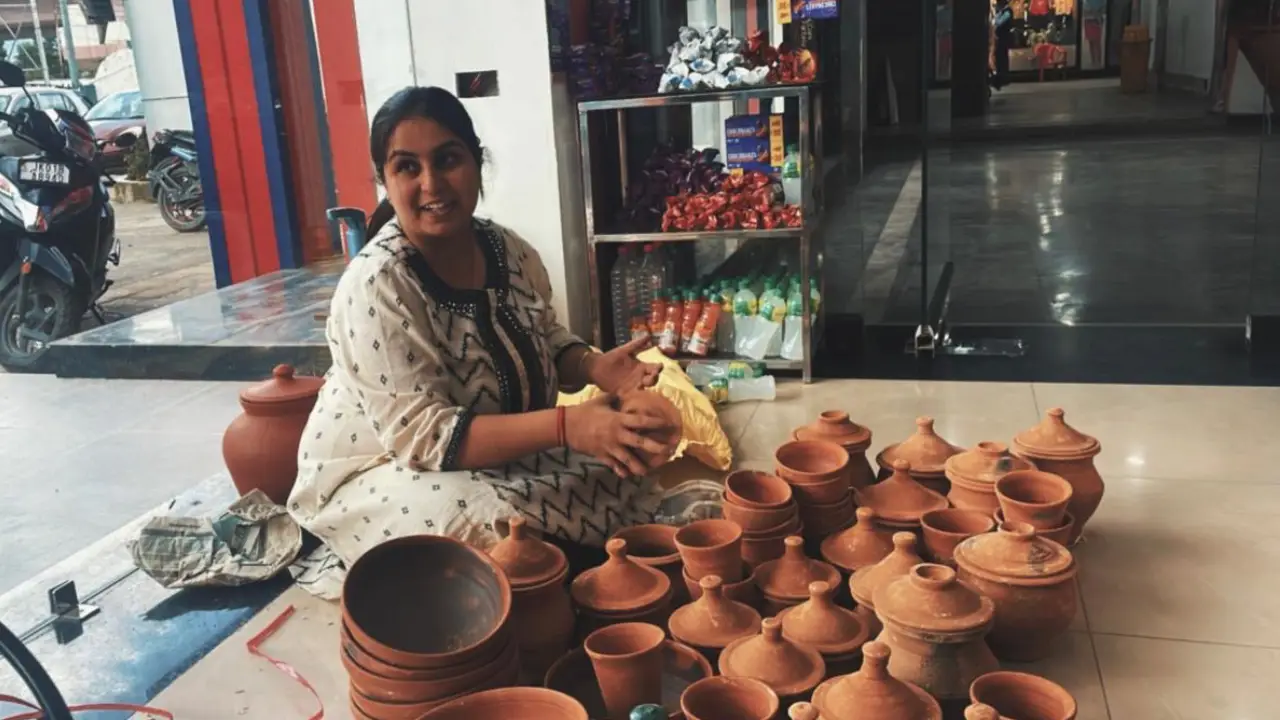
On Srinagar’s Airport Road near Hyderpora is a store named Kral Arts. On a long street dominated by apparently upmarket things, this store is about pottery. Founded by Gurpriya, a young entrepreneur who blends modern design aesthetics with age-old craftsmanship, this store was initiated to contemporise Kashmir’s traditional pottery.
Gurpriya said the idea was inspired by stories her father shared from his childhood. “He often spoke about his grandmother, who used clay utensils for everything,” Gurpriya remembers. “She believed they kept food pure and enhanced its flavour.” Those memories shaped her commitment to revive the craft in a contemporary format.
One anecdote in particular left a lasting impression. Her father had once longed for a traditional batteh baneh, a Kashmiri bowl-style plate. When he finally received one, he and his friends would gather around it, sharing simple meals and conversation. For Gurpriya, the story reflects a time when pottery was intertwined with everyday life, from serving meals to storing water.
This store is writing a new chapter in Kashmir’s pottery tradition, a craft deeply rooted in Kralpora, a settlement not far away from the Airport Road.
A Pottery Hub
Located on the margins of Srinagar city, Kralpora is believed by residents to be more than a thousand years old. In Kashmir, many settlements derive their names from the professions of their inhabitants: Chanpora, the settlement of carpenters; Goripora, the colony of herdsmen; and Kralpora, literally, the village of potters.
Several villages across Kashmir share the name Kralpora, but the one on the city’s outskirts remains the most prominent, long recognised as a hub of earthenware craftsmanship.
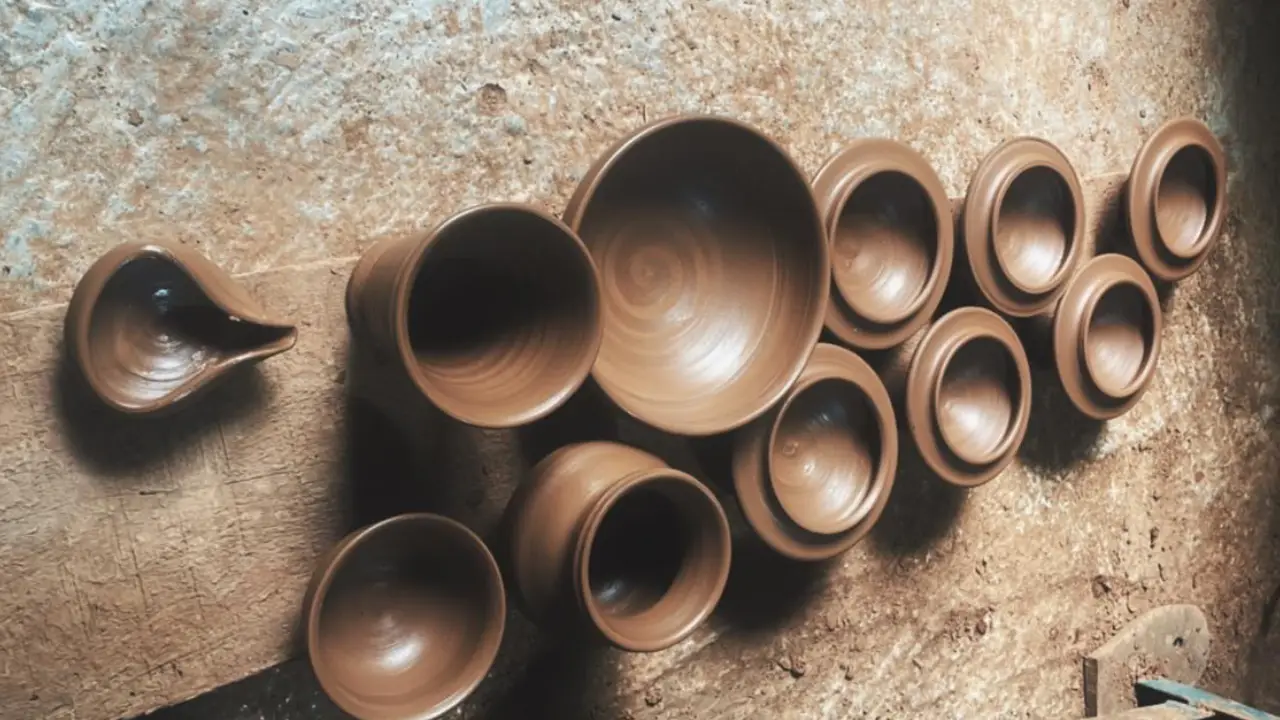
It has a pottery history, a past that the new generation is trying to rediscover and reinvent. There were dozens of families engaged in the craft. Potters produced traditional earthenware like kundal, the fire pot used in Kangri, plates for serving food, and the tumbakhnaar, a clay percussion instrument played at weddings.
Mushtaq Ahmed, now in his late forties, inherited the craft from his father, a well-known potter in the locality who recently passed away. Still grieving the loss, Mushtaq recalls a time when pottery sustained entire households.
“Pottery was the main source of income here. Many artisans lived in this area and took pride in their work,” he said.
Right now, his workshop is shut. He routinely halted production during winters as pottery requires adequate sunlight and warmth for drying and firing clay.
Like all potters, Mushtaq discusses the decline of the craft and links it to the mass production of metal utensils.
“Earlier, pottery was part of everyday life. Food was cooked, served and stored in earthenware made by potters,” Mushtaq explains the loss. “But once Chinese crockery and steel utensils entered the market, demand dropped sharply.”
Artisans reduced output, shopkeepers hesitated to replenish stock, and products that once sold quickly began gathering dust on shelves. It was a demand-supply chain moving out of the earthenware cycle.
Too many potters switched jobs. A few stayed put, even at great personal cost. One of them was Mushtaq, who remains determined to continue. However, he acknowledges a generational shift. The younger generation, he asserted, is reluctant to pursue the trade. “Unemployment is high, but young people prefer jobs that do not involve the harsh conditions of a pottery workshop,” he said.
The locality of Kralpora, once dotted with workshops and kilns, has witnessed a steep decline in the number of practising potters.
Suhail Ahmed, a resident who has observed the transformation over decades, said the change is stark. “During my childhood, there were hundreds of workshops here. Customers would come searching for pottery items. Today, half the population doesn’t even recognise these traditional products,” he admitted.
Veteran artisans admitted that they had struggled to persuade the younger generation to carry forward the craft. Only a handful, including Mushtaq Ahmed and three to four other potters, continue to practise their families’ decades-old tradition of pottery.
“As long as I am alive, I will never allow my father’s workshop to be locked,” Mushtaq said. “I will do everything within my capacity to keep this art and legacy alive, even after I am gone.”
Recent Revival
After years of decline, Kashmir’s pottery sector has witnessed a modest revival. Over the past few years, several new outlets have opened, and consumer interest has gradually returned, though not at the scale seen in earlier decades.
Muzaffar Ahmad Sheikh, in his early twenties, runs a pottery shop in Natipora, Srinagar. The business belongs to his father, and Muzaffar is learning the trade while managing daily operations.
“I am still learning from my father. He oversees procurement and the key aspects of running the shop,” Muzaffar said. Having completed his studies, Muzaffar chose to step into the family enterprise at a time when few of his peers were willing to do so.
“Pottery was once among Kashmir’s principal artisan sectors,” he noted. “Times changed, and so did consumer preferences. Sales declined sharply. But thankfully, the craft has not disappeared.”
Muzaffar hopes the industry will regain stability and that people will once again recognise the value of clay utensils, which he describes as simple, culturally rooted and free from harmful health effects.
The Revival Effort
Pottery decline was fast and long-term. It is being attributed to rapid urbanisation and the widespread adoption of aluminium, stainless steel and plastic utensils. These materials offered durability and convenience, gradually displacing traditional earthenware. Migration to urban centres, changing consumption patterns, and aggressive marketing of modern products further weakened the local artisan economy. As a result, pottery came to be viewed as outdated rather than culturally integral.
Unlike other societies, the clay artisans took a long time to explore the possibility of reviving the age-old art. Eventually, it has started happening, and the credit goes to the new generation.
Across Jammu and Kashmir, the number of practising potters has steadily decreased. Many artisans have shifted to other occupations in search of stable income. Against this backdrop, initiatives like those of Muzaffar and Gurpriya represent a conscious attempt to rebuild demand.
“In the beginning, it was a challenge,” Gurpriya recalled. “We travelled to remote villages where only one or two elderly artisans were still shaping clay by hand.” She credits environmental activist Raja Muzaffar Bhat for helping connect her with some of these craftsmen.
The larger challenge, she said, lies in convincing younger members of artisan families to return to the craft. “Many see it as a dead-end profession with limited scope,” she explained. “Promising them a market for their work was the hardest part. Building that demand from scratch is the only way this legacy can survive into the next generation.”
Health Benefits
The new generation pottery artisans are banking on just two things: a cultural revival and something for the health-conscious.
In recent years, several health professionals have underscored the potential benefits of using traditional earthenware utensils, particularly at a time when most cooking and storage products are manufactured from materials containing synthetic chemicals and industrial compounds.
They argue that clay cookware, being natural and non-toxic, does not leach harmful substances into food. Unlike certain metal alloys, plastics or chemically coated utensils, earthen pots are free from artificial additives and can help retain the natural flavour and nutritional value of food. This renewed health awareness has, to some extent, contributed to a gradual revival of interest in pottery products across Kashmir.
Dr Altaf Hussain Shah, a senior Unani physician with the Ayush Department at District Hospital Pulwama, said the renewed interest in earthenware is not without medical reasoning.
“Use of pottery products can benefit health in certain ways,” he explained. “Clay utensils help maintain the body’s pH balance because their natural alkalinity can neutralise acidic foods, aiding digestion. They also help preserve nutrients and reduce the need for excessive oil or butter, as they retain natural moisture during cooking.”
Historically, he added that the earthenware served practical health purposes beyond cooking. “Traditionally, pottery was widely used for cooling. Clay pots keep water naturally cool through evaporation, making it more soothing and throat-friendly,” he explained.
Drawing on such medical observations, Gurpriya says the health dimension has strengthened her resolve to promote traditional clayware. “Pottery products offer tangible benefits that align with modern wellness trends,” she asserted. “Unlike chemically treated plastics or certain metals that may leach substances, earthenware is naturally alkaline and can help maintain pH balance.”
In a region where health awareness is steadily increasing, she believes pottery represents more than nostalgia. “In Kashmir’s health-conscious communities, these are not just products; they are a return to roots. They promote sustainable living in fast-paced times. Doctors are right; this is not folklore, it is functional wellness that people can adopt in their daily lives.”