A Poonch village that breathes Kashmiri culture carries within its ruins a fort that once stopped a world-conquering empire, reports Syed Shadab Ali Gillani, who spent many days locating the fort that was key to Kashmir’s defence
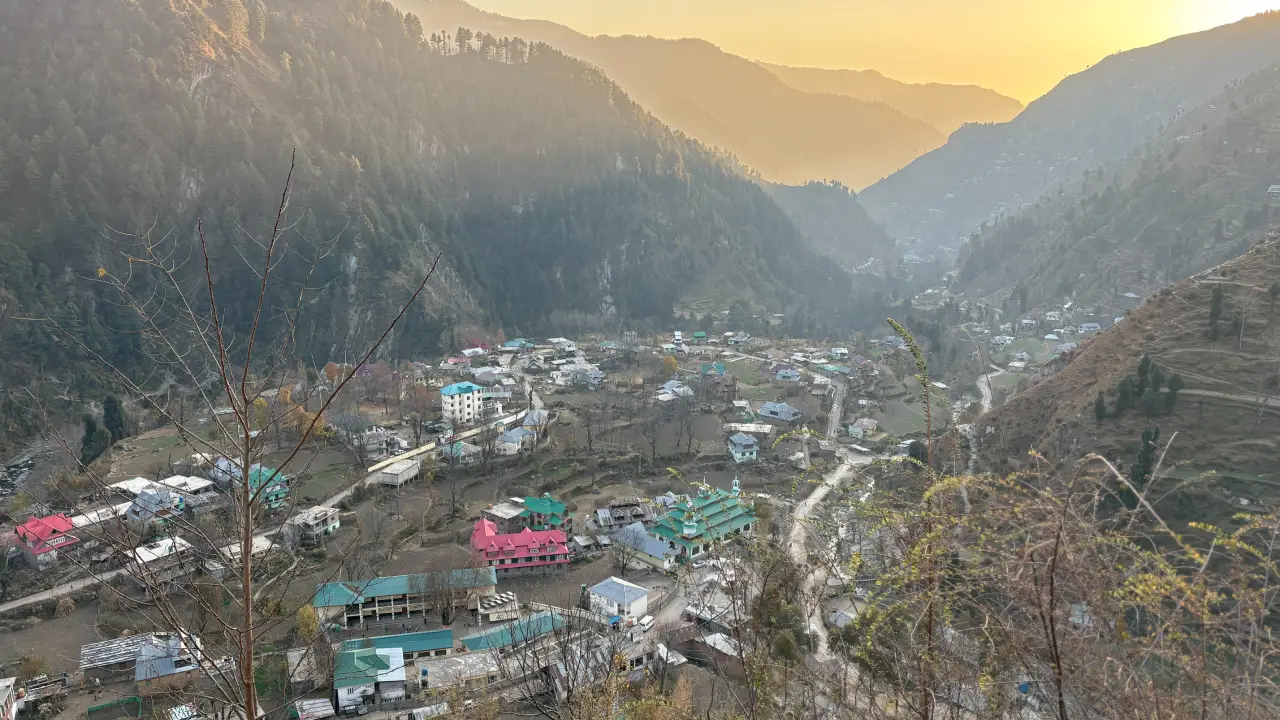
The trek down from the Pir Panjal into Poonch ends at Loran. It is the first village a traveller encounters after descending from the mountain range. There are no signboards or check-posts to announce it. Instead, it announces itself differently, through the sound of Kashmiri being spoken, the sight of pherans on local shoulders, and the faint warmth of a kangri tucked beneath a shawl.
Loran sits 35 kilometres from Poonch, cradled at the foothills of the Pir Panjal. Geographically, it belongs to the erstwhile Poonch estate. Culturally, it is something else entirely. Over centuries, it has absorbed the language, dress, cuisine, and kinship ties of the Kashmir Valley. It wears them with quiet ease.
“Here, people mostly speak Kashmiri,” said one resident. “The place is called Loran. It has the maximum Kashmiri population.” He said it the way people speak of things that have always been true, without emphasis, without surprise.
Rooted in Kashmir
The resemblance to Kashmir is not accidental, nor is it recent. It is the product of centuries of movement across the Pir Panjal. Traders, armies, seasonal migrants, and wedding processions have crossed between the valley and these foothills for generations. They used routes that no longer appear on most maps. Only herdsmen trek those passes year after year.
Residents describe a summer rhythm that persists to this day. Kashmiris come down to Loran in the warmer months. In summer, the people from Loran head up to the valley. The journey on foot, through Noorpora, across Doodpathri, takes nine to ten hours. Baraat parties have made this crossing on foot for generations. Brides from Kashmir have settled in Loran. Brides from Loran have gone to Kashmir.
“Kashmiris and we resemble a lot,” said Bashir Ahmad, a resident. “People here and in Kashmir are almost the same. There are marital alliances. Baraats go on foot. We have a lot of brides from Kashmir here, and vice versa.”
The cultural assimilation runs deep. The pheran, the long, loose cloak that defines Kashmir’s winter life, is standard dress in Loran. The kangri, the traditional fire-pot carried beneath the pheran, is as common here as in any Srinagar neighbourhood. Even wazwan has a presence in Loran, though locals acknowledge it is not prepared at the scale seen across the mountains.
“I have seen this deeply rooted in our culture since my childhood,” said another resident. “It is a result of cultural assimilation through marital alliances between Kashmiris and locals here. Plus, our proximity to Kashmir lets us adopt these cultural elements.”
The Broken Road
Despite these bonds, the physical link between Loran and Kashmir remains inadequate. For the people of this village, that inadequacy is a daily grievance.
There are formally two roads connecting Poonch with Kashmir. One runs through Uri via the Haji Pir Pass, a 46-kilometre route laid in the early 1940s, crossing at 9,000 feet. It functioned until late 1947. It briefly reopened after the 1965 war, when India captured Haji Pir, and was even used by Indira Gandhi during that period. Then the Tashkent Agreement restored the status quo ante. The pass became inaccessible again. The road has been defunct since.
The second connection is the 84-km-long Mughal Road, which has been operational for several years and remains the primary formal link.
For Loran specifically, the most awaited connection is a proposed road from Gulmarg to Tosamaidan. Residents insist it would transform their relationship with Kashmir entirely.
“The road from Loran to Gulmarg would cover all our connecting routes to Kashmir – Gulmarg, Tangmarg, Tosamaidan, Doodpathri, with some minor turns,” said Bashir Ahmad. “It has no mountains, no tunnels, no vegetation. It should be constructed at the earliest.”
Some movement happened in 2015. The then BJPDP government initiated work on a road in the Tangmarg area of Baramulla that would connect with Loran. The Border Roads Organisation (BRO) was assigned the project. It was launched with considerable fanfare. Nearly a decade later, only twelve kilometres of the total thirty-eight have been completed.
Older trekking routes still exist. From Poonch, Gulmarg is reachable through Nilkant Pass, moving through Dangar Allan and Pharpat Marg before arriving at Gulmarg.
Parallel routes run through Ferozpur Pass via Mandi in Koondah, touching Gurgi Upper, Banabali Nag, and onward to Magam.
Another branch from Gurgi Lower passes through Shinamani, Dunwas, Aripanthan, Soibug, and eventually Srinagar. The Tosamaidan access starts from Mandi in Poonch, crosses Sultan Patri, and arrives at Tosamaidan. A parallel track runs through Doodpathri.
These routes exist. They are walked upon. But they are not roads. The people of Loran know the difference.
“The mountain via Noorpora to Doodpathri, Pakhapora, Yusmarg needs immediate attention,” said one resident. “Road is the major crisis here.”
Neglect, Iron, and Gold
The village’s name carries its own history. Loran, residents believe, takes its name from the iron the area once produced. Loha, iron, gave rise to Loran. Nearby Surankote, the story goes, was where gold was once found, its name reflecting that too. Some believe the area was that of ironsmiths, some of whom eventually ruled Kashmir as well. These are not merely etymological footnotes. They speak of a region that was once materially significant, a source of resources that mattered.
That significance has long faded. Today, the people of Loran describe their village with a directness that borders on exhaustion. “This place is neglected, devoid of facilities, with just two per cent in jobs. The rest is labour,” said one resident. “We want the media to highlight our plight so that the government wakes up from its sleep.”
“We are Kashmiris,” said another. “I am from Kashmir basically, and my ancestors moved here. We keep travelling to and fro. We have our roots there.”
The only road the village has owes less to government planning than to faith. “We have this road connectivity because of the Ziyarat of Sain Illahi Baksh,” said one resident. “Otherwise, we would have been devoid of this road facility also.”
The Fort That Stopped an Empire
Beneath the neglect and the unfinished road, beneath the cultural warmth and the fading Iron Age name, Loran holds something of extraordinary historical weight. Lohar Kote stands here, or what remains of it does. It was once called the Gateway of Kashmir.
Loran was the capital of Poonch state under Hindu rulers until 1542 AD, known then as Loran-Kote. But the fort’s importance predates even that. Loharkot occupied one of the most consequential positions in the entire Pir Panjal range, thirty-one kilometres north of Poonch, on the banks of the Dara Tosh Maidan. It commanded the steep approaches, river valleys, and trade routes linking the plains of western Punjab to the Kashmir Valley.
For centuries, this corridor was Kashmir’s southern shield. Before roads and tunnels reshaped the region, Loharkot was the principal chokepoint. Any army marching on Kashmir from the south had to pass through it. It was Kashmir’s first and most formidable line of defence.
The fort is inseparable from the Lohara dynasty, the ruling house that supplied kings to Kashmir in the eleventh and twelfth centuries. Medieval chronicles, most notably Kalhana’s Rajatarangini, identify Loharkot as the dynasty’s original hill-seat.
Historian K D Maini traces the house’s origins to a local chieftain and horse-trader, Raja Nar, who rebelled against the Kashmir monarchy and established his authority in 850 AD. His lineage eventually produced Rani Didda. She governed Kashmir from 980 to 1003 AD and laid the foundations for a dynasty that would rule the valley for nearly two centuries.
It is the events of 1015 AD that gave Loharkot its most enduring place in history. Mahmud of Ghazni had swept across the subcontinent without suffering a significant defeat. He turned his ambitions toward Kashmir and marched into the Pir Panjal with a large force. Loharkot blocked his ascent.
For weeks, the Ghaznavid army attempted to overcome the defences. Fierce Kashmiri resistance, brutal altitude, and severe mountain weather wore the invaders down. Mahmud withdrew. He left frustrated and, for once, empty-handed.
“This fort was famed because it controlled the invasion route into Kashmir,” said Maini. “Mahmud of Ghazni had never failed anywhere but failed here. He returned empty-handed after a long struggle.”
The defeat at Loharkot did not end the contact between Kashmir and the forces Mahmud represented. While the fort held the army back, the encounters opened a window. Islam began entering Kashmiri consciousness through traders, travelling scholars, and the wider currents of a changing subcontinent. The military repulse and the cultural opening were two sides of the same coin.
Loharkot’s long story ended under the Mughals. When the empire annexed Kashmir in 1586, it deliberately bypassed the traditional Loharkot route. The more manageable Dara Pir Panjal road was preferred for troop and supply movement. The old passage was closed. Guards were posted. The fort slipped from military use into slow abandonment.
What the Rajatarangini records, the ground has not yet fully yielded. A comprehensive archaeological investigation, one that would distinguish the original Lohara-era fortifications from later eighteenth- and nineteenth-century structures, has never been carried out. The ruins remain largely unexcavated. Their layers are unsorted. Their full story is untold.
Loran today is a village in waiting. It waits for a road, for recognition, for the government attention its people have been requesting for decades. It carries its Kashmiri identity with a naturalness that centuries of connection have made instinctive. And beneath the routines of a neglected frontier settlement, it holds the ruins of a fortress that once made an emperor turn back.
Not many villages can say that. Loran can.