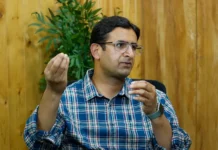
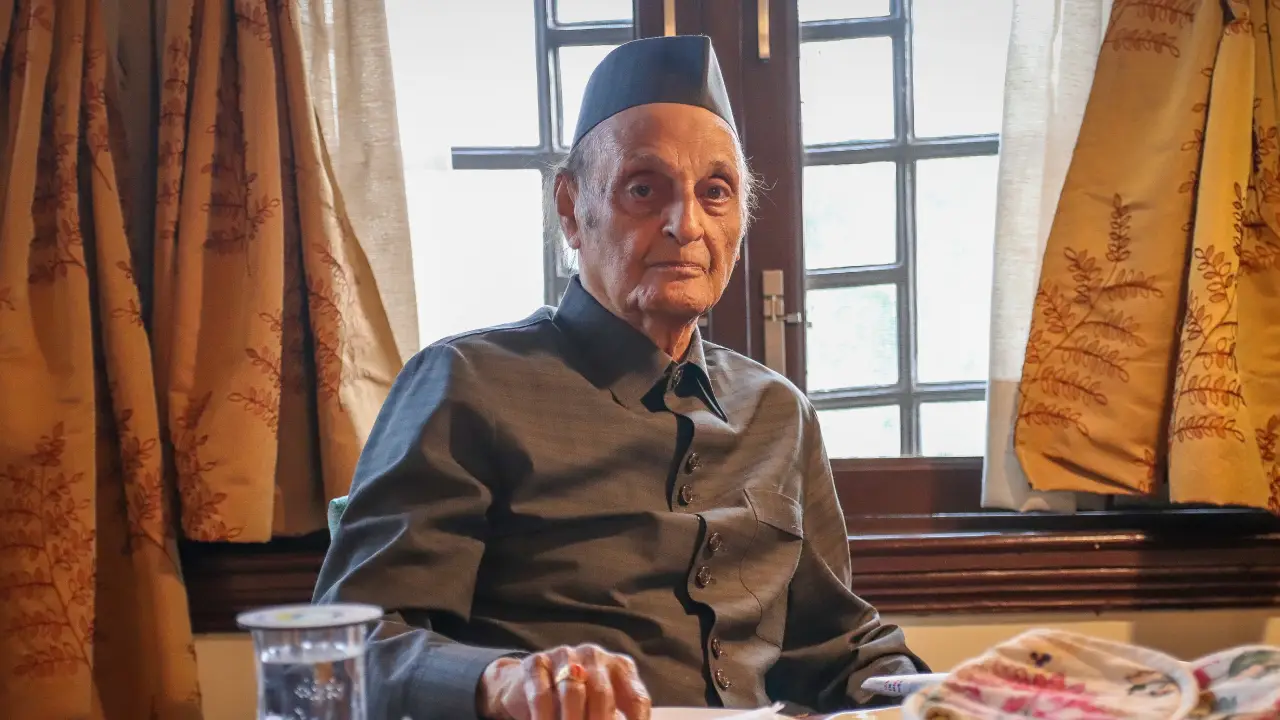
In a rare and unhurried conversation, Dr Karan Singh, the only Sadr-e-Riyasat of Jammu and Kashmir, reflects on the making of the State, the end of Dogra rule, and the turbulent political events that culminated in Sheikh Mohammad Abdullah’s arrest in 1953. Part of Yadain, Kashmir Life’s Personal History project, the conversation has been condensed by Umaima Reshi for clarity and readability
“Personal history is very important,” Dr Karan Singh said quietly, almost as a statement of method rather than sentiment. “Because it supplements the written histories, and it provides a much closer picture of what actually happens.”
For someone who has lived at the very centre of Jammu and Kashmir’s political transformation, memory is not an indulgence. It is a record, sometimes the only one. Born into royalty, appointed Regent at 18, sworn in as Sadr-e-Riyasat at 21, and later signing the dismissal and arrest of Sheikh Mohammad Abdullah, Dr Karan Singh occupies a singular position in Kashmir’s history. He was neither merely a witness nor merely an actor, but both at once, often constrained by forces larger than himself.
When he speaks of the origins of Jammu and Kashmir, he goes back not to 1947 but to 1846, when his family purchased Kashmir from British India under the Treaty of Amritsar. “When Maharaja Gulab Singh created the State, Jammu and Kashmir did not exist in its present form,” he explained. Kashmir had a civilisational history stretching back thousands of years, but Jammu, Ladakh, Gilgit-Baltistan, and Kargil were separate regions, politically and culturally distinct. The creation of a single State was neither accidental nor peaceful.
“The Dogra soldiers from Jammu and Himachal conquered Gilgit-Baltistan. There were battles in Ladakh. There were sacrifices,” he recalled. Only after those campaigns did India’s frontier extend to Russia and China. “And yet nobody really acknowledged it.”
What followed, he believes, was an administrative achievement rarely recognised: holding together for nearly a century a region of extraordinary diversity. Languages, faiths, cultural practices, and geographical realities varied sharply from Gilgit to Jammu, from Ladakh to Kashmir. Yet the State endured. “People of every faith lived together. Each region retained its own traditions, and still, they were held together. That itself was remarkable.”
His Childhood
Dr Singh’s own childhood unfolded inside this world of authority and distance. His father, Maharaja Hari Singh, was not an easy presence. “To me, he was a forbidding personality,” Dr Singh recalled. They did not speak much. His mother was different, warm, approachable, someone with whom he could speak freely. They watched films together, travelled occasionally, and it was with her that he felt at ease.
At eleven, he was sent not to a Rajkumar College, as most princes were, but to Doon School. “There was no special treatment,” he remembers. “We cleaned our shoes, made our beds.” At 14, he sat for his Senior Cambridge examination and secured a First Division, unusual for his age. The congratulatory telegrams were so many that the school opened a special post office to handle them.
Then came illness. At 15, Dr Karan Singh was confined to a wheelchair. When Sardar Valabbhai Patel visited Jammu, he advised his father that the boy be sent to the United States for treatment. Singh spent over 10 months in the hospital between 1948 and 1949, relearning how to walk. “Those months forced me to learn everything again, literally.”
That period coincided with Jammu and Kashmir’s most volatile years. While his body struggled, the State unravelled. Yet America opened his mind beyond the immediate politics of his homeland. “It broadened my outlook,” he admitted.
In Politics
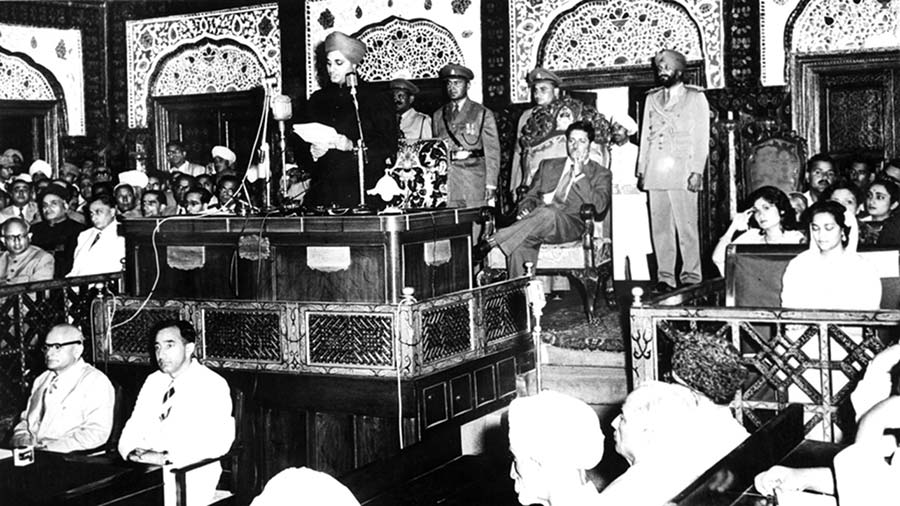
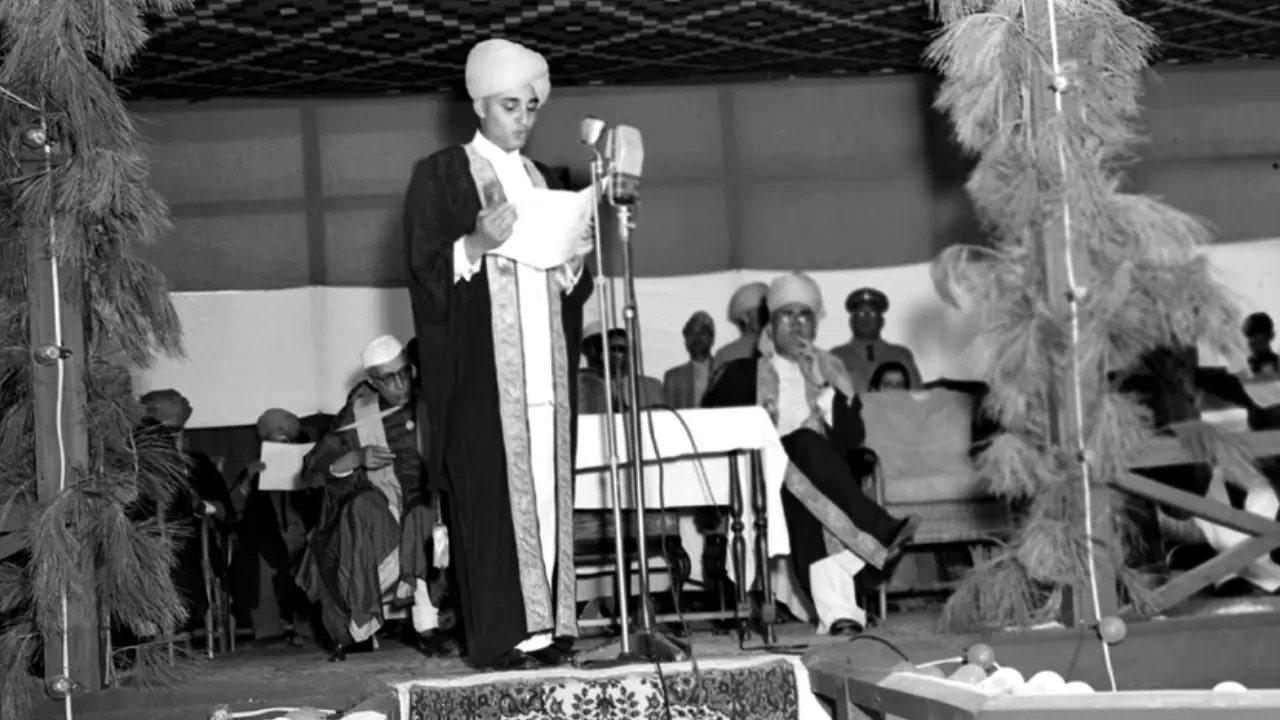
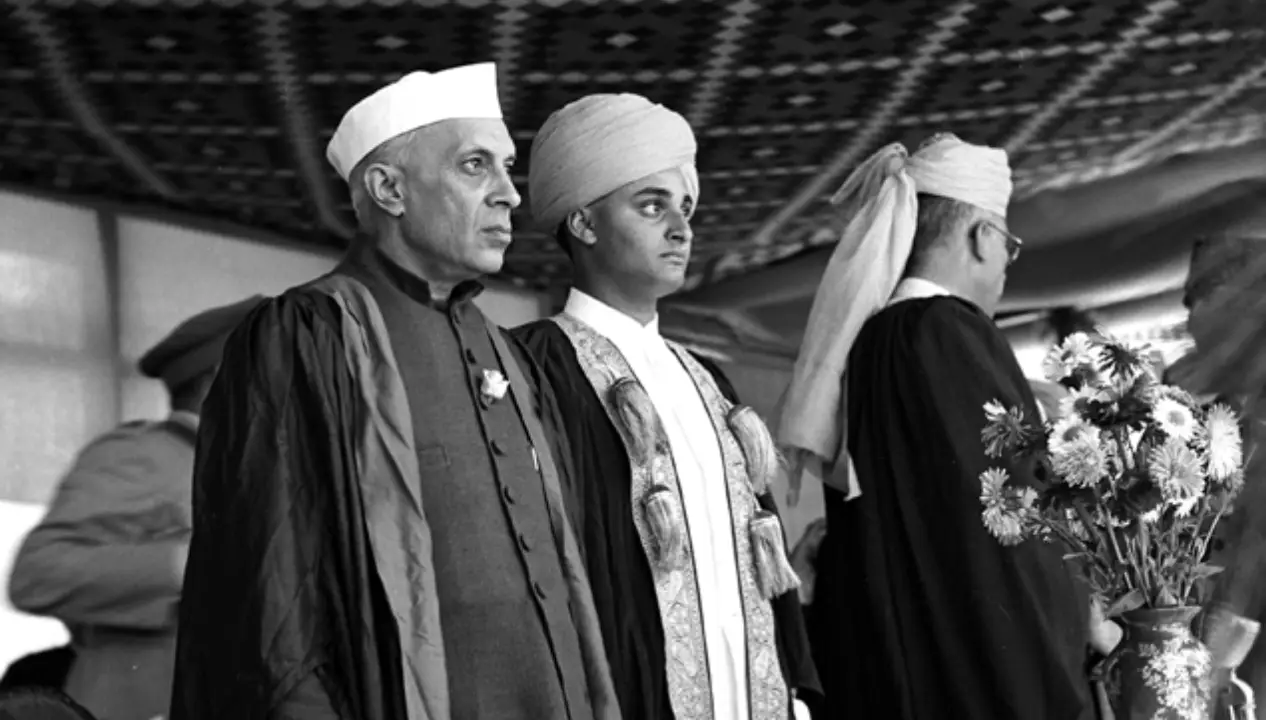
Politics, however, was inescapable. Across India, royal privileges were being abolished. In Kashmir, Sheikh Abdullah insisted that Dogra rule must be formally declared over. Committees were formed. The office of Sadr-e-Riyasat replaced that of the Maharaja. Dr Karan Singh faced a decision that would define his life.
“My father felt humiliated,” he recalled. “He asked, ‘If Sheikh Abdullah humiliated the Dogras, how can my son become the Sadr-e-Riyasat of that State?’” Singh chose otherwise. “I wanted to be part of the new India. I did not want to remain stuck in feudalism.”
Jawaharlal Nehru’s influence was decisive. Singh read him deeply. He admired his idealism, even when he later disagreed with his politics. “I made several important decisions in my life,” Singh said. “This was one of them.”
Remembering 1947
The year 1947 arrived like a rupture. Gandhi visited the State. National leaders passed through Jammu and Srinagar. Decisions taken then carried consequences that continue to reverberate. Singh recalls the arrest of Pandit Nehru, intended to prevent him from supporting Sheikh Abdullah. “It came as a deep shock,” he recalled.
He does not claim omniscience about those decisions. “I cannot say whether it was the bureaucracy or the Maharaja or the Prime Minister,” he said. “I can only tell what I saw.”
What he saw was confusion, fear, and the sudden collapse of an old order. Before Gandhi’s visit, Lord Mountbatten had already come. Singh still remembers the spectacle. “Full British splendour. Medals. Lady Edwina descended the staircase with great elegance.”
Then came October. The tribal invasion caught the administration off guard. “We were in the Durbar when they told us,” he recalled. VP Menon advised the Maharaja to leave immediately for Jammu. That night, a convoy of nearly seventy vehicles moved through darkness, jackals howling in the hills. Singh lay in plaster, his hip throbbing, accompanied only by an Australian nurse and a servant. “It felt like the end of an age,” he said. “Feudalism was slipping away.”
Singh rejected the charge that the Dogra rule was anti-Muslim. He acknowledges disparities but insists the regime was benign compared to Mughal, Afghan, and Sikh rule. “The Dogras were alien,” he admitted, “but not oppressive.”
On religion, his views remain inclusive. “My Hinduism includes everyone,” he said. “Hindutva does not.”
In Jammu, there was no public welcome. It was too late at night. Singh soon left again for America and returned only in March 1949, when he formally became Regent. Those two years, he said, are almost blank. With a change in location and health being a priority, he has no idea of what was happening in Kashmir, a place that his family once owned.

Sheikh versus the Maharajas’
It was during his American stay that he first met Sheikh Abdullah. The Sheikh was part of India’s delegation to the United Nations. “He came to see me in the hospital,” Singh recalled, remembering most of the details of a brief visit. “It was amusing to meet the man who had opposed my family all his life.”
Now in charge of Jammu and Kashmir, first as the emergency administrator and then the Prime Minister, Sheikh Abdullah insisted that both the Maharaja and Maharani leave Kashmir. For a plebiscite to succeed, he argued, there must be no royal presence. Singh was left alone, no siblings, no uncles, no aunts, and head of a State still finding its footing.
His father departed with the understanding that the exile was temporary. Thirteen years later, when Maharaja Hari Singh died, his ashes were brought back by his son. “He called me Tiger,” Singh remembers. “Like Nehru.”
The family fragmented. The father lived in Bombay. The mother preferred the Himachal hills. Singh remained in Jammu and Kashmir, the sole bridge between past legitimacy and present authority. His parents did not see each other for thirteen years, except at his wedding in 1950. “We could not marry in Kashmir or Nepal,” he said. “So we did it in Bombay.”
Initial Reforms
As Regent, Singh watched Sheikh Abdullah consolidate power rapidly. “It was autocratic,” he remembers. Abdullah wanted titles, reverence, and central control. New faces filled the administration: Mirza Afzal Beg, Ghulam Mohammad Sadiq, BPL Bedi, and Freda Bedi. “It was a revolution,” Singh said. “Not exactly democratic.”
Land reforms followed. The slogan Land to the Tiller captured the public’s imagination. When the draft reached Singh, he objected to the inclusion of orchards and consulted Delhi. Abdullah was furious. In the end, orchards were excluded. Singh signed the rest. “I feel good about that,” he said. “It was the most radical land reform in India.”
Sheikh’s Arrest
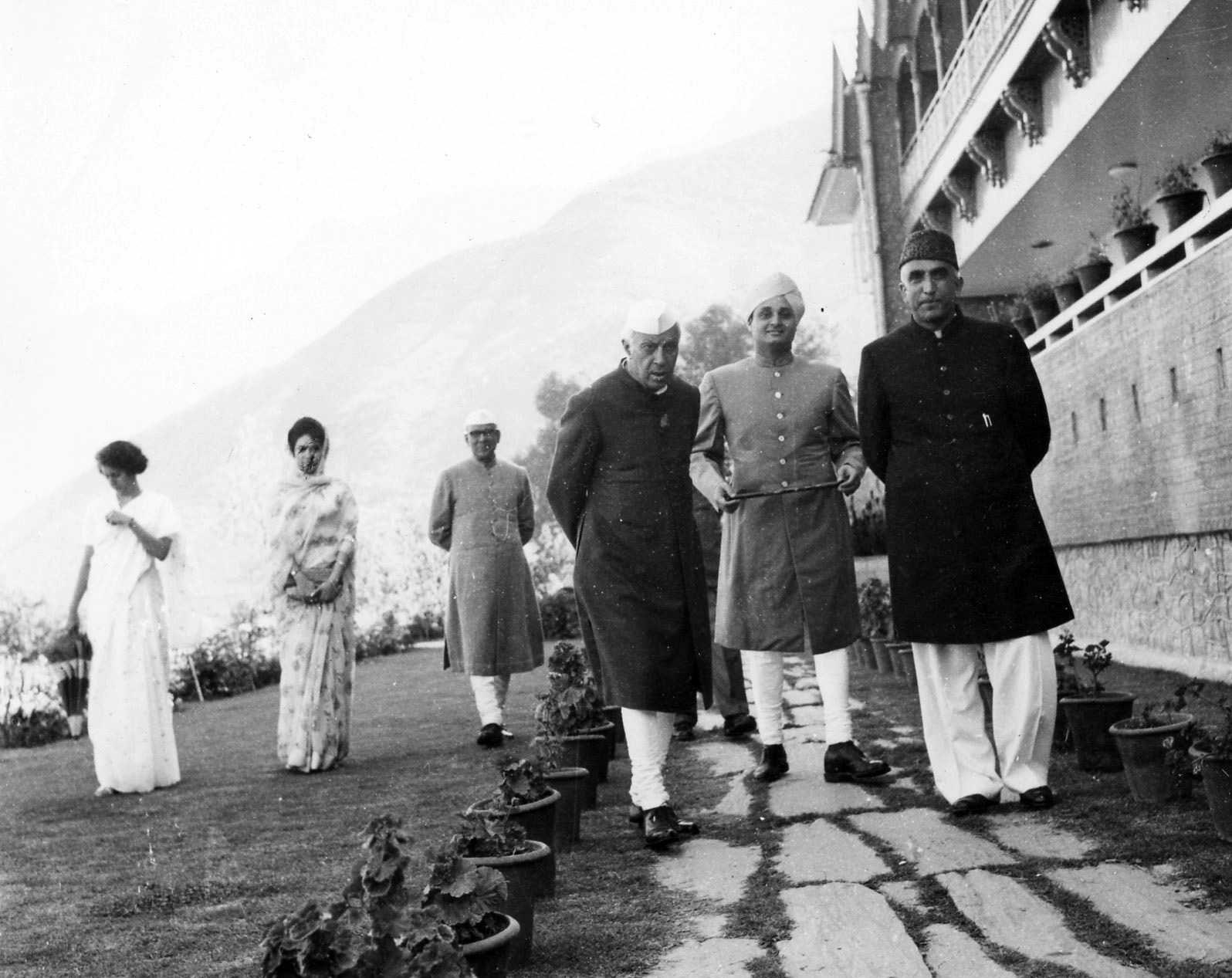
The early years were euphoric. Abdullah believed he had achieved his life’s dream, ending Dogra rule with India’s blessing. Nehru admired him deeply. A curious trinity emerged: Nehru in Delhi, Abdullah in Srinagar, and Karan Singh as Regent.
But it did not last.
The Delhi Agreement of 1952 was meant to settle Kashmir’s constitutional position. Singh believes it was sincerely negotiated by Mirza Afzal Beg and Gopalaswami Ayyangar. Abdullah, however, began retreating from its terms, making speeches that alarmed Delhi. Intelligence reports grew sharper.
The arrest and later death of Syama Prasad Mookerjee marked a turning point in Kashmir’s political landscape, though its impact was not immediately decisive. Recalling the moment, Dr Karan Singh said Mookerjee had met him earlier, accompanied by a young man carrying a briefcase and wearing a gold mouthpiece, Atal Bihari Vajpayee. “That same day, I received a call from Vijay Lakshmi Pandit informing me of Mookerjee’s arrest. No one else had told me. I was fully involved, and it was unbelievable,” he recalled.
Mookerjee’s death in Srinagar triggered widespread agitation in Jammu, consolidating support for the Praja Parishad under the slogan, Ek Nishan, Ek Vidhan, Ek Sadar, Ek Pradhan (One Flag, One Constitution, One Head of State, One Prime Minister). He is remembered by the right-wing parties as a martyr to this cause, and a major tunnel on the Srinagar-Jammu National Highway is dedicated to him.
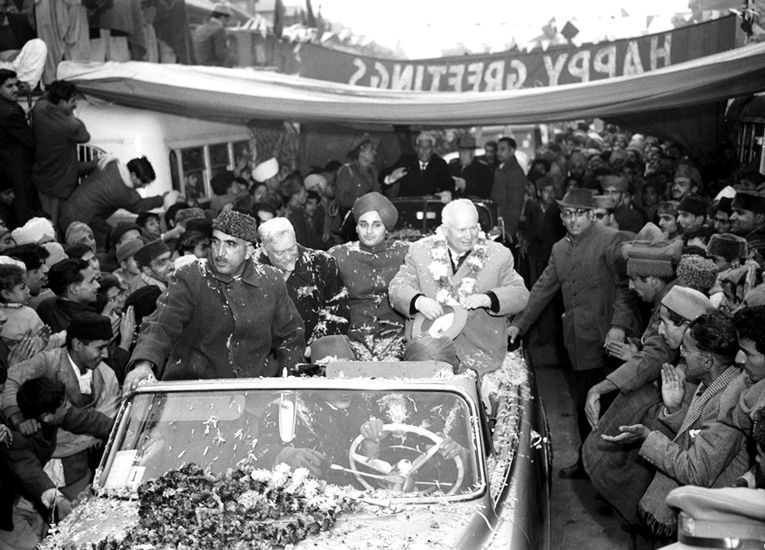
After the unrest came August 1953. Sheikh Abdullah lost the confidence of his cabinet, as Dr Singh remembers. Three of the five ministers withdrew their support. Singh signed the dismissal order. “It could not have been done otherwise,” he said, without triumph or apology.
The new government was sworn in at night. Singh believes there was unrest in Srinagar, gunfire, casualties, but the news was suppressed. Nehru addressed Parliament. Foreign correspondents exaggerated. “But people in Kashmir always knew what was going on,” Singh said.
Lost Wealth
Sheikh was in jail; by then, the Dogra family had lost everything. The land that the family had distributed to the feudal lords was restored to the real owners who were working on these lands. Soon, the Toshakhana case followed. The royal treasury was confiscated by the Sheikh Abdullah-led administration.
Singh fought the case and lost in the Supreme Court. “One comes empty-handed and leaves empty-handed,” he said philosophically in the conversation that was recorded in one of three palaces his family once owned. The family sold one palace, and it was converted into a five-star hotel; the second palace is the property of the Jammu and Kashmir government and is the major destination for big delegations. In proximity to them lies the Karan Mahal.
Unlike Sheikh, Dr Singh had no issues with Bakshi Ghulam Mohammad, who succeeded Abdullah. Singh describes him as liberal and capable, though corruption later undermined his rule. The decision to jail Abdullah and install Bakshi, Singh believes, permanently altered Kashmir’s relationship with Delhi.
Yet Singh’s personal relations with Abdullah did not collapse. After the Bangladesh War in 1971, Abdullah chose return over exile. With Farooq Abdullah, Singh shared warmth and political camaraderie. With Mufti Mohammad Sayeed, relations were distant. Ghulam Nabi Azad began as his campaign worker and became a lifelong friend.
In Delhi
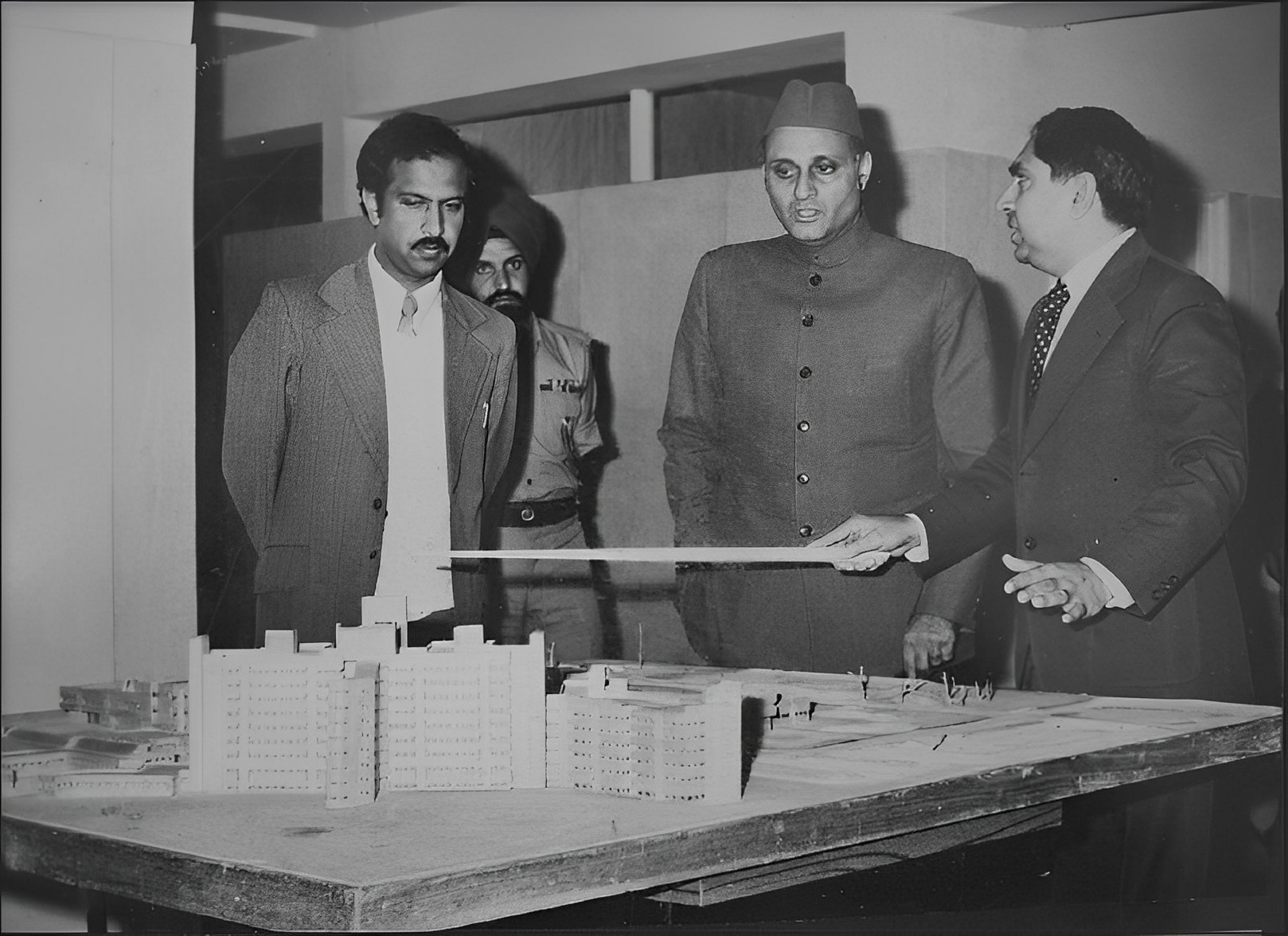
After decades in Jammu and Kashmir, Singh moved to Delhi, seeking the larger adventure of building India. He became one of the youngest Cabinet Ministers, served in Parliament for 40 years, represented India abroad, and led cultural institutions.
Still, Kashmir never left him.
“I speak many languages,” he said with a hint of regret. “But I do not speak Kashmiri.” His father would speak Kashmiri, as the family had accepted one larger reality that they cannot rule a society unless they can converse with them.
In a region where history is endlessly contested, Dr Karan Singh offers neither absolution nor denial. Only testimony. “I can only tell what I saw.”
That insistence on testimony rather than judgement is perhaps what most clearly defines Dr Karan Singh’s place in Kashmir’s history. He resists the temptation to recast himself as either hero or villain, even when history has repeatedly tried to assign him one role or the other. The decisions he took were rarely solitary choices; they were made within a dense web of pressures, from Delhi, from Srinagar, from a collapsing royal order, and from an emerging mass politics that left little room for hesitation.
The Loss
What distinguishes Singh’s account is his awareness of loss, personal, institutional, and civilisational. The end of Dogra rule, he suggests, was not merely the fall of a dynasty but the disappearance of a governing culture that, for all its flaws, had understood Kashmir as a composite space. “Each region knew itself,” he said, “and yet belonged to something larger.” That balance, he implies, proved harder to sustain under ideological politics.
Singh spoke with particular poignancy about the erosion of trust between Kashmir and Delhi after 1953. While the arrest of Sheikh Abdullah may have been constitutionally defensible in his view, Singh concedes that it planted a lasting suspicion in the public mind. “Legality and legitimacy are not always the same thing,” he said, asserting every single word, acknowledging that political actions, even when lawful, can carry emotional costs that law alone cannot repair.
Yet he also rejects the simplification of history into binaries of betrayal and victimhood. The popular narrative of a uniformly resentful population, he argued, overlooks the complexity of Kashmiri society in the 1950s. “People knew what was happening,” he insisted. “They were not naïve.” Political awareness, he suggests, was deeper than later representations allow, even if avenues for expression were limited.
Time has not softened his critique of authoritarian tendencies, whether under Sheikh Abdullah, later administrations, or central rule. Democracy, for Singh, is not merely about elections but about restraint, pluralism, and respect for difference.
In Good Faith
It is here that his philosophical grounding becomes most visible. His long engagement with Vedanta, comparative religion, and interfaith dialogue informs his politics as much as his upbringing did.
Dr Singh returns often to the idea of inclusiveness, not as rhetoric, but as lived practice. He recalls a Kashmir where temples, mosques, gurudwaras, and shrines coexisted not in isolation but in everyday familiarity. “Faith was not weaponised,” he said. That loss troubles him deeply, more than the loss of titles or power ever did.
There is also running quietly through his narrative a sense of personal solitude. To be left alone as Regent at such a young age, to serve as the final representative of a departing order, and to later spend decades defending decisions taken in one’s early twenties, this, too, leaves its mark. Singh does not dramatise it, but it surfaces in moments: in his regret at not speaking Kashmiri, in his description of fragmented family lives, in the memory of a convoy moving through the night as an old world receded behind him.
And yet, he does not describe his life as tragic. If anything, he sees it as improbably expansive. Few individuals, he notes, have had the opportunity to participate in so many phases of a nation’s life, from princely India to republican democracy, from regional politics to global diplomacy. That he was able to do so without entirely surrendering his intellectual independence is a source of quiet satisfaction.
As Delhi and Kashmir continue to argue over their past and future, Dr Karan Singh’s account resists easy appropriation. It offers no slogans, no absolution, no final answers. What it offers instead is continuity, a single consciousness moving through rupture after rupture, observing, deciding, and living with the consequences.
In a time when history is increasingly flattened into accusation and counter-accusation, his insistence on memory as nuance feels almost radical. “History is not a courtroom,” he said at one point. “It is a long conversation.”