Persian once ruled Kashmir’s courts and literature for centuries, but today it survives only as a nearly forgotten academic formality, reports Umar Mukhtar
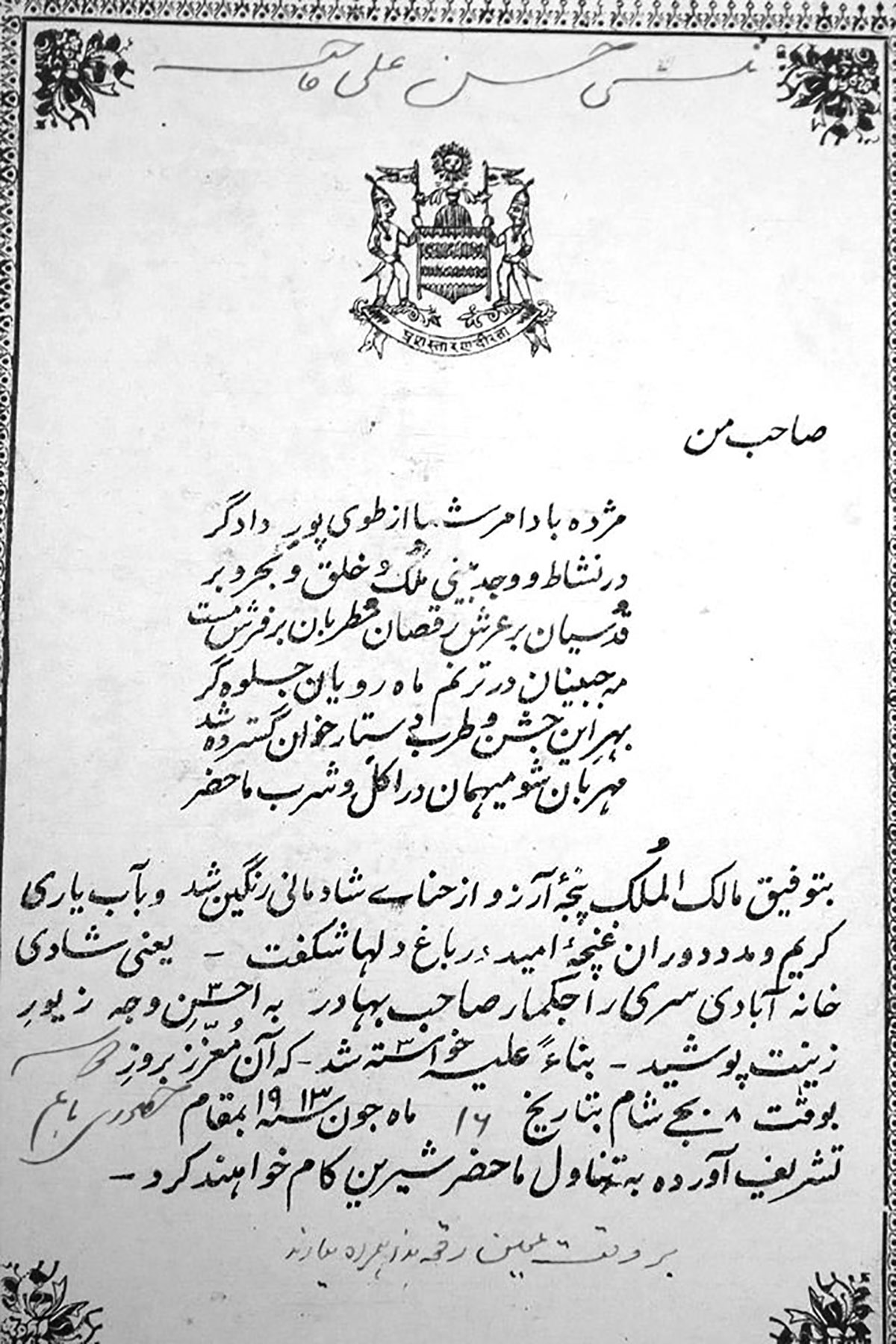
For centuries, Persian was the language of Kashmir’s court and its literature, the medium through which the valley wrote, spoke, and read. Urdu became its successor only in the latter part of the nineteenth century.
Nearly 125 years on, Persian sounds like an alien tongue to most Kashmiris. Every school and institution of higher learning in the valley still carries it as a subject, yet only a handful of students now choose to study it. The arc is a long one, from an era when nearly every educated person in Kashmir was fluent in Persian to a twenty-first century in which Persian speakers have become rare.
Imperial Roots
Kashmir had lived under Persian cultural influence long before the language gained any formal footing, and its institutional introduction coincided with Kashmir’s transition to Islam. The change did not immediately unseat Sanskrit, which had its own long evolution in the valley under Brahman society and Hindu rule. The Sultanate-era histories of Kashmir, in fact, were written entirely in Sanskrit, a status that survived even as Persian’s presence grew. That fragile early presence of Persian gained real strength only with the Mughal annexation of Kashmir.
The turning point traces back to Mir Syed Ali Hamadani, who travelled from Hamadan in Iran to Kashmir, bringing roughly 700 associates with him, men who were themselves descendants of Central Asia and Iran. Historians regard this migration, undertaken to preach Islam, as the moment the Persian truly entered Kashmir.
Mohammad Abdullah, who taught Persian in Kashmir’s colleges for more than three decades, frames the shift in terms of linguistic contact theory: it is always the dominant language, he argues, that reshapes the languages around it. In Amir-e-Kabir’s case, that dominance came through literature; the associates arrived carrying a body of work written mainly in Persian. In the Mughals’ case, it came through political power, as their rule replaced Sanskrit with Persian as the official language of administration.
Once planted, Persian found fertile soil. As Mughal rule stretched across hundreds of years, the language flourished further, securing a permanent place for itself in Kashmir’s literary sphere. Royal patronage made Persian fashionable among the educated classes, and Kashmiri writers increasingly treated Persian, rather than their own mother tongue, as the language worth writing in, a matter of honour, pride, and dignity rather than mere practicality.
Afterlife Endures
What is striking about Persian history in Kashmir is how long it outlasted the dynasty that elevated it. After Mughal rule declined, the Sikhs arrived, then the Afghans, and through both transitions, Persian held on as Kashmir’s official language, surviving all the way up to the start of Dogra rule.
Social activist Zareef Ahmad Zareef sums up what came next with a simple formula: every climax carries within it the seed of an anti-climax. For the Persian, that anti-climax had a precise administrative starting point. In 1889, Maharaja Ranbir Singh introduced Urdu as Kashmir’s official language.
Even after that change, Persian did not vanish overnight. Zareef notes that it remained part of school, college, and university curricula, and that people retained genuine affection for it. A substantial body of Persian-language literature continued to circulate, novels and short stories that were widely read across Kashmir, and much of the region’s Islamic literature, Zareef points out, survives chiefly in Persian rather than in Kashmiri or Urdu. The University of Kashmir still keeps a department dedicated to Persian studies, though Zareef offers a pointed comparison: the department now occupies roughly the place a French department might at another university, a presence that exists mostly in name.
Fading Practice
The numbers tell their own story of decline. Abdullah recalls classrooms packed with more than fifty students when he was first appointed professor of Persian in the 1980s. By the final years of his career, he could barely find four or five students enrolled in a given class, and on some days, none turned up at all.
Ali Mohammad, an octogenarian and retired teacher who still reads Farsi for its literature and philosophy, sees something larger at stake in this decline than enrolment figures. The disappearance of Persian from the curriculum, he warns, carries a real cost: a generation growing up disconnected from its own roots and unaware of its history. He remembers a time when Persian couplets were quoted at every gathering and cultural occasion, a habit he frames as evidence of how deeply Kashmir’s identity is tied to its Persian inheritance.
Asked why Farsi no longer holds the same appeal, Ali Mohammad points to the broader reshaping of Asia by Western influence. Modern life, he argues, now revolves around technology, and the language of that technology is overwhelmingly English, a force powerful enough to override almost everything that stands in its way, Persian included.