Afreen Ashraf’s guide to Kashmir’s food culture, from royal wazwan feasts to street stalls, warm kahwa, and home-cooked traditions
Kashmir is remembered not only for its mountains, lakes, and scenery, but for the taste it leaves behind. That memory lives in everything from a trami of wazwan to a simple cup of kahwa, every dish here carries an experience of its own.
The valley’s food culture has been shaped by both history and geography. The rich dishes of wazwan carry traces of Central Asian and Persian influence, while everyday meals reflect the realities of a cold region that depends on warmth, energy, and seasonal ingredients.
What is cooked and served often follows the calendar: winter brings slow-cooked, comforting dishes like Harissa, while summer meals lean lighter, built around fresh vegetables and rice. Yet Kashmir’s plates are not bound by tradition alone. Over the time the valley has absorbed new tastes, from bakery items to street food to the influences of its visitors. Today, a stall selling Masala Tchot can sit beside a momo cart, and kahwa is shared alongside the offerings of a modern café.
Wazwan: The Grand Feast
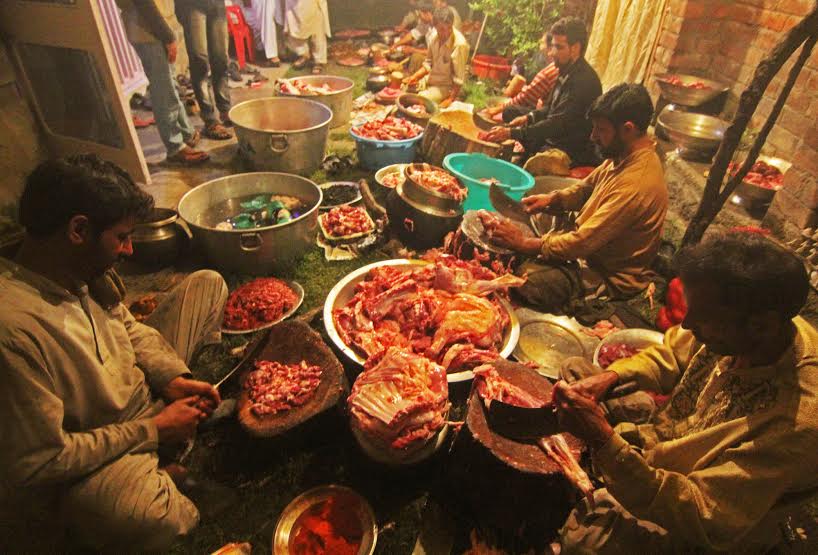
No journey through Kashmir’s food culture is complete without Wazwan, the valley’s most celebrated culinary tradition. More than a meal, it is a symbol of hospitality, celebration, and craftsmanship. Prepared by skilled waza’s, Kashmir’s chefs, Wazwan is traditionally served at weddings and family gatherings, where guests share a multi-course feast from a large copper platter called the trami. Off late, it is being served in buffet system as well and a number of Kashmir hotels prepare and serve this.
The feast is best known for its rich meat dishes – Rogan Josh, Rista, Gushtaba, Tabakh Maaz, and Aab Gosh are often considered its highlights, each reflecting the Persian and Central Asian influences that have shaped Kashmiri cuisine over centuries.
For a visitor, tasting Wazwan is an experience in itself. While it is traditionally reserved for weddings and celebrations, visitors no longer need a special invitation to enjoy it. Many restaurants across Kashmir now recreate the feast with remarkable authenticity, seating guests on the floor and serving them from a shared trami, offering not just a meal, but a glimpse into one of Kashmir’s most cherished cultural traditions.
Noon Chai and Kahwa
A day in Kashmir often begins with a hot cup of tea. Here, tea is woven into daily life. It is the first thing that appears in a room after a guest arrives. Mostly it is the reason for taking a break, or gathering with the family. The two most iconic brews are Nun Chai and Kahwa.
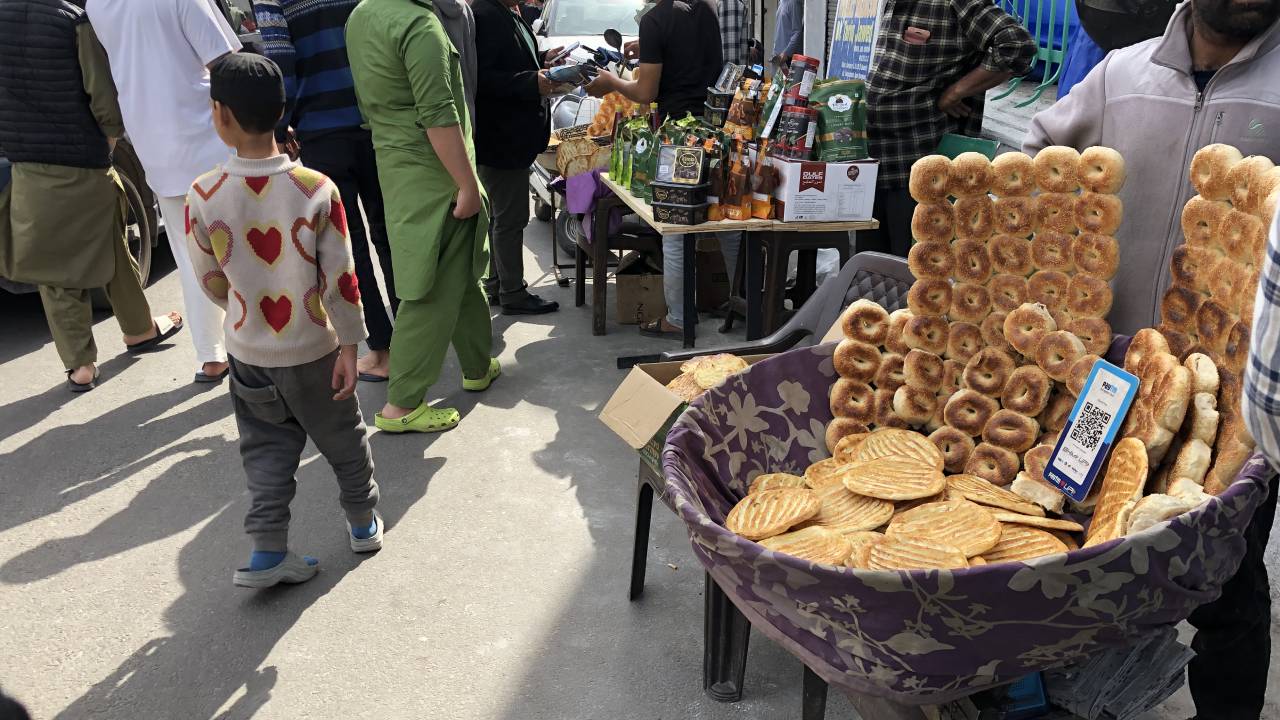
Noon Chai, the region’s distinctive pink salted tea, is traditionally enjoyed in the morning, paired with freshly baked bread from the neighbourhood bakery, or kandur.
Kahwa, a fragrant green tea infused with saffron, cinnamon, cardamom, and almonds, is served throughout the day as a symbol of warmth and hospitality, for many visitors, a first taste of Kashmiri culture.
The Bakery
All the brews, however, are deeply lined to Kashmir’s traditional baker, the Kandur. While much of the valley is still asleep, the kandur is already at work. Long before sunrise, he lights the tandoor, knowing that every bread has its own moment in the heat. The hottest temperature is reserved for Girda, the soft, round bread that has anchored breakfast tables for generations.
As the heat settles, the same dough is brushed with ghee and returned to the oven, emerging as the crisp, golden Ghev Tsot. Next comes Lavasa, a thin, naan-like bread that pairs perfectly with Noon Chai, followed by crunchy Kulchas.
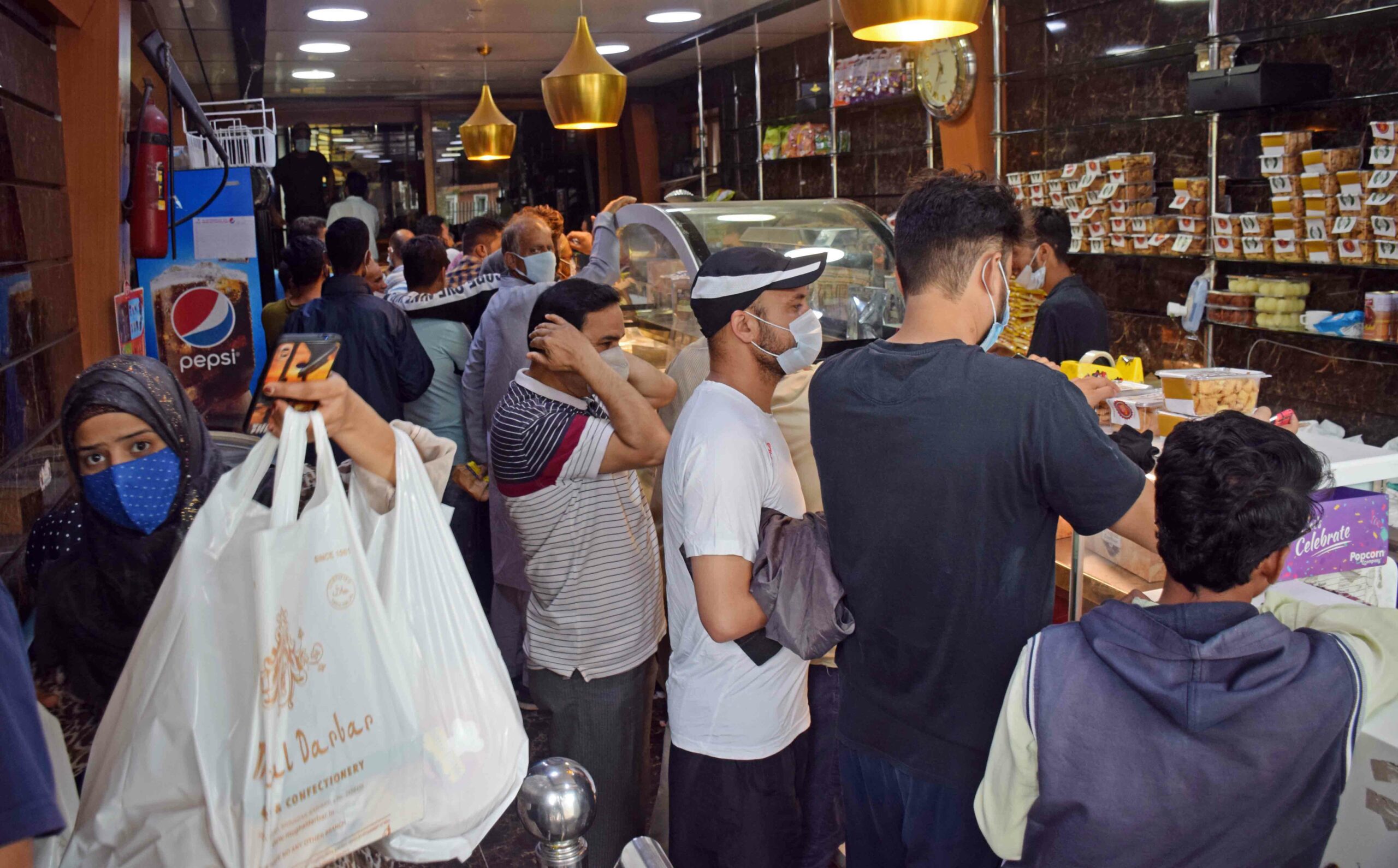
By evening, Tchotcheh Vor, a ring-shaped bread with a crisp exterior and soft centre, takes its place in the tandoor as an evening snack. As the fire dies down, the baker prepares Bakirkhani and Katlam, rich, flaky breads that need gentle heat to develop their delicate layers. Every loaf follows the changing temperature of the oven, a routine refined over generations.
For visitors, the bakery is one of the easiest ways to experience everyday Kashmiri life; almost every neighbourhood has a kandur. Pair these breads with Noon Chai for an authentic local breakfast, or sip Kahwa at any of the valley’s tea stalls and cafés. While Kahwa can be enjoyed almost anywhere, the Lethpora area on the outskirts of Srinagar has earned a reputation among locals for brewing some of the valley’s finest.
Some breads, however, are reserved for special occasions. Roth, a mildly sweet, thick bread flavoured with ghee, cardamom, and dry fruits, is traditionally prepared during festivals, often shared with family and neighbours as a symbol of community as much as a delicacy. Sweets like Tosha, meanwhile, have become popular companions to tea at everyday gatherings and festive tables alike. Walnut fudge, remains one of Kashmir’s most cherished bakeries product and now there are shops that exclusively deal in it.
Once upon a time, Gurus was very common drink but it has gradually faded to the periphery.
The Delicacy
As winter sets in, Harissa joins the valley’s diet. Its aroma fills the streets before dawn as people gather at traditional shops for bowls of this slow-cooked meat delicacy, often eaten with stale Girda. Prepared overnight, it has long been a winter favourite, offering both warmth and nourishment through the valley’s harshest months.
One of Kashmir’s most cherished winter delicacies, it is prepared through a slow, painstaking process. At its heart is a simple combination of carefully selected mutton, locally grown rice and a measured blend of spices, but the transformation depends entirely on time, patience and craftsmanship. Every stage, from trimming and deboning the meat to choosing the right proportions of rice and spices, is carried out with precision, as even minor variations can alter the texture and flavour of the finished dish.
The cooking itself is an overnight affair. The ingredients are placed in large earthen or copper vessels set over a gentle wood fire, where they simmer continuously for anywhere between ten and sixteen hours. Throughout the night, the mixture is stirred repeatedly with long wooden paddles to prevent it from sticking and to ensure that the meat gradually breaks down into the rice. By daybreak, the individual ingredients have fused into a smooth, rich paste with a silky consistency that cannot be achieved through hurried cooking or modern high-heat methods.
The emphasis is on bringing out the natural richness of the lamb rather than masking it. Just before serving, the dish is traditionally finished with a ladle of smoking hot oil, often infused with spices, which adds aroma, colour and a final burst of warmth to an already hearty preparation.
The Street Food
If Wazwan tells the story of Kashmir’s past, its streets tell the story of its present. Over the years, the valley’s food scene has grown beyond its traditional kitchens, embracing new flavours without losing its roots. Today, the streets of Srinagar blend old and new, a kandur may stand next to a Tibetan food shop, and a cup of Kahwa is just as common as a plate of steaming momos.
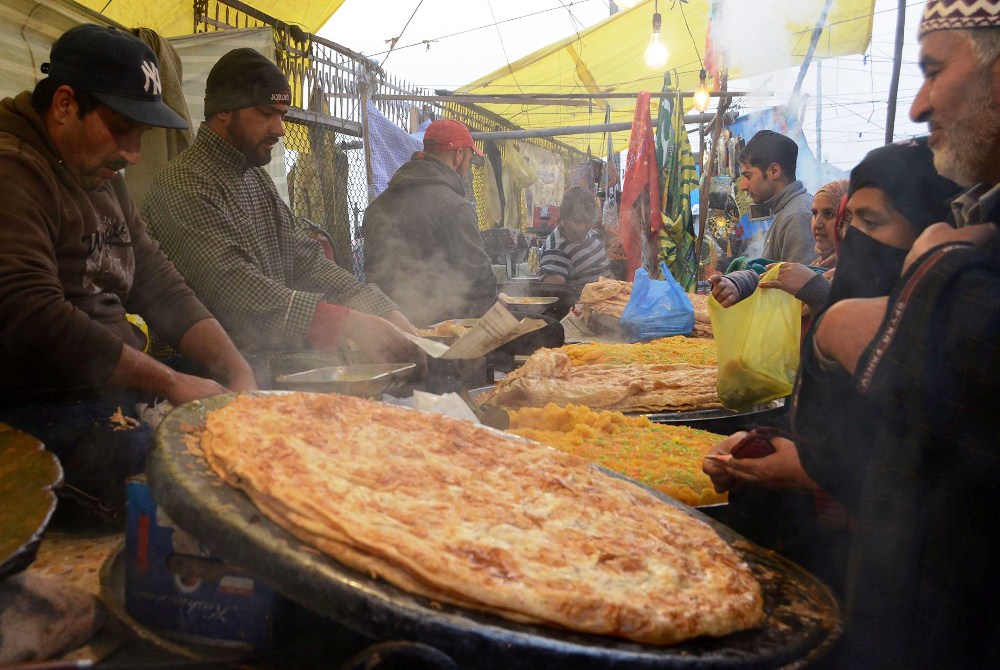
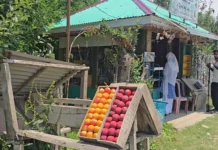
One of the most popular street snacks is Teli Monji, crispy vegetable fritters served hot with spicy chutney at stalls across the valley. As evening falls, the aroma of grilled kebabs and barbecued meats fills the air around markets, the banks of Dal Lake, and the famous Makai Point on Srinagar’s Boulevard Road, a favourite stop for locals and tourists alike.
Another local favourite is Masala Tchot, a soft bakery bread generously filled with Kabuli Pulao and layered with chutneys. Once an affordable, filling lunch for labourers, it has today become a street food that visitors seek out for a taste of everyday Kashmiri flavour. During harvest season, roasted corn sold by roadside vendors is another familiar sight, drawing crowds with its smoky aroma.
No street food haul is complete without dessert. Matka Kulfi, served in traditional earthen pots, has a loyal following among Kashmiris, the sidewalks of Bohri Kadal remain one of the city’s favourite spots to enjoy it. More recently, a kulfi seller known as Kulfi Chacha at Lal Bazar Molvi Stop has become a social media sensation, drawing locals and tourists alike for his handmade kulfi.
Another distinctive street food is Halwa Paratha, a deep-fried, flaky bread served with warm halwa, commonly sold outside religious shrines and often associated with spiritual journeys.
The influence of neighbouring cultures is equally visible here. Areas such as Hawal, once home to Tibetan and Himalayan trading communities, are now well known for Tibetan cuisine, where bowls of thukpa and freshly steamed momos have found a loyal following among Kashmiris.
Alongside these are cafés serving pizzas, burgers, and noodles, reflecting the tastes of a younger generation and the valley’s growing number of visitors. Yet despite these changing preferences, Kashmir’s street food has not lost its identity. Instead, it has simply evolved, welcoming new flavours while still celebrating local ingredients, traditional recipes, and the warmth of Kashmiri hospitality.
Inside the Home
Beyond the bustle of bakeries and street stalls lies the most intimate part of Kashmiri food culture: what is cooked and eaten inside homes. A typical home meal revolves around rice, served with vegetables and meat preparations that change with the season. One of the most traditional dishes is Haakh, collard greens cooked simply with mustard oil and garlic, eaten with rice as a daily staple, alongside Anchaar, which lends its sharp, fermented flavour to balance the meal.
In some households, especially during special meals or family gatherings, Muj Gaad holds a special place. Made with radish (muj) and fish (gaad), it reflects Kashmir’s close connection to its rivers and freshwater traditions. Light yet flavourful, it is typically cooked in winter when both fish and radish are at their seasonal best, a dish as much about timing as it is about taste. These home-cooked meals rarely appear on restaurant menus in their original form, yet they remain at the heart of Kashmiri food identity.
Taste and Memory
To eat in Kashmir is to move through layers of history, season, and everyday life – from the grand spread of Wazwan to the quiet comfort of Haakh and rice at home, from early mornings at the kandur to late nights at Makai Point. Food here is never just about filling a plate; it is about belonging to a moment shaped over generations.
For visitors, this makes Kashmir more than a destination of sights. It becomes a place of taste and memory. This helps visitors to remember Kashmir not only for what it looks like, but for what it leaves behind on the palate. Long after the journey ends, its flavours remain unforgettable.
(This is a web-only feature.)