Kashmir’s bakeries are more than mere food establishments; they are living testaments to the Valley’s rich cultural and culinary heritage. With origins tracing back to Central Asia and later influenced by British and French colonial traditions, these bakeries have evolved from traditional Kandaer Waan to modern patisseries, adapting to changing tastes while preserving time-honoured customs, reporters Umaima Reshi and Mujtaba Hassan
Nowhere in Kashmir can one offer tea without a piece of bread. That is where the traditional and modern bakery originated, and it is a roaring business. Among Kashmir’s many defining elements, the bakery culture holds a place of quiet yet enduring prominence. The story, however, evolved over centuries of interaction and interdependence.
Kashmir inherited its bakery culture from Central Asia and Europe, with significant contributions from the Shahmir dynasty, whose rule introduced distinct bread-making techniques. Subsequent regimes—the Mughals, Afghans, Sikhs, Dogras, and British—each left their imprint. The arrival of French and British bakeries further elevated the craft, particularly in response to an influx of tourists and trained chefs before 1947. This interplay of local and foreign influences shaped the unique bakery culture seen in Kashmir today.
One of the most distinctive features of life in Kashmir remains the early morning ritual of visiting the Kandaer Waan, the traditional bakery, a staple in the region. Usually, male members of families, often carrying a wicker basket or a cotton bag, venture out to collect freshly baked, crispy bread—a practice that has endured across generations. As every locality has its own Kandaer Waan, it has evolved as a culture to socialise around these bread shops and discuss every dimension of society.
Over the years, however, he emergence of cafés and boutique bakeries, influenced by English, French, and Middle Eastern styles, has redefined Kashmir’s culinary landscape.
The Evolution
Once limited to traditional breads, Lavasa, Bakirkhani, Tchochwor, Sheermal, Kulcha, Katlam, Ghev Czhot, and Roath, Kashmir’s bakeries now offer an expanded selection that includes cookies, cakes, tarts, pastries, and other confections. Globalisation and internet access facilitated the entry of sophisticated bakeries into Srinagar and beyond.
These bakery units have evolved to match contemporary tastes while preserving the signature style. Kashmir has an area-wise distinction of bakery delicacies: Baramulla is known for its namkeen Kulcha, saffron town Pampore is famous for Sheermal, Shopian is known for Aib Tchout, and Anantnag is famous for Krippe and Katlam.
The Nedous Legacy
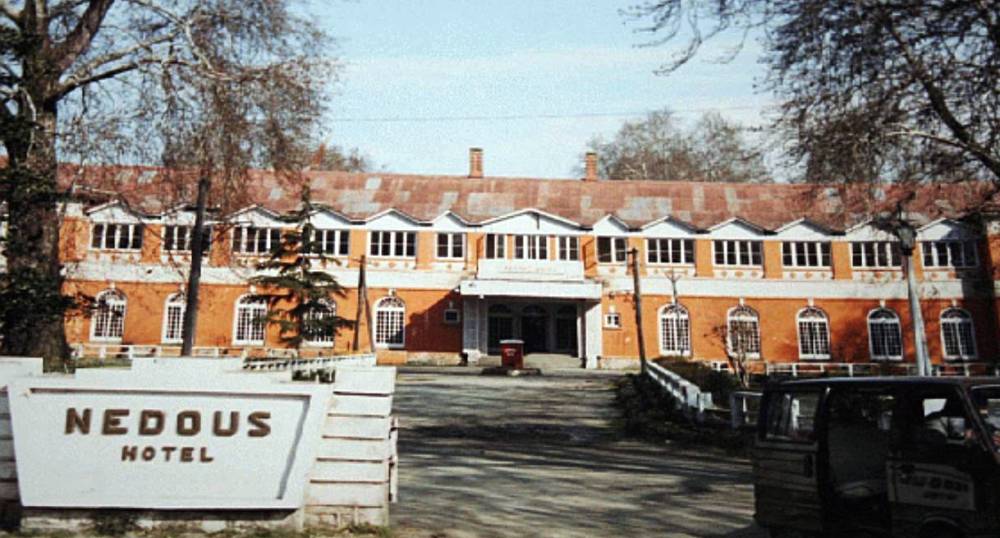
In the 19th century, Michael Adam Nedou, a Croatian entrepreneur, founded Nedou’s Hotel in Srinagar and Gulmarg. Enchanted by Kashmir’s beauty, he and his wife, Jessie Maria, expanded their hotel chain to the region. The hotel housed one of Kashmir’s earliest bakeries, which became renowned for its exceptional quality. Nedou’s Bakery, located near the iconic hotel, remained a hidden gem for decades, celebrated for its hospitality and artisanal offerings.
Among its specialities were Shirmal, a sweet saffron-flavoured bread, and Kulcha, a stuffed bread, which became culinary landmarks in Kashmir’s bakery culture. In 2022, the property was leased to the ITC Group for restoration, marking the next chapter in its storied history.
An Ahdoos Century
For over a century, Ahdoos has stood as a landmark on Residency Road, Srinagar, offering hospitality and culinary excellence. Established in 1918, the hotel and its recently rebranded Crème bakery have remained a favoured destination for tourists and locals alike.
Its founder, Haji Mohammad Sultan, trained in Kolkata under the patronage of Maharaja Hari Singh before returning to Srinagar to establish a bakery. Initially named Ahdoo & Sons, after Sultan’s father Ahad. Sultan’s training was facilitated by Michael Adam Nedou, the hotel’s founder, who encouraged Ahad to send his son to Kolkata to master the art of baking.

Sultan’s Cakery in Polo View became a staple among the city’s English clientele, offering tea cakes, biscuits, and bread. By the 1920s, the business had evolved into a restaurant—the first in the Valley to serve Kashmiri Wazwan. In 1944, the establishment moved across the road, incorporating a few guest rooms.
Generations later, Ahdoos emerged as a pillar of Kashmiri cuisine. Under the stewardship of the Sultan’s grandson, Hayat Bhat, the hotel and bakery continue to uphold their legacy. Its 3,000-square-foot restaurant, known for Wazwan, is a fixture on tourist itineraries across the globe.
For Ghulam Nabi, the longest-serving staff member with over forty years at Ahdoos, the essence of the establishment lies in its commitment to tradition. “The city has changed, the architecture has changed, but we have maintained our standard and taste,” he said.
Jee Enn Sons Half A Century
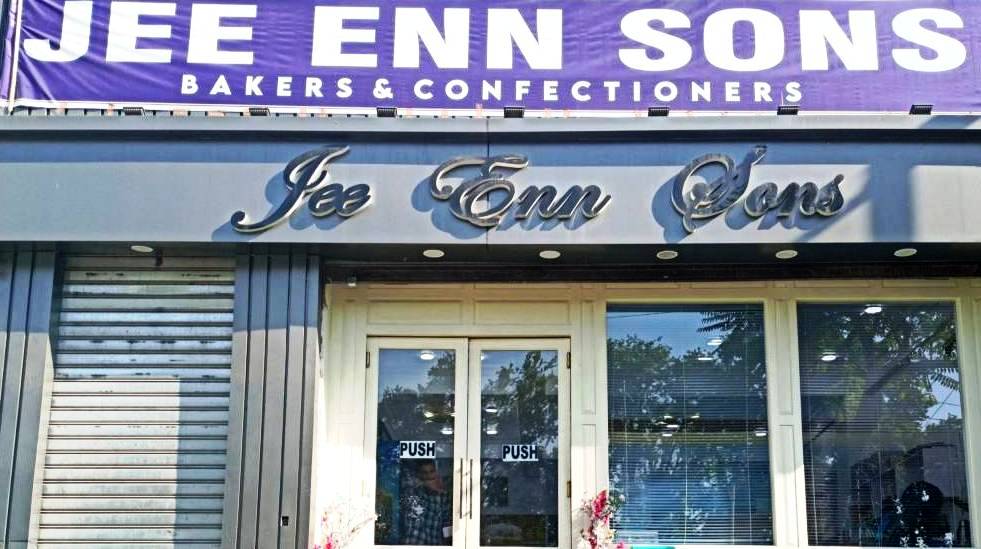
Founded by Ghulam Nabi Sofi, the Lala Ji of yore, Jee Enn Sons Bakery is also linked to Nedou’s Hotel, where English chefs trained a handful of Kashmiri apprentices, including Sofi’s father, Abdullah. Inspired by his acquired skills, Abdullah passed his knowledge to his son, who later pursued formal training in Delhi before returning to establish Jee Enn Bakery. The name derives from Ghulam Nabi’s initials.
Recognised by the National Association of Bakery Industry (NABI), Sofi was appointed as the chief patron of bakeries in five-star hotels across India. Today, his sons, Lateef Sofi and Mohammad Hanief Sofi, continue the family tradition.
“My father had connections across political, bureaucratic, and business circles,” Hanief recalled. “From Chief Secretary Ashok Jaitley to former Foreign Minister Jaswant Singh, many were regular patrons.”
Jee Enn introduced several bakery innovations to Kashmir, including Black Forest and White Forest pastries, mille-feuille, walnut tarts, and cheesecakes. It was also the first to bring electric ovens and planetary mixers to Kashmir.
Despite the rise of new bakeries, Jee Enn remains steadfast in its principles. “The bakery industry in Kashmir is being undermined by substandard additives,” Hanief said. “But we have never compromised on quality.”
Operating two outlets—at MA Road and Srinagar Airport Road—with a third also coming up, Jee Enn maintains its reputation without relying on social media. “We do not need digital promotions,” Hanief stated. “Our customers are always with us.”
The Lala Sheikh & Sons Era
Lala Sheikh & Sons, founded in 1890 by Lala Mohammad Sheikh of Budgam, is among Kashmir’s oldest bakeries. Gaining prominence during British rule, it became a favoured haunt of foreign dignitaries and politicians. Residency Road, where it stands, was once frequented by the English elite, who indulged in its famed pastries and chicken patties.
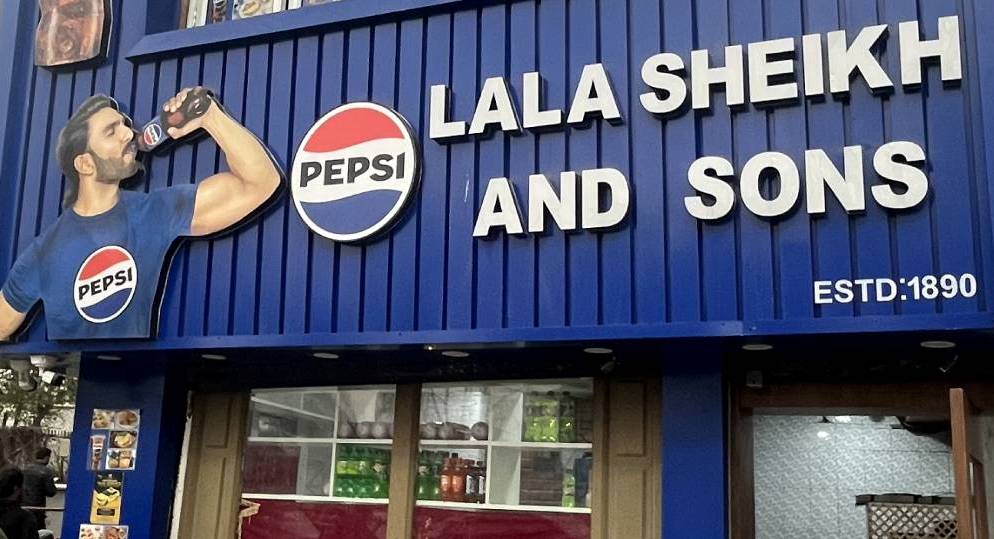
More than just a bakery, Lala Sheikh’s became a hub for intellectual discourse. Writers and poets, including Dina Nath Nadim, Mirza Arif, and Akhtar Mohiuddin, gathered there for discussions over endless cups of tea. Now helmed by the fourth generation—brothers Sheikh Altaf, Sheikh Javeed, and Sheikh Mehboob Ali—Lala Sheikh & Sons continues to honour its legacy.
Janta Bakery
Janta Bakery, one of Kashmir’s prominent bakeries, operates from Ali Kadal. Its founder, Ghulam Nabi Kitass, traces his ancestry to Tajikistan. Traditional Kandurs (bakers), he said they migrated to Kashmir before 1947.
Compelled by financial hardships post his father’s death, Ghulam Nabi started Janta Bakery as a small grocery vendor in Bohri Kadal.
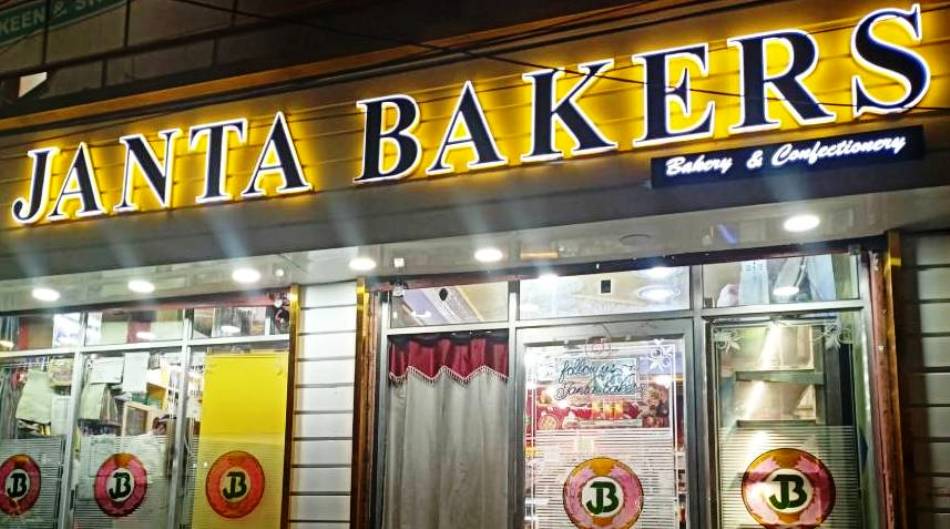
“We began by making Bakirkhani ourselves,” Ghulam Nabi recalls. “My wife and I would wake up for Fajr (morning prayer), perform ablution, and begin baking.”
“I started with nothing—borrowing Rs 500 for supplies—and built this business from the ground up. Life has its ups and downs, but one must remember God, respect their profession, and value time to achieve success.”
Later shifted to Aali Kadal, now FSSAI-certified, modernised and mechanised, Janta has 40 employees, and the new unit is being opened in HMT, Shalteng.
Now business is run by his three sons, Ghulam Nabi is contended with his life. Having deepened his love for the religion, he has performed Umrah 18 times and Hajj thrice, besides visiting various other holy sites in Karbala, Syria, Iran, and Tajikistan.
Shalimar Bakers
In the early 20th century, a young and ambitious boy approached Michael Harry Nedou, the eldest son of the European owner of the Nedous Hotel and Bakery in Srinagar, seeking an opportunity. That boy was Sufi Ghulam Mohammad, who would later establish Shalimar Bakers.
Soon after joining Nedous Bakery, Sufi’s talent became evident. He mastered intricate icing techniques, decorated cakes with lace-like patterns, and crafted his signature Party Biscuits, a luxury at a time when such treats were exclusive to the elite and European clientele. Local confections of the era, such as Khande Gazir, were simple in comparison.
His expertise in Danish pastries and sugarcraft elevated him to the position of chief chef at Nedous. He perfected frosting, sugar coating, and almond paste techniques, adapting each delicacy to customer preferences. His craftsmanship earned him the title ‘The Man with the Golden Fingers’, bestowed by the British.
By the 1930s, Lala Sheikh, a supplier to Nedous, persuaded Sufi to join him in launching a bakery. Initially a partner, Sufi later branched out independently, establishing Shalimar Bakers in the 1950s. However, his stint was short-lived—he passed away in 1962, taking his unique skills with him.
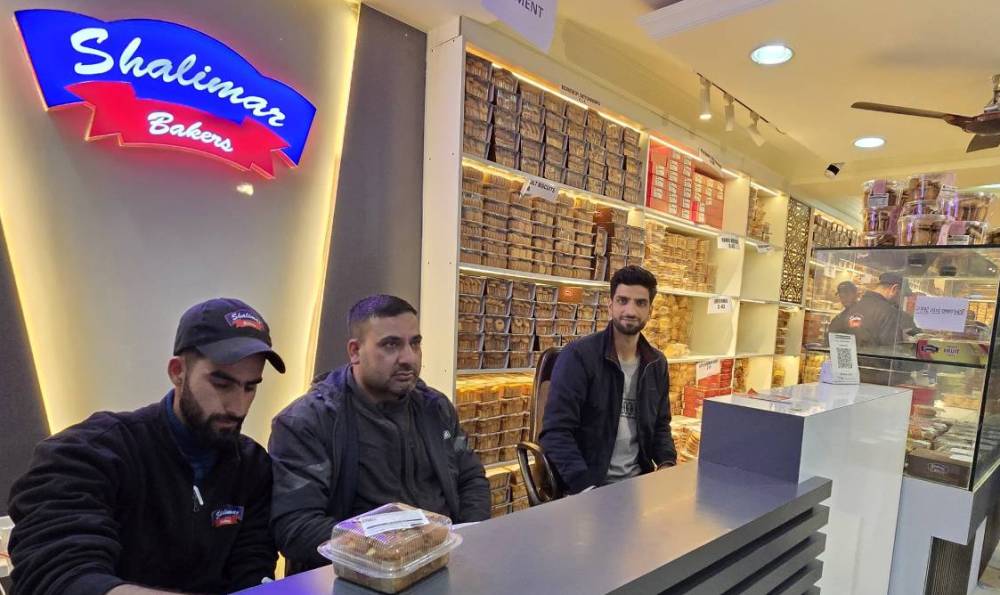
Following Sufi’s death, the bakery declined until the third generation of the family took charge. His grandsons, Sufi Bashir and Sufi Mushtaq Ahmed, revived the business, restoring its reputation.
“I had to sacrifice my dreams to uphold this legacy,” said Sufi Bashir. “I earned a diploma in bakery technology and consulted experts to modernise our methods. This effort has been crucial to our success.”
Now, Shalimar operates from multiple locations, including Solina Bazaar and Airport Road. The bakery now supplies goods to Srinagar International Airport, the Indian Air Force, and the army as well.
The fourth generation is now taking over. Bashir’s sons, Mohammad Nawaz Mubashir and Ahmed Faraz Mubashir, bring academic expertise—Nawaz, an MTech graduate in Civil Engineering, is an accomplished baker, while Faraz is studying food technology. Sufi Mushtaq’s son, Safiulla, has carved a niche in chocolate-making.
The Mughal Darbar
Nestled between the Jhelum Bund and Residency Road, Mughal Darbar has become a cornerstone of Kashmir’s bakery and restaurant culture. Founded in 1984 by Ghulam Qadir Grustoo, it began as a restaurant before expanding into the bakery business in 1992. Today, it stands among Srinagar’s most distinguished bakeries.
Strategically located near Ahdoos and Jee Enn, Mughal Darbar offers a respite from the city’s fast pace, inviting patrons to savour its rich array of baked goods, from traditional Kashmiri bread like Shirmal and Kulchas to European-inspired croissants and pastries.
According to Firdous, one of the bakery’s earliest employees, “Mughal Darbar was instrumental in redefining the bakery industry in Kashmir.” Renowned for its puffs and patties, the bakery’s offerings rival those of Srinagar’s finest establishments. Its diverse selection of tea-time delicacies further cements its place as a favourite among locals and visitors alike.
Jan Bakery
Jan Bakery traces its origins to 1965 when it was established in Srinagar’s historic Maharaja Bazaar. Founded by three brothers—Mohammad Sidiq, Nazir Ahmad, and Jan Mohammad—it later evolved into three separate units, two in Maharaja Bazaar and one in Chanapora.
“Our family’s roots in the bakery trade date back to pre-Partition Kashmir,” said Mohammad Sidiq. “Our ancestors supplied baked goods to tourists in Gulmarg and other destinations. After the tribal invasion, we lost everything. In 1965, we relocated to Srinagar and started afresh.”
Jan Bakery blends tradition with innovation. While it retains the essence of Kashmiri baking, it has also introduced modern adaptations of classic recipes. “Initially, Nedous Hotel had the only European-style bakery in Kashmir, but over time, those trained under British chefs established their own,” Sidiq noted.
Despite branching out independently, all three Jan Bakery units continue to thrive.
Sidiq believes that “the bakery market in Kashmir has untapped potential.” “With the right approach, quality service, and local employment opportunities, there is room for significant growth.”
Talak Bakery In Down South
Established in 1969 in Mehandi Kadal, Anantnag, Talak Bakery began as a small operation under Mohammad Abdullah Wani. Before venturing into baking, Wani ran a hotel for six years. The family name, originally Wani, gradually became synonymous with Talak, giving the bakery its name.
Initially, Talak Bakery produced only two types of bread—salty and sweet. By 1974, it expanded into cake-making, primarily supplying hotels. Today, with a workforce of 16, the bakery remains a trusted name in Anantnag.
Following Abdullah Wani, his son Abdul Rashid Wani took over in 1974, passing the reins to Bilaal Ahmed Wani and Mushtaq Wani. “The workload has always been intense, making expansion challenging,” Mushtaq said. “While our methods were once entirely manual, we have since mechanised the process.”
Hilaal Bakery In Pulwama
Established in 1970, Hilaal Bakery in Pulwama stands as one of the region’s most esteemed bakeries. Founded by the late Ghulam Mohammad Sofi, who learned his craft at Shawl Bakery in Srinagar’s Saraf Kadal, the business has since passed through generations. Today, it is led by his grandson, Iqbal Ahmed Sofi.
“Our bakery initially offered only traditional items like Kandi Kulcha and Bekirhaani. In my grandfather’s time, cakes were limited to two varieties—one flavoured with ghee, the other with butter. Confectionery was unheard of, and the locals mostly consumed Kashmiri staple bread,” Iqbal recalls.
Under his father’s tenure, the bakery diversified into biscuits. When Iqbal took over, he focused on marketing and packaging, expanding the business. “I started working after completing my 10th grade. In 2012, we opened a branch in Shopian, followed by two more in 2014 and 2018. A restaurant venture began in 2011, with another added in Pulwama in 2020.”
Hilaal Bakery continues to serve both traditional and customised confectionery, catering to weddings and festive occasions.
Just Baked: A Modern Take
Just Baked, launched in 2015 at Sanat Nagar, Srinagar, has swiftly carved out a niche. The brainchild of Bilal Gani Lone, the bakery set itself apart through meticulous attention to quality and packaging.
“We studied the Kashmiri bakery industry and identified gaps in quality control,” said Imtiyaz Ahmad, General Manager. “Unlike bakeries dependent on tourist sales, we focused on serving locals, which secured our reputation.”
Despite its location in a residential zone, Just Baked has expanded to Munawarabad, Lal Bazar, and Sopore. It also operates a fine-dining café, The Lounge by Just Baked, at Parray Pora.
Signature offerings include Special Baklava, Fine Cookies (Almond, Pistachio, Butter Salted, Chocowalnut, Cranberry, Oatmeal, and Cornflake), Chocolate Truffle Cake made from Couverture chocolate, as well as Almond and Walnut Tarts. The bakery has become a preferred stop for politicians, businessmen, and bureaucrats.
Le Delice: The French Connection
Launched in July 2015, the story behind this bakery is one of homecoming. Its owner, Saqib Mir, owned a bakery and handicrafts store in France. Married to a French woman, Melanie, the couple decided to return to Kashmir after fourteen years of stay in Europe. Marking a market niche which was booming with bakery products at the time of his launch, he focused on introducing authentic French bakeries in Kashmir and drew a different kind of attention.
Interestingly, when French envoy to India Alexandre Ziegler visited Kashmir in 2018, he visited Le Delice to taste something like his home.
Famous for French heart, choco fills, Hazelnut Brownies, Donuts, French bread, almond delice, lemon tarts, choco walnut tarts, lemon charlotte, pastries and cakes, Le Delice, with a signature taste and texture, is emerging as a new address for different functions in Kashmir. Having a base in Boulevard, Le Delice has already started to branch out to different places.
Moonlight: The Fudge Shop
While bakery shops around have multiple items to attract customers, one establishment in Srinagar has been surviving only on a single item, walnut fudge, since 1896.
Initially started from a shop near Dal Lake in Dalgate, Moonlight, during the 1990s, was shifted to a complex outside the University of Kashmir. Another outlet is operational in Hyderpora.
Presently being run by the third generation of the family, the recipe of this magical mixture of walnut, honey and dates is a secret.
Over the years, walnut fudge has emerged as a signature sweet for weddings, engagements or any other related celebration in Kashmir.
Bake My Cake: An Exotic Flavour
Founded in April 2021 by Mudasir Naqashbandi, a law graduate from Baramulla, Bake My Cake combines a café and bakery concept, introducing French, Continental, Arabian, Iranian, and Turkish baked goods to North Kashmir.
“I wanted to introduce non-traditional bakery items and elevate the local palate,” Naqashbandi said. “Quality is our priority. We have a dedicated quality controller and a food expert to ensure hygiene and consistency.”
Recognising the power of social media, the brand leveraged online platforms for marketing and product showcases. A second outlet was launched in Sopore, with plans for further expansion in Srinagar and major tourist destinations.
Its bestselling items include Red Velvet and Chocolate Pastries, Fresh Fruit Cakes, Pistachio Cheesecakes, Éclairs, and Brownies. “It is rewarding to see our efforts being embraced by customers,” Naqashbandi adds.
Bake and Take: A Pandemic-Inspired Enterprise
In April 2020, Lyka Khan from Jawahar Nagar launched Bake and Take, a home-based bakery. While pursuing a BBA in 2019, she found herself confined at home following the abrogation of Article 370. Having baked for family gatherings since childhood, she had never considered it a profession. But encouragement from relatives during the COVID-19 lockdown pushed her to leap.
What began as an Instagram-based venture quickly gained traction through word-of-mouth. Starting with just Rs 2,000 from her pocket money and no external support, Lyka navigated the initial surge of orders while learning to manage a business online. The bakery is now FSSAI-registered, and her workload has stabilised into a full-time operation.
Initially supplying local cafés and department stores, she eventually shifted focus entirely to independent sales. As demand grew, she moved from her home kitchen to a dedicated workspace, ensuring her products remained preservative-free and tailored to changing consumer preferences.
“The tastes and health concerns of people vary,” she explained. “Children and young adults prefer visually appealing cakes, while others look for sugar-free or eggless options.”
Her menu now includes 3D cakes, customised designs, cupcakes, tea cakes, and cake baskets. She was the first in Kashmir to introduce chandelier cakes, a concept she developed for her brother’s birthday. On peak occasions like Eid, she handles up to 23 cake orders in a single day.
Managing both baking and social media, Lyka has received unwavering support from her family. Now, she hopes to expand her business and train aspiring bakers. “Customer satisfaction keeps me going,” she said.
A Bake Studio
Kar Aabiru from Khanyar, Srinagar, has been running Bake Studio by Kar Aabiru for two years. She offers an extensive menu of cakes, cupcakes, cookies, chocolates, pastries, biscuits, hampers, and sweets, all made to order.
“I started baking for family and close friends,” she said. “As word spread, people began placing orders, and I decided to turn my hobby into a full-time venture. I have no formal training, but I have dedicated immense effort to mastering the craft.”
Aabiru credits social media for her business growth. “Instagram is my primary platform. Customers place orders and provide instant feedback,” she explained.
She differentiates herself from traditional bakeries by avoiding preservatives and artificial flavours yet providing products at competitive pricing. “We use only natural, chemical-free ingredients, ensuring hygiene and quality and offering the products at an affordable price. This has become our unique selling point.”
A Fusion of Tradition and Modernity
Kashmir’s bakery industry has transformed, blending traditional delicacies with global trends to cater to an evolving clientele. Alongside longstanding establishments, a wave of contemporary bakeries has introduced artisanal creations and modern flavours, appealing to changing tastes. These new bakeries incorporate local ingredients with international baking techniques, offering everything from sourdough and wholegrain bread to intricately designed pastries.
Alongside established players, a growing number of home-based bakeries, primarily run by women, have emerged. Operating through social media, these ventures have created a niche market, yet remain largely untapped.