In Kashmir, a new generation of women writers is reshaping the literary landscape, overcoming societal challenges to make their voices heard and share their stories in Urdu fiction, writes Syed Shadab Ali Gillani
The modern era of women’s Urdu fiction writing in Kashmir can be traced to Dr Tarannum Riyaz, the first Kashmiri female short story writer. Suhail Salim, a research scholar, noted Riyaz’s pioneering role in shaping contemporary Urdu fiction by Kashmiri women in his book Jammu wa Kashmir ki Khawateen Afsana Nigaar.
“If we consider the Indian subcontinent, Dr Tarannum Riyaz stands as the first Kashmiri Urdu short story writer to explore a wide range of themes,” Salim writes. Her debut short story, centred on Halaala, was published in a leading Urdu daily, sparking both interest and controversy. Her narratives, deeply rooted in Eastern values, examined various aspects of Kashmiri society.
According to Amin Bhat, president of Adbi Markaz Kamraz, Kashmiri women’s fiction writing began with Taj Begum Renzu, who pioneered short stories in the Kashmiri language. He concurs with Salim’s view, describing Riyaz as the key figure in the development of Urdu Afsana Nigari in Kashmir. “Many women writers are emerging today and receiving due recognition for their work,” he adds.
Literary Landscape
Over time, several other women writers have left a mark on Kashmiri fiction. Salim points to figures such as Neelofer Naaz Nehvi, Waajida Tabassum, and Nayeema Mehjoor, whose writings predominantly focus on women’s issues. The 1990s saw the emergence of Nighat Nazar, followed by Tabassum Zia, both of whom brought women’s experiences to the forefront.“Tabassum explored themes of desire and marriage, particularly the lives of brides,” Salim notes.
For decades, Urdu fiction remained a male-dominated field. The increasing presence of female writers, however, is reshaping the genre. Salim argues that their works reflect the evolving socio-political realities of Jammu and Kashmir, moving beyond traditional romances to explore complex, symbolic narratives.

“Kashmiri fiction writers have always engaged with contemporary movements and ideas,” Suhail asserted. “Women fiction writers of Jammu and Kashmir occupy a central role in this tradition. Their works reflect the social, economic, and political dynamics of their times. Instead of conventional romance, they have embraced narratives that depict the varied shades of life with realism.”
Among the contemporary voices shaping Kashmiri fiction today are Dr Nighat Nazar, Sayeda Nasreen Naqash, Zanfar Khokhar, Dr Nilofar Naz Nahvi, Shabnam bint Rashid, and Rafia Wali. Their works continue to challenge conventions and broaden the scope of Kashmiri literature, ensuring that women’s voices are no longer sidelined in the literary landscape.
Women’s Literary Space
Amin Bhat emphasised the need to create a secure and encouraging space for women in Jammu and Kashmir’s literary circles. He said that men must take responsibility for fostering an environment where women feel safe to express themselves. “We are lacking in that,” he believes.
He praised female writers for asserting their presence in a traditionally male-dominated space. “We should salute our female writers because they are not merely creating but snatching a space for themselves. Unfortunately, it is not being given to them,” he said.
However, Bhat noted that apart fromTarannum Riyaz, no woman from Kashmir had made a lasting impact in Urdu Afsana Nigari. “Tarannum’s canvas is much wider than anyone else’s,” he said, adding that short story writing in Kashmiri remains more dominant than in Urdu.
Bhat notes that while there’s scope for growth, women lack safe and supportive environments to develop their writing. Bhat emphasises the need for intellectual spaces, prioritising educational institutions that foster creative growth, to produce world-class women writers.
A Trailblazer in Fiction
At the forefront of women’s fiction writing in Jammu and Kashmir stands Tarannum Riyaz, who introduced new dimensions and themes to Urdu fiction. Born Tarannum Farida on August 19, 1963, in Srinagar, she earned recognition as a poet, novelist, short story writer, critic, and researcher.
Her literary contributions include acclaimed collections such as Yeh Tang Zameen (1998), Abaabeelaen Laut Aayaengi (2000), Yimberzal (2004), Mera Rakht Safar (2008), and the novel Moorti (2004). Other notable works include Barf Ashaana Parinde (2009), Nargis Ke Phool, and Sahra Hamari Aankhu Mein.
In his book, Suhail Salim highlights Riyaz’s feminist consciousness and engagement with gender issues. “Her stories offer a full glimpse of feminine culture and identity,” he wrote. “Perhaps this is why her protest against a male-dominated society is deeply felt in her work. She openly spoke about women, their significance, and their rights.”
Tarannum Riyaz passed away in 2021. Her legacy endures, with her work featured on Rekhta, one of India’s most prominent literary platforms.
From the Margins
Among the writers who followed in Riyaz’s footsteps, Zanfar Khokhar stands out. Hailing from a remote village in Rajouri, she emerged as one of Jammu and Kashmir’s leading short story writers. She began writing in the 1980s while still a student and later pursued a master’s degree in Urdu.
Now a retired teacher, Khokhar has authored six books—five in Urdu and one in Pahari. She recalls her early days in literature when her first short story was published in 1988. “People around me encouraged my writing, and that appreciation motivated me,” she said.
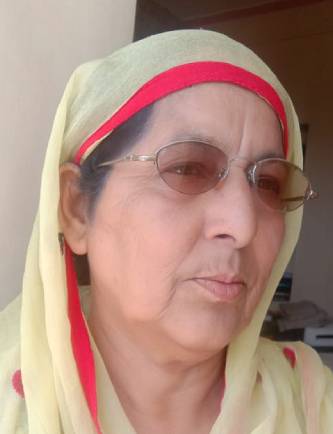
Khokhar credits her family, particularly her husband, for unwavering support. “He accompanies me wherever I am invited,” she said. Unlike many, she did not approach writing as a deliberate pursuit. “I never wrote consciously. Whenever I found time outside my daily life, I wrote.”
While she acknowledges facing challenges, she considers them valuable lessons. Access to literary magazines and newspapers in her youth, along with participation in cultural events, bolstered her confidence. “The Cultural Academy invited me to many functions, which strengthened my resolve,” she said.
Khorkhar hopes more women and young girls from her region will take up writing. “Women should write about their experiences and struggles,” she said, believing that the new generation of female fiction writers is, making meaningful contributions.
In contemporary Urdu short fiction, writers such as Shabnam Binte Rashid, Rehana Shajar, and Rafia Wali are emerging as prominent voices, continuing the tradition set by their predecessors.
The Late Arrival
Shabnam Rashid is among the respected Afsana Nigaars of Kashmir. Born and raised in Pahalgam, she began her literary journey in 2017 with the short story Saayah Chinar Ka, published in a leading Urdu daily. Unlike many writers, she had no literary lineage. Her father, Abdul Rashid Malik, was a retired educator who passed away in 2014.
She adopted the pen name Shabnam Binte Rashid when she started writing. Her passion for literature began in childhood, nurtured by her father’s collection of Urdu and English novels, magazines, and newspapers. “That is how I developed an interest in writing,” she said.

Shabnam has explored diverse themes in her fiction, from cultural narratives to social issues. Her stories include Adhoora Sweater, Dard ki Dehleez, Dard ka Maara, and Tillae Waalaa Pheran. A homemaker and mother of two daughters, she credits her family for their unwavering support. Initially, her niece typed her manuscripts, but her daughters later took over. “I am not well-versed in technology, so they help with the typing,” she said.

Although she wrote stories as a child, she never shared them. “I lacked the courage to tell my parents or seek publication,” she recalled. It was only after spending over a month refining a story that she considered submitting it. “I was sceptical about sending it for publication,” she said.
Some of her works have been referenced in academic research. Shabnam believes a writer must first be a dedicated reader. “Consistency is the key. We should not stop reading or writing. The first draft may not be good, but persistence leads to improvement,” she said.
The Return of a Writer
Rafiqa Rehana, who writes under the name Rehana Shajar, is an emerging Afsana-Nigaar from Wazir Bagh, Srinagar. A retired personal assistant to the Dean of Veterinary Sciences at SKUAST Kashmir, she holds a law degree from the University of Kashmir.
She began writing while still at university and published a few pieces before pausing her literary pursuits due to personal commitments. “I got busy with life and put my writing on hold,” she said. Though she continued writing privately, she never sought publication.
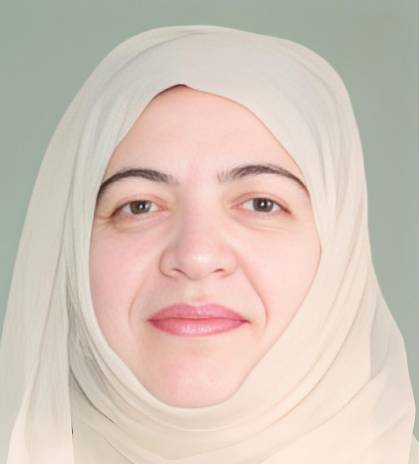
Rehana credits her family for their encouragement. “My husband and children have always been supportive,” she said. After retiring, she decided to revive her passion. “I thought it was time to chase my dream again,” she said.
Her writing journey, however, was once stifled by fear. She recalled how, as a class nine student, she wrote her first afsana and read it to her elder sister. “She told me to destroy it. We were both afraid of our father,” she said. That day, she buried her literary aspirations—until recently, when she chose to reclaim them.
Reflecting on her father’s absence, she said, “Had he been alive, he would have loved my stories. I know he would have been happy for me.”
During her career, she wrote extensively but never revisited those works. “I never had time to organise my stories and poems. But it was my misfortune that everything was lost in the 2014 floods. Not even a single page remained,” she said.
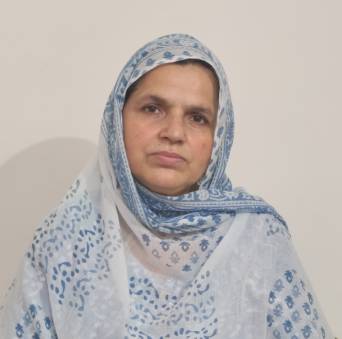
Now, her stories are published in local, national, and international publications. She focuses on themes of women, society, and contemporary issues. Looking ahead, she hopes to compile her stories into a book. “I dream of writing a novel, but for now, I plan to bring my short stories together in one collection,” she said.
Rehana finds Urdu the most natural medium for her expression. “The language has a unique essence,” she said, advocating for its promotion. “Today’s generation is drawn to Urdu. It is a language of immense literary beauty,” she added.
For aspiring writers, she stressed the importance of exploring different genres. “Urdu offers vast opportunities—from drama and short stories to poetry and essays. Parents should encourage their children to pursue it,” she said.
A Shared Struggle
These writers from diverse backgrounds share a common journey: overcoming challenges to find their voice. They credit local Urdu Newspapers for providing a platform, and their paths converged in a shared passion for storytelling.