A chain of grassroots reading communities is reviving Kashmir’s parks as third spaces, echoing the Valley’s century-old tradition of collective reading, reports Lilac Ali
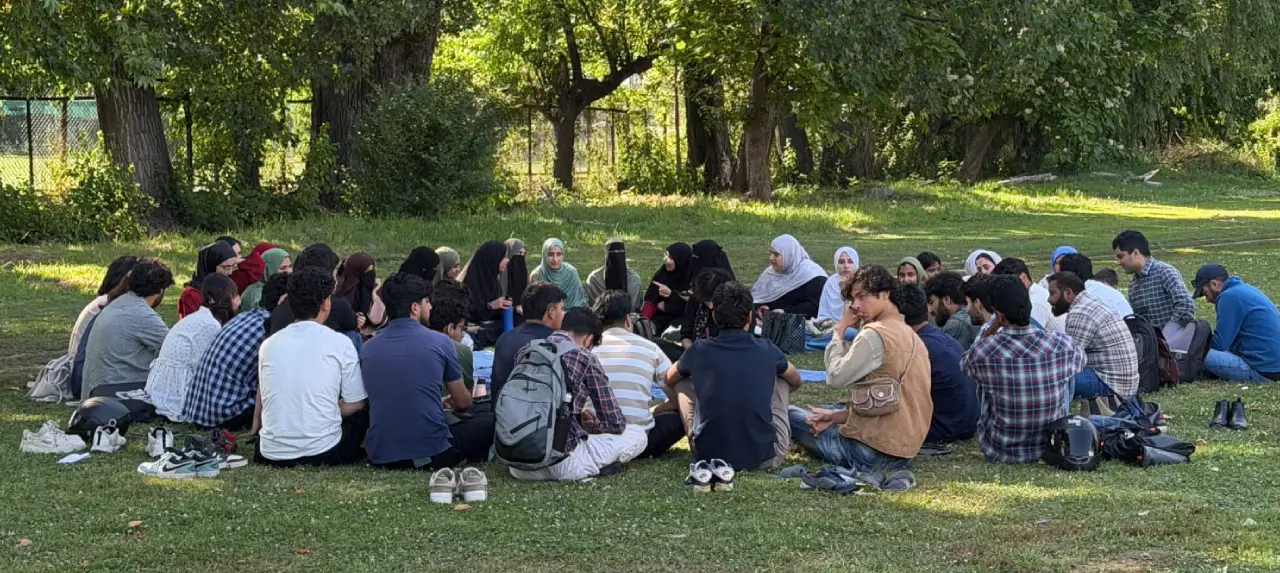
Under the sprawling canopy of a Srinagar park on a quiet weekend afternoon, a circle of men and women sit cross-legged on the grass in the shade of Chinar trees, simply reading. Some are lost in their pages; others are deep in conversation on philosophy, their voices drifting through the afternoon air. It is a scene where the rush of the digital world slows to the rhythm of a turning page, and the afternoon has nowhere else to be.
This is a typical Sunday meet-up of Kashmir Readers, one of several grassroots reading communities breathing fresh air into the Valley’s social life. Communities like Srinagar Reads have been gathering on Saturdays for nearly three years, traditionally closing their sessions with a competitive round of Uno, a popular card game.
At dawn on Sundays, Boulevard Reads claims Ghat No 5, reading against the mirror-like expanse of a waking Dal Lake, while Jhelum Reads sets up on the grassy riverbanks.
That so many distinct communities have appeared almost simultaneously is telling. A collective sign of a generation looking to log off and find each other. Women-exclusive communities are emerging too, including one founded by oral historian Maumil Mehraj, offering a secure space for women to read, think, and exist aloud, free from social surveillance.
Reading has long been considered a solitary act, a quiet partnership between one reader and one writer. These circles are gently proving that books can also be social glue.

A Stubborn History
Kashmir owes its modern history to reading, quite literally. The Valley has a long history of collective thinking, where ideas have travelled between people as fast as they travel between pages. Long before WhatsApp groups and Instagram pages, there was the Fateh Kadal Reading Room Party of 1929.
Founded by two cousins, Molvi Bashiruddin and Naseeruddin, one a schoolteacher, the other a graduate locked out of the civil service who turned to journalism, the Reading Room was a cramped, unassuming space that functioned as an intellectual pressure cooker. Young Kashmiris crowded in to devour newspapers smuggled from undivided Punjab, debating how global anti-colonial revolutions might apply to their own lives under an autocratic Maharaja. State authorities kept a nervous eye on the premises, but the reading never stopped, and that single book club eventually seeded the political consciousness that catalysed Kashmir’s modern history.
As decades passed, the Reading Room evolved into public libraries, which eventually yielded to the legendary Coffee House on Residency Road, where poets, journalists, and thinkers debated politics and literature over steaming cups. When militancy closed the Coffee House, the arrival of the internet, secured after a protracted battle for access, promised a digital global village. Instead, it delivered isolated, glowing screens.
What is happening in Srinagar’s parks today is a modern echo of that old, collective instinct.
Kashmir Readers
Aqib Bashir, currently studying Urdu, understands the weight of words. His literary journey began with the light-hearted comedy of Diary of a Wimpy Kid, but shifted when he discovered Jane Austen, whose razor-sharp social satire turned provincial drawing rooms into battlegrounds of rigid convention. In her sharp-witted heroines navigating those expectations, Aqib found an unexpected mirror for his own surroundings.
“She made me see books as something deeper than entertainment,” Aqib said. These days he is working through Mirza Waheed, finding his way back to stories written closer to home.
In January 2025, Aqib and his friend Mumin were reading in a park when a casual thought struck them: why keep this to themselves? They posted a flyer online, and 15 people showed up to the first meet-up. Today, Kashmir Readers has hosted over 50 meet-ups. Its online community has grown to over 650 members, drawing university students from Aligarh Muslim University, a reader from Kerala, and local youth who travel hours from Pulwama, Kulgam, Baramulla, and Anantnag to sit in a circle on a Sunday afternoon.
Alongside the open-ended meet-ups, the group runs structured weekly online discussions where members read and dissect a pre-selected book together. It recently hit a milestone, drawing 51 attendees to a single session, a genuine feat in an era when getting that many people to log off and travel for hours to sit together and read counts as a small triumph.
“The setup is beautifully simple,” said Abrar Irshad, a journalism graduate from Pulwama who co-manages the community. “You show up with whatever book you want, find a spot on the grass, and read, no homework, no assigned chapters, no academic pressure.”
Once the reading hour ends, the gathering transforms into warm, lively chatter, a prelude to the most cherished part of the afternoon: the mushaira, where members read their own handwritten verses or recite beloved classics. When the sun dips, the board games come out. To keep the community connected beyond the park, Abrar also organises Google Meet sessions, virtual welcome meets, and late-night video-call poetry readings for members who cannot travel to Srinagar. The entry fee for this ecosystem is remarkably low: just curiosity and a willingness to engage.
Third Spaces
Is it really just about the books? Aqib’s answer is immediate: “Books bring people to Kashmir Readers, but the conversations and connections are what make the community special.”
For many, the group is a rescue mission for their attention spans. Seerat, who joined a month ago, had watched her reading habit slowly get crowded out by daily life; the unfiltered debates over fiction, philosophy, and poetry helped her rediscover a “creative, intellectual side” of herself she feared she had lost. She describes the feeling with a rare word, apricity, the warmth of the sun in winter.
There is a fair question underneath this enthusiasm. In a digital moment where sharing the link to an article often counts as having read it, a photograph of a carefully curated bookshelf on social media can do the heavy lifting of intellectual performance. In this environment, posturing is cheaper, and often more visible, than genuine effort. Are these communities evidence of a real cultural shift, or simply another staged aesthetic?
“If it were performative, people would not keep showing up every weekend, reading books, and spending hours discussing them,” Aqib responded. Fifty-one people sitting together in a Srinagar park on a Sunday afternoon, he argues, is something more substantive than posturing.
For other members, the value is personal. Zuhaib, a computer science student who travels from Baramulla, calls the sessions a mental sanctuary. “In Kashmir, young people carry a lot of unspoken anxiety and isolation,” he revealed. “When you sit in a circle here, you realise you are not carrying it alone. It is a shared pressure valve.”
As one member puts it, these gatherings function as crucial third spaces. They offer neutral, non-commercial ground outside home and work, where people can socialise and let their guard down without buying a ticket or justifying their presence. They are not flawless utopias. Organisers grapple with inconsistent attendance, the challenge of finding indoor venues when it rains, keeping large online chat groups from descending into noise, and balancing quiet reading with social conversation.
A Space of One’s Own
In Srinagar, public spaces where people can gather without a commercial transaction are rare. For women this absence is more pronounced, raising the necessity of what Virginia Woolf called a room of one’s own, or here, a patch of grass free from social surveillance.
Aneela, a critical reader since middle school, points to the divide. “There are not many spaces to build collective intellectual curiosity in our society, whether due to political instability or social conservatism,” she said. “Men can easily gather on the streets, play cricket, or discuss politics on shop-fronts. Women are rarely seen in those informal physical spaces to connect.”
The mixed-gender environment of Kashmir Readers is, for this reason, a necessary step forward. “Gender should not dictate who gets to participate in intellectual and social life,” Aqib said. Two of the group’s core organisers, Fatima and Tooba, have shaped the community since its inception. For Monisa, the space has been a welcome change of pace: while fewer women make it to physical meet-ups compared to men, the environment is free of the condescension women often face when airing opinions in public. “It feels safe, and it feels equal,” she said.
Keeping It Alive
Starting a trend is easy; keeping it alive is the real art. The true test of a community is not the first meet-up but the 53, the one held on a grey Sunday when the novelty has worn off and only the dedicated show up. What keeps Kashmir Readers going is a shared sense of ownership, one that lives on in late-night WhatsApp recommendations and the warmth with which veterans welcome newcomers.
Srinagar Reads has found its own version of that longevity. What began as a strictly silent reading club has evolved into a more fluid, lively gathering. Its founder, Ridwan-Ul-Haq, a Dubai-based software engineer and science fiction buff, originally wanted to bring Toastmasters to Srinagar. However, he realised formal memberships and steep fees were barriers for local youth. He found the people wanted something simpler: a space to be with others and slow down.
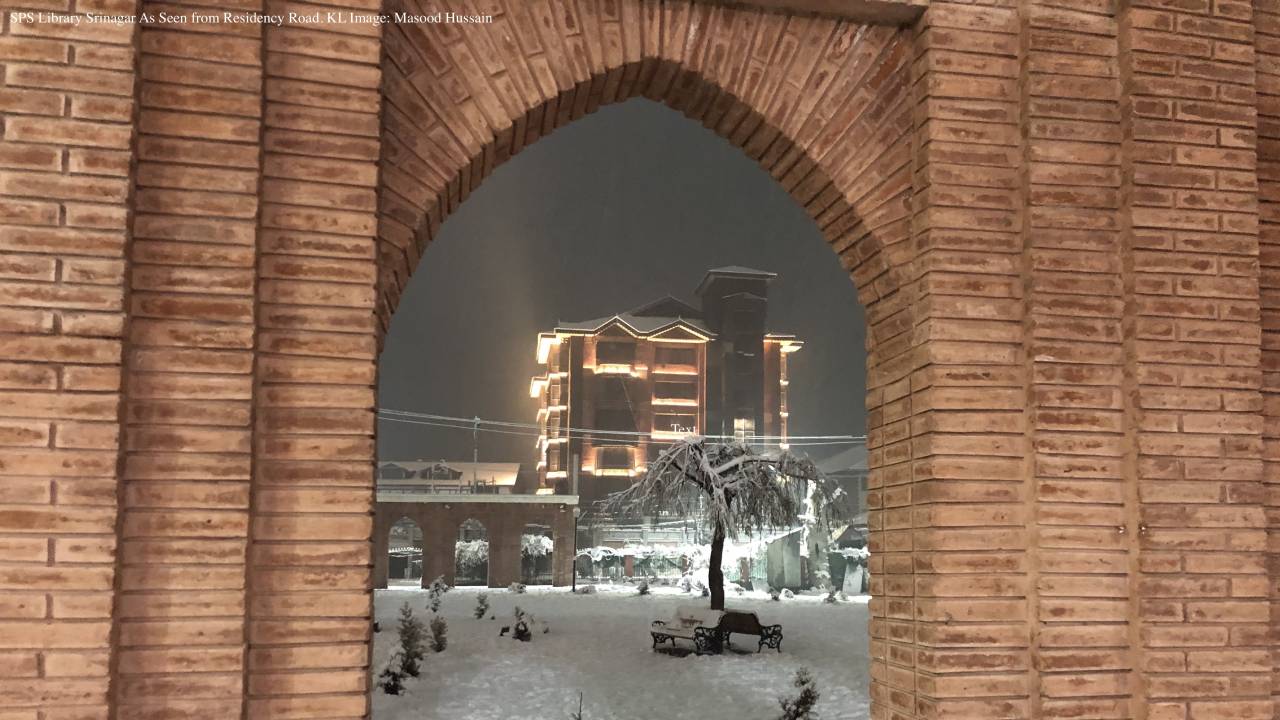
Keeping that space alive is a constant challenge. When Kashmir’s 40-day deep winter, Chillai Kalan, settles over the Valley, park meet-ups become impossible. The group is then forced to test Albert Camus’s famous line: “In the depth of winter, I finally learned that within me there lay an invincible summer.” Though, it is fair to say, Camus never had to contend with the added obstacle of the SPS Library’s registration formalities.
Ridwan tried moving sessions into local libraries, including registering at the SPS Library, only to find that Srinagar’s public libraries lack a welcoming aura, dominated by silent students cramming for exams rather than offering a cosy space for leisure reading. “I wonder what happened to reading for leisure in libraries,” he regretted, noting that bureaucratic formalities serve as barriers rather than invitations.
Yet three years on, the community endures, meeting on Saturdays and still ending with Uno. Farheen, a fourth-year medical student who has attended long enough that the group feels indistinguishable from friendship, offers the simplest explanation for what keeps it going: “I show up even when I do not feel like reading. I show up for them.”
The Legacy
Asked what they hope these reading circles leave behind, the organisers give a modest answer: to make reading a visible, normal part of everyday life.
It is a quiet goal, but it carries a grand legacy. Almost a century ago, a few young men in Fateh Kadal proved that a shared room and a stack of books could change the course of a society. Today, that torch has passed to a resilient network of circles gathering in parks, on riverbanks, and by the lakeside, carrying forward, in their own quiet way, the same wistful promise that they shall meet again in Srinagar.
The books in their hands span a wide spectrum, from the Kashmiri narratives of Mirza Waheed to the searching introspection of Virginia Woolf. The titles and the generations differ, but the underlying hunger for connection remains unchanged. Under the shade of the Chinars, the circles stay open, and the pages keep turning.