Jammu and Kashmir’s proposed Industrial Policy 2026-35 seeks fresh investment and jobs while easing compliance, supporting stressed MSMEs, expanding local procurement and addressing concerns over implementation of the existing industrial incentive regime, reports Mudasir Majeed Peer
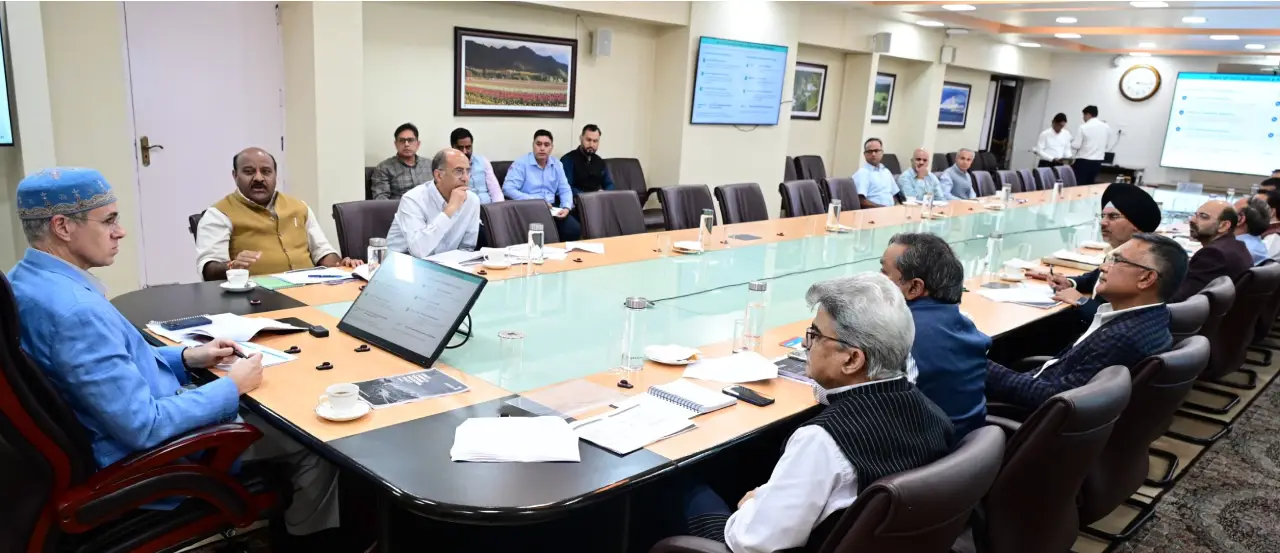
Busy overhauling its industrial incentive regime, the Jammu and Kashmir government is working on a new 10-year policy. The objective is to attract fresh investment, create employment and rehabilitate stressed micro, small and medium enterprises.
The proposed Jammu and Kashmir Industrial Policy 2026-35, currently under consideration by the government, envisages a new incentive framework centred on fresh industrial investment, with interest subvention, net SGST reimbursement and freight support among the key proposed benefits for new units, according to people familiar with the developments.
The framework, however, draws a distinction between new investments and existing industrial units, with the principal investment-linked incentives proposed for units commencing commercial production after the new policy comes into force.
The approach comes as the government seeks to build on the industrial expansion witnessed under the existing policy regime while addressing the financial stress faced by a sizeable section of the existing MSME base.
Refinement Required
Last month, while reviewing the draft policy, the Chief Minister directed the Industries and Commerce Department to further refine it before its formal finalisation. The government has publicly said the new framework is intended to provide a competitive incentive structure, improve ease of doing business, strengthen market access and link industrial incentives with local employment and skill development.
The proposed policy has set an investment ambition of around Rs 1 lakh crore over 10 years and aims to generate about 10 lakh direct and indirect job opportunities.
People familiar with the government’s proposed framework said the policy is also expected to lower the investment threshold for mega projects to Rs 2,500 crore from Rs 4,000 crore. The change is aimed at making the category more accessible to large investors after the higher threshold under the previous framework failed to attract any investment.
Units proposed under the new policy would have to employ at least half their workforce locally. The bar will go up to around 75 per cent in five years. Units employing more than 30 people would also be required to provide paid apprenticeships equivalent to 15 per cent of their workforce.
The policy architecture has a strong focus on sectors identified as having investment and employment potential, including food processing, medicinal and aromatic plants, tourism and hospitality, film tourism, handicrafts and handloom, healthcare, textiles and garments, pharmaceuticals and packaging.
Medical devices, precision and light engineering, renewable energy, IT and education have also been identified for greater policy attention.
For these sectors, the government is considering sector-specific interventions as well as dedicated industrial parks and clusters equipped with testing, incubation and skill-development facilities.
The Compliance Window
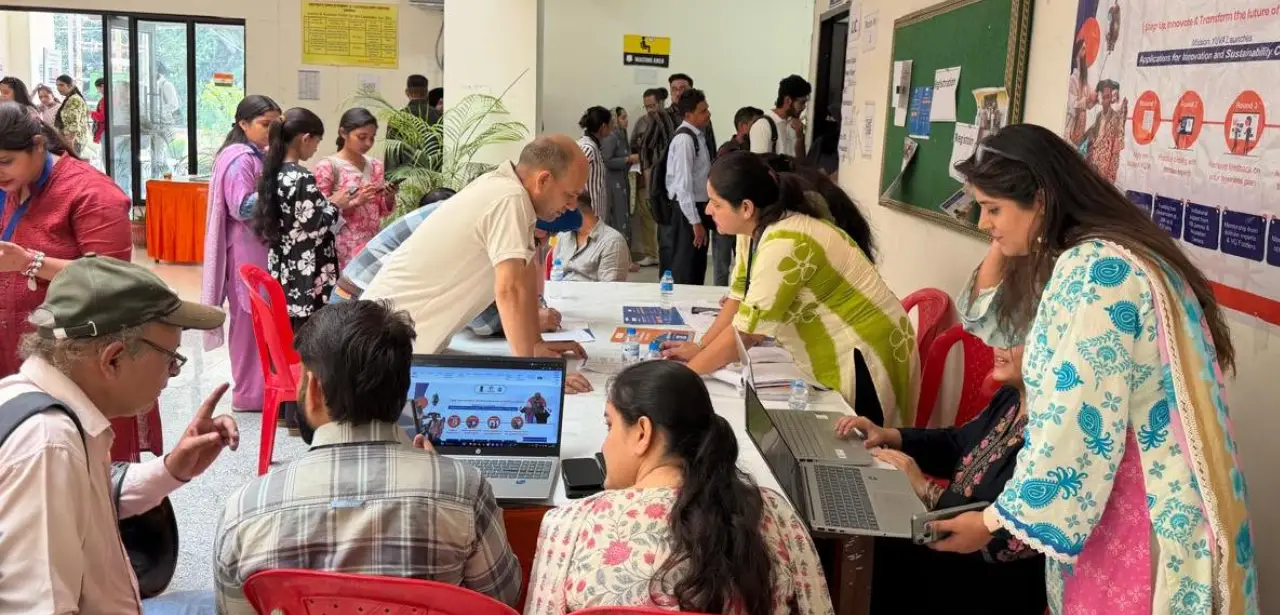
Ease of doing business is another major component of the proposed framework. The government is likely to consider a self-certification mechanism under which new MSMEs could receive a single in-principle approval, with the District Level Committee headed by the Deputy Commissioner playing a key role.
The proposed system would give enterprises a three-year window to obtain various statutory approvals, licences, registrations, permissions and clearances required for their operations. Routine inspections would also be restricted during this period, subject to specified exceptions.
The measure is a step in the direction of the government’s announcement in the 2026-27 Budget of a self-certification scheme for MSMEs, including a single in-principle approval and a three-year grace period for obtaining clearances.
Industry’s View
Industry lobbyist and former president of the Federation of Kashmir Chamber of Commerce (FCIK), Shakeel Qalandar, said that ease of doing business has remained one of the industry’s biggest concerns. The system, he said, should move away from requiring prior approval for every permissible change made by an investor.
“The biggest issue in the non-fiscal incentives is ease of doing business,” Qalandar said. “A new MSME unit should be able to obtain one in-principle approval on self-certification, start construction and installation of machinery immediately, and get three years to secure the regular departmental clearances, approvals, permissions, registrations, licences and consents, with freedom from routine inspections during this period.”
Under the proposed system, he said, the delivery of approvals, clearances and services is proposed through an integrated digital ecosystem, strengthening of the Single Window System, time-bound services, investor grievance redressal and continuing reduction of the compliance burden.
“In case a change is legally permissible, a unit should only have to intimate the concerned department rather than seek prior approval, with intervention reserved for cases involving an actual regulatory violation,” he asserted.
Revival Support
While the policy is primarily focused on bringing in fresh investment, the government is proposing measures to keep existing local enterprises afloat.
Sources suggest that new micro and small enterprises registered in Jammu and Kashmir are proposed to receive preferential treatment in government procurement, including a 20 per cent purchase-price margin and a local filter for procurements up to Rs 50 lakh.
Qalandar said procurement policy could play an important role in creating sustained demand for local manufacturers. Citing the instance of transformer manufacturers in Rangreth, he said native units are capable of manufacturing transformers but were losing procurement opportunities to non-native firms.
The industry leader said Kashmir’s manufacturing sector had consistently argued that the L1 price should remain the benchmark, but if a local enterprise is capable of supplying at the same price, it should get the opportunity to supply.
The government is also looking to use SICOP as a support platform for digital procurement and market access for local MSMEs, with a projected marketing turnover of around Rs 1,600 crore to Rs 1,850 crore and a proposed service charge.
The proposed industrial framework is likely to include a multi-crore revival package for viable stressed MSMEs, with the government estimating that it could cover a major chunk of the sick and non-performing units identified for intervention.
The package would distinguish between enterprises in different stages of financial stress.
For MSMEs classified as SMA-2, a dedicated pool of about Rs 300 crore is proposed. Eligible enterprises are likely to receive additional credit of up to a specified percentage of their outstanding fund-based working capital or term-loan exposure as of the end of the previous financial year. The interest rate on such assistance is proposed to be capped at 9 per cent, with a 3 per cent interest subvention.
Separate corpora of Rs 300 crore and Rs 400 crore are proposed for viable NPA MSMEs, with financial assistance linked to either 20 per cent of the relevant exposure or the assessed requirement, whichever is lower.
The government is also considering a credit-loss protection mechanism for participating banks covering eligible credit losses, aimed at reducing the risk for lenders extending fresh support to distressed enterprises.
OTS for Stressed Units
Qalandar said industry had also sought a One-Time Settlement mechanism for stressed industrial units, arguing that viable enterprises should be given a route to restart rather than being allowed to remain trapped in accumulated debt. He said there had been OTS schemes in the past and that a similar mechanism could be considered for stressed industrial units.
The scale of the proposed intervention reflects the financial stress within the existing MSME ecosystem, with government assessments placing the number of NPA units at around 20,000 and SMA-2 accounts at nearly 40,000.
Qalandar said industry had also sought relief for sick and stressed units from accumulated interest and surcharges on statutory liabilities, particularly where enterprises had remained shut because of disruptions while rent, maintenance charges and other dues continued to accumulate. Such units, he said, should be assessed individually for viability, with mechanisms for both revival and an orderly exit where revival is not possible.
Central Scheme
The rehabilitation component is significant because industrial expansion in recent years has occurred alongside a large central incentive programme. The Centre’s New Central Sector Scheme for Industrial Development of Jammu and Kashmir, with an outlay of Rs 28,400 crore, provides capital investment, GST-linked, capital-interest and working-capital-interest incentives to eligible industrial units.
Local industry experts and trade representatives have been upset at the way the Rs 28,400-crore NCSS outlay was implemented, saying it put established businesses at a disadvantage.
“We have said it in every meeting with the government that the package implementation was unfair. There was a regional imbalance which put the businesses from the Valley at a disadvantage. There is no doubt that there were a lot of business-friendly initiatives included in the NCSS scheme which benefited many businesses. But our grievance with regard to package implementation remains,” Ashiq Hussain Shangloo, an executive member of the Kashmir Chamber of Commerce and Industry (KCCI), said.
“We also demand relief in GeM portal eligibility. The qualifying criteria makes it very difficult for the local businesses to compete.”
Arun Gupta, president of the Chamber of Commerce and Industries Jammu, said he was very hopeful that the new policy would be beneficial to the business community in Jammu and Kashmir.
“Chief Minister has assured us that our inputs will be looked at with all seriousness and government will take every step to work towards the welfare of the businesses of Jammu and Kashmir,” Gupta said.
Both Qalandar and Shangloo demanded that rooftop solar should be incentivised through a 100 per cent subsidy, arguing that power tariffs are very high and constitute a significant cost for businesses, while greater use of solar power could bring those costs down.
The Road Ahead
Jammu and Kashmir’s 2026-27 Budget revealed that 2,227 industrial units involving close to Rs 15,940 crore of investment had commenced production since 2020, generating employment for around 74,000 persons. The government had also said that amendments to the existing industrial policy were being planned to sustain industrial growth after the central scheme.
The new policy, which is likely intended to supersede the 2021 industrial policy, therefore seeks to address two distinct challenges: attracting another wave of investment after the existing incentive regime, while preventing financially distressed local enterprises from exiting the industrial ecosystem.
For industry, however, the demand is not simply for more incentives but for an environment in which existing and new units can find markets, access finance and operate without prolonged regulatory hurdles.
Qalandar summed up one of the industry’s central concerns by saying the objective should be “continuity of demand and sustainability of the industry.”
The final policy, however, is yet to be notified and its provisions could change during the approval process and refinement.