For generations, Punjab was where Kashmiris went to trade, study and heal. Today, those who make the journey travel with caution, struggle to rent rooms and stay wary of drugs and hostility, reports Asrar Syeed
Historically, the neighbouring state of Punjab was a place Kashmiri artisans, shawl weavers, and traders travelled to frequently. For most of the Sikh and Dogra era, Amritsar had more Kashmiri Muslims than Srinagar had. Even now, it is the only state that hosts the highest number of Kashmiri students on its campuses.
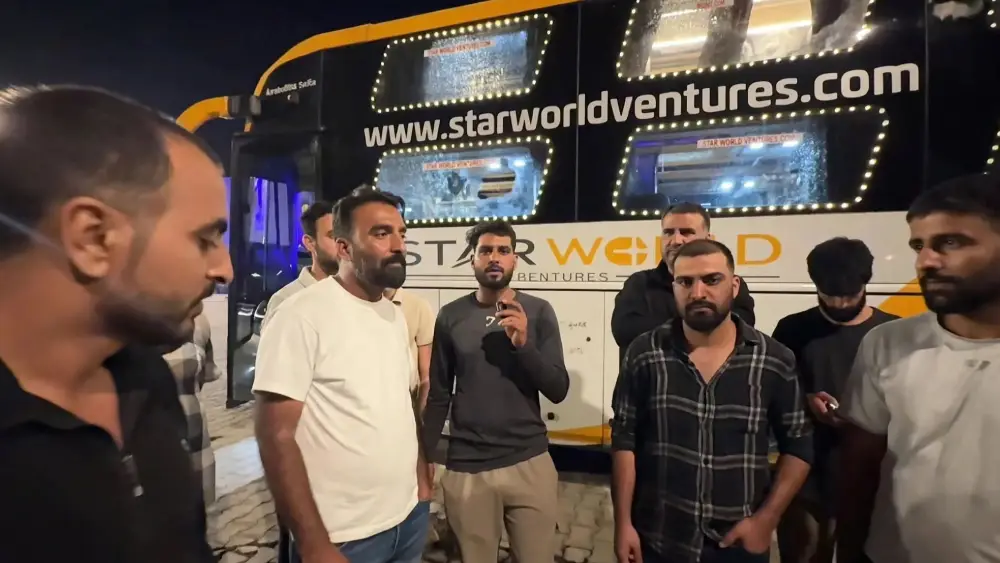
The situation, however, appears to be changing. Repeated attacks on Kashmiri students, traders and travellers over the past few years have fuelled growing anxiety. The recent stone-pelting attacks on two buses carrying Kashmiris in Ludhiana and Karnal, coupled with the mysterious death of labourer Aijaz Ahmad, have once again raised troubling questions about the safety of Kashmiris in Punjab and Haryana.
‘I used to travel to Punjab for trade’ is a phrase common among Kashmir’s elderly men. Over the years, the sentiment has changed. In the early 2000s, as Kashmiri youngsters started moving out for studies in large numbers, Punjab pulled the maximum numbers. Lack of healthcare infrastructure at home has also prompted many people in Kashmir to travel to the state for treatment.
Currently almost 30,000 Kashmiri students are studying across multiple universities in Punjab. Each year, thousands of shawl sellers still travel to Punjab; hundreds of Kashmiri patients are currently under treatment at various hospitals in Punjab, but the fear of landing up in a “dangerous situation” prompts them to remain attentive and avoid any unnecessary conversation.
In 2025, after the Pahalgam attack, Kashmiri students were attacked in Punjab, prompting many parents to bring back their children until normalcy would return. This was despite the universities having assured the safety of Kashmiri students and labourers there.

Historic Bonds
In his book History Of Srinagar noted Kashmir historian, Mohammad Ishaq Khan has highlighted briefly Kashmir’s deeply rooted relationship with Punjab. The author wrote about Kashmiri shawl weavers travelling to the state of Punjab during the difficult rule of the Dogras. He also mentions the remarkable role of the Punjab press during Maharaja Hari Singh’s authoritarian rule. Famous personalities like Sheikh Abdullah and poet Mehjoor studied in Punjab.
During the peak of that exploitative era, the only Kashmir handicraft cluster that existed outside the valley was Amritsar. This cluster evolved and now feeds on Kashmir’s apparel and textile demand, including fake shawls.
But now, the warmth between the two northern neighbouring territories seems to have diminished.
According to data compiled by the Jammu and Kashmir Student Association (JKSA), more than 700 cases of violence against Kashmiri students, traders, shawl sellers, businessmen and other community members were recorded across India between 2014 and 2026. Although there is no separate data for the state of Punjab, there have been reported incidents of fatal injuries against Kashmiris from the state.
The most recent incident of violence was reported from Punjab’s Ludhiana city, where a bus travelling from Kashmir was pelted with stones, and an elderly Kashmiri man onboard was severely injured, as glass shards had pierced his face, causing deep wounds.
Growing Intolerance
Twenty-year-old Shakir Wani was the second person from his family to travel to Punjab after his grandfather, who used to travel to the state earlier for trade. Wani had heard wonderful stories about communal harmony and unity in Punjab from his grandfather, but upon arriving in Punjab, things were different; the image he had in his mind was shattered.
“After living in Punjab for a few months, I realised the state had changed to a great extent in comparison to the time when my grandfather used to be here,” Wani said.
Since 2014, when the Bharatiya Janata Party came to power at the centre, hate crimes against minorities have increased across the country, especially in North India. Although the party hasn’t secured a win in any of Punjab’s elections so far, its vote share has comparatively increased over the years.
Wani argues that tremors of this hatred have travelled to Punjab also. “Sections of the Punjab population have grown intolerant. As a Kashmiri one really needs to watch out before even striking a normal conversation,” added Wani, who largely remains inside the university campus.
At present, Kashmiri students mostly travel to Punjab for studies. Due to a limited number of professional colleges in Kashmir, these youngsters have found Punjab the nearest place to fulfil their educational dreams. But their journeys revolve around fear and caution.
“In the areas I have been through in Punjab, I felt they were safer and more open for non-Muslims. In the area where we used to live, we were supposed to stay extra cautious. It is always very distressing to live in constant fear and alertness just because of my Kashmiri identity,” said 23-year-old Shahid Zahoor, who recently came back after completing his studies.
Sufiyan Bhat, a 28- year-old software engineer has a different analysis of things. She said one doesn’t feel any kind of ill-will or hatred while interacting with the native Punjab population. “The state is one of India’s corporate hubs, and many people from states like Haryana, Himachal Pradesh and other neighbouring states work there, and that has given birth to a sense of ‘communal hatred’ in the atmosphere,” she said. Working in a top company in Punjab for the last many years, Sufiyan said that in interactions with people from Himachal Pradesh, Haryana, or even Jammu, one could feel the “tinge of hatred” and “othering”.

‘Mysterious’ Deaths
In the last few years, there have been multiple cases of young Kashmiri boys being found dead under “mysterious” circumstances. Between 2022 and 2026, 10 students from Jammu and Kashmir were found dead inside their hostel rooms or rented accommodations. The causes of their deaths, according to the initial reports, remained unknown. In Kashmir, there has been a massive uproar over such kinds of deaths; people have repeatedly demanded a fair and serious probe into such incidents.
According to a 2023 parliamentary report, Drug Abuse Among Young Persons: Problems And Solutions, Punjab has over 66.70 lakh drug users, including 21.36 lakh consuming different types of opioids. Punjab has been among the worst-hit states by substance abuse and deaths due to drug overdose. Between 2022 and 2024, the state witnessed 339 deaths due to drug overdose.
Shaheen Shafat, who has been studying in one of Punjab’s premier universities, explains how over the past few years many Kashmiri youngsters have turned towards drug addiction in Punjab due to the easy availability of the drugs.
“Drugs are far more easily available in Punjab than a bottle of drinking water. Hundreds of Kashmiri youngsters travel here each year for studies, and many among these get addicted towards drugs, sometimes due to bad friendship or the easy availability,” Shaheen said. “I remember this Kashmiri boy who used to study in our university; he became friends with some locals and eventually started doing drugs. Over time, he suffered both academically and physically. And one day we were in the university and heard that he was found unconscious inside his hostel room.”
Besides, youngsters leaving Kashmir for the first time, according to Sufiyan Bhat, find it hard to cope with the ‘new-found freedom’. “Students find the relatively open availability of drugs and opioids as an escape and an easy answer to the stress and struggles. The vast availability of a variety of drugs largely contributes to these accidental deaths,” he believes.
Space Crisis
Imtiyaz Ganai, 31, argued that finding accommodation has become an exhausting job for Kashmiris in Punjab over the years. According to Ganai, many landlords have asked brokers not to give flats to Kashmiris. “The main issue I have faced is related to accommodation. There are nowadays many places in Punjab where Kashmiri students are not easily given flats or rooms for rent.”
“Discrimination in accommodation is something that does exist and should be addressed. The accommodation issue was not pre-existing; rather, it has emerged over the last two years,” Imtiyaz said. “Personally, I haven’t noticed a major change in this issue.”
Due to years of political instability, Kashmir was largely avoided by multinational corporations for setting up of offices or any kind of infrastructure which exists outside Kashmir.
“In Kashmir there is no opportunity. The government job sector is already saturated, and the private jobs are available in very limited numbers. Youngsters like me have no option but to migrate to different parts of India. And the least one would wish is to suffer because of political differences and rising hatred across the country,” asserted Sufiyan Bhat.
Bhat, however, believes that the native population has always been helpful towards Kashmiris. “My experience with the local majority community has always been positive and forthcoming. During heightened political tensions, they have opened their own homes for Kashmiri students, even arranged transportation if anyone wished to go back”, he says.
According to a local Punjabi real-estate dealer, Manpreet Singh, the accommodation crisis has become an issue for Kashmiris living in Punjab.
“No one wishes to be associated with any terror-related cases even remotely. When Delhi blasts took place last time, and names of Kashmiri doctors came up, many landlords who earlier allowed Kashmiri tenants clearly decided not to provide accommodation to any Kashmiri.”, Singh said on the phone.
“No one really understands our misery. Why would any sane person wish to leave their own home, but Kashmiri youngsters have been left with no option. I hope people in India realise that Kashmiri youngsters have compulsions to move out, be it matters of study, trade or any other travel. It is not about choice”, says Shaheen Shafat*.
After the recent incidents of violence in Punjab and Haryana, one question haunts every Kashmiri family with ties to these states: what guarantees of safety and security remain when mobs can roam the streets, target Kashmiris and drive them out through violence?
(Barring the real estate agent, names of all people quoted in the report have been changed on request.)