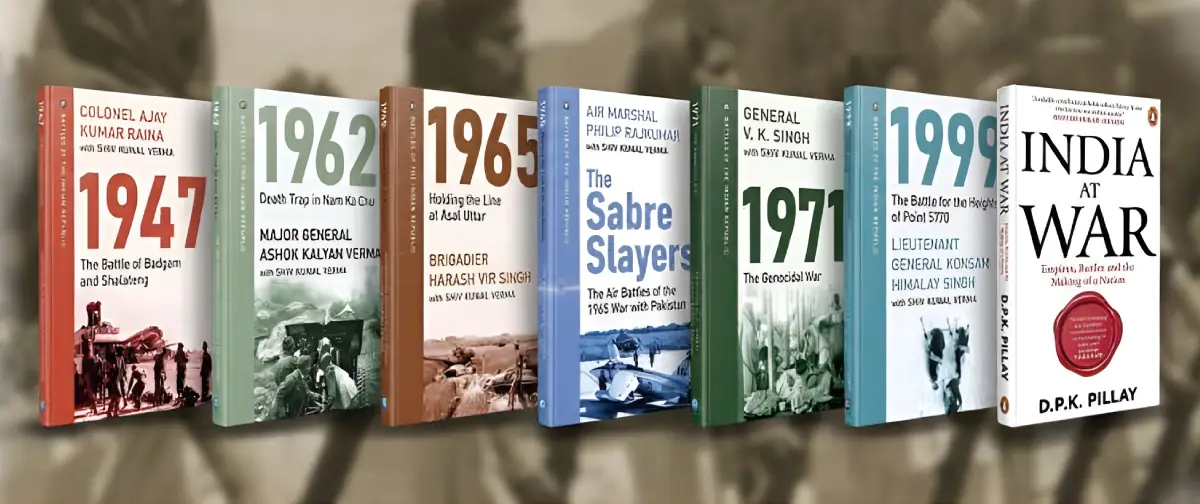
Except for the 1962 war with China, all of India’s major wars have been with Pakistan. In the aftermath of Operation Sindoor, a new body of war literature has emerged, much of it produced by military historians seeking to revisit these conflicts, their strategies and their consequences. Kashmir Life reviews this growing body of literature.
Reclaiming India’s Wars
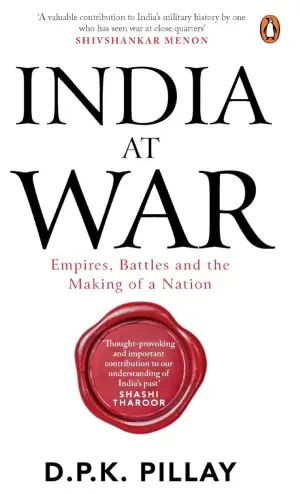
Colonel DPK Pillay’s book on India’s wars argues that colonial defeat never erased Indian identity by tracing a history of resilience across centuries, writes Mudasir Majeed
History is never simply a record of what happened. As the British historian EH Carr famously argued, it is the dialogue between the past and the historian who selects, orders and interprets it. That distinction matters when reading Colonel DPK Pillay’s India at War: Empires, Battles, and the Making of a Nation.
Pillay is troubled by how India has been represented in history, particularly by historians he sees as diminishing the achievements of Indians as fighters, despite their role in helping the Empire wage wars within and outside India. The book recounts the conflicts that shaped India’s military experience. But more than that, it is what Pillay calls an act of “reclamation”, where he asserts: “We are not the people who were defeated: we are the people who outlived our conquerors.”
Reclaiming India
For Pillay, Indian identity has remained a civilizational thread that no enemy could sever.
The Empire that ruled India harmed it beyond measure but failed to erase the shared sense of community and identity among Indians. If it excelled at anything, Pillay argues, it was appropriation, extracting not only material wealth but intellectual wealth too.
“We may have lost battles; we may have handed over fortresses turned into funeral pyres and allowed invaders to strip the treasures they sought,” Pillay writes. “But while they occupied our lands, they could never conquer the consciousness that defines us.”
Pillay mounts a devastating indictment of Western narratives whose sole aim was to portray the British Empire as a benign saviour, selling its invasion and expansion as a project of enlightenment for a wounded civilisation.
Drawing on his own battlefield experience and the experience of Indians who fought under the British Empire, he reconstructs a history of heroism, valour and resilience. This history, he argues, remains obscure because, for centuries, India’s story has been told by those who sought to rule her, diminish her or tame her spirit.
Haifa’s Lesson
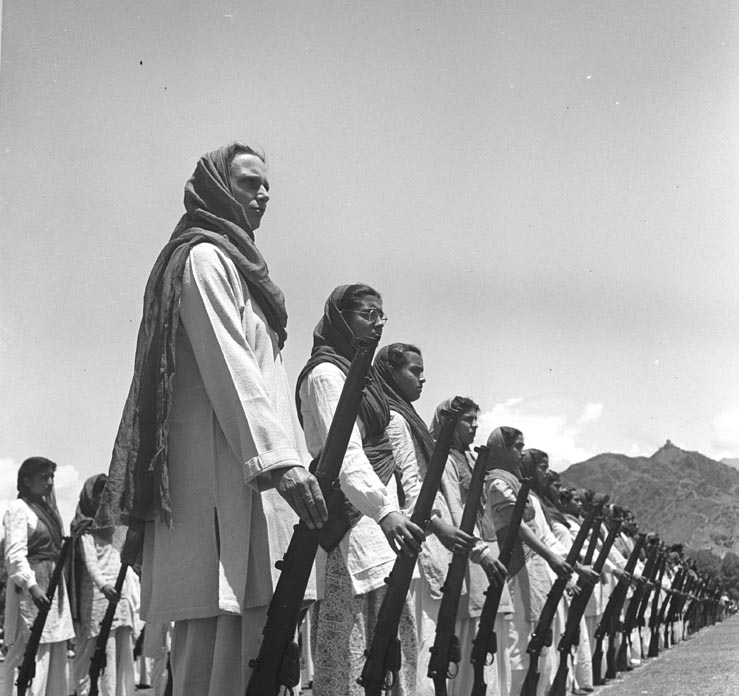
The book uses the Battle of Haifa in 1918 to illustrate the role of Indian cavalry, emphasising the courage, discipline, tactical skill and sacrifice of the Jodhpur Lancers and other Indian formations.
Haifa becomes one of Pillay’s most compelling examples. The charge of Indian cavalry against Ottoman forces is not portrayed merely as a battlefield event. For Pillay, it stands as testament to a deep military tradition and courage that he argues has been buried under colonial literature, without celebratory mention. The battle culminated in the capture of Haifa from the Ottomans, but there was also a major humanitarian objective: the safety and rescue of Abdul Baha, eldest son of Baha’u’llah, founder of the Baha’i faith.
Haifa, then, becomes in Pillay’s words not merely a battle to be remembered but a piece of historical memory to be reclaimed for Indian military history.
For the author, the soldier remained a fighter always, whether under the call of duty of the British Empire or of independent India. What mattered was upholding the ideals of duty, honour and courage under the imperial flag and under the tricolour. “Empires fell and sovereignty shifted, but the discipline and spirit of the soldier endured,” he writes.
1947 Reckoning
As with his reflections on Haifa, Pillay valorises India’s military narrative by drawing on major war events, both under the British and from independent India’s own history.
The Kashmir War of 1947 to 1948 was the first battle test of the Indian armed forces, fought without the “logistical backing” and “institutional depth” they had under the colonial system. Despite that, Pillay argues, the army, air force and the Jammu and Kashmir State Forces fought like warriors and prevented the complete loss of the state.
He admits India suffered significant losses in the 1947 to 1948 campaign. Yet he calls it a “civilizational awakening” rather than just a “military victory”, for it tore apart the colonial myth of a “defeated and exhausted” people and proved, that “the warrior spirit of India had been waiting to defend its own flag.”
Beyond Empire
Pillay’s account establishes a narrative in which readers see less of a Foji and more of a passionate academic, one versed in history and politics, relying little on imagined valorisation and more on properly referenced accounts. The Battle of Haifa, though one of the linchpins of his reclamation narrative, may not resonate with readers as strongly as he intends. But there is no denying that Indian men participated in Great Britain’s war in the Middle East and helped it win. It is a truth firmly grounded in history.
Britain left India wounded economically, politically and geographically. But as a civilisation, India stood strong and survived repeated foreign invasions aimed at breaking it, emerging as the nation it is today. It was the collective memory of centuries of suffering, humiliation, deprivation and subordination that cemented the consciousness of a nation, which is, what independent India became. Pillay’s book echoes this sentiment, prioritising the military narrative over the political one, a narrative he believes has remained overshadowed in the histories told over centuries by foreign as well as many Indian writers.
Lasting Impression
India at War is not simply a book of a few hundred pages about empire, wars, memory and the making of a nation treated unfairly by colonial writers. It is a writer’s lament, a catalogue of upsets and a journey into the past. In Pillay’s telling, it lays bare the unfair treatment meted out to a people by historians who sustained an empire by concealing its ugliness and portraying it as a benevolent coloniser on a “civilising mission”.
Edward Said’s critique of Orientalism offers a useful lens through which to read Pillay’s book. If colonial knowledge transformed the East into an object of European learning, the Colonel’s effort to foreground India’s military experience can be seen as an attempt to recover historical agency. It challenges narratives in which Indians were often represented as subjects of empire rather than as historical actors in their own right.
Pillay writes with the maturity of a seasoned historian when it comes to choosing facts, ordering them neatly and interpreting them in a manner that is reasonable given the enigma India has been.
History books do not usually pull in readers who consume fiction. This is one rare book, like Ramachandra Guha’s India After Gandhi, that does not lose its reader before the last page.
It is no small task to talk about war, numbers and places in a language that flows gently and smoothly. Despite having served in the army as a colonel, readers will be surprised to discover that the author writes in the camouflage of a gentleman who speaks wisely and asks difficult questions in a very humble tone.
1947: A Soldier’s History
Colonel Ajay Kumar Raina’s book on India’s first war is a brief introduction to the landmark event and how the army sees it, writes Asrar Syeed
 In 1947, British departure was months away. Partition had created two new dominions, India and Pakistan. Communal tensions, uncertainty and political motives gripped both countries. Jammu and Kashmir, a princely state with a Muslim majority ruled by a Hindu Maharaja, was caught in political confusion. Emerging leaders held the Maharaja responsible for ongoing Kashmiri suffering. Both new dominions eyed sought the state joins them.
In his book, 1947: The Battle of Badgam and Shalateng, published by Aleph Book Company. Colonel Raina, a decorated Indian Army officer and military historian, opens with the state still independent but caught in chaos over accession. He argues the “Accession of Jammu and Kashmir was legally complete but politically rendered uncertain.”
The book’s boldest claim is that Gurdaspur was not the only district giving India access to the state. Raina writes: “Crucially, access to Jammu & Kashmir did not hinge on Gurdaspur alone. The principal rail and road links to the state ran through Pathankot and Hoshiarpur.” Then, Jammu was connected with Punjab through Sialkote by road and by rail.
Raina has highlighted British complicity in creating the Kashmir dispute. He notes that British military leaders serving in the newly formed Pakistan Army helped plan the tribal raids.
Maharaja Hari Singh was steadily losing control of state institutions. Sheikh Mohammad Abdullah’s leadership challenged his popularity and authority. The tribal raiders’ offensive deepened the crisis. Facing pressure to decide, the Maharaja was promised a plebiscite by both the Viceroy and Indian leadership, an assurance Raina says “introduced a political conditionality absent from other accessions.”
The book credits the Army soldiers with executing Delhi’s decisions on the ground, holding bridges, ridges, roads and the crucial airstrip while buying time for the country. “The war that began in October 1947 did not conclude quickly,” Raina wrote. “But the war that might have ended Jammu & Kashmir’s accession before it could be defended was narrowly averted.” The book also draws a distinction between political decision making and military necessity, noting the time politicians took was bought by soldiers on the ground.
Spanning ten short chapters across roughly 103 pages, the book is written by a former military officer who has access to the military documents and the military history. It is a comprehensive account of a soldier on a landmark event in history. He has written on Kashmir earlier as well.
The 1962 War
Major Ashok Kalyan Verma’s book revisits the 1962 India-China war’s deadliest clash, examining military failure, bravery and command decisions at Nam Ka Chu, writes Wajeeha Hajira
The India-China war of October and November 1962 remains one of the serious chapters in Indian military history. Major General Ashok Kalyan Verma’s book, 1962: Death Trap in Nam Ka Chu, revisits the conflict through the eyes of soldiers who fought it, rather than through political or strategic hindsight.
The war stemmed from an unresolved Himalayan boundary. In the west, India built a road through Aksai Chin and treated the region as its own. In the east, India held the McMahon Line as the border, a position China rejected. Tensions deepened after China’s communist government moved into Tibet in 1950. When the Dalai Lama fled to India, and after the 1957 Tibetan uprising against Chinese rule, relations worsened further.
China struck on October 20, 1962, from both sectors at once. The fiercest fighting came at Nam Ka Chu, where Chinese troops held the high ground. Indian forces faced brutal terrain, poor communication, equipment shortages and no proper defensive system. Of 513 soldiers deployed at Nam Ka Chu, only 60 survived. 282 were killed, 171 captured and 80 wounded.
Fighting spread to Tawang, Se La and positions across Ladakh. Across the war, 1,423 Indian soldiers were killed, 3,018 wounded, 3,587 taken captive and 1,655 went missing, presumed dead.
India entered the war with an army shaped for other purposes, weak infrastructure and inadequate weapons, yet its troops resisted repeatedly under pressure. China declared a ceasefire on November 21, 1962, retaining Aksai Chin but withdrawing from several occupied areas. The border itself stayed unresolved. The war exposed serious gaps in India’s defence preparedness and pushed lasting reform of its armed forces, marking a turning point in the country’s security and foreign policy.
Verma’s account centres on three units that bore the brunt of the fighting: 2 Rajput, 7 Infantry and 1/9 Gorkha Rifles. Each faced the Chinese advance with courage, at heavy cost. Nam Ka Chu dominates the narrative because it captures India’s army at its most exposed, outmatched in position and supply, yet still forced to hold the line.
The book resists framing Nam Ka Chu solely as a defeat. It is equally a record of endurance, sacrifice and survival under conditions stacked against the troops. Verma also traces how decisions made far from the battlefield, in planning rooms rather than trenches, shaped what happened on the ground. Command choices, logistics and timing, he argues, carried consequences as real as any act of combat courage.
Beyond its military history, the book stands as a personal account of soldiers who fought with distinction despite overwhelming disadvantage, a reminder that the story of Nam Ka Chu belongs as much to the men who held it as to the war that was lost and won around them.
The 1965 War
Afreen Ashraf reviews The Sabre Slayers, a book tracing the 1965 air war between India and Pakistan through pilots, aircraft and command decisions above the battlefield.
The Sabre Slayers: The Air Battle of the 1965 War with Pakistan, by Air Marshal Philip Rajkumar and military historian Shiv Kunal Verma, brings a lesser discussed part of the 1965 India Pakistan war into focus. Published by Aleph Book Company as part of the Battles of the Indian Republic series, it examines the air battle of the 22 day conflict, particularly the encounters between the Indian Air Force and Pakistan Air Force.
The book does not open with dogfights. Instead it returns to the 1962 war with China, a conflict that exposed serious weaknesses in India’s military preparedness. Verma writes that this experience remained an important backdrop as India entered another conflict just three years later, raising the question of whether air power would still be treated as an adjunct to the army, or recognised as a co-equal instrument of national policy.
Aircraft and Odds
Pakistan entered the war with American supplied F86 Sabres and F104 Starfighters. India operated Hunters, Gnats, Vampires and Toofanis. On paper, the gap favoured Pakistan. Yet the Gnat became one of the most discussed aircraft of the war, chiefly through its encounters with Sabres, the book says. The story that follows is less about which aircraft was faster, and more about how pilots, tactics, training and command decisions shaped events in the skies.
The book’s strength lies in its focus on the people inside the aircraft. Technical writing on air warfare can drown in specifications, speed and weaponry. Authors instead keep pilots at the centre of every chapter, showing men flying at high speed, searching for an opponent, making decisions in seconds, and trying to bring their aircraft home safely. The aircraft dominate certain pages, but the people inside them give the book its life.
Two Authors
The authors bring different strengths. Rajkumar served in the Indian Air Force and flew during the 1965 war, giving him direct connection to the events. Verma, a military historian, contributes years of research and documentation. Together they draw on archival material and first-hand accounts to reconstruct the battle, producing some of the book’s strongest passages.
The title places the Gnat and Sabre encounter at the book’s heart, but the story is more complex than a contest between two aircraft. The book moves past the popular image of the Gnat as Sabre killer to examine the circumstances behind those encounters. General readers may find the technical detail on formations, weapons and manoeuvres demanding, though such detail is necessary to understand why particular encounters unfolded as they did.
The book is written from an Indian perspective. Within its chosen scope, though, it offers a detailed record of an often overlooked part of the war.
The Sabre Slayers shifts the view of 1965 from the battlefield to the cockpit, reminding readers that behind every aircraft, statistic and combat report was a pilot facing an opponent within seconds. By combining military records, technical detail and personal accounts, the authors reconstruct the air war as a story of people making decisions in combat’s most demanding moments.
The 1971 War
A new book on 1971 War argues that India’s swift Bangladesh victory obscured the genocide that made the war necessary, writes Mudasir Majeed
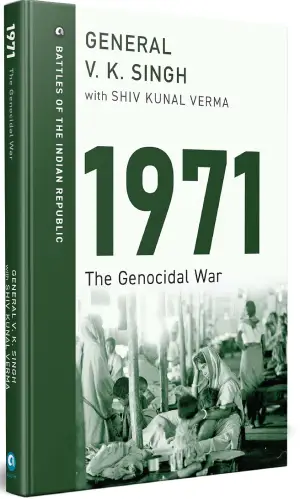
Military colleges still teach the 1971 Bangladesh Liberation War as a textbook case of speed: 14 days, tightly coordinated, ending with the surrender of “over 90,000 Pakistani troops” in Dhaka. Shiv Kunal Verma and General VK Singh, in 1971: The Genocidal War, argue this clean operational story hides something darker. It erases the reason India went to war at all.
The book stays focused on the violence the Pakistan Army carried out across the erstwhile East Pakistan, and asks an uncomfortable question: why does the “largest mass killing” on the subcontinent since Partition still have no name in international law? A war remembered only for how quickly it ended risks losing all connection to why it had to be fought.
The book’s emotional weight comes from Singh’s own story, running beneath the political analysis. He was commissioned into 2 Rajput, the Kali Chindi, in June 1970. His first months were spent on ceremonial duty at Delhi’s Red Fort. That changed once Pakistan’s politics collapsed after the December 1970 elections. Sheikh Mujibur Rahman’s Awami League won by a wide margin, and West Pakistan’s military and political leadership refused to accept it.
When the Pakistan Army launched Operation Searchlight on March 25, 1971, targeting intellectuals, students and Bengali minorities, the fallout crossed straight into India. Singh, serving as battalion intelligence officer, watched it unfold at border posts like Dalu in Meghalaya, where millions of refugees arrived carrying nothing but stories of executions, arson and organised sexual violence.
The combat narrative stays close to what infantry fighting actually looked like: improvised, chaotic, often held together by luck. The reduction of the Belonia bulge in Tripura and the daylight attack across open paddy fields at Chauddagram are told without cinematic flourish. Officers read maps by torchlight and commandeer civilian fire engines and cycle rickshaws to reach Chandpur.
After the fall of Chittagong, the story reaches its worst moment. Singh recounts being sent to check a secluded campus at Fauzdar Haat, which Pakistani forces referred to, almost casually, as a “race-improvement camp.” Inside, he says he found nearly 200 women, naked and broken, stripped of their clothes so they could not escape or kill themselves.
Beyond the eyewitness material, the book’s real contribution is asking how two armies with the same British Indian roots ended up behaving so differently. The authors trace it to Pakistan’s retention of the colonial “martial races” theory, which ranked Punjabi Muslims above Bengalis and deemed the latter unsuited for army service. That belief made it easier to justify unchecked violence against fellow citizens.
The Indian Army, by contrast, built its culture on professional discipline, and even after learning what had been done to civilians, its soldiers’ still protected Pakistani prisoners of war under the Geneva Conventions. The book also questions the silence of major powers, who looked away and called the violence “excesses” rather than genocide.
The writing never reaches for melodrama. Even Pakistani officers, such as Major Siddiq Salik, whose account Witness to Surrender is cited, are treated with objectivity. Between regimental pride, tactical detail and diplomatic critique, 1971: The Genocidal War corrects a military history sanitised for too long. It is an unsettling read, but unavoidable too.
The 1999 War
Verma and Lt G KH Singh strip away Kargil’s televised mythology, revealing the deception, intelligence failures and brutal terrain behind India’s costly Himalayan victory, writes Babra Wani
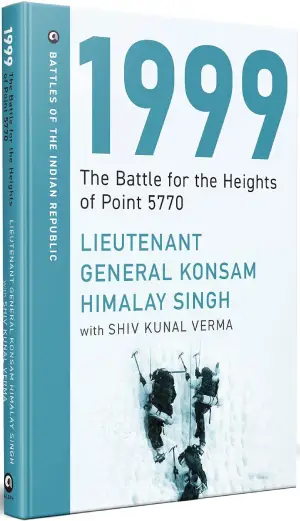
The 1999 Kargil conflict over the high Himalayan ridges of Ladakh stands as a historical moment in modern Indian military history. In 1999: The Battle for the Heights of Point 5770, Lt General Konsam Himalay Singh and military historian Shiv Kunal Verma provide a granular, ground-level assessment of the war. Moving beyond televised artillery duels near Drass and Kargil town, the authors dismantle romanticised narratives to examine the operational deception, intelligence failures, brutal terrain and institutional realities that defined the war.
The crisis originated in a flawed plan conceived and overseen by Pakistan’s Chief of Army Staff, General Pervez Musharraf, codenamed Operation Badr. Designed to exploit the winter vacation of high-altitude Indian posts, it aimed to seize dominating ridgelines and sever communication lines across Ladakh. Pakistani thrusts coordinated across sectors: 232 Brigade from Dansam towards Turtuk and the Shyok Valley; elements of 62 Brigade from Skardu towards Batalik; and 80 Brigade from Minimarg across Drass, Mushkoh and Kaksar. To sustain the illusion of an indigenous Kashmiri uprising, regular Northern Light Infantry and Special Services Group troops were disguised as local “freedom fighters.”
Pakistan’s calculus contained the seeds of its own unravelling. Planners placed brittle faith in paper assumptions, ignoring the realities of mountain warfare: at nearly 19,000 feet, extreme cold and hypoxia made reinforcement and evacuation nearly impossible. They also assumed the mountain passes would stay snowbound into summer. Instead, the Zoji La Pass opened nearly a month early, letting India rush reinforcements from Kashmir to Leh without delay.
On the Indian side, the conflict exposed intelligence gaps. Warning signs through late 1998 and early 1999, stepped-up shelling, new helipads, filling logistics dumps, intercepted transmissions, were dismissed as routine winter activity. When intrusions were detected in early May, India declared Operation Vijay on May 6. Command initially assumed the intruders were scattered militants, an assumption that collapsed on May 26 and 27 when Indian aircraft were shot down by well-directed ground fire, confirming disciplined regular troops held fortified stone sangars.
A directive from the Cabinet Committee on Security barred Indian forces from crossing the Line of Control, which held international opinion but denied commanders the option to outflank or encircle enemy positions. Soldiers were left to mount costly, near-vertical frontal assaults under direct enemy observation.
The Indian military reorganised its command: 8 Mountain Division under Major General Mohinder Puri took the Drass and Mushkoh sectors, freeing Major General VS Budhwar’s 3 Infantry Division for the remote northern fronts of Kaksar, Batalik, Turtuk and the Siachen approaches. The book notes the disparity between theatres, television covered the artillery along the Srinagar–Leh Highway, while the high northern sectors fought in silence.
= The ordeal was most intense at Point 5770, an 80-degree pyramid of rock and ice above the Siachen Glacier, held by Pakistan as Bilal Post. Tasked with taking it, 27 Rajput, soldiers from the Rajasthan desert who had never seen snow before induction, executed an audacious plan. In temperatures near -40°C, rope-fixing parties moved over three moonless nights, wrapping pitons in cloth to muffle sound. Abandoning artillery cover to preserve surprise, Major Navdeep Singh Cheema and Captain Shyamal Sinha led a silent daylight assault on June 27, taking the post in close-quarters combat.
The capture, later renamed Navdeep Top, came at a cost. Lance Naik Bhagawan Singh and Sepoy Bhanwar Singh died under sniper fire during consolidation. War college assessments had calculated 40 to 50 Indian fatalities for the objective; the authors note that such clinical validation never erased the moral weight of the men who did not return.
The book’s strength lies in its sensory detail, and its period photographs offer a glimpse into what was, at the time, India’s most televised war.