Omar Abdullah won his statehood resolution as the BJP walked out. But the debate exposed how little authority a legitimately elected government holds in a state reduced to a UT, writes Masood Hussain
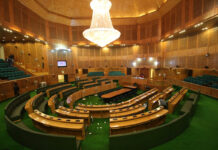
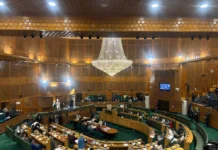
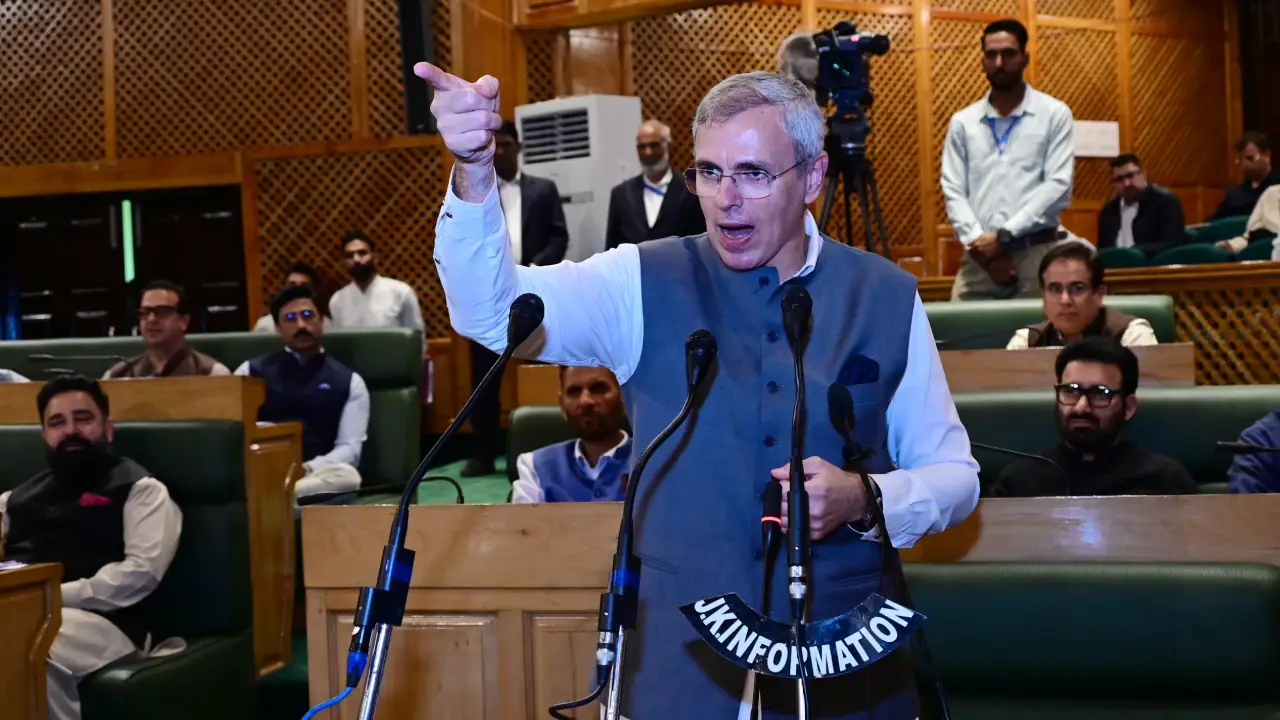
The Jammu and Kashmir Assembly passed its statehood resolution on September 28, 2026. It went through by voice vote while the BJP walked out. On paper, Chief Minister Omar Abdullah won.
Then the resolution went to the Chief Secretary, the same officer who wanted it not discussed at all.
That detail tells the larger story. Abdullah told the House that he was both Chief Minister and Law Minister. He said a Law Department opinion against his own resolution had reached the Speaker without his knowledge. “I have no knowledge of my bureaucracy sending an opinion to you on my resolution,” Omar said in a passionate speech he made moments before the resolution was put to vote. “I do not know on whose instructions it was sent.”
A government chosen by the people cannot see the letters written about its own business. Everything else in the debate follows from it.
Friday Chaos
The trouble began on September 25. Omar moved the resolution after Question Hour. It called on the Government of India for the “immediate and urgent restoration of full statehood”. It also began with a phrase that caused the uproar: “In addition to the resolutions passed by this House on June 26, 2000 and November 6, 2024.”
The 2000 resolution, passed by his father, Dr Farooq Abdullah’s government, sought the position that existed before 1953. The 2024 resolution sought restoration of the special status.
Abdullah began with the Centre’s promise. He spoke of a three step process: delimitation, elections and statehood. “The process of delimitation happened,” he said. “Elections took place.” Only the third step was missing.
“We kept waiting,” he said. “Publicly, privately, in every meeting, in every forum, we reminded the Government of India that you have a promise with the people of Jammu and Kashmir but that promise is not being fulfilled.”
He recalled raising the matter with Prime Minister Narendra Modi. “Why is this big promise not being fulfilled?” he asked. He also rejected any smaller offer. “We do not want half or quarter statehood, but full statehood.”
BJP legislators fixed on the reference to 2000. Rajiv Jasrotia stood up. “What does the Government want to discuss?” he asked. The treasury benches answered with one word: “autonomy.”
Balwant Singh Mankotia said the BJP would not allow autonomy to be discussed. Ruling National Conference members shouted back, “Hum cheen ke layenge apna haq.” The BJP replied with “Jis Kashmir mein balidan hua Mukherjee, woh Kashmir humara hai” and “Desh ke tukde nahi sahenge.” The NC answered, “Special status ko wapas karo.” It witnessed the return of the old famous Kashmir slogans: Jis Kashmir Ko Khoon Say Sencha, Who Kashmir Hamara Hai.
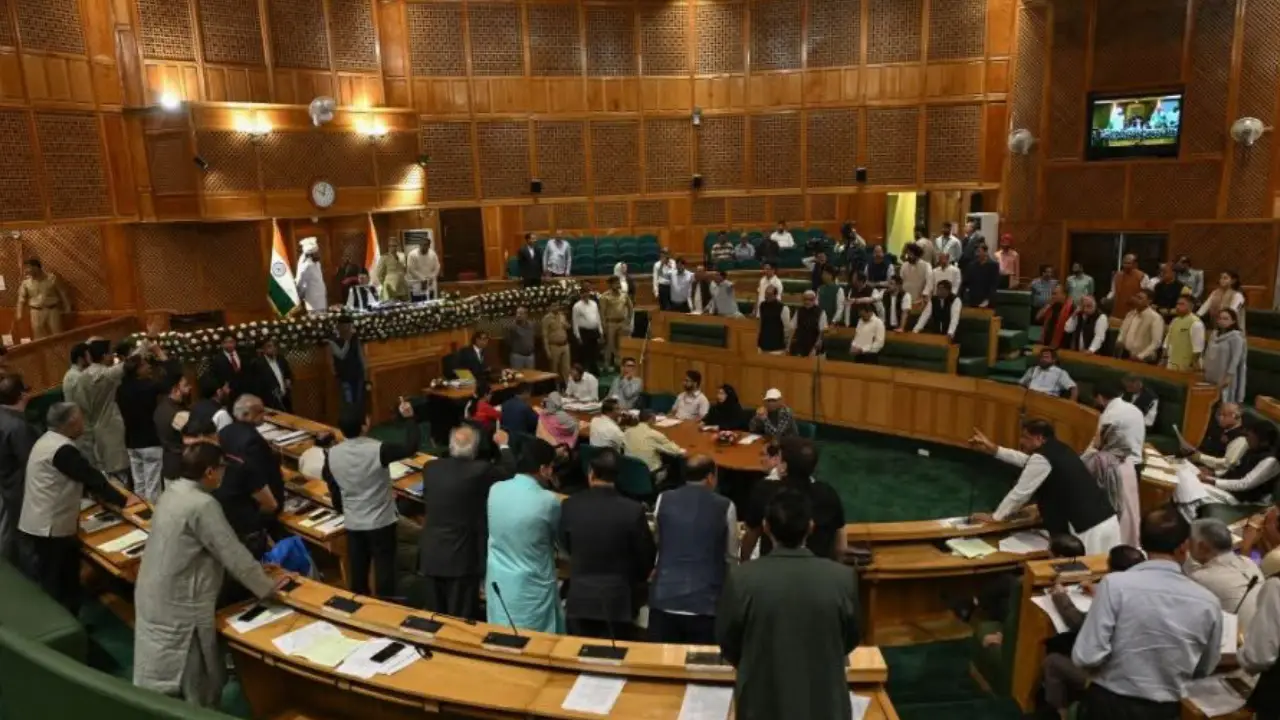
The Well of the House filled. BJP members tore copies of the resolution. Some climbed on desks. Marshals stopped Congress legislators and independent Shabir Kulley from entering the Well. BJP member Vikram Randhawa lifted a chair, apparently to hurl it at the treasury benches. Marshals overpowered him and evicted him.
Minister Sakeena Masood Itoo pressed the BJP on the law. “Tell us the law under which statehood was taken away from us,” she asked. “Tell us the law which allows you to tear the papers.”
The Speaker adjourned the House for half an hour. Later he ended the day 20 minutes early, citing Friday congregational prayers.
Vote Yes
Outside the House, Omar turned the chaos into a challenge. He told reporters the resolution had nothing anti national in it. “Show me a single anti national word used in the resolution,” he asked. He called the BJP’s behaviour drama. “BJP got exposed today,” he said. “It would have been better to allow discussion over it.”
His real demand was a vote. “Neither abstain, nor walk out, nor make noise, vote,” he said. “If they are in favour of the statehood, then say yes, if they are against the statehood, say no, people will know.”
Omar said the resolution asked for nothing on Article 370. “Today, no one is asking them to vote on Article 370… or special status or autonomy,” he explained. “We are asking for a vote from the BJP solely and exclusively on statehood.” His lawmakers, however, carried and displayed placards seeking the restoration of both read-down Articles.
He explained why he had mentioned the old resolutions. “Tomorrow, you (reporters) might say, ‘Look, they abandoned those resolutions and brought this one instead.’ That is why we said ‘in addition’.”
Reporters asked why a resolution was needed when his Cabinet had passed one two years ago. His answer was sharp. “Two years is a very long time to make us wait,” he said. “Clearly, the voice of the Cabinet was not considered to be the voice of the people.” The Cabinet, he said, represents only the ruling party. The legislature represents parties outside the government.
BJP member Sham Lal Sharma had asked for an account of two years in office. Abdullah accepted. “I am ready,” he said. He promised to add “the difficulties we faced”.
The BJP had spoken of the government falling soon. Abdullah answered in one line. If the BJP was so sure, it should bring a motion against him.

Weekend Moves
The weekend brought manoeuvres. Leader of Opposition Sunil Sharma met Home Minister Amit Shah in Delhi. He briefed him on the Assembly and raised security, development and the pay of Special Police Officers.
A BJP leader told a newspaper the plan for Monday. “We will not allow any proceedings of the Assembly if the resolution is taken for discussion.”
Sharma set out the party’s line. “BJP is prepared to discuss restoration of statehood but would oppose bringing Article 370 and autonomy related issues into the proceedings.” He also turned the argument on the Abdullahs. “The same resolution his father got passed in this Assembly, his son threw into the dustbin. It only means they don’t want statehood and want to sabotage it.” Omar, it may be recalled was part of the Vajpayee led BJP government in Delhi, when Jammu and Kashmir assembly passed the autonomy resolution.
National Conference MP Chowdry Mohammad Ramzan replied. He said the BJP had also promised statehood in its manifesto and was now looking for ways to back out. He added that eight BJP MLAs had supported the 2000 resolution. Asked about calls to dissolve the Assembly, he said the government was performing effectively “despite limited powers”.
The sharpest weekend voice came from inside the party. Lok Sabha member Aga Syed Ruhullah Mehdi, who has set November 3 as the deadline for his exit, said the Assembly had become a “wrestling ring”. “The hopes that people had from this assembly have not been fulfilled,” he said. He asked whether those who now speak only of statehood were “working on the BJP’s agenda”.
Amendment Trouble
The resolution’s own supporters then complicated things. Ten amendments arrived before Monday’s debate. Eight sought to add Articles 370 and 35A or the pre 2019 position.
Six National Conference legislators moved them, among them Javid Hassan Baig, Tanvir Sadiq and Ajaz Ahmad Jan. Sadiq’s amendment sought to reaffirm “the constitutional guarantees embodied in Articles 370 and 35A”. PDP’s Waheed Para asked for autonomy and the Articles “in their original form”. Independent, but a ruling party ally, Muzaffar Iqbal Khan sought the full pre 2019 position. Congress member Nizam ud Din Bhat asked that the Centre be reminded “to respect its own commitments”.
The National Conference held a legislators’ meeting at a Srinagar banquet hall, chaired by Dr Farooq Abdullah. Then the House sat.
Speaker Under Fire
Monday opened in uproar. BJP members shouted “Bharat Mata ki Jai” and “Kursi chodo, kursi chodo” and entered the Well. They said 23 members had signed a notice against Speaker Abdul Rahim Rather. He later told reporters that they have all the 46 votes required to unseat the Speaker who will participate once the voting takes place.
RS Pathania told the Speaker Abdul Rahim Rather that he could not sit in the chair after the motion. Rather answered with the rules. He said he had not seen the notice. Even a written notice could enter the business only after 14 days. “You are a practising lawyer and have not read the Constitution properly,” Rather, a seven-time lawmaker, he told Pathania.
Deputy Chief Minister Surinder Choudhary pushed the other way. “Why wait for 14 days?” he asked. He meant that if BJP has the votes let them show it.
Sunil Sharma stated the BJP’s case. “We are also for the statehood, but the kind of language or words that have been used in this resolution are unacceptable and unconstitutional.” He added, “Jammu and Kashmir is a sensitive state; the enemy is at its borders.”
Choudhary hit back. “Jammu and Kashmir is not the only border state, Rajasthan is also… does that mean we should drop the demand for statehood?” He asked about the Home Minister’s promise in Parliament and the promise made before the Supreme Court. “What happened to those promises? Two years have passed since.”
Two Letters
Then came the twist. Hours before the debate, the Speaker received letters from Chief Secretary Atal Dulloo and Law Secretary Achal Sethi. Both said the issue was sub-judice. Both asked that the resolution not be taken up.
Rather told Kashmir Life that he knew of no precedent. “In my memory, I doubt I have ever heard any officer writing to the Speaker or his secretariat to stop something that the House has listed,” he said. “Opinions are being sought sometimes but in this case, it was unsolicited and even without the approval of minister concerned.” He called it a clear attempt to undermine the House.
Omar used the letters as his central argument. “Can you imagine such a thing happening in any state, that the Chief Minister moves a resolution in a state and the Law Secretary gives an opinion against it?” he asked. “This can happen only in a UT, and such actions take place every single day.”
He asked whose orders the officials followed. “At whose behest was this sent? I do not know.”
Missing Powers
Omar then listed what the elected government cannot do.
A committee on daily wagers, given six months, has not reported. “Why? Because we are a UT,” he said. The government has no Advocate General after two years. A written proposal with a name is “still lying there”.
The reservation decision went to the Lieutenant Governor. It then went to the Centre for opinion. Queries came back, and the Cabinet answered them. “From that day to this day, that decision on reservation has not been returned to us.”
Revenue officers sit outside LG’s control. “What is the justification for keeping Revenue officers out of the elected government’s domain?” he asked. The Cultural Academy answers to the Lieutenant Governor. “What does the Cultural Academy have to do with law and order?”
The Chief Minister once served as Chancellor of two universities. Today he has no role in either. The Business Rules, sent nearly two years ago, remain unapproved. “How long should we remain patient? How long?”
Under the system put in vogue by the federal government, the Jammu and Kashmir government lacks any authority over police, the security set-up, the judicial issues, and the central services. Most of the decisions that the government takes will have to be vetted by the Lok Bhawan,
Timing Question
Omar then turned to the Supreme Court. Irfan Hafiz Lone had read out the judgment. It asked for statehood “at the earliest” and “as soon as possible”.
“Tell me, Mr Speaker, in which English dictionary does ‘as soon as possible’ mean two years?” Omar asked. He asked the Centre what “an appropriate time” means. “Give us an account.”
His sharpest passage followed. “If you are saying that statehood will not return until militancy ends in Jammu and Kashmir, then the decision regarding Jammu and Kashmir’s statehood will not be made in New Delhi; it will be made in Islamabad.”
He rejected the charge of a royal appetite. “This state belongs to all of us; it belongs to the people of Jammu and Kashmir.”
Then he pleaded. “Jammu and Kashmir wants no favours. Jammu and Kashmir asks for no charity. We are not beggars.”
Quiet Retreat
Then Omar asked his own colleagues to retreat. He said some had “fallen into their trap”. He urged them not to press their amendments. “Those amendments give these people (BJP) a direct excuse to vote against this resolution.” Special status, he said, was already demanded twice. The Speaker asked whether members would withdraw. All eight agreed.
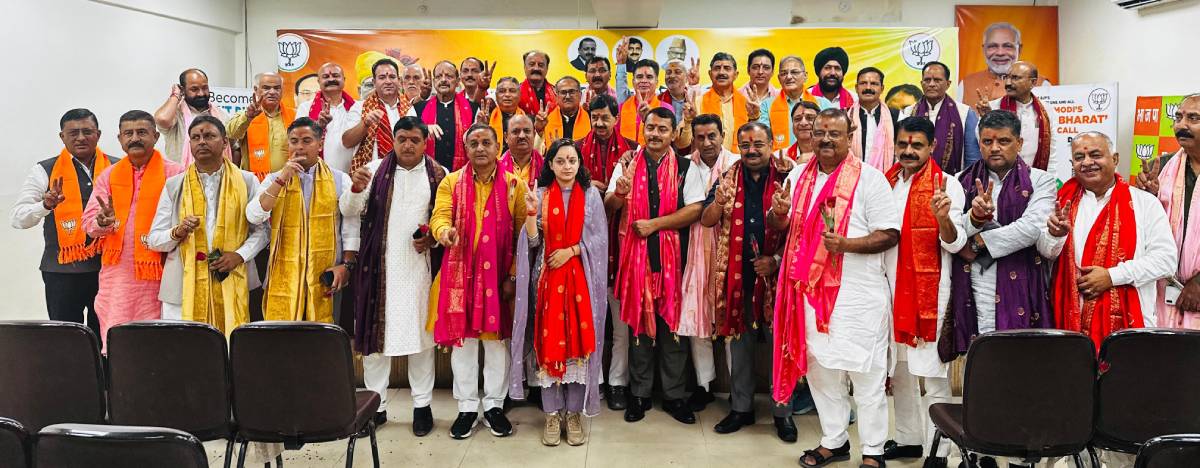
The resolution went to a voice vote. The BJP walked out. Sunil Sharma later said his party still stood for statehood. It would support a text without autonomy and the 1953 position. “We will restore the statehood, our agenda is to restore it.”
He called the resolution “purely communal”, and labelled its politics Muslim sub nationalism.
Others were not satisfied. Waheed Para of the PDP said the withdrawn amendments proved something. “The fact that several NC legislators sought amendments in the resolution moved by the Chief Minister tells you that the government is not sincere in its intention.” He asked, “After how many resolutions will we be able to find a solution?”
Awami Ittehad Party’s Sheikh Khursheed held up a poster with the old State flag and emblem. He asked why the NC quotes Modi’s promise but forgets Nehru’s. “Statehood is about our political identity, dignity and democratic rights.”
CPI(M)’s MY Tarigami, a 5-time member of the House, welcomed the resolution. “From where will we get the calendar to know when the ‘appropriate’ time is?” he asked.
NC’s Bashir Veeri said statehood would “not settle every question”. It would restore an “important part of its federal architecture”. Tanvir Sadiq called the day historic: “history is made in the J&K Assembly.”
Privilege Threat
A day later, brought new noise. Sharma said the Speaker had allowed the resolution despite Law Department advice. “I leave it to the conscience of the Speaker to step down from the chair.” Rather snapped back: “Do not teach me how to function.” The treasury benches shouted “vote chor“. The BJP walked out.
The bigger irony came from the paperwork. The Assembly Secretariat forwarded the passed resolution to Chief Secretary Dulloo for “kind information and necessary action”. The letter does not say it should go to the Government of India, though the resolution itself says so.
So the officer who argued the House should not discuss the resolution now holds it. He must process it.
Some lawmakers are not willing to let that pass. They want a breach of privilege motion moved against the Chief Secretary and the Law Secretary. Their case rests on the Speaker’s own words. Rather had called the letters a clear attempt to undermine the House.
The demand raises an awkward question. A House can defend its privileges against officials. Yet those officials answer to an administration that the elected government does not control. Omar has already said he does not know who instructed them.
Hollow Win
The Assembly cannot restore statehood by resolution. Article 3 gives that power to Parliament. The resolution is a demand and nothing more.
Omar has his vote. He also has a bureaucracy that acts without his knowledge, and a House now weighing action against two of its senior officers. His own speech proved the point he set out to make. Without statehood, an elected government can pass resolutions and little more. The Kashmir show goes on.