National Conference legislators aired grievances over cabinet expansion, governance and unfulfilled promises at Gupkar. Farooq and Omar Abdullah heard their demands, promising corrective measures within six months to a year, reports Mudasir Majeed Pir
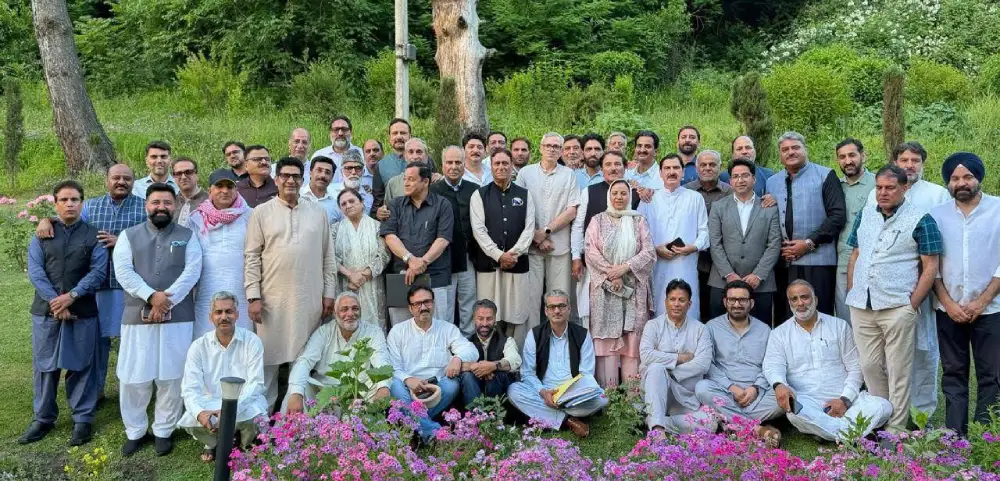
A major group of ruling National Conference legislators walked up the driveway at Gupkar on the morning of November 6, as dissidents. They walked out at noon, standing behind Dr Farooq Abdullah, who told reporters the party had never been broken and never would be.
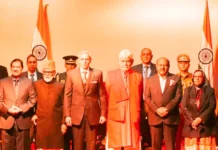
“Their concerns were genuine, and they were examined very thoroughly,” Farooq said, with Chief Minister Omar Abdullah and all 15 legislators arranged around him. “Everyone was heard.” Some steps would be taken quickly, he said, others gradually.
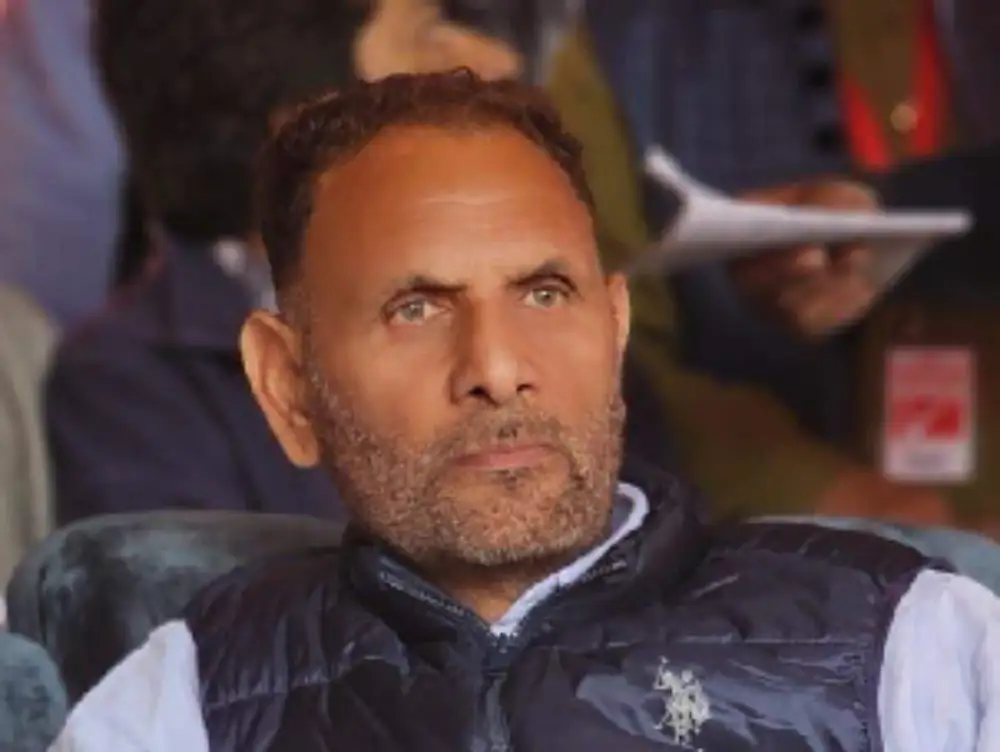
Abdul Majeed Larmi, the Anantnag West MLA who was among the most visibly aggrieved of the group, told this correspondent that nothing came up in the meeting that the group had not already put in writing.
“Whatever points we had raised in memorandum, only those points were raised in the meeting, whether they were about party issues or government related or the other issues like implementation of manifesto: statehood, Article 370, 35-A,” Larmi said. “We told the leadership that we have made promises to people and we need to deliver on those promises.”
The second complaint was about the air around the leadership rather than the leadership itself, Larmi said. “There are some people in party which includes some ministers as well, who misguide the leadership that has to be prevented at any cost”.
Larmi also raised concerns about public expenditure. “There were grievances as well as apprehensions about some ministers with particular portfolios who do not work fairly, who spend money in their own constituencies to secure their vote banks and ignore the rest of the places,” he said. “We also brought this to the leadership’s attention and we were assured that it will be properly looked into on priority”.
What the group got back, in Larmi’s telling, was a calendar. “We were assured by Farooq sahab as well as Omar sahab that all our issues will be addressed within six months to one year, but the work on every issue will begin within one week.”
On the demand that has travelled furthest outside the party, the removal of the Chief Minister’s advisor, Larmi was blunt. “Nasir Aslam Wani needs to be replaced as soon as possible because there is considerable resentment against him within the party and among the people,” he said. “He is not MLA; he has lost the election.”
In response, Larmi said they were told the issue is constitutional rather than political. “We were told by the Chief Minister that there is no provision in the UT for appointing an MLA as advisor, as it would be occupying office of profit at two places.” The group did not take it as an answer. “We still made this point categorically that Wani should go and an arrangement should be made in his place. We also suggested that there could be two advisors, one from Jammu and one from Kashmir.”
An Unforgiving Arithmetic
The arithmetic behind Friday’s meeting was unforgiving. The October 27 expansion took in four legislators, Ali Mohammad Sagar, Shamim Firdous, Saifullah Mir and Altaf Ahmad Wani, and carried the council of ministers to nine, the statutory ceiling for a union territory with a legislature. The National Conference has 41 MLAs. All nine chairs are now occupied, and the party’s own six-time MLA, Mubarak Gul, led the delegation of the unaccommodated to Gupkar. Eighteen legislators had sent an eight-point memorandum to Farooq and Omar Abdullah on October 31, four days after the expansion, and by the end of last week the count of MLAs backing it was being put at closer to 25, with a two-week deadline attached.
Larmi said the Chief Minister conceded the handling. “Omar admitted that if there were apprehensions already before the cabinet expansion news came out, it should have been conveyed to party leadership; the issue would not have come up at all.”
Then came the assurance, and the problem inside it. “Chief Minister assured that within one year the upset MLAs will be accommodated in the cabinet,” Larmi said, “and also said there is no question of dropping the current ministers as it would send the wrong message.”
Bashir Ahmad Veeri, the MLA from Srigufwara-Bijbehara, told reporters after the meeting that some decisions might be taken by the party within 24 or 48 hours as confidence-building measures.
Then he moved to the ground the dissidents have been pushing the leadership back towards. “National Conference government is committed on the issue of Article 370. We are even committed to the issue of autonomy within the constitution of India,” Veeri said. “Very soon you will see us aggressively pursuing the demand of statehood, because the way we were humiliated in 2019, we won’t let this pass normally. We are not able to function in a system like diarchy.”
An Angry Start
Members who attended the meeting and spoke on condition of anonymity said the leadership was initially displeased that the issues had been taken to the public domain without first being brought to its notice. Some members were specifically singled out during the discussion. The atmosphere, however, gradually eased, allowing participants to discuss the concerns at length. The lawmakers were advised to approach the party leadership directly with their grievances rather than airing them publicly.
“They accepted all our demands, and one must appreciate that, for the first time in the history of the JKNC, lawmakers were invited for a discussion in which every demand was heard and accepted,” a north Kashmir lawmaker said. “We conveyed that the lawmakers are keen to strengthen the party, not weaken it.”
Another lawmaker said the instances of “humiliation” faced by some members also needed to be addressed, with accountability fixed wherever warranted.