SRINAGAR: National Conference president and former Jammu and Kashmir Chief Minister Dr Farooq Abdullah recalled stepping in to defend India at the United Nations Human Rights Commission in Geneva in 1994. He said he took the floor after Atal Bihari Vajpayee and I K Gujral declined to respond to a sharp attack on India by then Pakistani Prime Minister Benazir Bhutto.

In an interview with former MP and journalist Shahid Siddiqui on his YouTube programme I Witness with Shahid, Abdullah recounted being asked to speak on India’s behalf after Bhutto, who had recently returned to power in Pakistan, delivered a blistering speech against India at an international forum.
Describing the atmosphere at the Geneva meeting, Abdullah said world leaders and representatives gave Bhutto a five-minute standing ovation after she expressed gratitude for her return to power. However, when she began addressing the gathering, she launched what Abdullah described as an unprecedented attack on India.
“When India’s turn came to respond within the allotted five minutes, Vajpayee was asked to speak. He said, ‘Look, brother, I will not be able to explain everything in English, so I will not speak in it, and there is no Hindi translator here’,” Abdullah recalled.

Gujral was approached next but also declined, he said.
“When the turn fell to me to speak, they handed me a piece of paper. I said, ‘I will not read from a paper. I want to tell them the reality of our condition’,” Abdullah said.
Dr Farooq said he then narrated the events of October 1947, when tribal raiders from Pakistan entered Jammu and Kashmir, describing the violence inflicted on civilians, particularly women, during their advance towards Srinagar.
Abdullah said he told the international gathering how women were assaulted and killed, and how their earrings were torn away along with their ears.
Recalling the attack on Baramulla in 1947, he said the raiders killed foreign missionary doctors working at the local hospital, their wives and nurses. He also spoke about Maqbool Sherwani, who stood up to the raiders and deliberately delayed their advance towards Srinagar, buying time until Maharaja Hari Singh signed the Instrument of Accession and Indian troops arrived.
“I placed that entire account before them: ‘Look, this is what happened to us’,” Abdullah said.
His intervention, he recalled, prompted an extraordinary response from diplomats present at the meeting. Several ambassadors approached him afterwards, while the session’s president took him into his private room to verify the authenticity of his account.
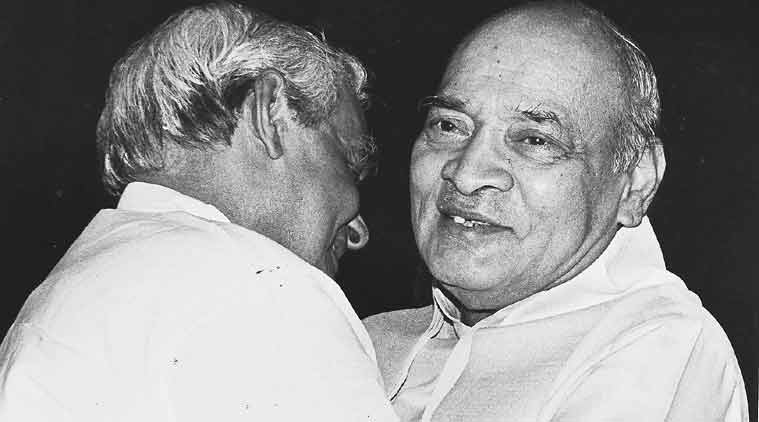
“He asked me, ‘Farooq Sahib, is every word you said true?’ I told him, ‘Every single word is true. If even a single word is false, you can hang me’,” Abdullah said.
The episode, he said, was subsequently acknowledged by Vajpayee himself after the Indian delegation returned to Delhi.
“When Mr Vajpayee returned to Delhi, he publicly declared, ‘Farooq saved our dignity’,” Abdullah recalled.
The former Chief Minister used the recollection to underline what he described as the persistent prejudice he has faced because of his religious identity, despite his political position and public record.
“Some people will never change because I am a Muslim. They find a Muslim objectionable in every way. They will try every means to pull me down, and often they will use other Muslims to pull Farooq Abdullah down,” he said.
Abdullah said he had no regrets about the political battles he had fought, including confronting militancy and surviving assassination attempts.
“We fought militancy; we faced it when they tried to assassinate us. I survived an attack in Jammu. Yet my path remains unshakeable: we are with this country, and we will progress only with this country,” he said