by Nida Ashraf
SRINAGAR: Kashmir occupies an unusually intimate place in Sonia Gandhi’s memoir, Belonging. It is at once a family inheritance, a landscape of childhood memories, a repository of cultural traditions and, eventually, the setting of one of the most painful political transformations she witnessed.
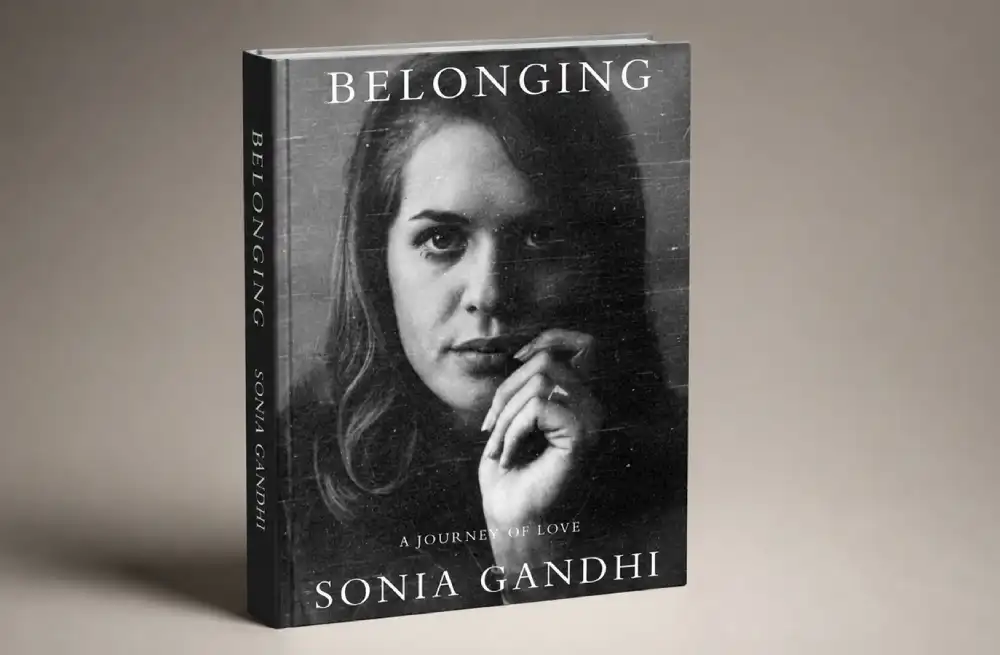
The Kashmir connection, Sonia writes, was embedded in the Nehru-Gandhi family’s identity. Indira Gandhi belonged to a Kashmiri Pandit family, although she was born and brought up in Allahabad. The family’s geographical separation from Kashmir did not erase its cultural inheritance.
Indira maintained close relationships with relatives and friends from the Kashmiri community and preserved several customs within the household. Kashmir was reflected in the family’s food, celebrations, religious observances and domestic life. Sonia recalls that most of the family’s everyday Indian meals were prepared in the Kashmiri Pandit style.
Nauroz, which she describes as the Kashmiri Pandits’ New Year, was an important family occasion. At dawn, Indira would come to Sonia’s room carrying a tray of rice grains on which were placed a small mirror, almonds, a pen signifying the family profession, a gold coin representing prosperity and other auspicious items. Lunch that day was traditional: mutton koftas, haak with rice and lentils, and meetha chawal.
The Chinar was another enduring symbol of Indira’s attachment to Kashmir. She loved the tree, particularly the sight of its leaves turning golden and auburn in autumn, a spectacle she had cherished during many visits since childhood. Sonia recalls that the changing foliage was one of the reasons Indira repeatedly returned to the Valley.
Kashmir also found expression in the family’s material culture. Indira treasured old Kashmiri shawls, carpets and embroidered garments. The family’s association with the region was therefore not merely ancestral; it remained visible in its everyday domestic traditions.
Wedding traditions
Kashmir’s cultural presence was particularly visible during Sonia and Rajiv Gandhi’s marriage in February 1968.
Indira involved relatives from every branch of the family, including those from the Kashmiri community, in the wedding preparations. During the ceremony, Kashmiri women and girls chanted a Vedic shloka she had selected. The hymn invoked happiness through rivers, winds, herbs, trees, the earth and the sun.
Rajiv and Sonia wanted the ceremony to be as private as possible, with no media present. Indira felt there should be at least an official government photographer, and the couple reluctantly agreed. The Kashmiri connection continued after the marriage.
Honeymoon on Nagin Lake
Months after the wedding, once Rajiv had completed his training in Secunderabad, the couple travelled to Kashmir. They had not had a honeymoon, and a friend who had relatives in the Valley offered to drive them there.
They stayed in a wooden houseboat on Nagin Lake. Sonia describes its khatam-band ceilings, intricate geometric patterns, carved walnut-wood doors and decorative wooden fittings. Early each morning, vendors in their shikaras would approach the houseboat to sell fresh flowers, vegetables, rugs and souvenirs.
The couple visited the Shalimar, Nishat and Chashma Shahi gardens, walking among their fountains, pavilions, flowering trees and ancient Chinar trees. They also explored Srinagar’s old city, moving freely through its narrow lanes.
One of the most memorable parts of the journey was a drive to Pahalgam. The place held particular significance for Rajiv because it brought back memories of childhood holidays with his parents, brother and grandfather. He especially cherished the memory of his last holiday in Kashmir with his father, Feroze Gandhi, a few months before Feroze died in 1960.
The couple also visited Ramzana, a pony owner whom Rajiv had known since childhood. Ramzana invited them to his home and served them a meal on a large communal tray placed on a blanket spread over the mud floor.
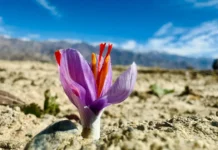
As they were leaving, he gave Rajiv a small cloth pouch containing walnuts, almonds, honey and saffron. For Sonia, he had a woollen shawl, which he proudly explained had been woven in his own home. She remembers the encounter as an expression of the genuine warmth and generosity of ordinary Kashmiris.
A family holiday before tragedy
Kashmir had also been the setting for one of the last happy periods in Indira and Feroze Gandhi’s married life.
After years of differences, the couple had begun rebuilding their relationship. In June 1960, all four family members travelled to Kashmir and spent a month together in a houseboat on Nagin Lake.
Sonia recalls the holiday as a particularly happy period. Feroze suffered another heart attack three months later, which proved fatal. The Kashmir holiday thus acquired a special place in the family’s memories.
In subsequent years, Rajiv’s work as an Indian Airlines pilot provided the family with opportunities to revisit the Valley. His flights to Srinagar sometimes involved overnight stopovers, allowing Sonia and the children to spend time there.

They walked along the Bund, took shikara rides and revisited the places they had explored during their honeymoon. Sonia particularly admired the wooden Zero Bridge over the Jhelum, traditional mosques with layered wooden roofs and the old city’s stone and wooden houses.
The markets offered carpets, shawls, hand-beaten copper vessels, samovars, papier-mâché articles, dry fruits and spices.
She was impressed by the craftsmanship of Kashmiri men and women, particularly their handspun wool and fine embroidery, while Rajiv photographed local people and conversed with them.
Indira’s last visit
One of the most poignant passages concerns Indira Gandhi’s sudden decision to travel to Srinagar on October 26, 1984, five days before her assassination.
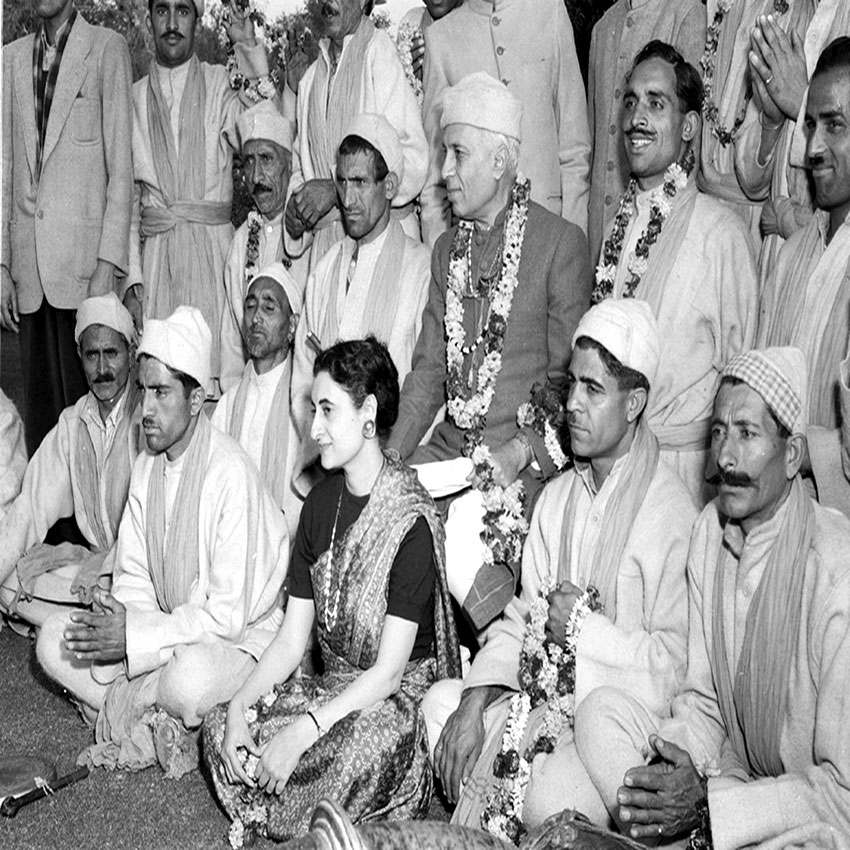
The day after Diwali, Indira decided to visit Kashmir, taking Sonia, the children and some of their friends along. Sonia fell ill the night before their departure, and the family doctor advised her against travelling. Indira nevertheless went ahead.
She had asked Sonia to pack special sweetmeats for the family of the chief minister and for the Kashmiri Shaivite sage Lakshman Joo, whom she intended to visit.
In Srinagar, Indira stayed overnight at a government guest house overlooking Dal Lake. She spent time with the children and attended to her official engagements.
The following day, she visited the Sharika Devi temple on the western slope of Hari Parbat and the Makhdoom Sahib Sufi shrine before returning to Delhi.
Indira particularly regretted that the Chinar leaves had not yet turned the golden and auburn colours she loved. Sonia says the autumn foliage had been the principal reason for the visit.
The family later wondered whether Indira had somehow sensed that it might be her last journey to Kashmir.
She was assassinated on October 31, 1984.
Kashmir and the early militancy
The memoir also records an early incident that brought Kashmir-related militancy into the family’s security concerns.
In January 1971, an Indian Airlines Fokker F27 passenger aircraft was hijacked by two Kashmiris and taken to Lahore. The passengers and crew were released, but the aircraft was destroyed.
Sonia writes that the hijackers were feted in Pakistan. India responded by banning Pakistani aircraft from using Indian airspace.
The incident raised concerns about Rajiv’s safety because he was an airline pilot. Security agencies warned Indira that he could potentially be targeted because of his profession.
Years later, the Rajiv Gandhi Foundation set up INTERACT, a programme that provided scholarships to children who had lost one or both parents in terrorist or insurgency-related attacks. Most of its beneficiaries came from Jammu and Kashmir, the north-eastern region and the tribal areas of central India.
Kargil and international concern
Her account of the 1999 Kargil conflict notes that a Ladakhi shepherd, Tashi Namgyal, spotted Pakistani intruders disguised as Kashmiri militants. She blames the loss of many lives over the following ten months on the government’s negligence in patrolling the border.
Kashmir appears again in her account of meeting US President Bill Clinton in 2000.
Clinton, who was visiting India, was staying at the Sheraton hotel with his daughter, Chelsea, and his delegation when Sonia called on him alongside India’s foreign minister, she writes.
She recalls that Clinton appeared more interested in offering his assessment of Kashmir than listening to India’s position. He described it as a “nuclear flashpoint” and “one of the most dangerous places on earth”.
Meeting the bereaved
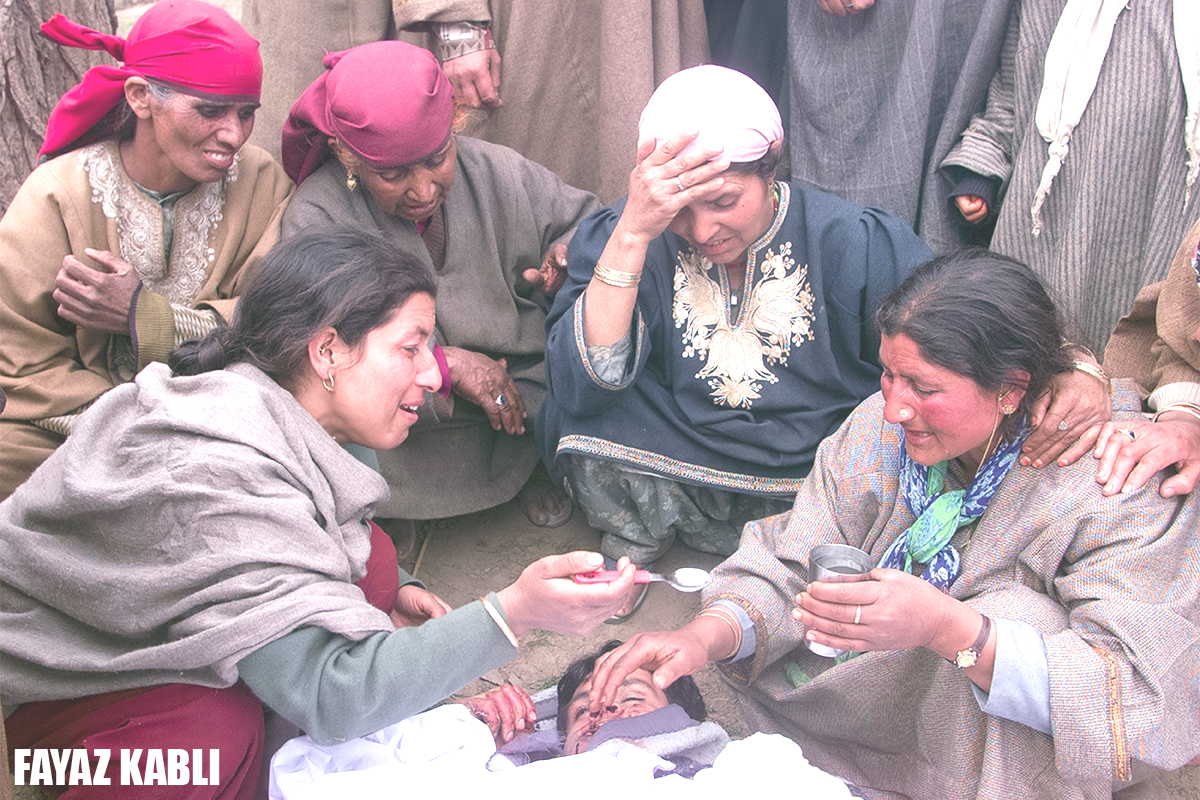
The most substantial political and emotional account of Kashmir in the memoir concerns Sonia Gandhi’s visit to Nadimarg in Pulwama district in 2003.
As Congress president, she had visited 12 sites of militant violence in Jammu and the Valley. One of them was Nadimarg, where 24 members of the Kashmiri Pandit community had been killed by terrorists.
Sonia recalls walking along a narrow path towards the homes of the bereaved families. The group encountered angry slogans directed against the BJP government. Some women invited her into their homes. They were beating their chests and weeping as they recounted the killings and the trauma that had followed. She writes that the women must somehow have known that she would understand their feelings.
The visit took place a few months before a conference of Congress chief ministers in Srinagar in the summer of 2003. Several party colleagues had questioned the wisdom of bringing a large number of chief ministers to the Valley because of continuing militant attacks on security personnel and civilians.
Sonia insisted that the conference should proceed. She believed Congress had not maintained a sufficiently strong presence in Jammu and Kashmir for decades and that the gathering would restore confidence among local party workers. The conference went ahead, and she recalls the enthusiasm of local Congress workers who had the opportunity to meet senior party leaders.
Mistakes
The Nadimarg visit prompted Sonia to reflect on the transformation of Kashmir.
She remembers the Valley as having remained largely peaceful, apart from occasional disturbances, until violence escalated in the late 1980s.
Her account describes the emergence of cross-border militancy involving Pakistani-trained youths, alongside demands for independence by different Kashmiri groups. The situation developed into an insurgency, followed by a tough response from the Indian state. The result, she writes, was an oppressive atmosphere.
The contrast became particularly evident during her 2003 visit to Srinagar. She recalls the Kashmir she had known during her honeymoon and subsequent family holidays in Gulmarg, Dachigam and Pahalgam.
The Srinagar she encountered in 2003 was very different. Security personnel were deployed in large numbers throughout the city. During an evening visit to a Mughal garden and a walk along the road leading to the old Takht-e-Suleiman above Dal Lake, she found herself surrounded by a large police contingent. Security pickets were visible across the area.
The natural beauty remained, but the atmosphere had changed. Sonia writes that she was filled with sorrow at what had happened to the Valley she had known.
She asks: “How many mistakes, some of them in good faith, had been made for this beloved state to come to this pass?” She wondered whether Kashmir would ever return to what it had been.
Looking back, she adds that she could not have foreseen that matters would deteriorate further in the decades that followed, culminating in the loss of the state’s status in 2019.
Pulwama
Kashmir appears again in Sonia’s account of the 2019 general election, particularly in the aftermath of the Pulwama suicide bombing.
She recalls that in February 2019, a suicide bomber attacked a convoy carrying Indian security personnel on the national highway in Jammu and Kashmir, killing 40 paramilitary personnel. She describes the attack as a catastrophe that shocked the country.
Sonia makes serious allegations against the Narendra Modi government, writing that it had failed to act on intelligence inputs warning of a possible attack and had inexplicably failed to provide safer air transport, which had been requested for moving the personnel.
She says the government had not provided a clarification on these issues even at the time she was writing the memoir.
Her account then connects the attack and the subsequent Indian air strike in Pakistan with the political atmosphere preceding the general election. She argues that patriotic sentiment overshadowed other electoral issues and changed the political mood. Congress was defeated again, although it marginally increased its parliamentary strength.
Rahul’s March
The memoir’s final major Kashmir episode concerns the conclusion of Rahul Gandhi’s Bharat Jodo Yatra in Srinagar in January 2023.
Sonia describes the final phase of the march as particularly difficult for her as a mother. Rahul had continued walking despite severe knee pain, exhaustion and adverse weather, eventually reaching Kashmir in January, traditionally the coldest part of the year.
As the march approached Srinagar, she panicked on seeing no sign of Rahul’s security personnel in the massive crowd. His security personnel, she writes, had simply disappeared, “for reasons best known to themselves”.
She says she frantically contacted people to find out what had happened. The Kashmir leg of the march was held up for a day until security arrangements were restored.
Rahul eventually walked into Srinagar amid swirling snowfall, accompanied by Priyanka Gandhi Vadra and Kashmiri leaders Omar Abdullah and Mehbooba Mufti.
Sonia recalls the relief she felt when he finally returned home safely. She was also proud of his determination to complete the march despite the physical difficulties.
For her, the Yatra was an important turning point in Rahul’s political journey. She believed it helped counter the image his political opponents had constructed and restored confidence among Congress workers.