With three transport-linked studies gathering dust, the government is toying with the idea of six new projects to manage mobility in Srinagar. The question remains: who is deciding Srinagar’s future, and on what basis, writes Iftikhar Hakim
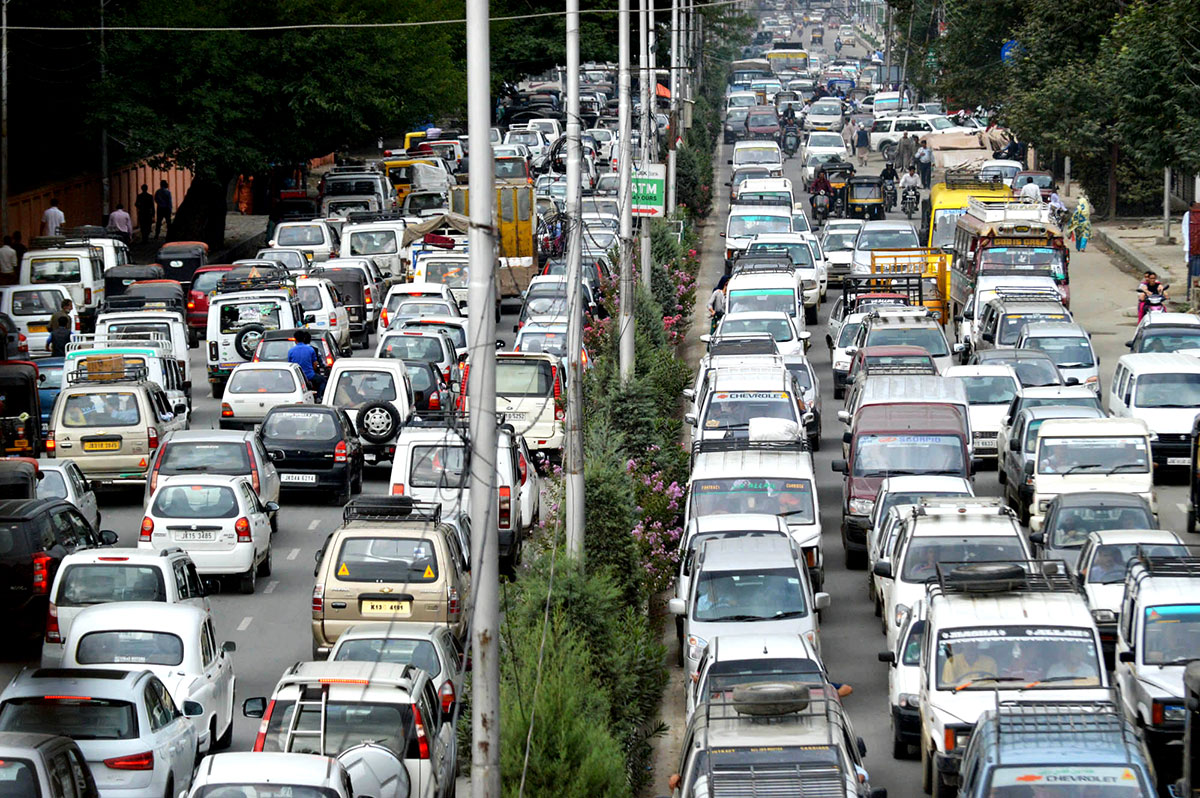
Srinagar is witnessing a proliferation of flyover, bridge and road-widening proposals, each promising relief from congestion. Yet traffic bottlenecks persist, parking remains inadequate, pedestrians struggle for safe passage, and the city’s fragile environment faces mounting pressure. The paradox is striking: the city has decades of transport studies behind it, yet its infrastructure priorities appear increasingly difficult for the public to understand.
Where do these projects originate? Which urban vision do they serve? Have alternatives been examined? And who establishes that they deserve priority over other pressing needs?
These are not objections to development. Srinagar needs better mobility and infrastructure. But public money cannot be committed, and the urban landscape permanently altered, merely because a new proposal promises to ease traffic. A project must demonstrate its necessity, justify its costs, establish its wider benefits and show how it fits the city’s long-term development strategy.
Three news reports published on October 21 sharpened these questions. Concerns were raised about the design of the Shalteng-Parimpora flyover; officials were directed to explore alternative alignments for the proposed Parimpora-Dalgate flyover; and commuters continued to endure severe congestion at Tengpora. Together, they expose the danger of addressing individual traffic problems without demonstrating how each intervention contributes to a coherent transport system.
Decades of Studies
Srinagar’s transport challenges are not new. The Planning Department commissioned Comprehensive Mobility Plans in 1992, 2012 and 2020, undertaken by RITES, while Srinagar Smart City Limited commissioned an Integrated Public Transport Study. Light Rail Transit (LRT) featured in successive mobility plans, yet most short- and long-term recommendations reportedly remained unimplemented, with the Jehangir Chowk flyover being a notable exception.
In January 2021, RITES submitted the modified final Detailed Project Report for Mass Rapid Transit System in Srinagar, proposing a Metro-lite system along two major corridors. A separate rail-based transport proposal was also pursued, with E Sreedharan making several visits to Srinagar during its development. Although a final DPR was submitted to the Ministry of Housing and Urban Affairs, the proposal appears not to have secured approval; its current status and the reasons for the outcome require verification from official records. The Srinagar Smart City Limited study was completed in 2024.

No Follow Up
The central question remains: what became of these substantial planning exercises, and why are their recommendations not more clearly reflected in the succession of road and flyover proposals now being advanced? Before committing further public funds, the government must explain how earlier studies have informed current priorities and how each new project fits into an integrated transport vision for Srinagar.
Mobility studies may not themselves have the statutory force of a notified Master Plan, but they provide important technical inputs to transport planning. Major projects must also be assessed against the Master Plan’s land-use strategy and applicable statutory requirements.
The government should account for the recommendations of previous studies before commissioning or advancing another generation of projects. Without that continuity, planning becomes a cycle of proposals rather than a process of implementation and accountability.
The New Proposals
At least six major infrastructure proposals have entered public discussion this year, signalling a renewed push to address Srinagar’s growing traffic congestion. These include a flyover-cum-bridge connecting Convent to Sangarmal; a proposed 7-kms flyover between Dalgate and Shalteng; an elevated corridor linking Pathachuk with Pandach; a flyover along Airport Road, the Western Foreshore Road connecting the Mamta Hotel area with Nigeen Lake, and the widening of the Boulevard stretch between Nehru Park and Nishat.
These projects differ in purpose, location and likely impact. Their merits must be assessed individually. But what common strategy connects them, and how were their relative priorities established?
Have they emerged from the existing mobility studies, the Integrated Public Transport Study, the statutory Master Plan or updated traffic assessments? Have alternatives been compared? Are the projects intended to complement public transport, or are they independent responses to local bottlenecks?
The available information does not establish the origin, approval status or technical justification of every proposal. It would therefore be premature to attribute them to particular individuals or agencies. But this lack of public clarity is itself a governance concern.
A proposal may legitimately originate with a government department, elected representative or consultant. What matters is whether it undergoes rigorous scrutiny before public money is committed. The sponsoring agency, planning rationale, estimated cost, alternatives considered, appraisal status and approving authority should be disclosed for every major project.
Citizens should not have to speculate about decisions that may permanently transform their city.
Vision for Srinagar
Before deciding where to build a flyover or widen a road, the government must establish what kind of city Srinagar should become.
Is the objective to accommodate ever-increasing private vehicle traffic by expanding road capacity? Or is it to create a city where people can travel efficiently by public transport, walk safely, reach essential services conveniently and enjoy accessible streets and public spaces?
Srinagar needs roads, but roads alone cannot deliver an effective transport system. Mobility depends on coordinated investment in buses, potential rail-based transport, pedestrian facilities, parking, junction management and the location of jobs and services.
The city’s lakes, wetlands, drainage channels and flood-sensitive areas must also shape infrastructure decisions from the outset. They are essential elements of Srinagar’s urban system, not incidental constraints to be considered after an alignment has been selected. Infrastructure that obstructs drainage, fragments neighbourhoods or damages sensitive landscapes can impose costs far beyond the project site.
The vision must therefore integrate mobility, environmental protection, disaster resilience, economic vitality and quality of life. It should be reflected in measurable objectives: more reliable journeys, better public transport, safer walking, fewer road fatalities and protection of the city’s ecological assets.
Without this framework, the availability of projects risks driving investment instead of demonstrated public need.
Three Problems, Three Reports
The reports published on October 21, illustrate why Srinagar needs an integrated approach.
At Shalteng-Parimpora, MLA Waheed-ur-Rehman Para questioned the proposed use of reinforced-earth panels and earth fill along a reported 900-metre stretch, rising over 21 feet. He raised concerns about drainage, waterlogging, flood risk, soil stability, vegetation, neighbourhood access and local businesses. He called for an independent technical and environmental review and proposed considering a four-lane, pier-supported structure instead of the reported six-lane earth-filled design. These concerns warrant examination, although the design’s technical shortcomings cannot be treated as established without the relevant evidence.
For Parimpora-Dalgate, the Divisional Commissioner directed the Roads and Buildings Department to explore alternative alignments from Qamarwari towards Nalamaar and Karanagar. The review considered access to SMHS Hospital, construction disruption, utilities, existing structures, costs and the protection of a major water body. The public should be told how the alternatives are being evaluated and why a particular alignment is preferred.
At Tengpora, meanwhile, commuters face severe congestion caused by converging traffic, wrong parking and inadequate traffic regulation. School buses, pedestrians, public transport and emergency vehicles are affected.
These are different problems: the design of a structure, the choice of a corridor and the operation of a busy junction. The reports do not establish that the flyovers caused Tengpora’s congestion or that any particular design is technically unsound. They do, however, highlight the need to assess interventions within the wider transport network.
A flyover may ease congestion at one point but transfer it to another. An elevated road may improve through-traffic while making local access more difficult. Junction improvements, parking enforcement, better public transport and safer pedestrian facilities may address some bottlenecks more quickly and economically.
These alternatives must be compared before decisions become irreversible.
Who Decides?
Infrastructure is built with public money and transforms spaces shared by the city’s residents. Its consequences extend beyond motorists to pedestrians, shopkeepers, residents, public transport users and people who depend on accessible public spaces.
Yet public discussion often begins after a project has been announced or construction has commenced. By then, questioning its basic premise can be portrayed as opposition to development.
Citizens need not decide engineering specifications, but they are entitled to understand why a project is necessary, what alternatives have been examined and how its costs and benefits will be distributed.
The government should make relevant DPRs, traffic studies, environmental assessments and alignment drawings publicly accessible, subject to legitimate restrictions. Consultation must occur early enough to influence decisions, and authorities should explain how substantive objections have been addressed.
Transparency would replace speculation with evidence and allow the administration to demonstrate that its priorities reflect the public interest.
Visionary Planning
Srinagar needs a disciplined process for turning proposals into justified investments.
First, the government should review previous mobility studies and the Integrated Public Transport Study, documenting what has been implemented, what remains pending and why particular recommendations were not pursued.
Second, it should publish a consolidated register of major proposed transport projects, identifying their sponsoring agencies, objectives, estimated costs, appraisal and approval status, alternatives considered, and relationship with the Master Plan and mobility studies.
Third, every proposal should be compared with practical alternatives, including public transport improvements, junction redesign, parking management and pedestrian infrastructure. Assessments should cover network-wide traffic impacts, environmental consequences, flood risk, neighbourhood access, construction disruption and long-term costs.
Finally, the government should establish a transparent investment programme with clear priorities, timelines, funding commitments and accountability for implementation. Projects should proceed because they address demonstrated needs and deliver the greatest public benefit, not merely because a proposal has been made or a DPR commissioned.
City First
Srinagar has accumulated decades of transport studies and infrastructure proposals. It should not have to rediscover its problems every few years while its future is shaped by projects whose relationship with an overall urban vision remains unclear.
It would be premature to declare every new proposal arbitrary without examining the official records. The government, however, must demonstrate that each major project has a clear origin, a defensible rationale, a transparent appraisal and a place within an integrated strategy.
A city is not planned by adding one flyover, bridge or road at a time. It is planned by defining the future it seeks, identifying the systems needed to support that future, and directing public investment accordingly.
Before another major project is advanced, the public deserves clear answers: What problem are we solving? Why is this best solution? How does it advance Srinagar’s long-term vision? And where is the evidence?
Srinagar deserves answers before its future is built in concrete.
(Author is an Urban Planner and Disaster Risk Management Specialist and former Chief Town Planner, Jammu and Kashmir. Views are personal.)