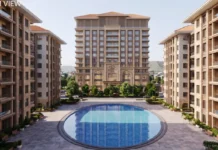
The government plans river cruises on Jhelum, Chenab and Ravi. Land is mostly secured, and boats are ordered. Jetties, terminals, power lines and an operator remain unresolved, pushing launch to 2027. But the questions about Kishtwar-Batote not getting a service and the fate of historic Chattabal Weir remain, writes Masood Hussain
Rivers across Jammu and Kashmir are being reused and revived as transport channels. The government has begun with the three that are declared national waterways: the Jhelum (NW49), the Chenab (NW26) and the Ravi (NW84). The Jhelum runs 110 km. The Chenab runs 53 km, and the Ravi runs 44 km. All three are meant to be operational during 2026-27.
The Inland Waterways Authority of India (IWAI) leads the work. IPRCL builds the onshore facilities. The Jammu and Kashmir administration must clear land, power, water and roads. The plan covers cruise tourism first and urban water transport later.
Calm Jhelum
The Jhelum is the calmest of all the rivers in Jammu and Kashmir. The others run down steep gradients, unlike Jhelum. It is the natural place to begin.
The cruise route has grown with the plan. In May, it ran from Pantha Chowk to Wular Lake, a distance of 76 km. By October, it ran from Sangam Bridge to Wular Lake, 106 km. The route now has eight terminal sites: Sangam, Pantha Chowk, Zero Bridge, Amira Kadal, Maharajganj, Chattabal, Sumbal and Gund Prang.
The main contracts are together worth about Rs 178.04 crore, according to officials associated with the exercise. Eight concrete pontoons cost Rs 25.26 crore, and six of them have been cast. The 52 navigational buoys cost Rs 3.50 crore, and all have been delivered. Ten hybrid electric catamarans, each carrying 20 passengers, cost Rs 66.11 crore. The work order was issued on June 19, 2026. The design is approved, and the boats are under construction. Delivery is due in March 2027.
Onshore terminals at the eight sites cost Rs 83.17 crore. Work was awarded in August. Piling has begun at Sangam. Completion is targeted for June 2027.
Land is the success story. In April, most Jhelum parcels were stuck at Cabinet level or at the Divisional Commissioner’s office. By October 7, seven of the eight sites had been handed to IWAI. Only Byopar Mandal Ghat awaits handover. It has been transferred to the Transport Department, and handover to IWAI is expected shortly.
Other jobs are done. The administration removed the ropes tied across the river. It was confirmed that rafting spots do not clash with the cruise route. IWAI has opened an office in Srinagar and has staff quarters. It has a dredger and a VIP boat deployed in Srinagar.
Timelines have shifted since May. Floating jetties were due in July 2026. They are now due in December 2026. Navigational aids were also due in July 2026. The target is now October 2026. Onshore terminals were due in July 2027. They are now due in June 2027, a month earlier. The hybrid boat award was expected in May. The order was placed on 19 June.
Other Rivers
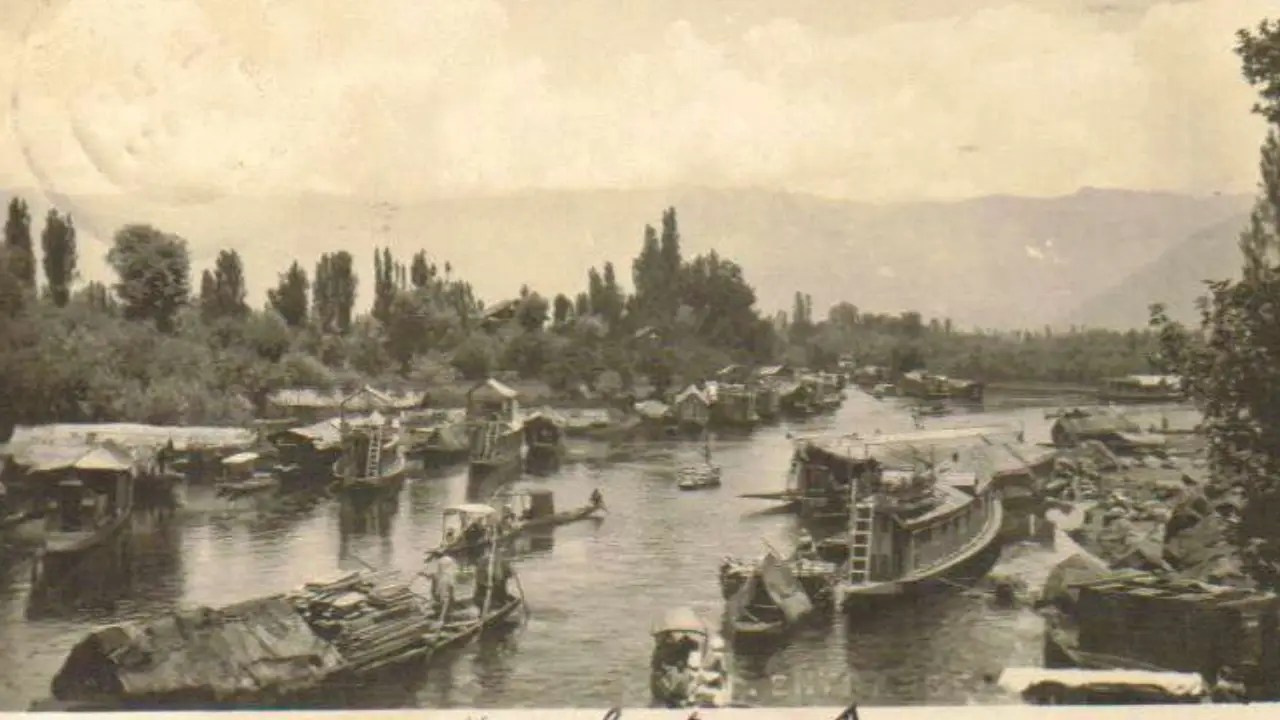
Fast-flowing rivers, the Chenab and the Ravi, trail the Jhelum. Both are planned as short stretches. The Chenab cruise runs 9 km, from Reasi to Akhnoor Fort. It has two terminals, at Reasi and Akhnoor. The Ravi cruise covers 15 km at Sohar, with one terminal. Both stretches have adequate depth for cruising through the year.
In May, jetties on both rivers were due by July 2026. Now three pontoons, costing Rs 8.34 crore, are still being cast. The target is December 2026. Onshore facilities on both rivers cost Rs 32.07 crore. Detailed project reports are ready. IPRCL expects construction to be awarded by November 2026. Completion is due in September 2027.
Chenab land is settled. Akhnoor and Reasi are both with IWAI. Ravi is not settled. The site at Satwain, near Ranjit Sagar Dam, is still in process with the Divisional Commissioner, Jammu. The Ravi terminal at Ranjit Sagar is estimated at Rs 8.58 crore, excluding GST.
Unfinished Business
Several jobs sit with the administration. The first is power lines. Of 68 high- and low-tension lines across the Jhelum, 62 must be raised or removed. Initially, the estimate was Rs 41.90 crore, and now it has fallen to Rs 24.30 crore. A meeting chaired by the Chief Secretary on September 2 decided to provide funds in the 2027-28 capital budget.
The second is coffer dams. Leftover dams and piles block the channel at bridges. The estimate for removal is about Rs 1.9 crore. The Public Works Department was told in May to use its own resources. By late August, 19 of 52 locations had been cleared.
Utilities are the third. Treated water discharge, power connections and water supply at all eight sites are still in process. As many as 61 houseboats are being shifted. Road widening at Gund Prang is pending. Renovation of the Chattabal navigational lock is undecided.
The last is the operator. The administration’s first tender for a cruise operator drew no bidders. A special purpose vehicle (SPV) between IWAI and the Jammu and Kashmir government is meant to manage operations. Cabinet approved it. The draft articles were vetted on August 12 and sent to the Finance Department. Incorporation with the Registrar is next. The operator request for proposals is still being prepared.
The Questions Remain
The project is under regular review at the highest level. Even so, several issues are being raised, and they need answers.
Each time a road accident occurs on the Kishtwar Batote Highway (NH244), people start talking about a waterway between the two towns. The stretch is nearly 115 km. It includes 55 km from Batote to Pul Doda and 60 km from Pul Doda to Kishtwar. This part of the Chenab is the most stable, thanks to the Baglihar dam. The water is smooth and very deep. The discharge is always adequate.
The river has around six dams along this length, all linked to hydropower projects. The upstream dams at Kiru, Kawar and Pakal Dul are at various stages of implementation. The large reservoirs at Dul Hasti and Baglihar are operational. Ratle will soon be getting water to its huge reservoir. Chenab is the only river in Jammu and Kashmir where bigger boats can operate.
A waterway of this length could give people a faster way to commute. The road is hazardous and is currently being upgraded. Even so, the Jammu and Kashmir government has not yet extended this facility to the Chenab Valley.
Historic Weir
A vital question is now being asked in Srinagar. What will become of the Chattabal Weir once the waterway is revived for operation?
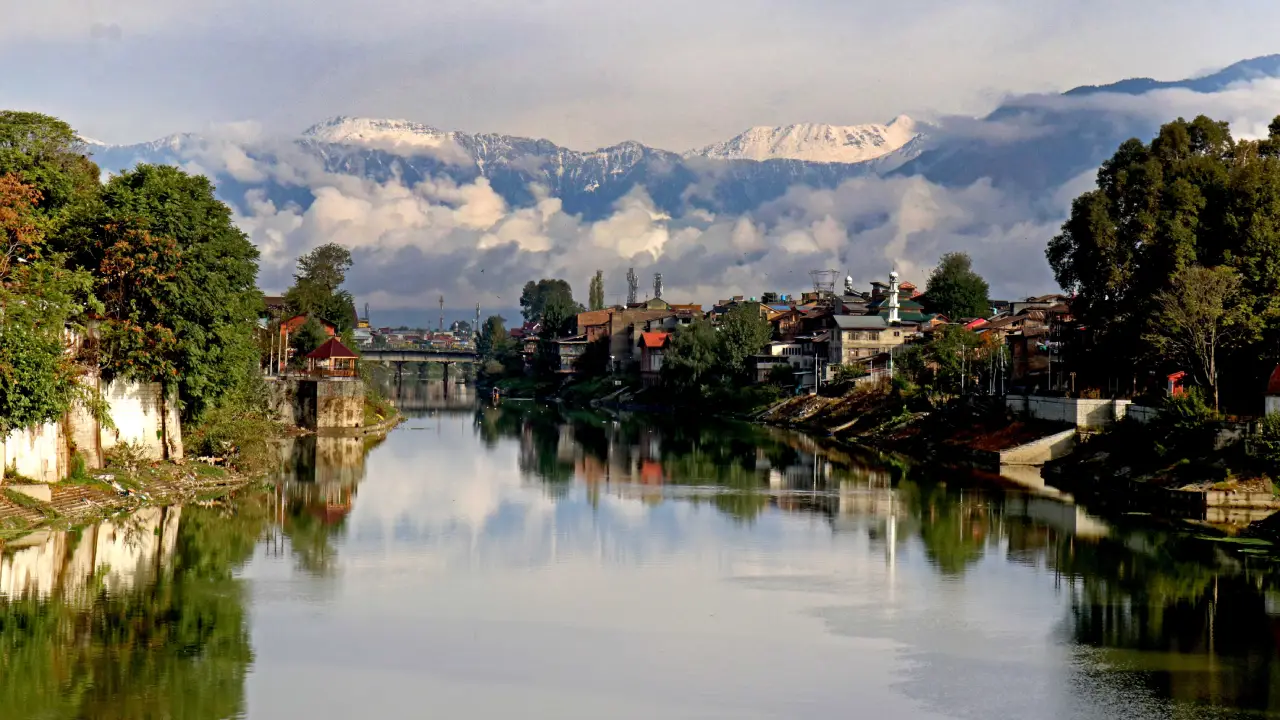
The weir was opened by Maharaja Pratap Singh in 1916. It was an important engineering intervention in the management of the Jhelum and the city’s interconnected waterways. It stands below the city’s seventh bridge, now popularly called the Cement Bridge. The weir’s main purpose was to keep enough water in the river and its tributary canals. This extended the period in which boats could travel through the city and reach the Dal Lake. In those days, the river was not merely a feature of the landscape. It was the principal transport artery.
The structure worked by the seasons. A contemporary description said the weir would generally be lowered towards the end of March and raised around the middle of September. When fully closed, it was expected to lift the water by about seven feet above the minimum level at the site. That depth would allow even large boats to pass through the canals and enter the Dal Lake more freely.
The weir is 453 feet long. Its navigational lock was designed for boats up to 20 feet wide and 150 feet long. These figures suggest more than a barrier across the river. The lock was part of the design. It let substantial craft move while the water level stayed under control.
The contract was carried out by Mr Avery at a reported cost of Rs 116,700. Retrospective accounts place construction between 1903 and 1907.
The weir served more than the Jhelum. It helped the linked canals keep navigable levels. These included the Nalla Mar (later filled and converted into a road) and the now-choked Tsunth Kuhl, Kutteh Kol and Soner Kol.
The Kut-i-Kul Canal shows how the network worked. It branched from the river near Shergarhi Palace, below the first bridge. It rejoined the Jhelum near the seventh bridge. When the river ran high, boats could take this alternative route.
The weir mattered beyond transport. The Jhelum and its canals carried goods and people. They linked neighbourhoods and markets. They shaped the daily life of a city tied closely to water. The weir was part of a system that made the river a dependable route for communication and commerce.
Later, the site gained a guesthouse and drew visitors. Political delegations and prominent guests stopped on its banks during journeys by water. These recollections suggest that Chattabal was more than a hydraulic installation. It was a recognisable urban landmark, woven into the social history of Srinagar.
The original structure eventually deteriorated. A leak was reported in 2005, after decades of use. Later accounts describe damage to the old components. The government began restoration in 2009. Reporting in December 2010 put the cost at Rs 10 crore.
The weir was rarely used to improve river levels. In recent years, when levels fell below the minimum, a number of houseboats were reported broken in Jhelum.
A Hanging Decision
The official papers about the Jhelum Waterway offer a partial answer. Chattabal is one of the eight terminals on the Jhelum cruise route. The 500 square metres of land was first held up at the Divisional Commissioner’s office. It has since been handed over to IWAI. The renovation of the Chattabal navigational lock is also on the list of pending issues. The latest information suggests the Irrigation and Flood Control Department has to take a call, in consultation with IWAI. No decision has been taken.
Officials have nothing much to offer on the weir. Nobody knows who will decide when it is lowered or raised once boats run. They do not have answers to why a structure restored after 2009 needs work on its lock. Those answers will decide whether the weir serves the cruise or constrains it.