Kashmir’s bureaucratic dominance extends from golf clubs to developmental bodies, sidelining domain experts. J&K needs hybrid institutions that retain administrative accountability while empowering professionals to shape sectoral strategy, writes Haseeb A Drabu

The 140-year-old Kashmir Golf Club, set up soon after the British Residency was established in Kashmir in 1885, recently held its executive committee elections. Its 500-odd members elected four members to the 10-member executive committee, with five members being nominated by the Chief Minister, who is the President of the Club. The Chief Secretary, ex officio, chairs the executive committee. The elected members are in a minority, ab initio.
Why should the Chief Secretary (or, for that matter, any civil servant) head the executive committee of a Golf Club, the role of which is to make day-to-day decisions regarding club expenditures, course upgrades, and payroll? As the head of the bureaucracy, he surely has more important and pressing matters to attend to and decide. Especially in the current regime.
Why not a golf club professional, who can add value and devote time, expertise and energy to it? Kashmir has produced many golfers of eminence right from Ghulam Mohammad, India’s very first golf professional in the 1930s. In the recent past, Ghalib Shah or at present Kshitij Naveed Kaul has established a national presence. Or for that matter Champika Nanda who is an absolute pillar of women’s golf in India. She too is from Kashmir.
A Capture
The issue of the golf club is the microcosmic reality of the bureaucratic capture that is pervasive in Kashmir. Though meant to act in public interest, it has come to serve its own narrow commercial, ideological, or political interests.
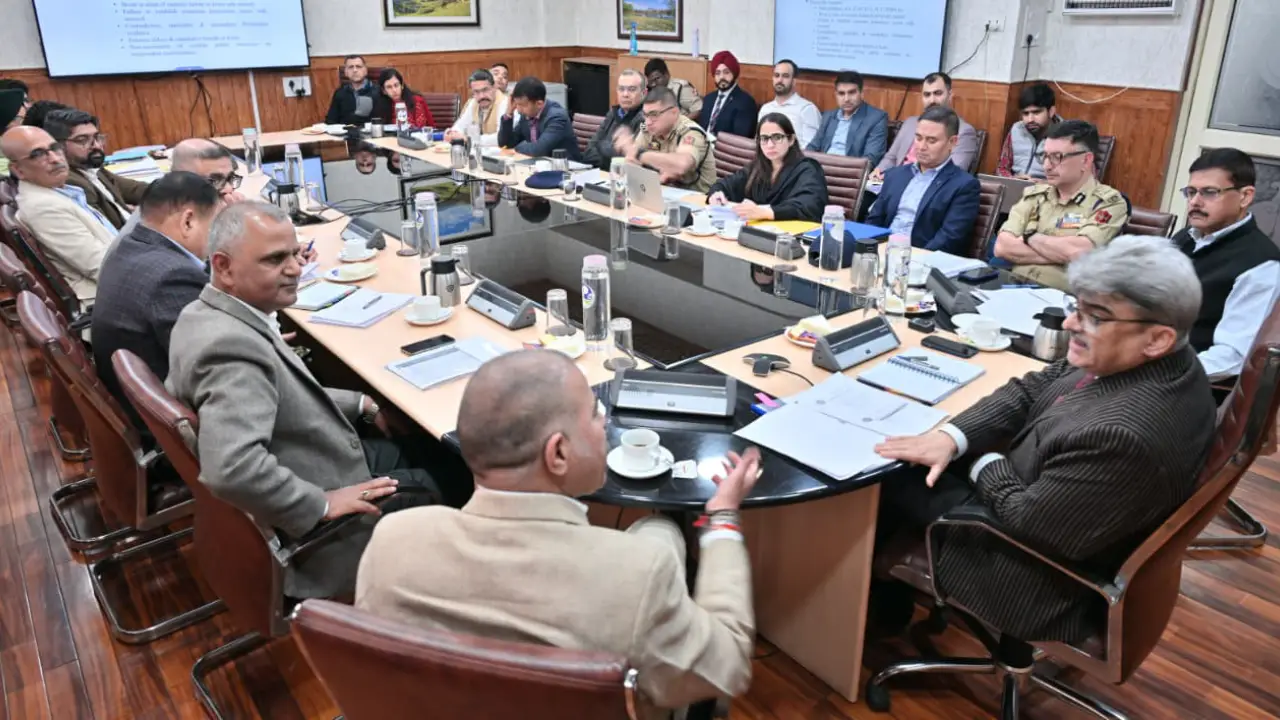
The local government regularly utilises all-bureaucrat committees to drive governance, operational reforms, and strategic decision-making. They are staffed entirely by civil servants to the complete exclusion of external public members.
Take for example the Artificial Intelligence Enabled Governance Committee. Chaired by the Chief Secretary, all members except perhaps one is top-tier bureaucrats like the Financial Commissioner of Finance and other Commissioner Secretaries. The same is true of the Compliance Reduction and De-regulation Strategy Committee. It is composed strictly of senior department secretaries and legal advisers within the administration. The Sustainable Development Goals (SDG) State Level Committee is again chaired by the Chief Secretary, with the Administrative Secretaries of all major infrastructure, social welfare, and economic departments serving as its sole members.
Besides running the state machinery, all the state PSU, joint ventures, boards or regulators are headed by civil servants, including retired ones. This has resulted in a complete concentration of power and decision making. Jammu and Kashmir must be the only governments where the bureaucracy takes it upon itself to identify a precise number, “1.37 lakh”, entrepreneurs, that too within a specified age bracket and timeframe! Government identifying entrepreneurs’ flies in the face of both administration and entrepreneurship.
When every committee, working group, or sector body is headed by a generalist civil servant, specialised domains often get generic treatment. A chief secretary may be outstanding at coordination and political-administrative interface; that does not make him or her the optimal person to shape the technical and commercial strategy of a golf course, a tourism product, or a horticulture value chain. The same logic applies to other super specialized areas like leveraging AI. It needs domain experts. The rationale is straightforward: policy design in complex areas benefits people who have spent years in that domain.
Do Not Reinvent
The secretariat’s strength is running the system. Developmental outcomes in specialised fields improve when people who know the domain help design the strategy and the bureaucracy focuses on making it happen within the rules. Other states and successful developmental jurisdictions have already moved in that direction; J&K does not have to invent the wheel.
Indeed, the approach of progressive states like Maharashtra, Tamil Nadu, or Karnataka is illustrative. It is not a replacement of the bureaucracy; they are hybrids that keep administrative accountability while injecting specialized input. For instance, Maharashtra has used scientist-led panels, Anil Kakodkar-chaired committee examining data-center impacts, with a mix of officials, technical experts, and industry voices.
The model combines state coordination capacity with commercial and technical insight; it is widely cited as part of the “developmental state” toolkit that has helped many economies develop and upgrade rapidly. Meritocratic bureaucrats continue to be central, yet policy design rests on continuous inputs and dialogue with experts and those who actually ran factories, export markets, and technology.
Global experience suggests that successful developmental states combine bureaucratic competence and insulation with deep ties to specialized private-sector knowledge. Pure generalist dominance is neither the global nor the national standard in high-performing developmental settings.
The goal is not to displace the civil service. Secretariat administration remains essential for legality, equity, inter-departmental coordination, and implementation discipline. The shift is to stop letting it monopolize the design and strategic leadership of developmental bodies.
The Model
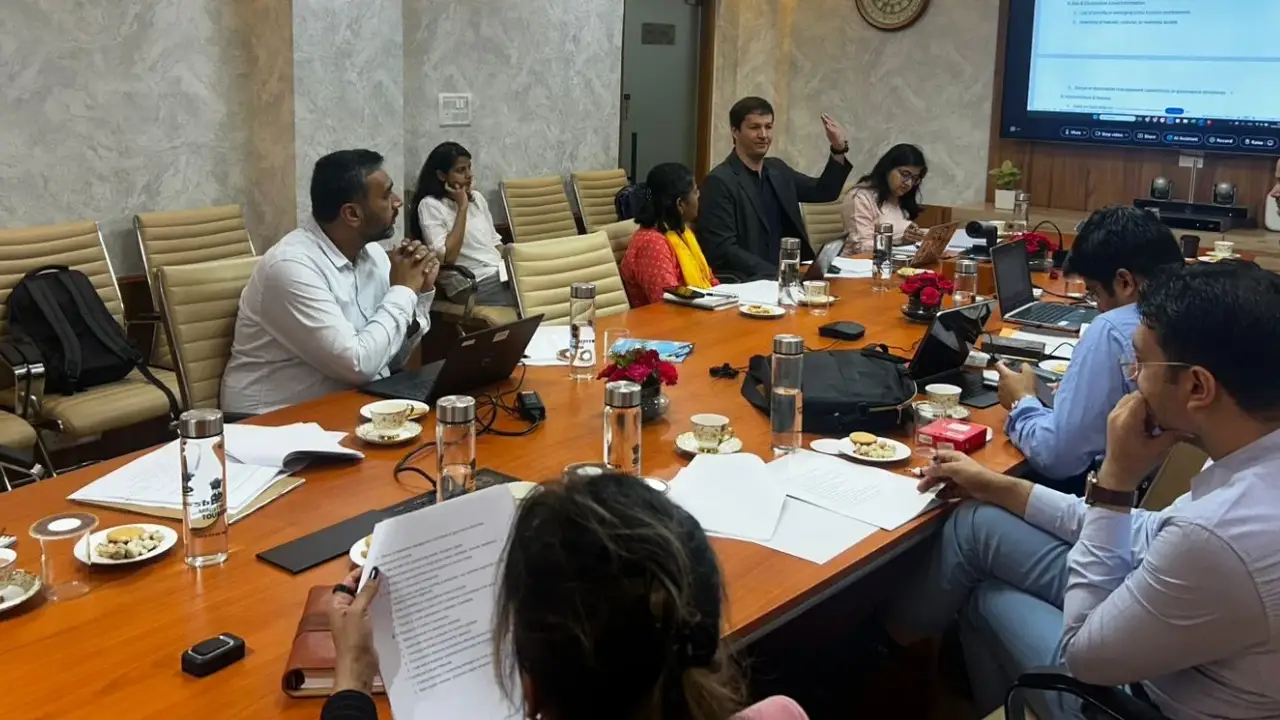
A practical model is hybrid: a senior civil servant as member-secretary or administrative anchor (for accountability and government interface), with domain professionals as chair or co-chair and as substantive members.
For golf tourism and related infrastructure, that means golf-course professionals, hospitality operators, tournament organizers, and environmental specialists who understand turf, visitor economics, and international standards. Parallel logic applies to horticulture (scientists plus exporters), handicrafts (designers and market specialists), adventure tourism, renewables, or IT.
All the committees, boards and working groups should have structured representations from the relevant industry associations and technical institutes, not merely official members.
The problem is that the bureaucracy decides what is to be done, how it is to be done, when it is to be done and where it is to be done! Ideally, they should just ensure it gets done. In classical terms, the bureaucracy’s proper role is executive: to implement decisions, enforce rules, coordinate departments, manage resources, and ensure delivery within legal and fiscal boundaries.
Strategy — “what,” “when,” and “where” — should primarily be set by political leadership informed by domain specialists, industry knowledge, and technical expertise. When generalist civil servants dominate both design and execution, the system inverts. Implementation becomes cautious and procedural, while design becomes generic and risk averse.
Domain Experts
Domain professionals then shape the concrete strategy: course design standards, visitor experience, tournament calendars, pricing, ecological constraints, or market linkages. The secretariat’s job is to clear land, arrange financing within budgets, obtain statutory approvals, monitor timelines, handle contracts, and report outcomes. When the same officers control the design stage, they tend to default to what is familiar, administratively convenient, or lowest-risk, often producing committees, reports, and incremental fixes rather than commercially or technically sharp outcomes.

There is no denying the need to maintain a strong bureaucratic core for coordination and discipline, but developmental, industrial and export strategy must be forged through continuous, structured engagement with sector specialists and firms rather than being written solely inside the secretariat. In several European systems and in parts of the UK civil service, specialist streams and external advisers handle domain policy while general administrators focus on delivery and accountability.
This does not require dismantling the civil service. It requires stopping the automatic assumption that the chief secretary or an additional generalist chief secretary must chair every developmental committee. Implementation capacity remains essential; the problem is that capacity currently extends too far upstream into design.
When bureaucracy decides the strategy as well as the execution, developmental outcomes in specialised sectors tend to lag what the place’s natural and economic potential would allow. The correction is institutional: clearer role separation, structured induction of professionals into strategy bodies, and accountability focused on delivery rather than on who wrote the original concept note.
Call out: The goal is not to displace the civil service. Secretariat administration remains essential for legality, equity, inter-departmental coordination, and implementation discipline. The shift is to stop letting it monopolize the design and strategic leadership of developmental bodies.
(An economist, the author was Jammu and Kashmir state’s finance minister.)