After a question triggered a stormy Assembly debate on regulating social media, a harder question remains. Without a strong formal press in Jammu and Kashmir, who will hold the digital space accountable, asks Masood Hussain
Lawmakers in Jammu and Kashmir need more time to grasp a basic reality. The world has gone virtual. What people once did in person, they now do on a screen.
That includes the good and the bad. People greet each other online. They criticise, gossip and call names. They humiliate others, often in public view and often without consequence. But one thing makes it distinct: earlier, people could talk and remain anonymous. Now they are not. Digital footprints tell the whole story of a person who starts the rumour or humiliates someone.
The same shift has changed how events are reported. In Kashmir, technology has improved reportage in ways unthinkable a generation ago. A video from a remote village can reach millions within minutes. A citizen with a phone can document what no camera crew could reach.
Not all of it is good. Some is careless, some is cruel, and some is false. But most of it is useful. Any debate on regulation must begin by admitting both truths. Social media is neither a menace to be crushed nor a miracle to be left alone. People can commit mistakes online and can be held responsible under the routine law.
Question Hour
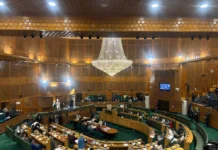
The question reached the House on September 30, the last day of the brief session.
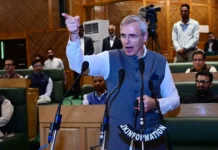
National Conference MLA Bashir Ahmad Shah Veeri sought guidelines for social media. Minister Sakina Itoo replied on behalf of the Chief Minister. She told members that a House Committee, headed by senior MLA Ali Muhammad Sagar, had given the DIPR four months to frame new guidelines.
The trigger was small. MLA Altaf Kaloo had been filmed taking chewing gum from his pocket. The clip went viral. Kaloo told the House, “They make private things public.” Nobody asked him House is not private.
Neither the clip nor the mockery that followed was a great matter of state. But they opened a larger argument. Who may film a legislator? Who may share it? And who answers when it goes wrong?
The House was not of one mind. Ruling members demanded regulation. An opposition member opposed it. One member was marshalled out. The division was visible. It remains unresolved.
Regulation Demanded
The case for regulation came mainly from the ruling benches. Veeri said there was an urgent need for rules against online mudslinging at legislators. Kaloo argued that private moments were being turned into public spectacle.
NC MLA Tanvir Sadiq accepted that social media was important for spreading information. But he sought safeguards against morphed images and the misuse of platforms. His distinction matters. He did not ask for the medium to be shut. He asked for protection from its worst use.
MLA Nazir Ahmad Gurezi went further. He said anyone with a phone could now call himself a media person, and he favoured laws to regulate the portals.
The Speaker, Abdul Rahim Rather, backed the demand but added a condition. Any mechanism, he said, must rest on statute. “But a law should be made,” he said. He called the media a bridge between government and people. Those not working professionally, he said, should face action. He also recalled asking the government during the Budget Session for a comprehensive study of media functioning.
Minister Itoo added a grievance of her own. She criticised the circulation of personal content about public figures, including Deputy Chief Minister Surinder Choudhary. She said social media posts often distorted what was said inside the House. She called for strict action against the portals responsible.
These complaints are not frivolous. A private moment made public is harm. A distorted clip can travel across the Valley before any correction is drafted. A family may be shamed. A career may suffer. Supporters of regulation are right that freedom carries duties.
Voices Against
The other side was smaller in number but not in weight.
PDP MLA Waheed Ur Rehman Para opposed any curbs. His warning was blunt. “We cannot afford further censorship and regulation,” he said. He added that demanding censorship in the twenty first century was not the right thing.
He also turned the debate inward. Para noted that whether a member chews gum or gutkha in the Assembly, both are wrong. His point was that conduct inside the House deserves scrutiny too. He added that the media cannot be blamed for everything.
AAP MLA Mehraj Malik took the argument to the Well of the House. He questioned why the Assembly should spend its hours on regulation when no law yet existed. He was not heard for long. “Nobody can impose a ban on social media,” he said, as the Speaker ordered him marshalled out for making noise.
Critics of regulation ask a pointed question. Who decides what counts as abuse? In a region where politics runs hot, the answer is rarely neutral. A rule meant to punish harassment can be turned on a reporter. A rule against false news can be used against an inconvenient truth. That happened last time when somebody uploaded two law makers, male and a female, talking to each other in the assembly, it went viral. The House shouted at the clip and the police launched a long “verification” process of journalists. Social media based “citizen journalists” are increasingly being seen as formal media persons.
History offers little comfort. Laws written for one purpose find other uses. Officials change. Governments change. The law stays.
Kashmir has also known restrictions on communication. People remember them. Trust is thin, and any measure that looks like control will be read as control.
Parties Online
There is an irony at the heart of this debate. The sharpest remark came from the government’s own bench.
Minister Itoo told the House what many already knew. “We are also responsible for the social media boom,” she said. Every party keeps its public relations staff busy, she said, so that its activities are flashed online.
She went further. She alleged that some accounts run under borrowed names. One, she said, was opened in the name of a servant by the wife of an ‘honourable member’. She said the language on that page would shame the devil. The criticism of ministers was foul, she said, and if all that is acceptable, the blame cannot rest on the media alone.
This is not a charge against one party. It is a description of the whole field. Every party and nearly every politician has a presence online. They announce policies there. They answer critics there. And some use organised teams to attack rivals.
Those who complain of abuse are often among its users. Those who demand a law may be among its beneficiaries. A law aimed only at the abuse of others will fail the test of fairness. A law aimed at everyone will struggle to win political support.
Media Duress
To see why the debate matters, look at the formal media. This means newspapers, channels and digital outlets with editors who verify facts and answer for what they publish.
The minister herself paid tribute to them. She said that without print and electronic media, the House is incomplete. She also cautioned against blaming media persons for every problem, saying they were not always wrong.
But the minister also named a problem. Registered journalists, she said, are fewer than unregistered ones. That single comparison tells a larger story.
Kashmir media has been under duress for a long time. Advertising is limited and often tied to official goodwill. Access to information is uneven. News apartheid is in vogue. Reporters face scrutiny, and sometimes worse. Editors weigh every story against risk. Now, newsrooms have gatekeepers and it is a reality.
The financial strain is just as severe. Revenue has shrunk. Newsrooms have thinned. Salaries are delayed in some places and cut in others. Young journalists look for safer careers. Experienced ones leave or fall silent.
For some, surviving is itself a struggle. An outlet that cannot pay its staff cannot fund an investigation. A reporter who cannot afford to travel cannot cover the story. Over time, careful reporting weakens.
When the formal media weakens, something fills the space. That something is rarely better.
Readers still want news. If a trusted outlet cannot deliver it, they turn elsewhere. They turn to a page, a forwarded video or a message from a friend. Or, they enrolled in the WhatsApp University. These sources are fast and free. They are also unverified.
The result is a slow shift in public attention. The formal press loses readers and advertisers. It loses the revenue that pays for good journalism. The weaker it grows, the less it can compete. This is a cycle, and it feeds itself.
There is a human side as well. A journalist under pressure may choose caution over courage. A story may be softened or dropped. Silence in one place becomes noise in another. What the formal media cannot say, anonymous accounts will say, without evidence and without responsibility.
Here is the core of the problem. The formal media carries accountability within its structure. Social media does not.

Missing Gatekeepers
A newspaper has an editor. A broadcaster has a standards desk. A reporter has a name, and that name is attached to everything he writes or relays.
If a story is wrong, there is a process. A correction can be demanded. A complaint can be filed. A court can be approached. The institution has an address and a reputation to protect. That reputation is its strongest discipline.
An anonymous account offers none of this. It can accuse anyone of anything. It can vanish and return under another name. It owes nothing to its audience.
This is why a weak formal press is dangerous. Gatekeepers filter rumour from fact. They give context. They decline to publish what cannot be proved. When they disappear, the gate stays open to everything.
A society in this condition grows suspicious and divided. Every claim is contested. Every video is doubted or defended according to loyalty. Truth becomes a matter of preference.
Lawmakers who worry about social media should ask a simple question. Who is left to check it?
Wrong Target
This brings the argument back to the Assembly.
The government now plans a Media Policy for 2026. Has the media ever been asked to contribute to the policy? How can the government frame a policy for the media without consulting the institution that is rumoured to be the fourth pillar of democracy? The media policy in vogue was reportedly drafted by a police man, and its alternative is now being written by the civil servants.
The policy is expected to cover online news platforms and unregistered social media handles. Registration sounds orderly. But consider who will feel it first.
A powerful politician with a large team can absorb a legal notice. A small digital portal or an independent reporter cannot. The new regulation can silence the honest and spare the loud.
A law can punish a post. It cannot create trust. It can remove a video. It cannot restore the system of verification. Only a healthy formal media can do that.
This is not an argument against all rules. Privacy deserves protection. Defamation deserves a remedy. Existing law already covers much of this ground. But the priority must be clear. If the goal is accountability, then strengthening the press comes first.