Digital storytellers, bloggers, vloggers, and food creators are reshaping outside perceptions of Kashmir, moving from personal encounters to debates over consent and privacy, reports Afreen Ashraf
 In 2013, a foreign visitor named Fatima walked into a small aari embroidery shop in Soura, Srinagar, with a camera. She was recording for her Facebook page. Inside, she met Mohammad Maqbool, an elderly craftsman sitting with his workers. She spent time talking to him, learning about his craft. But she wanted more than the craft. She wanted the people behind it.
Maqbool noticed her curiosity and invited her home for lunch.
What followed was not a short visit. Maqbool, his wife and their children welcomed her into daily life. She ate with them, talked with them, and learned their traditions. The family later took her to their maternal home on the outskirts of the city. She saw another layer of Kashmiri life there.
The exchange went both ways. “She asked our mother to wear jeans after seeing her always dressed in a shalwar kameez. Our mother became very shy,” recalled Abida, Maqbool’s daughter.
Abida remembers another moment, when her mother cooked haakh for their guest. Language got in the way. Her mother could only offer two words: haakh and chaman. Haakh is Kashmir’s most common vegetable and chaman is a reference to the vegetable garden. Not able to pronounce the Kashmiri words, Fatima kept calling it chaamain in her videos through her whole stay.
She returned three or four years later, this time staying with another family in Harwan. But she came back to see Maqbool’s family too. “I still remember she was wearing a yellow suit with floral prints, the kind of dress we often see women in villages wearing,” Abida said. Fatima had noticed the style earlier and asked the Harwan family to find her one.
“She had started understanding our way of life,” Abida recalled. “She wanted to truly blend in, to experience our culture in the way we live it.”
Through her Facebook posts, Fatima showed a Kashmir rarely seen beyond tourist images: family gatherings, homemade and haakh, everyday hospitality. For those who followed her, the Valley became more than mountains and lakes. It became the people who live there.

Wider Lens
Fatima’s camera was not alone for long. Digital storytelling in Kashmir has grown into a much wider movement since. Creators now explore not just landscapes but traditions, crafts and everyday life. Social media has pulled attention toward places once rarely seen by outsiders. Remote villages have started appearing on Instagram, drawing visitors who want a Kashmir beyond the usual tourist routes.
Many creators now document a slower, quieter Valley: village life, local traditions, small homestays, and conversations with residents. Their videos guide travellers to places tourism campaigns never promoted, discovered instead through personal stories shared online.
The difference from Fatima’s time is mostly scale. Her story reached a small audience on Facebook. Today’s creators reach millions within hours.
Hidden Corners
This digital attention has reshaped local business too. Small cafes, food stalls, handicraft shops, homestays and family enterprises have found new customers who discover them online. A few seconds in a video can bring in people who might never have known the place existed.
At a market in Sonmarg, shopkeeper Asif has watched the shift. “I have owned a shop here since the 1990s, and by God’s grace we have always received customers,” he said. “But mobile phones have created opportunities for many other people who were not visible before, especially communities away from crowded tourist areas.”
He remembers a video of a woman preparing and selling makai roti and saag. It stayed with him, simple as it was. “I thought that whenever I visit that place, I will definitely try it. If a video can make me curious enough to taste something new, it can surely encourage many others too,” he said.
For fellow shopkeeper Mohammad Ashraf, the change shows in how people treat cameras now. “Earlier, we felt happy when foreigners came with cameras. The camera itself was exciting for us,” he recalled. “Now, shopkeepers want to be filmed because they know someone watching that video may remember the place and visit later. It can help their business.”

Taste Trail
Food has become one of the strongest threads in this storytelling. Creators move through restaurants documenting the stories and people behind Kashmiri cuisine. Channels such as Global Centre have covered wedding feasts, traditional cooking methods and street food, carrying dishes once known mainly within the Valley to wider audiences.
Toiba, a Srinagar resident, saw the effect first-hand at a small eatery in Lal Chowk. A visiting family walked in asking for masala roti but could not pronounce it properly. They described it as “a roti wrapped around something,” leaving the waiter confused. “Later, when I spoke to them, I realised they had seen it in a video,” Toiba said.
She explained they could find it almost anywhere in Kashmir, by looking for an elderly vendor with a wooden basket on a bicycle, selling soft naan-like bread filled with chana. They were keen to taste Kashmir’s masala tchout.
Food bloggers have amplified this reach further. When creator Golgappa Girl visited Kashmir, her videos on local restaurants and food reached millions of viewers. Other travel creators have leaned into personal interactions with Kashmiri families instead, presenting the Valley through hospitality and conversation rather than scenery alone. YouTube creator Urban Guide followed this path, sharing a video built around time spent with a Kashmiri family.
These stories echo what Fatima found years earlier: Kashmir understood through its people, not just its places.
Is Kashmir Safe?
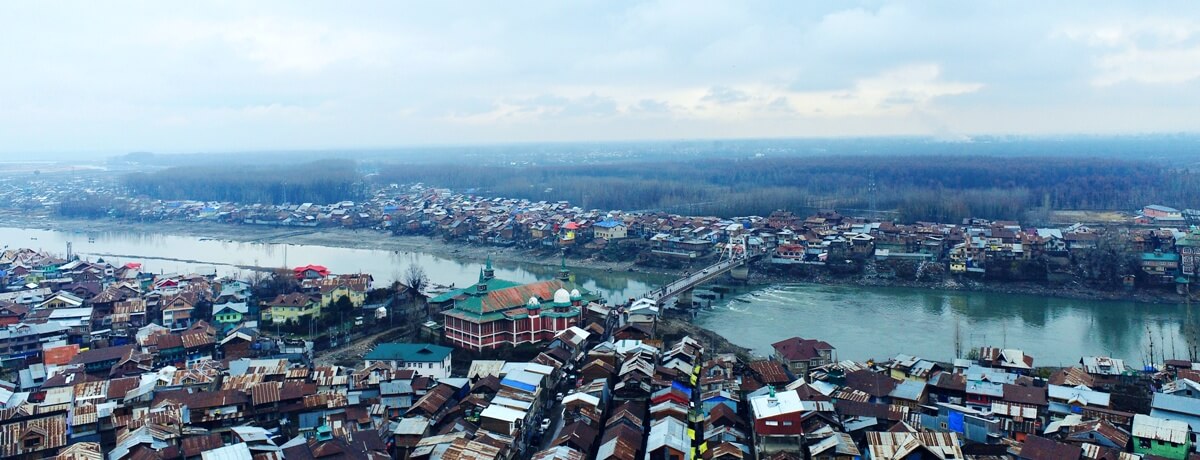
Digital storytelling has also started reshaping older perceptions of Kashmir. One trend stands out: videos built entirely around the question, “Is Kashmir safe?” A search on YouTube turns up dozens of creators chasing this question, turning it into its own genre of content.
For decades, political instability has shaped outside perceptions of Kashmir, often overshadowing everyday life. Many creators now engage with these perceptions directly, documenting their own experiences and conversations with locals to offer a fuller picture.
Violence has occurred, and it cannot be dismissed. The 2025 Pahalgam massacre, which killed 26 tourists, was described as one of the deadliest attacks on tourists in the region in nearly three decades. But millions of visitors have travelled through Kashmir over the years in perfect peaceful environment.
Many creators try to show the Valley past the headlines. They walk through markets, ride the Gondola, take shikara rides, eat local food, and talk to residents.
UAE-based creator Khalid Al Ameri recently made this his theme during a visit to Kashmir. He explored streets, met locals, visited tourist sites and shared meals, including masala roti with a local food creator near Khanqah-e-Moula.
Since Kashmir is gradually limping to a semblance of normalcy, various vloggers visited and were visibly generating a narrative. A woman vlogger visited the length and breadth of Kashmir and uploaded the content that shocked Kashmir. Even though the people asked the law enforcing agencies to intervene and stop her, the governance structure kept its clam indicating as if they were part of the ‘consent creation’.
Behind The Frame
But cameras entering homes and neighbourhoods have brought new responsibilities too. For many Kashmiris, the issue is not that visitors record the Valley. It is how they do it.
A phone camera pointed at someone without permission can turn an ordinary market walk uncomfortable. In a society where privacy ties closely to dignity, many people, especially women, are not at ease being filmed by strangers.
A few weeks ago, a video went viral showing a group of elderly women covering their faces with veils when they noticed a creator filming them. The creator reacted with frustration. For Farhana, a Srinagar resident, the moment reflected misunderstanding rather than hostility.
“The problem is not the camera,” Farhana said. “Many older women in Kashmir have not grown up with social media. They naturally feel uncomfortable when a stranger starts filming them. At the same time, many other people are happy to be part of videos. A creator should respect both choices.”
Farhana herself has no objection to appearing in a video, as long as she is asked first. “If a storyteller stops me and asks whether I would like to be part of the video, and if the content is decent, I do not really mind. But it should remain my choice.”
This is not a new concern. In February 2025, a video filmed from a moving car by non-native visitors showed young Kashmiri women walking on a street, unaware they were being recorded. It spread quickly online, drawing sharp criticism, and police eventually registered a case after the backlash.
For some residents, the worry extends beyond privacy to a different kind of content: staged drama built for views. Norain recalls an incident at Srinagar’s Sunday Market. “My cousin and I were walking near Gulshan Book Depot when I noticed a man’s phone lying on the road. I hurried towards it to return it, but my cousin stopped me.” A nearby vendor warned her it was part of a prank video, pointing toward a man filming from a distance.
According to Norain, people who tried to return the phone were unknowingly becoming part of a staged clip. “They were not waiting to see whether someone would return the phone. As soon as anyone picked it up, they would rush in and start filming, making the person appear suspicious or creating drama for the video.”
Farhana has had a similar brush with staged content. “One day, I saw a man who appeared to be having a medical emergency. I immediately went to help him, only to realise it was being staged for a video.” Once such clips are edited and shared, she said, they can leave misleading impressions, not just of the people filmed but of the place itself.
Most of the residents, this reporter talked with, said they welcome visitors who genuinely want to document Kashmir’s culture and everyday life. What they ask in return is simple: consent, privacy, respect for the people whose stories are being told.
Every generation finds its own way of telling Kashmir’s story. Once it was poetry, travelogues and memoirs. Today it is reels, vlogs and shorts, watched by millions around the world. The platforms have changed, but the responsibility has not. Kashmir keeps drawing storytellers, not only for its mountains and lakes, but for the lives and memories that exist beyond the frame. The challenge for today’s creators is not just to capture the Valley. It is to do so with honesty, curiosity and respect.