by Syed Shadab Ali Gillani
Sir William Mark Tully, the journalist who reported on the major events of South Asian history for more than 30 years, died in Delhi of multi-organ failure on January 25, 2026. He was 90. His career with the British Broadcasting Corporation (BBC) made him one of the most recognised figures in international media, particularly within the Indian subcontinent, where he served as the New Delhi Bureau Chief for two decades.
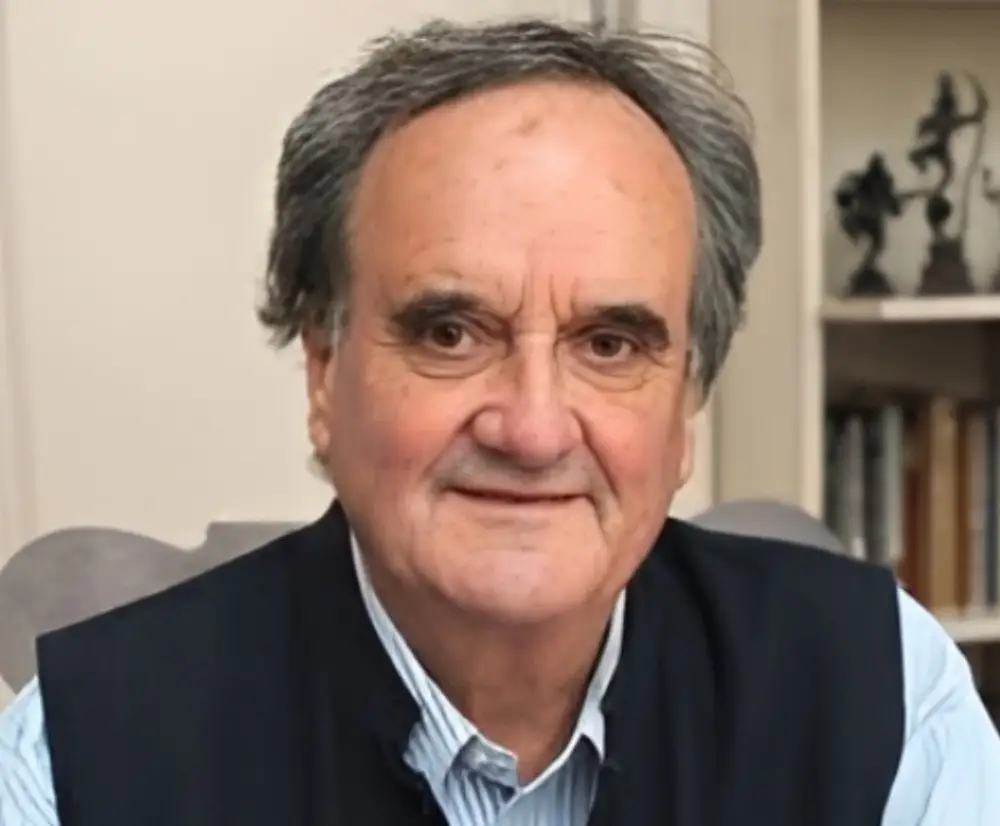
Son of a British businessman, Tully was born in October 1935 in Tollygunge, Kolkata. He attended Marlborough College and Cambridge University in England, where he initially prepared for a career in the church. He joined the BBC in 1964 and returned to India in 1965. Over the following decades, he covered the 1971 India-Pakistan War, the 1975 Emergency, the 1984 storming of the Golden Temple, and the 1992 demolition of the Babri Masjid. His reporting was known for its focus on the lives of ordinary people and the social changes occurring across the region.
Turbulent 1990s
In Kashmir, Tully’s work during the early 1990s coincided with the onset of insurgency and frequent communication blackouts. During this period, radio broadcasts served as a primary source of information for the local population. Kashmiri journalist Yousuf Jameel, who worked with Tully, wrote on Facebook that the correspondent provided a link between the region and the international community. Terming Tully his “mentor” and a “pillar of support” during times when reporting from the ground involved significant risk, Jameel recalled walking through Srinagar under curfew with him. Tully, he wrote, remained focused on the details of the situation despite the presence of security forces and the silence of the streets. Jameel emphasised that Tully did not settle for “easy conclusions” and insisted on “standing firm against pressure” from various authorities.
Another account of Tully’s time in the region was provided by Zafar Meraj in the Kashmir Monitor. Meraj recounted an incident in 1990 when the administration ordered the expulsion of several journalists from Srinagar. While other reporters were being gathered at their hotels for transport out of Kashmir, Tully and his colleague Satish Jacob were located at a private residence.
Meraj wrote that Tully viewed the expulsion with “professional disappointment,” as it limited the ability of the press to document the use of force. During a period of restricted movement, Tully stayed in a local home, where Meraj observed him engaging with his hosts and eating local meals. This period of “house arrest”, Zafar wrote, allowed the journalist to witness the effects of the curfew on the civilian population at a closer range. During this self-imposed incarceration, Tully lacked access to toothpastes, ate on the floor and eventually, when he moved out, he wore the shalwar-kameez of the host’s butler.
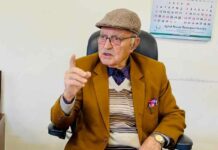
Kashmiri photojournalist Mehrajudin Dar remembers a time when the world’s eyes on Kashmir were often limited to the lens and sound of one man, Mark Tully. Dar remembers the Gaw Kadal massacre, noting that while the broader press corps was restricted, Tully, alongside a colleague from Reuters, was among the solitary few permitted to document the tragedy. Even as Governor Jagmohan ordered the removal of foreign journalists from Kashmir, Tully refused to disappear. Instead, he took refuge in the home of Zafar Meraj.
“He was not afraid of anyone,” Dar recalls. He describes a striking scene of Tully defying a curfew at Pratap Park:
“The lights were off, and the CRPF had stopped him, but he simply said he had a story to make. There he was, sitting in the dark of the park, lighting a candle to write his dispatch.”
A Mentor
For Dar, Tully was more than a colleague; he was a mentor who reshaped his understanding of professional pride. Tully famously advised him never to chase a “soundbite” with desperation.
“He taught me not to run after anyone,” Dar said. “He would say, ‘It is their loss that they are not giving you a byte, not ours. We are journalists, and we have a reputation.’”
Dar’s anecdotes paint a picture of a man who demanded dignity, not just for himself, but for the profession. He recalls an incident on the road to Kupwara when their vehicle was stopped by security forces. Tully, usually composed, flared with indignation at the treatment they received.
“Talk to us politely,” Tully had demanded, said Dar. “Are we sheep or goats to be stopped like this?”
An Unfinished Book
Tully had planned to publish a book dedicated to Kashmir, meticulously selecting 65 photographs from Dar’s personal archive to illustrate the narrative. However, the project never reached the printing press.
Despite the lost book, Tully’s admiration for his local counterparts remained a pillar of his legacy. As Dar remembers, during a lecture on the anniversary of the death of Mushtaq Ali, Tully offered the highest praise a veteran could give: “Kashmiri journalists are the best.”
Tully’s reporting often brought him into conflict with the government of India. During the Emergency imposed by Prime Minister Indira Gandhi in 1975, he was among the foreign correspondents expelled from the country. He returned in 1977 to report on the general elections and the change in government. In 1994, Tully resigned from the BBC following a public disagreement with the organisation’s management regarding its editorial direction. He chose to remain in India as a freelance journalist and author, living in the Nizamuddin area of New Delhi with his friend, Gillian Wright.
His published works include Amritsar: Mrs Gandhi’s Last Battle, co-authored with Satish Jacob, and No Full Stops in India, a collection of essays on Indian society. These books argued that Western perspectives often failed to account for the internal logic and traditions of Indian life. For his contributions to journalism, Tully was knighted in 2002 and received the Padma Bhushan from the Government of India in 2005. His death concludes a chapter of journalism characterised by long-term residency and a focus on the historical context of the news. He is survived by his four children and his partner.