by Syed Asim Hashmi
Zamir Ahmed Bhat, lovingly called “The Professor,” was a rare intellectual and humane soul whose ideas, faith, and friendships continue to illuminate hearts beyond his passing.
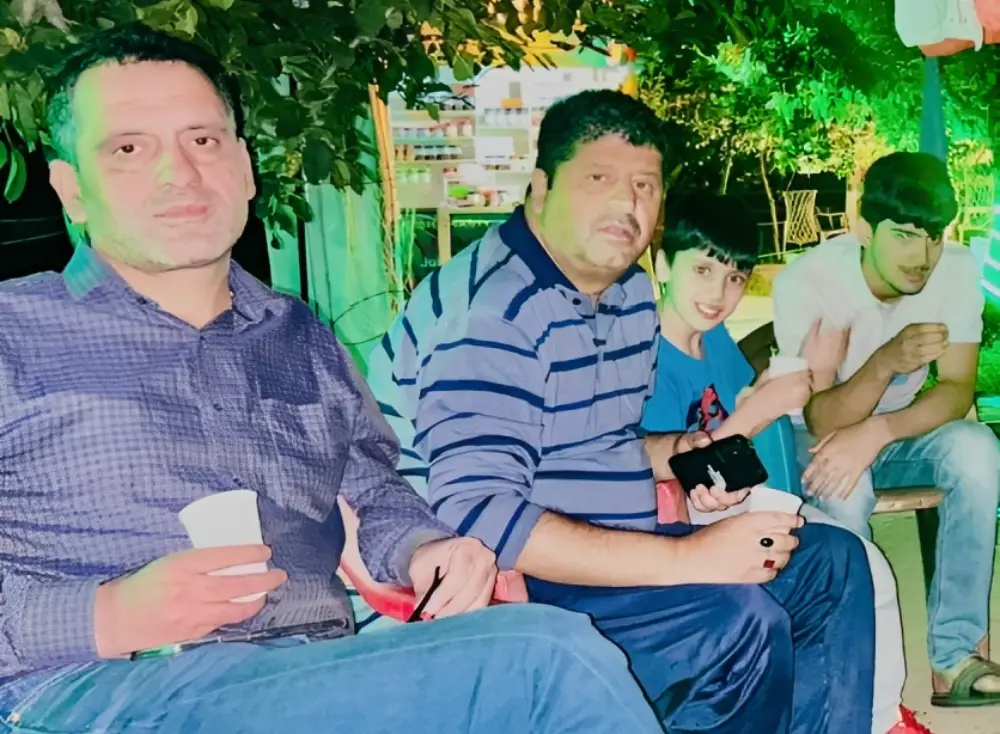
Some lives are not merely lived; they become a legacy, a light, and a lasting echo in the minds and hearts of those they touch. Zamir Ahmed Bhat, affectionately remembered among us as The Professor, was one such rare, luminous, and unforgettable soul. His departure from this world is not only a personal grief; it is an intellectual, cultural, spiritual, and human loss that words struggle to contain.
I first met Zamir during my early years at Aligarh Muslim University (AMU), a time when young minds step beyond familiarity and encounter the vastness of ideas, cultures, and possibilities. AMU was not merely an institution; it was a living universe. One of the largest residential universities in the world, home to nearly 25,000–30,000 students, it brought together scientific minds, literary spirits, political thinkers, philosophers, poets, sceptics, dreamers, and revolutionaries under one vast intellectual sky.
In that ocean of brilliance and diversity, Zamir Ahmed Bhat stood apart, a personality distinct, radiant, and unforgettable.
He carried within him a rare fusion of humour, intellect, philosophical depth, literary elegance, and cultural rootedness. While many spoke, Zamir illuminated. While many debated, Zamir interpreted. He possessed the remarkable gift of breathing life into fading conversations, reviving dull gatherings, and transforming even the driest philosophical argument into a living, vibrant dialogue. We would often say, half in admiration, half in awe, that he could “make the silent speak and the dead awaken.”
So profound was his intellect that we lovingly called him Professor even during our university days, a title earned not by designation, but by wisdom, clarity of thought, and the natural authority of his ideas. Today, it pains the heart to say: The Professor has gone. He is no longer among us.
To sit beside Zamir at a humble dhaba or in a hostel room late into the night felt like attending a private symposium of life. Crowds of thoughtful minds would gather around him as he effortlessly journeyed from the spiritual humanism of Khalil Gibran, to the romantic lyricism of John Keats, to the intellectual depth of Western philosophers, to the metaphysical brilliance of Ghalib, to the poetic resistance of Majrooh, and to the mystical legacy of Kashmir’s Sufi saints.
He carried at his fingertips the poetry of Sheikh Noor-ud-Din Wali (Nund Rishi) and other great Kashmiri Sufi poets, reciting and interpreting their verses with reverence and insight. His pride in the Kashmiri language, heritage, Sufi wisdom, and cultural identity was deep, dignified, and scholarly. In his words, literature became wisdom, poetry became philosophy, and conversation became art.
Zamir was not merely a thinker; he was a storyteller, a story-maker, and a creator of imagined worlds. His narratives carried humour, satire, intellect, tenderness, and reflection. Nights in the hostel passed without fatigue when he was present; we never felt bored, only awakened.
Even after we parted ways from university life, our bond never faded. Zamir possessed a rare social grace; he nurtured friendships with sincerity, warmth, loyalty, and empathy. Our shared history contains thousands of moments, debates, laughter, literary reflections, philosophical duels, and memories so rich they deserve an entire book.
One of my most cherished memories unfolded when I first visited his village, Hutmura, in Anantnag district. Walking along the humble village road, he proudly took us to the banks of the River Lidder and pointed toward a scene of rare and touching beauty: two Kashmiri Pandits, two Muslims, and one Sikh sitting together, sharing tea, laughter, and a game of cards.
With pride shining in his eyes, Zamir said, “This is my village, a symbol of unity, coexistence, and brotherhood. This is Kashmir, the symbol of love and mysticism.”
He often remarked that Hutmura was among the rare places where Kashmiri Pandits and Muslims were so deeply bonded that Pandits never migrated and harmony was never allowed to collapse, a living testimony to Kashmir’s original spirit of tolerance and shared humanity. In that moment, he was not merely showing a village; he was revealing his worldview, his politics, his faith in coexistence, and his love for humanity.
Zamir’s political intellect was equally profound. He could dissect political systems, power structures, ideology, governance, and social conflict with clarity, fairness, and depth. Conversations with him felt like seminars in wisdom, challenging, illuminating, and transformative.
Then came the season of suffering. About a year and a half ago, I was shaken to learn that Zamir had undergone emergency brain surgery. Soon afterwards came the cruel revelation that he was battling cancer, a disease that has devastated thousands of lives and families across Kashmir.
Even as cancer consumed his strength, Zamir remained painfully aware that it was draining him financially and placing a heavy burden upon his family. Yet despair never stripped him of dignity. He remained resilient, not in loud defiance, but in quiet courage, patience, and steadfast faith.
I witnessed a profound spiritual transformation within him. The once vibrant debater and storyteller was becoming deeply reflective, humble, prayerful, and spiritually awakened. His heart increasingly turned toward the Almighty, toward repentance, mercy, gratitude, and surrender to divine will.
He spoke often of his daughters, his parents, and his family, expressing love, concern, and responsibility, as though preparing his soul with serenity and acceptance.
What moved me most was the beautiful harmony within his personality, a rare blend of modern intellectualism and deep religious devotion. He was progressive in thought, yet rooted in faith; worldly in knowledge, yet humble before God. His love for the Holy Prophet Muhammad (peace be upon him) was profound and heartfelt. Whenever he spoke of the Prophet, his voice softened, his eyes glowed, and his heart overflowed with reverence.
He admired the lives of saints, Sufi masters, noble souls, and spiritual exemplars, drawing inspiration from their humility and closeness to God. In his final years, his conversations shifted from debate and politics toward forgiveness, prayer, destiny, mercy, and the welfare of humanity.
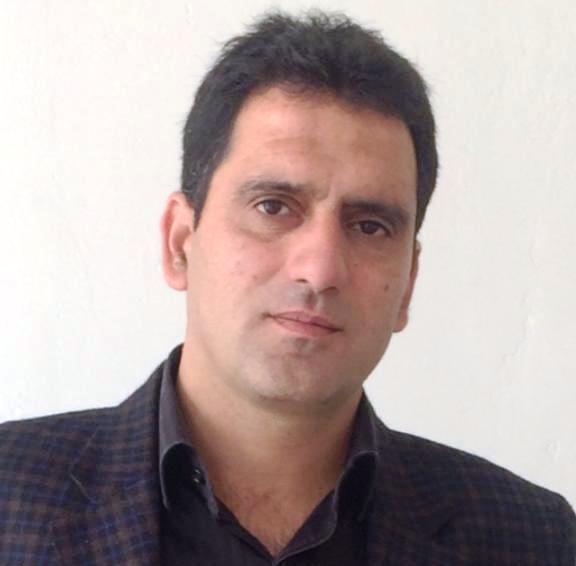
During my visits to him, I witnessed moments that will remain etched in my heart forever. Once, when I went to see him, he was in the mosque, where we offered Maghrib prayer together, standing side by side in humility and devotion. I found him seated upon his prayer mat, whispering supplications to the Almighty. I joined him, praying for his healing, his forgiveness, his children, his family, and the people of Kashmir. Even in pain, his heart extended beyond himself, praying for peace, mercy, protection, and healing for all.
“I will fight,” he would say. “I will survive.”
We spoke of cancer, how it not only weakens the body, but shatters families emotionally, drains finances, burdens parents and children, and reshapes entire lives. Yet Zamir faced his struggle with courage, dignity, patience, resilience, and unwavering faith, a fighter until his final breath.
A few days ago, I tried calling him.
His phone was switched off.
I assumed he had gone for treatment.
Then came the news, sudden, heavy, and heartbreaking: Zamir Ahmed Bhat has returned to his Creator.
The Professor has left the classroom of life.
The storyteller has fallen silent.
The philosopher has taken his final journey.
And yet, his voice echoes in memory, his ideas endure in thought, his wisdom continues to inspire, and his kindness lives on in the hearts of those who knew him.
May the Almighty grant him the highest station in Jannah.
May his grave be filled with divine light.
May his soul rest in eternal peace.
We have not merely lost a friend, we have lost a teacher, a thinker, a Kashmiri intellectual, a spiritual seeker, and a beautiful human being.
But as long as poetry is recited, ideas are debated, stories are told, faith is remembered, and friendship is honoured, Zamir Ahmed Bhat, our beloved Professor, will never truly be gone.
(The author is a prominent lawyer and political activist from Doda.)