by Nayeema Ahmad Mahjoor
An emotionally charged riverfront conversation explores divorce, remarriage, loneliness, gender inequality, religious hypocrisy, and societal stigma faced by middle-aged women in Kashmir
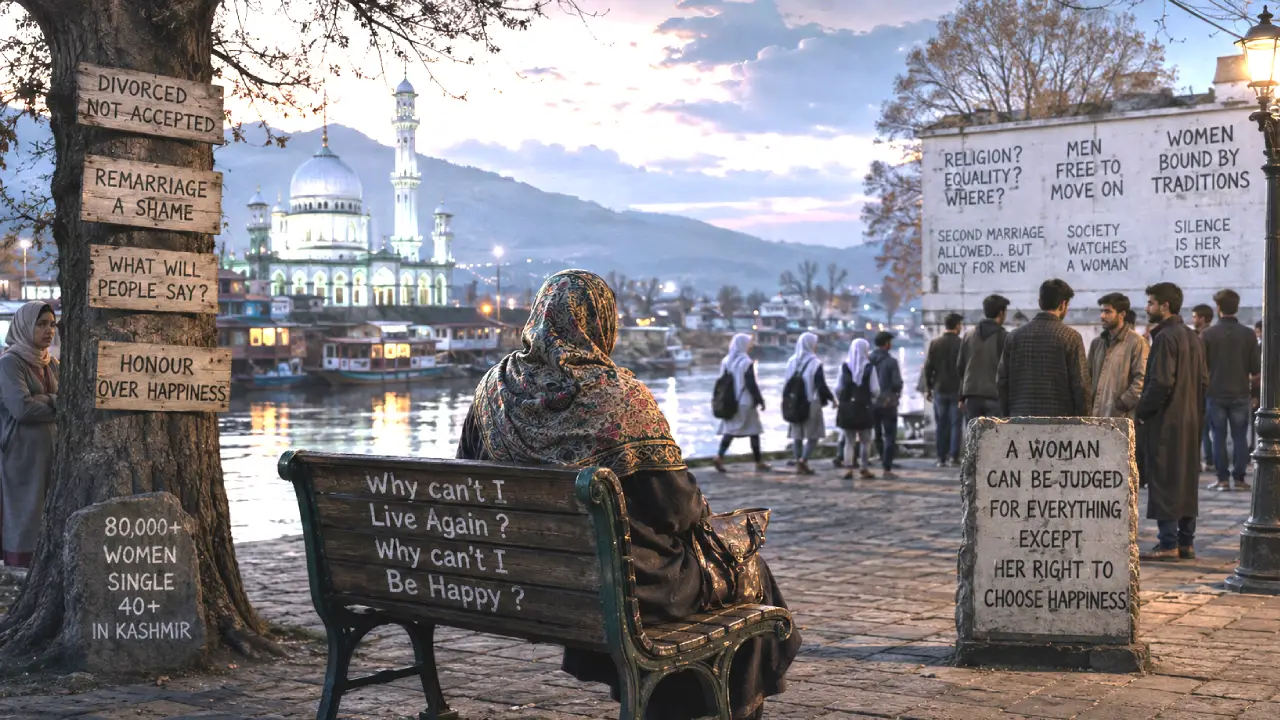
The moment I step out to meet her, I will recall Voltaire’s words: “O God, save me from my friends; I will take care of my enemies myself.” Yet I will feel a strong urge to see her and catch up on the gossip I had missed while travelling constantly. I know that every meeting will end in heartache, but it will give me a sense of belonging.
Call it my selfishness. But I assure you, she had no one but me to confide in or to take out all her anger on. I was living in isolation, and she was the only one to endure me.
Despite all odds, she was a confidante and a deep connection, making fighting and arguing over everything her adornment.
Staying away from the crowd was not her style. She wanted to be part of the crowd, even the crude and toxic crowd, but her job and family status kept her from doing so. That drove her to seek out remote or isolated corners, where she inhaled fresh air, oblivious to the world around her.
‘My mother-in-law did not like me meeting everyone; perhaps she was kind to me out of love for her son, and she also kept a close eye on me so I would not betray her innocent son.’ She repeated it many times, then began to laugh loudly, her teeth gleaming like snow-peaks.
I thought toothpaste companies should make her their brand ambassador.
Her mother-in-law did not stop her son from pursuing further affairs, which could have saved his marriage, home, and reputation. It was my friend who had to keep a tight lid on all the dirt and filth that remained from the marriage she had chosen rather than her parents’ choice.
After many years of separation, she received an invitation from her in-laws to attend her ex-husband’s third wedding. She became toxic and threw a tantrum. Her reaction was unexpected, given her usual calmness.
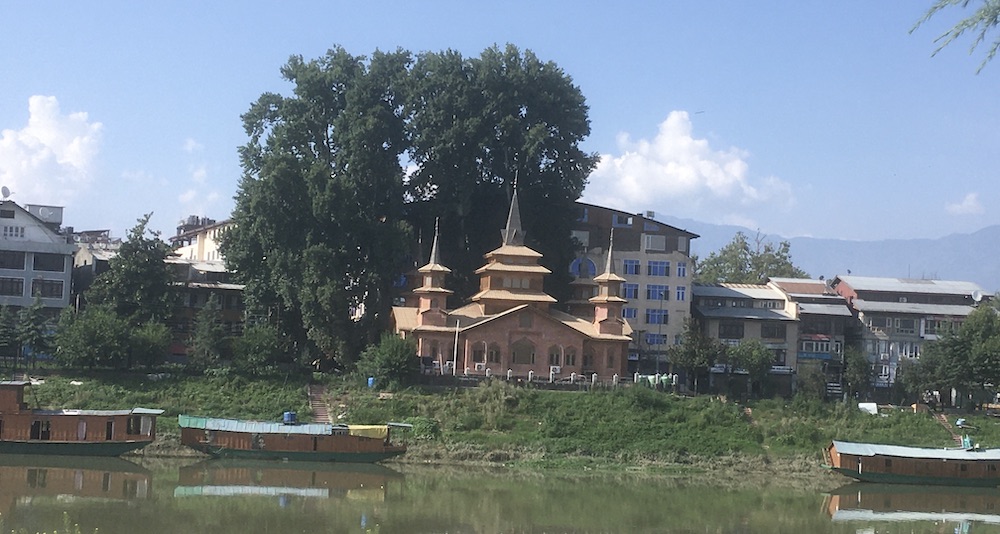
Last year, she confided in me that she had found her Prince Charming and was once again entering into a proper relationship to secure permanent companionship. I had my apprehensions, but I did not discourage her. I thought she wanted to live again.
Returning from travel recently, I had encountered her a few times, but today’s meeting was the first time we had spent the late evening together.
In about twenty minutes, I reached the Jhelum riverfront.
She was lost in thought, the shimmering riverfront illuminating her face, which showed signs of ageing. Her eyes were sunken, and a few wrinkles had become noticeable. She was holding a bag, unconcerned with the walkers around her… A flock of mosquitoes was dancing near the shrub, their hissing music a soft hum.
The waters of the Jhelum were still, and the waves of her thoughts were surging…
Ever since the riverfront was built along the banks of the Jhelum, most people from the surrounding areas have come here to stroll. Although it looks mostly deserted in the late evening, the scent of hashish or ganja can be detected from afar, and sitting here in the evenings definitely brings peace.
The water level in the river was very low; a few houseboats near the banks were sinking into the ground, while a few tourists were enjoying Hindi film songs on the roofs of the houseboats.
Today, the weather seemed to be hoodwinking us. Only an hour ago, it was raining heavily. Then there was sunshine, and now it feels dark and chilly, like November.
The weather was like the people who had developed the habit of shifting loyalties. Relationships were losing their sheen as life had become cheap. Otherwise, why was this older woman leaning against a tree, calling out to the children to help her up, while they were busy chatting with the ice-cream vendor? Her voice was lost in a cough.
I saw my friend from afar; her gaze was fixed on the Jhelum, as if she wanted to wash it with clouds so the water level would become visible.
Since the 2014 flood, this river has become muddy as the water level has fallen.
As I passed the mosque near the footbridge, the evening prayer was announced. A group of teenage girls was coming out of the school in front of the river and moving towards the bank, where my friend was sitting.
I saw a few young people running towards the mosque, while most were busy chatting, paying no attention to the call to prayer.
She also pulled her dupatta over her head.
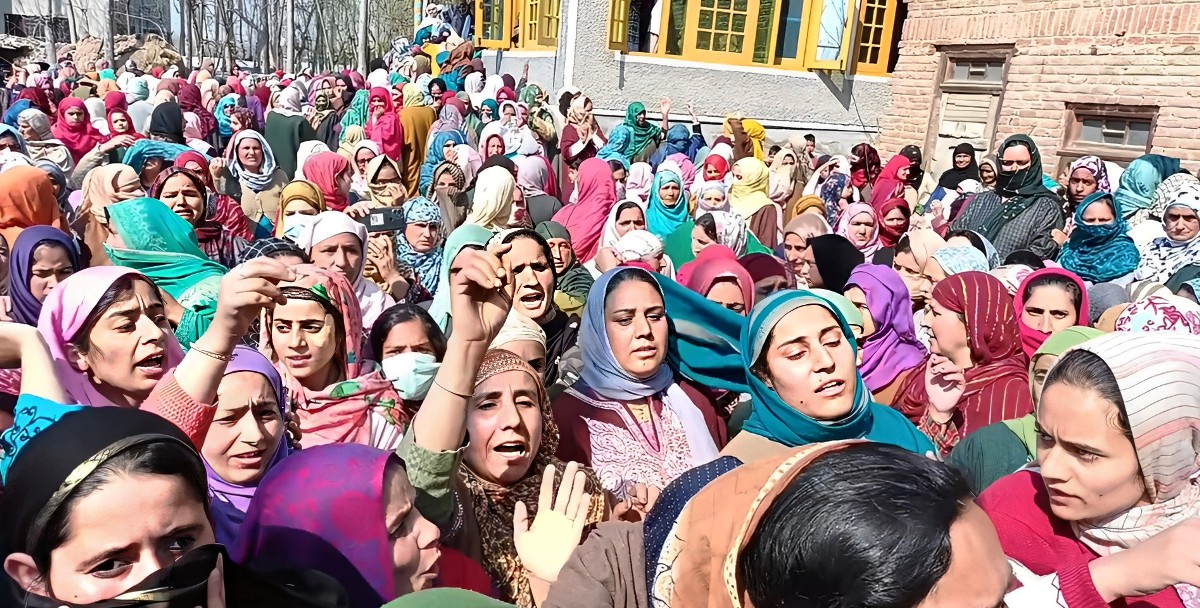
I could gauge her feelings. Her look towards the mosque had meaning. She was also thinking that if there were a place for women in the mosque, she would pray there as well. Still, Islam, which treats people equally, has not reached Kashmir, nor have the seven hundred saints who came from Persia had the opportunity to teach my people about equality in Islam.
Her eyes fell on me, and perhaps she was cursing me in her heart. I smiled, letting her feel my presence.
She would glance from the mosque to me. I don’t know what war was raging in her mind at the time, or whether she was devising a strategy to counter my witticisms.
Her sarcasm was written on her face. She would repeat, ‘I had to think for a long time before talking to you,’ and then burst out laughing.
I would plunge into chaos, roar, and erupt in anger, yet she never even thought of protecting herself from it. I don’t know what kind of relationship it was. It seemed difficult to imagine life without her, or maybe I had met someone like-minded after a long time, or maybe she was the first friend who tolerated my insults, sometimes even being slapped by me and then hugged tightly.
From a few yards away, I extended my hand, and she got up from the bench, shook my hand, then hugged me.
I don’t know why being with her used to bring a strange sense of relief, yet her words created chaos. Now I have also learned to cope with these situations, and I don’t want to lose her. That was the dreadful feeling.
Recently, an article of hers was published in the newspaper, in which she described the number of divorces in the valley as shocking, citing marital differences. Along with the statistics, she also pointed out many reasons. Her research showed that men are mostly responsible for this alarming situation due to their extramarital affairs. Women are suffering, and so is society.
This was a favourite subject of both of us, and she had travelled all over the country and done a great deal of research, which most men dismissed as unimportant, saying that the issue of divorce or marital differences in the valley was not as serious as she had claimed.
‘Your extensive research on divorces has become controversial. You identified the issue but did not offer a solution.’ I quizzed her.
She was staring at me, and after a long silence, she said, ‘If I had the solution, would you have found me alone on this bench by the riverfront? Someone else would have been with me, and I would have been leaning on his shoulder, looking at the Jhelum. Despite the lack of water, I could still see the river, which has no life in it.’ She fixed her gaze on my face again, as if searching for answers.
‘You have the solution, but you lack the courage to act on it.’ My words hit her like a bullet, and she shot me an angry look.
‘You dare to say this, having visited more than a hundred countries and claiming your bravery before the world. Living without fear of society, the surveillance of relatives, and the innuendos of friends, enjoying the freedom of living in a secure society, and then questioning my courage. How audacious of you.’
She had hurled these outbursts many times. I had drunk this poison in silence. The bitterness of this poison had diminished so much that I knew what taunt she was going to hurl. But for a few brief encounters, I felt her words were forcing the wound in her heart to come to the surface, which she had tried her best to heal and move on from.
‘You live in a society where religion permits second or third marriages. If one relationship is not successful, what is wrong with having another? Muslim countries have no issue with it. Why are eyebrows raised in a Muslim society like Kashmir if you want to remarry?’ I tried to speak reasonably.
‘Whether it is a Muslim society or a Muslim country, discussion is limited to women’s rights, their likes or dislikes, and what is permissible or unlawful. In the society I live in, a man can have other relationships while married. However, if a woman talks about a second marriage, a storm erupts, even though religion allows it.’
‘This society has to be told, and this attitude has to change; someone has to rebel. You are highly educated and have a good job. Is it a sin to want to live with someone at this age? Isn’t it better to enter a proper relationship and live together again than to live together without being married? Or is this society so modern that it considers living in a relationship or having an extramarital affair right?’
She looked around and whispered, ‘Keep your voice down; the Molvis will stone us both. Do you really want to shut their shops by preaching the true religion?’
‘If they advise divorced men and women to marry for the second or third time, won’t most of society’s problems be solved?’ She watched the worshippers leave the mosque.
‘If I tell you the reality of the valley, you will be shocked. More than eighty thousand girls aged forty and above are single, and thousands of marriages have broken down. Husbands and wives have been living apart for many years. Domestic violence has become a new norm in households. Half a million boys are unemployed. Many girls want a career first and reach forty while pursuing it. Boys without jobs are rejected in marriage proposals. Infertility has risen, and growth is minimal. I gave facts and figures in my article, and people started trolling me, threatening me, and sending abusive letters.’ Her eyes were moist.
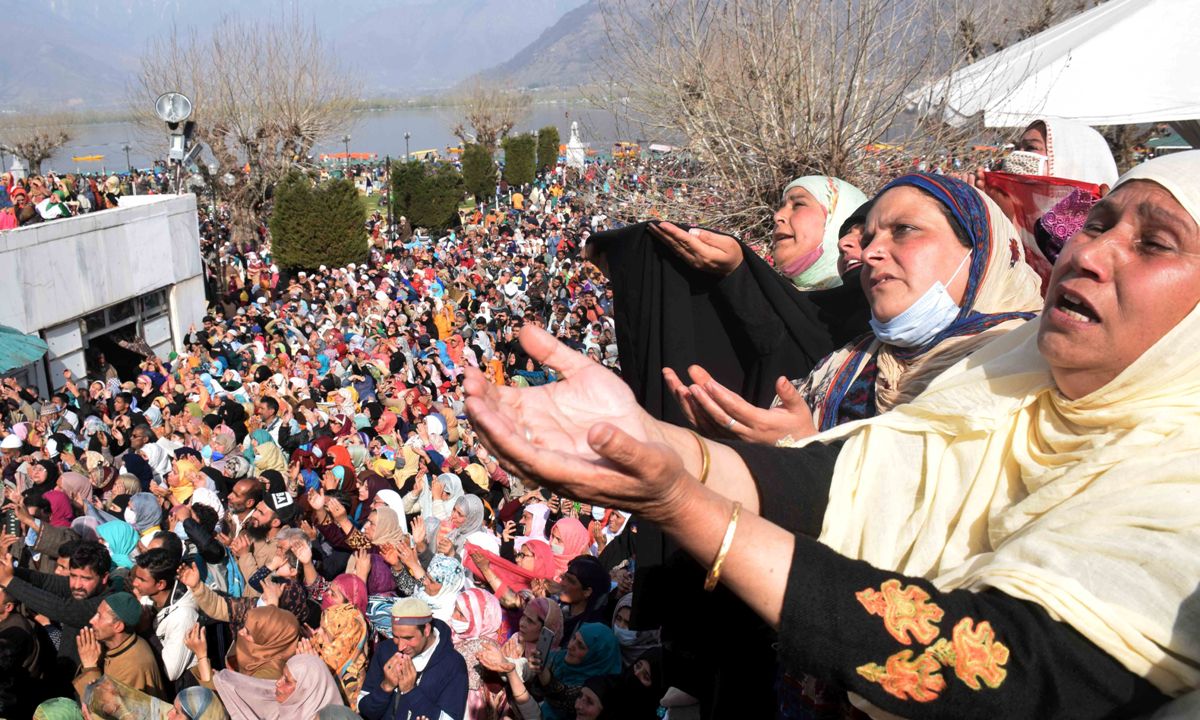
I placed my hand on her shoulder. ‘This has to be stopped; otherwise, it will have the same results we are seeing in Western society, where couples live without marriage, and the children born from these relationships keep wandering in search of their father. Because of the falling birth rate, society has shrunk, and the older population has risen, creating a huge burden on the exchequer. Broken homes have led to generations of problems. Would our society be able to tolerate all this?’ My voice trailed off under her constant gaze.
There was now silence around us. Only a few boys were loitering near the restaurant, which had closed its doors to new customers.
‘Did you express your desire to remarry to your family?’ I mustered considerable courage to ask her.
‘Yes, I did, because I wanted to remarry when my ex remarried for the third time and moved on with his life. You should have seen my mother’s angry face. She began beating her chest, pulling her hair, and shouting that, by marrying at this age, I would humiliate her family. The scene she created was a grand performance. She threatened to go to the Mufti to have me declared promiscuous. I tried to make her understand that I, too, wanted to move on with my life, but she threw a tantrum. Her shouts crossed the walls and reached my neighbours, relatives, and friends. Everybody blamed me for shaming my mother, her dignity, and her honour.’ Tears rolled down her cheeks. My heart was pounding fast. Her miseries were eating me up inside.
‘The family, community, or society doesn’t care about anything. If I secretly establish relations with someone, it is acceptable, but I cannot remarry. That has become the new norm, acceptable to families and clerics.’
I handed her a paper napkin to wipe away her tears, but she refused and let them fall on her cheeks, which looked like red pearls in the light around the poles.
After a moment of silence, she laughed for a long time, as if she had lost control. I scolded her several times until she regained her composure.
‘I live in an imaginary world where everything seems farcical and artificial. Those who speak the truth are punished, while the guilty become leaders. Religious bigotry has overshadowed true faith. Darul-ulooms are talking politics rather than religion.’
She stopped talking and wore a broad grin. A convoy of cars was passing by, sirens blaring and whistles blowing.
‘Look at these morons. They are our representatives, who do nothing in government, yet show false pride on the roads. Do you think they have any intention of sorting out our societal or economic issues? That has never been their concern, like our religious mafia, who thrive on a growing, rotten society.’
I held her hand and asked her to calm down.
‘The world you live in is at least not built on lies. We pretend to live a normal life, yet we are the most abnormal society in the world. Before my world disturbs your peace, go and protect your sanity, or you will lose, as I have.’
‘This is a midlife crisis.’ My psychiatrist in London would have delivered such a pronouncement while listening to her woes.
‘Should I speak to your mother?’ I whispered.
She smirked and said, ‘The misfortune of a woman is that she can make decisions for the world, yet discussing her own destiny is forbidden. A 55-year-old woman cannot do anything without her parents’ or relatives’ permission. This is our society, where seventy per cent of divorcees are involved in non-Islamic relationships but do not dare to marry according to Islam.’
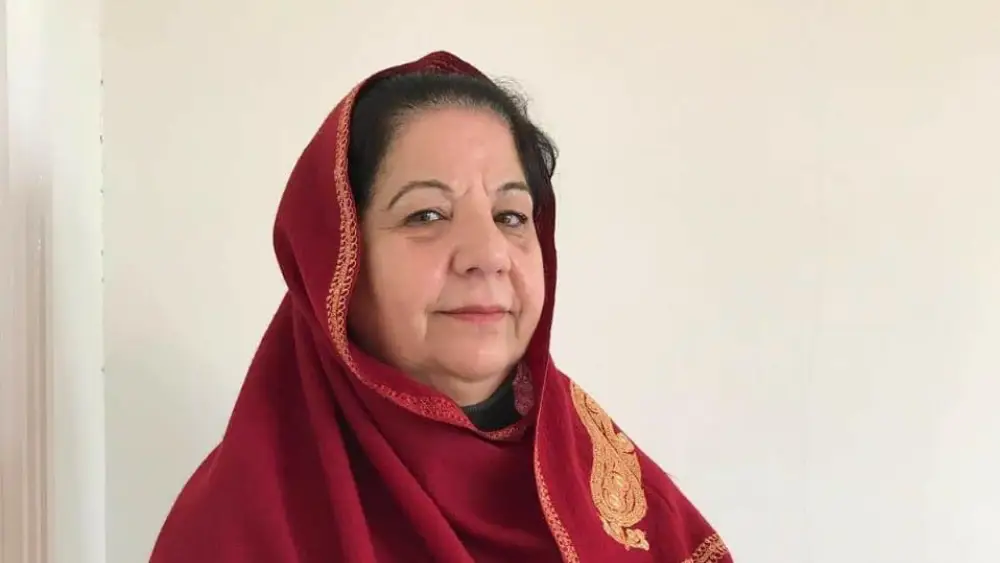
Just as I was about to ask her more, a group of boys at the corner of the road were loudly discussing why more women than men come to the riverfront, do not do housework, leave children for tuition, neglect relationships, then talk about women’s rights and bring society to the brink of destruction. We looked at each other and had a good laugh. Her eyes were brimming with tears too.
‘Are they telling us all this, or have even the cows in their house run off?’ It was an instant outburst.
Giggling through tears had a strange effect on both of us. We became calm, light, and shallow, like the river in front of us.
We stared at the silent Jhelum for a long time, and the reflection of the light from Bilal Mosque looked like a huge, round shape. The cool wind was multiplying the shape into hundreds of circles of life, each without colour or courage.
(Author is a broadcaster and author. Ideas are personal.)