After legislators decried shrinking press freedom, the Jammu and Kashmir government issued fresh verification orders for journalists, triggering fears of control and deepening anxiety over who qualifies as “genuine media” in the region, reports Zaid bin Shabir
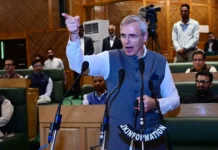
In a charged Assembly session on October 30, Mohammad Yousuf Tarigami, the lone face of the Communist Party of India (Marxist) in Jammu and Kashmir’s legislature, launched a sharp critique of the government’s approach to the media. The Kulgam lawmaker accused the administration of failing to uphold press freedom, saying the Department of Information and Public Relations (DIPR) remained “confused” even after the formation of an elected government.
“India, once celebrated as the world’s largest democracy, has slipped to 166th position in the Global Press Freedom Index,” Tarigami reminded the House. “In Jammu and Kashmir, the condition is even worse. Any society where press freedom suffers gives rise to disruptive practices.”
The comrade urged the government to revisit the media policy, protect independent journalism, and ensure fairness in the allocation of official advertisements, which have been a lifeline for most of the local media outlets.
Echoing his concern, PDP legislator Waheed-ur-Rehman Parra called for rebuilding trust between the state and the press. “The government needs the media as much as the media needs the government,” Parra said. “A policy built on mutual trust, transparency, and fairness would strengthen both institutions.”
Both the lawmakers took the cue from ruling JKNC lawmaker, Tanvir Sadiq, who flagged the issue during Zero Hour, a time slotted for raising issues in the House to which the government is not bound to respond.
Their concerns did touch on the heart of a critical issue, but the house fell largely silent. There was little response from the administration, which has been read by journalists in the region as an indifference that reflects the uneasy relationship between the state and the media in the post-2019 political order.
A Day After
But the very next day, October 31, the Assembly’s focus abruptly shifted. Deputy Chief Minister Surinder Choudhary rose to condemn a viral social media reel that, he alleged, had “misrepresented a personal moment” between him and Minister Sakina Itoo. The short clip, he said, was “twisted for cheap publicity”.
“Such mischief disrespects individuals and lowers the dignity of public representatives,” Choudhary told the assembly, urging the deletion of the ‘offending’ Facebook accounts and strict legal action against those responsible. His remarks immediately drew support from several members, who warned against the “growing misuse of social media to malign legislators.”
By evening, the conversation had shifted from press freedom to press control. That night, the Department of Information and Public Relations (DIPR), which falls under the Chief Minister’s office, issued a sweeping new order. Citing “repeated complaints” from officials, public representatives, and “media houses”, the order claimed that “certain individuals, without any formal accreditation or authorisation, are posing as journalists or correspondents of various media organisations.”
“These persons,” it said, “have in several instances been found misusing the name of media for blackmail, extortion, coercion of officials, and circulation of unverified and defamatory material.” It further noted that some such individuals had been “apprehended and booked for extortion and misuse of media identity,” highlighting what it called “the seriousness of the matter.”
The directive instructed all District Information Officers (DIOs) to “exercise heightened vigilance” and implement measures to identify and verify media persons operating in their jurisdictions.
An Unease Resumes
Though framed as an administrative step to weed out impostors, the order has triggered unease among journalists across Kashmir. With no clear definition of who qualifies as a “genuine journalist,” the directive granted the state the power to decide who is “real” and who is “fake”.
For a region where many journalists have faced questioning, raids, and even detentions over the past few years, reporters and editors say, such orders reinforce fears of a tightening noose around the media. Many see it as a continuation of the same “confusion” Tarigami warned about, where governance has largely remained a control and press freedom is treated as a privilege that can be withdrawn at will.
The DIPR notice was followed by Lt Governor Manoj Sinha’s directive on November 3, instructing police and civil administration officials to jointly prepare a verified database of accredited and active journalists in every district and to take strict action against “fake journalists.”
The move has made accreditation a central prerequisite for legitimacy. But it has also raised alarm bells about who will be excluded. “It’s like using a hammer to fix a screw,” said a correspondent of a national media outlet, requesting not to be identified. “If someone misuses a press card, take legal action against them. But you cannot put every reporter under suspicion.”
A Formal Crisis
Within Jammu and Kashmir’s media landscape, the divide between formal and informal sectors has grown sharper since 2019. Traditionally, the formal media that includes registered newspapers, magazines, trained reporters and editors formed the backbone of journalism. Newspapers, along with their digital operations, are the regulated media and have to follow the norms already set by the regulating institutions, including the RNI and the Press Council of India, strictly as per the principles laid down in the Constitution of India. In states and at the federal level, these newspapers are accredited for government advertising from the local Information Department and the DAVP.
But over the past six years, this structure has largely withered. Several local publications have either laid off most of their staff or drastically reduced their print runs after the government withdrew or froze ad allocations. Journalism is usually seen as an extension of the project of democracy, and the states invest massively in free media to encourage it to be a watchdog and a bridge with the people.
“The formal media is dying not because of a lack of readership, but because the state has cut off its oxygen,” said an editor of a Srinagar-based daily newspaper. “Without ads, you can’t pay staff. And when you don’t have the money to hire or retain reporters, isn’t it obvious that genuine journalists who follow ethical codes will simply disappear?”
Informal Media
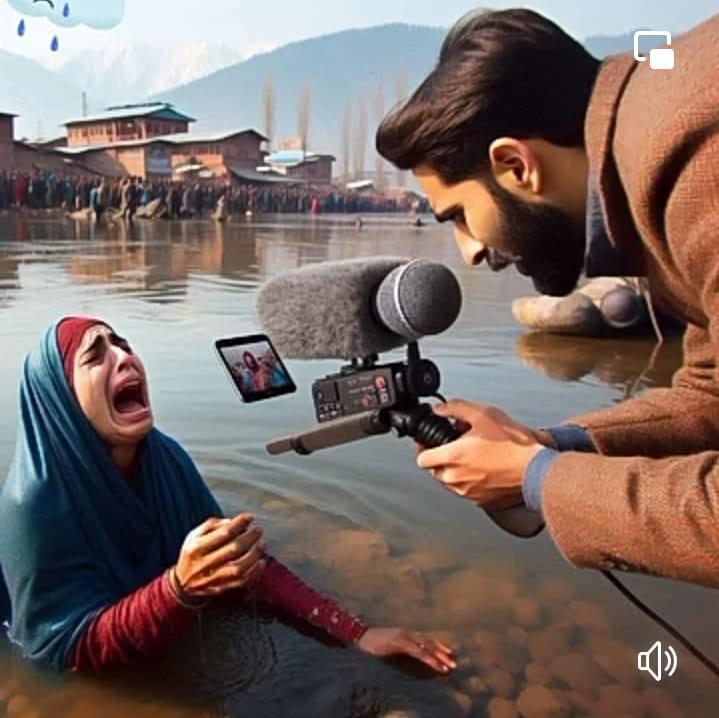
As the formal media struggles, an informal media ecosystem of YouTubers, influencers, citizen journalists and small digital collectives has grown rapidly. Many operate without registration or accreditation but enjoy a visible presence. Officials describe this as a “democratisation of media,” yet in the newsroom, few doubt that it is partly shaped by official favour. “When the situation was terrible before 2019, some online journalists would favour us when we asked,” said a senior police officer. “And it is the same favour being returned today.”
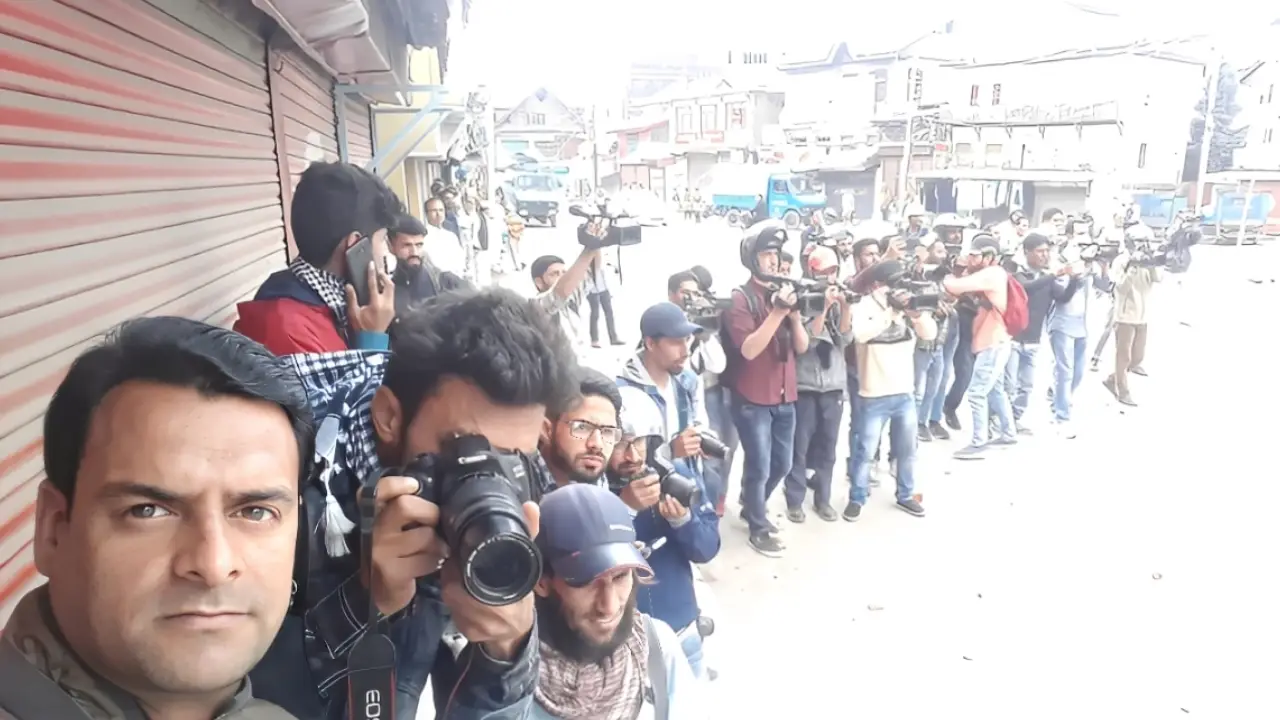
Those operating in the informal media space have often found themselves at the centre of controversy. In October 2025, police booked a Facebook page after it shared a video of a dead horse, falsely claiming that the animal had been slaughtered for its meat to be sold in the market.
A fortnight back, police booked a person in Baramulla for allegedly posing as a journalist to extort money and intimidate individuals and public officials through social media.
In 2022, reports alleged that a suspected operative of proscribed Lashkar-e-Taiba, Talib Hussain Shah, had gained access to the BJP headquarters by posing as a reporter, though the opposition maintained he was, in fact, heading the party’s Minority Morcha.
That same year, a “self-proclaimed journalist” in south Kashmir was arrested on charges of rape and extortion. His reporter friend was also taken into custody. Around the same time, police in Kupwara arrested a “self-styled journalist” after a medical officer accused him of extortion.
In fact, citizen journalists who are trying to bring light to some issues have also faced official fury. In June 2025, a resident of Bandipora uploaded a short video showing a cow wandering inside the district hospital. The clip went viral. Instead of addressing the issue, hospital authorities accused him of being a “known mischief-maker who often creates disturbances” and filed a police case against him.
Regulation Risks
The incident underlined how the informal media space, though wide and accessible, is not free from risk. However, the state’s approach to regulation now risks punishing legitimate reporting along with misuse, as many small publications that run on tight budgets and informal contracts may find it impossible to get every one of their contributors accredited under new conditions.
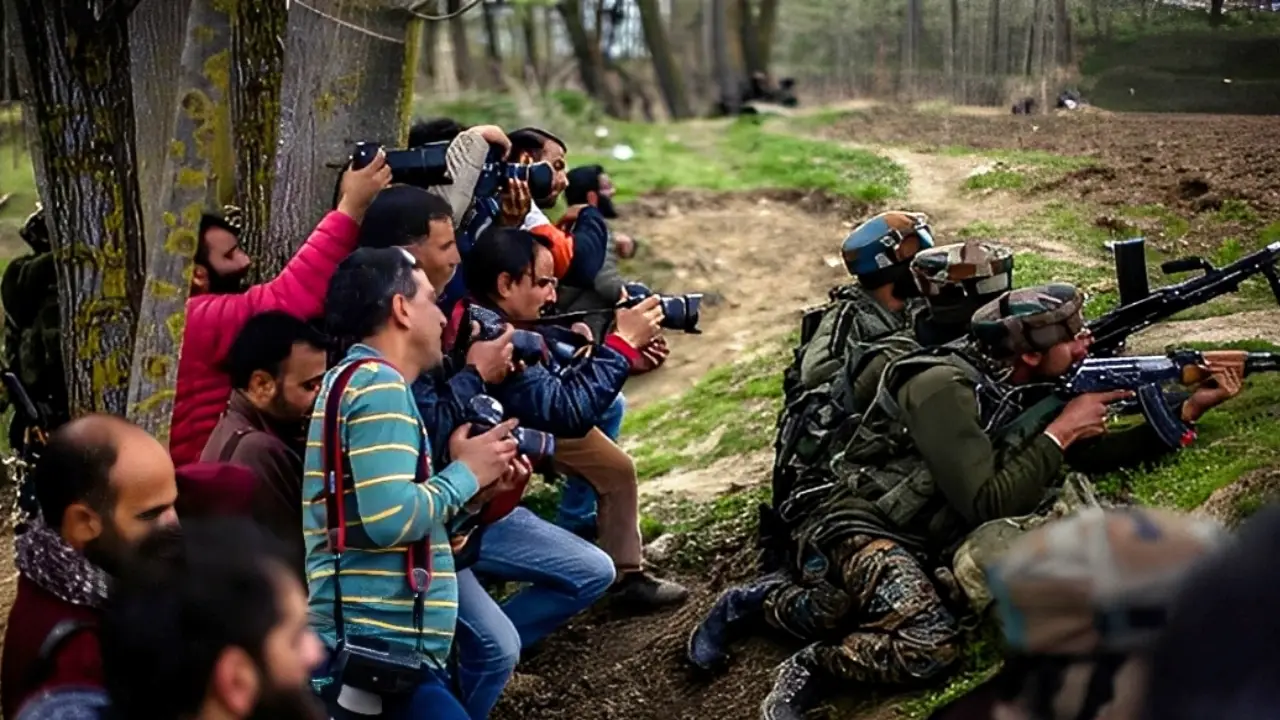
An editor echoed that view. “If an organisation has 20 journalists on staff, maybe one or two will have accreditation and the rest may not,” he said. “It is not possible for everyone to have it. So does that mean those without accreditation, working in the same newsroom, aren’t journalists?” Usually, the DIPR offers accreditation to a few in an organisation in text, visual or video verticals, and no better media organisation can run on a few accredited reporters. It needs too many people.
Officials and politicians have started giving accreditation a new meaning. The fact of the matter is that accreditation is a process under which the government, in a state or at the centre, permits a journalist to access its operations. It is sort of a gate pass and, in certain cases, they can have certain privileges like concessions in railway tickets or priority in certain services linked to the delivery of his or her professional duties. At one point in time, accreditation was basic to get a telephone connection on priority. People not accredited never means they are not journalists, the editor, who has been a member of the accreditation committee of the erstwhile state, many times asserted.
Accreditation follows certain norms. The journalist is supposed to have five years of experience, must have journalism as the sole source of his or her income and must have an appointment letter from the organisation he or she works for. “If only accredited journalists are permitted to operate, the process of accreditation may not be required after a few years because there would not be applicants at all,” another editor, who has been an accredited journalist for more than 30 years, said. “Our universities produce around 50 to 100 media post-graduates every year. With these norms in vogue, where will it lead them to?”
The process of accrediting journalists has remained a smooth affair, with a government-appointed committee granting and even withdrawing the privilege on a year-on-year basis. In post-2019, the process has become a cumbersome, opaque and complicated process. Last year, the process of getting accreditation was criticised by journalists for favouring a limited few.
“It was disheartening to see experienced journalists being sidelined and even humiliated while others with questionable credentials were given priority,” a local magazine quoted an anonymous senior journalist who had been deprived of his accreditation as saying.
Free Lancers
Not all journalists are always on the rolls of the media outlets. They are hired for special projects. In the ongoing information era, now gig work is just a global phenomenon in which one journalist has the capacity to work with too many outlets at the same time without being an employee of any of them. They may not require accreditation at all, but they can be denied their right to work as journalists. Of late, especially after 2014, most of the media organisations within the country rely more on freelancers than the staff. The emergence of social media has impacted the revenue streams of all media outlets across the globe, and this has led managers to rely more on journalists who work on short-term contracts.
They are also suffering. Take the example of a Kashmiri freelancer who visited a government office last year to collect data on drug addiction. “Everything was going smoothly until I mentioned the organisation I was doing the story for in front of the official,” he recalled. “The official immediately asked for my accreditation card, which I didn’t have, despite applying for one. When I couldn’t produce it, he asked me to leave. I still don’t understand what I did wrong.”
For many journalists, these experiences confirm what they call a pattern of “administrative suffocation”. Across newsrooms, there’s a growing anxiety that the government’s new definition of a “genuine journalist” leaves little room for independent or critical voices.
‘Breach of privacy’
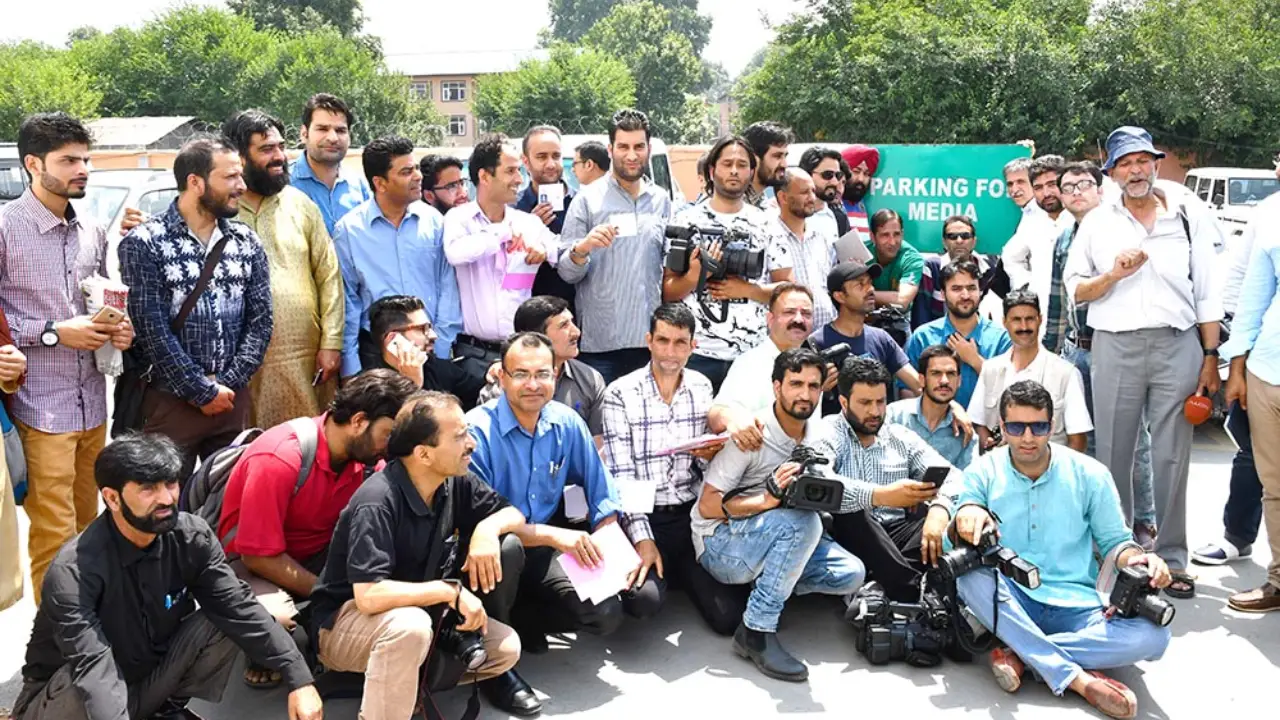
In the days that followed DIPR’s order, district information officers across many districts in Kashmir began circulating verification forms. Reporters were asked to submit their PAN, Aadhaar, appointment letters, and salary statements of the last six months, among others. Officials described the move as “authentication of media persons,” but in newsrooms across Srinagar and the districts, it landed like a warning.
“Seemingly, the order has a twin purpose,” said a Kashmir-based freelance journalist, who wished not to be identified. “One, it seeks to curb the growing tribe of social media reporters who have been indulging in practices that allegedly violate the journalistic ethics and code of conduct, because there are credible reports of individuals posing as journalists and trying to assault or threaten someone. Taking an action against such people is not a bad decision per se.”
He continued: “It is the second aspect of this order that is worrisome, though. The directive also seeks pay slips of journalists, which the administration isn’t entitled to see. This is a blatant breach of someone’s privacy.”
This isn’t the first such order issued in the region. In May 2022, the Ramban district magistrate directed the local police to identify “fake media groups,” collect their personal details and “verify their antecedents.” Around the same time, the Jammu and Kashmir High Court told the union territory’s administration to consider setting up a regulatory body for news outlets on social media. Nothing really happened.
The journalist believes that nowhere in the world do you see a government that scrutinises the bank accounts of the media persons before allowing them to perform their duties. “This can also be potentially misused in future,” he continued. “But more crucially, orders like these are symptomatic of bureaucratic arrogance. They are designed to further degrade and erode the trust within the media and make it difficult for journalists to operate freely.”
“Such orders also reinforce the tropes about the journalists invariably being corrupt, impostors and fraud,” a freelance journalist who has written for many national and international organisations told Kashmir Life. “It serves the government to have these impressions solidified within the official hierarchies. And because it perpetuates a sense of enduring suspicion and disdain against the journalists, it naturally pre-empts the acts of the officials anonymously sharing a crucial piece of information to reporters, which is otherwise a common practice everywhere else.”
Many times, he added, such information is of paramount public interest. “Perhaps, what the government wants is that no official within its ranks should ever turn into a whistle-blower,” he observed.
Government officials maintain that the new verification drive is aimed at addressing growing cases of “fake journalists” using media cards for blackmail or extortion. It has been a problem that even legitimate reporters acknowledge exists.
“These orders are not a tool to control journalists but a mechanism to restore order and accountability in a space that has become dangerously unregulated,” said a senior official from DIPR. “Genuine journalists have nothing to fear. Only those misusing the name of media for personal gain need to worry.”
But journalists argue that the latest order casts the net far too wide. Veteran journalist Mohammed Sayeed Malik, with more than half a century of experience and who has headed Jammu and Kashmir’s DIPR as well, expressed shock at the new requirements. “This is atrocious. Where else in this vast country is it in force? None, to my knowledge,” he wrote on Facebook. “Could be the proverbial thin end of the wedge, make other privately engaged workers get enlisted with the Sarkar.”
Who Gets to Be a Journalist?
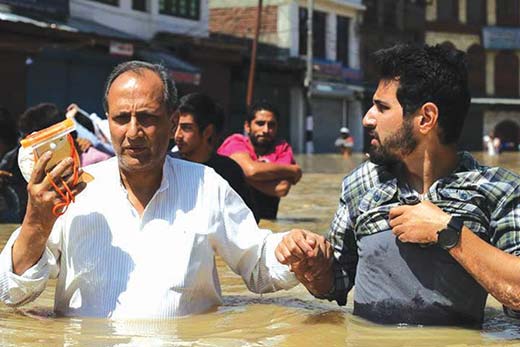
Independent journalists in Kashmir believe they are likely to be among the worst hit by the new order, which ties accreditation to stringent scrutiny of a journalist’s conduct. Many freelancers and independent reporters in the region already operate without institutional backing or fixed salaries, relying instead on fellowships, grants, and payments from national and foreign publications.
“There are no salary slips required for freelancers,” remarked a Kashmir-based freelance journalist. “So, tomorrow if I write a story that maybe is against an official, he or she will have the power to call my foreign payment illegal because I don’t belong to that organisation, or it has come from a foreign publication?”
Interestingly, at his first media interaction this year after assuming office, Chief Minister Omar Abdullah addressed growing concerns over the functioning of the media in Kashmir, expressing his commitment to uphold press freedom. He spoke of his desire for a “free and open media” and pledged to be “more open and accessible to media persons.” His remarks were seen as an attempt to reassure journalists in the region, which was read as a promise many had hoped would mark a new chapter in government-media relations in Jammu and Kashmir.
However, as the new verification process takes shape, many in the media community fear that the government’s recent move could undermine that very promise and create new divides.
“People didn’t vote for control; they voted for dignity and the right to speak without fear. One of the loudest promises made was to scrap the media and social media gag policy,” PDP legislator Waheed-ur-Rehman Parra, while criticising the government’s new order, voiced this concern in a post on X. ““Yet today, fresh orders to monitor and restrict social media are being issued selectively in Jammu and Kashmir, nowhere else in India,” he wrote.
He went on to question the administration’s intent: “What is the Chief Minister’s stand on this? What does the @CM_JnK, who also holds the Information portfolio, have to say? Using ‘vigilance and monitoring’ as a pretext to intimidate journalists and police public expression exposes a deeply disturbing intent to control narratives, muzzle truth, and drag J&K further into surveillance. Jammu and Kashmir deserves openness, not oppression; transparency, not targeting. This election was fought to restore trust and dignity not to replace one silence with another.”
While defending the government’s move, Jammu and Kashmir National Conference leader Nasir Lone criticised Parra’s remarks, saying that “people voted for dignity, dialogue, and stability….ensuring responsible use of social platforms is part of that.”
“We protect free expression, but not deliberate misinformation,” Lone wrote in a post on X. “Regulation of media, especially social media platforms, is governance not gagging.”
However, for many, Parra’s words still underline the central tension in the debate, whether the new accreditation demands and DIO requirements will create accountability or simply decide who gets to tell Jammu and Kashmir’s story.