Anchor Sabreen Ashraf recounts her emotional return to Kashmir Life’s Jashn-e-Ramzan after three years, traversing all ten districts across thirty Ramzan episodes
Sometimes I feel grief does not announce itself. It does not have grand gestures, no farewells, no funerals. It comes quietly, in the middle of an ordinary day, when you realise that something you loved is simply gone. That is what leaving Kashmir Life felt like for me in April of 2023.
I had not planned to leave. There was no resignation letter, no experience certificate, no formal goodbye. One day I was there, disposing of my duties, and the next I was not. Life, as it sometimes does, arrived before I was ready for it and pulled me in a direction I had never anticipated. I left without being able to say what I wanted to say. I left with a season still living inside me, unfinished in ways I could not yet name.
Where It All Began
I had joined Kashmir Life while I was still completing my Master’s at the University of Kashmir. Even though I had to juggle between the newsroom and the university, the newsroom was never a burden; it was the place I had been quietly looking for. I still remember the first time I walked into that room. The first face I saw was Iqra Akhoon’s. My parents had often pointed to her on screen and said, “When will you be like her?” And here she was, right in front of me. I did not say that to her then. I am saying it now.
Iqra Ma’am shaped something in me that no classroom ever could. The small corrections, the quiet guidance, the way she held the editorial vision of the show without ever making the rest of us feel small, that is a kind of teaching that stays. Wherever I go in this career, her contribution to my anchoring, my presence, and my instincts as a presenter will always be part of the foundation. What I am writing right now is a note of gratitude I owe to her.
Season 1 of Jashn-e-Ramzan was born from an idea that felt almost too ambitious for a small team in a regional newsroom. A quiz series about Islam, the Quran, and the people of Kashmir, shot across the valley, broadcast daily throughout the month of Ramzan, the Muslim month of fasting. The research team was almost entirely women. The anchor was a woman. The editor was Iqra Ma’am. And somehow, across 15 episodes and hundreds of kilometres, we pulled it off.
The audience responded with a warmth none of us had fully prepared for. People recognised us in markets. They stopped us on the road. A viewer in Sopore once told us he had watched every single episode with his father. Children everywhere wanted to be on camera. The show had found something real in people’s hearts.
And then, just as it all came together, it fell away. Season 1 ended, and so, without warning, did my time at Kashmir Life.
Three Years Away
The years that followed were full in their own way. Life moved forward, as it must. But Jashn-e-Ramzan stayed with me like a song you cannot quite stop humming. The faces of strangers who had spoken to us with such openness, the warmth of people in places I had never been before, the feeling of doing something that actually mattered to an audience, I carried all of it quietly, in the back of everything, not knowing what to do with it.
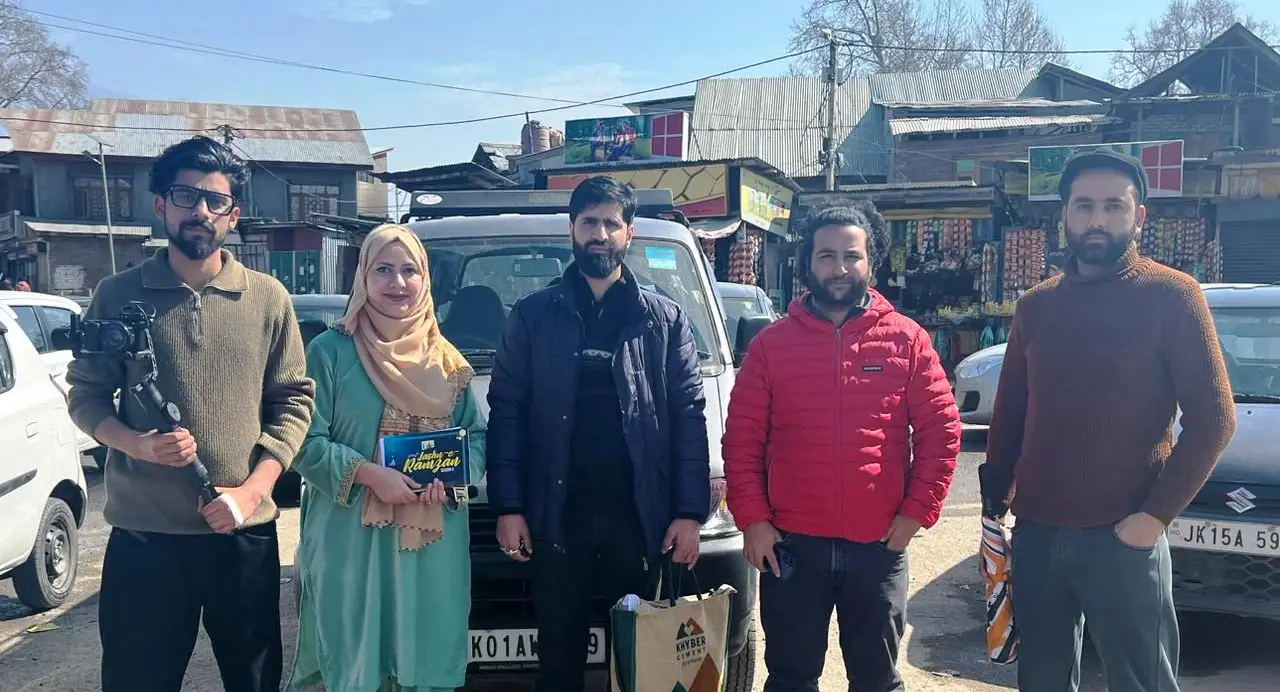
Then, on February 16, 2026, a message arrived from my friend and classmate Babra Wani. We had started this journey together, she as a reporter, I as the face on screen, and her words that day stopped me mid-breath: “Sabreen, I need to talk to you. Will you host Jashn-e-Ramzan Season 4?”
I read the message twice. Then I sat with it for a long time.
Three years is not a small distance. I was not the same person who had stood in front of that camera in 2023. I had changed, my rhythms, my confidence, my relationship with public life. And Jashn-e-Ramzan Season 1 had meant so much to me that the thought of returning felt both like a homecoming and a risk. What if I could not find her again, that version of me who had walked into shrines and markets and fields with nothing but a microphone and a belief that people had stories worth telling?
But I said yes. With every fear intact, I said yes.
I visited the office and met the sir after a long time. Everything around had changed. I was nervous, but after meeting my colleagues, I decided to record the promo first. When it was released, I watched it with my parents. When I saw myself on screen after three years, my eyes filled with tears, without any warning. My mother noticed. She did not say anything. She did not need to.
A Changed Room
The return was not easy in the ways I had not prepared for. The Kashmir Life I walked back into was a different place, with new faces, new rhythms, a different energy. Iqra Ma’am was not there. Many of the people who had made Season 1 feel like home were gone. On the first day of shooting, I felt the absence of familiarity like a weight.
What steadied me was Shuaib Nazir, our camera person, who understood immediately what I needed, not direction, but ease. His professionalism and warmth on that first day gave me something to hold onto. Slowly, episode by episode, I began to find my footing again.
But there were harder moments. Some people I was working with, perhaps meaning to push me, said I was not as energetic as I had once been. Those words, however well-intentioned, settled somewhere deep and did not leave easily. Others remarked that the content was not exceptional enough.
I processed all of this alone, in the quiet after the camera stopped rolling, and then I showed up the next day and smiled. Because that smile, that genuine desire to walk up to a stranger and actually want to know them, was never a performance. It was the only real thing I had to offer, and I refused to let doubt take it from me.
Thirty Places, Thirty Communities
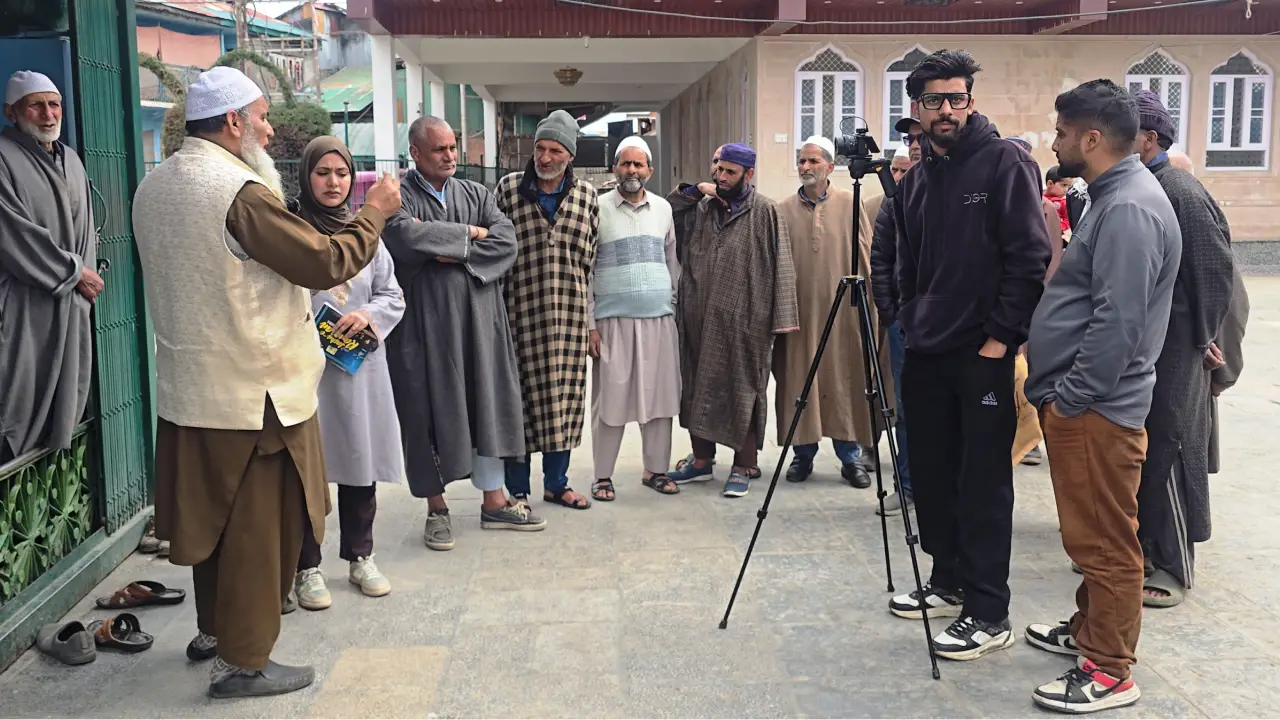
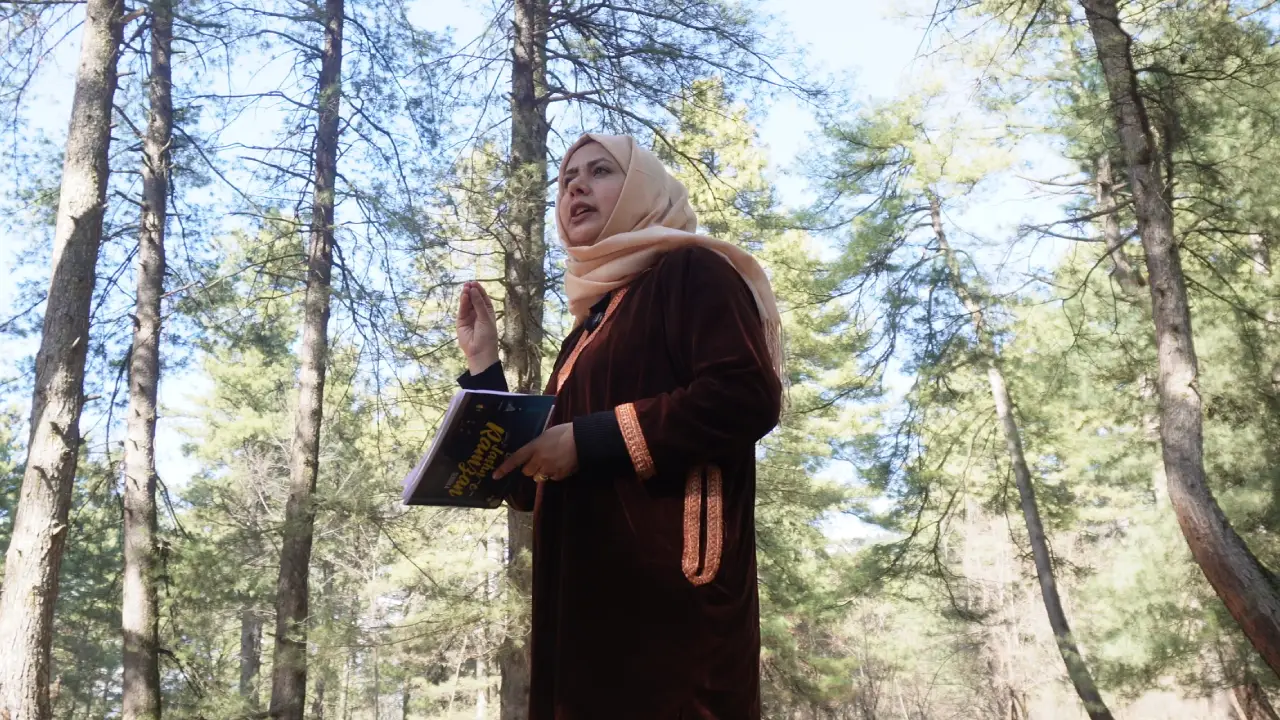
Season 4 of Jashn-e-Ramzan took me across all ten districts of Kashmir, through 30 locations, across the full length of a fasting month. From the lanes of Khanyar in downtown Srinagar to the mountains of Kupwara in the north, from the shrines of Kulgam in the south to the quiet roads of Tral, every episode was its own world.
We began in Khanyar and moved through Shalteng, Batmaloo, Ganderbal, Soura, Shopian, Pampore, Pulwama, the Sunday market, Hazratbal, Budgam, Beerwah, Tral, and Khrew, and two of the best NGOs in Kashmir: Athrout, and Voluntary Medical Society (VMS). Then, through the old sacred sites, Makhdoom Sahib, Pakharpora, Anantnag, Bandipora, Baramulla, Kulgam, Chrar-i-Sharief, Aishmuqam, Bijbehara, Sopore, Sumbal Sunawari, Shehr-e-Khas Srinagar, again, Pattan, and finally, Kupwara for the last episode. Thirty places. Thirty communities. Thirty chances to understand something about Kashmir and about myself.
The kilometres added up fast. Across the month, the team covered roughly 2,500 kilometres of Kashmir roads, sometimes breaking the Iftaar fast on the move, and rarely finding rest even after Sehri, the pre-dawn meal that marks the start of each fasting day.
There are images from this journey I will not forget. A cave in the mountains where a saint had once spent years in prayer, and the silence inside it that felt almost physically heavy with peace. A stone carver in Bandipora who worked without hearing or speaking, whose hands moved with a precision and grace that made language feel insufficient. An elderly man in a village outside Anantnag, who, when he learned what we were doing, recited a verse from the Quran so beautifully that the entire crew went quiet.
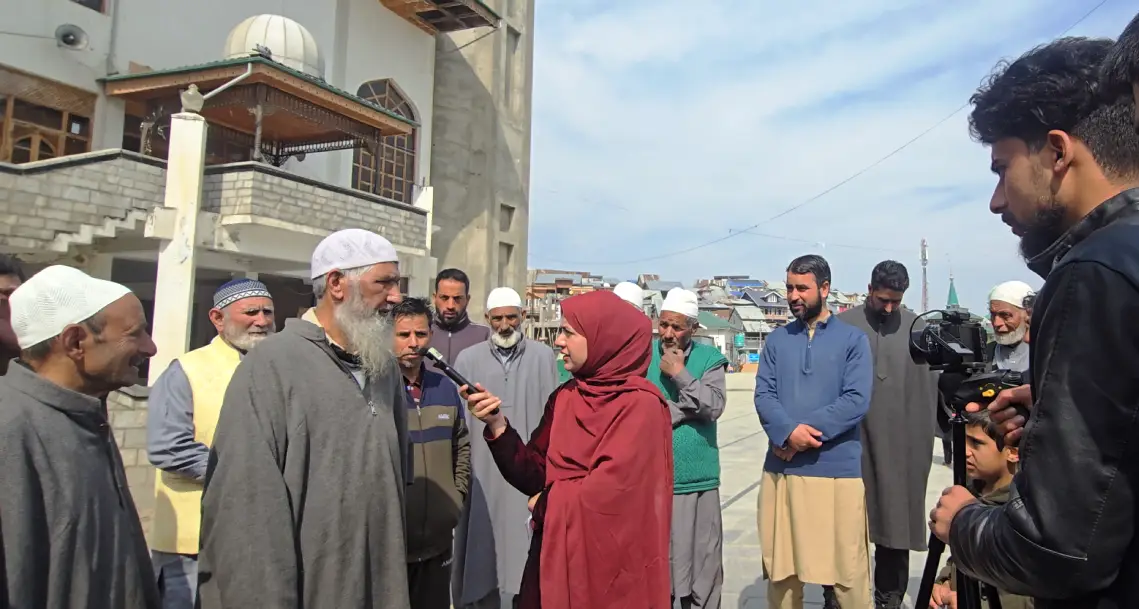
I visited shrines and mosques and ordinary marketplaces. At Iftaar, I tried bread I had never tasted before, what is called naan khoshek in the south, becomes kulche in the north; kandi kulche here becomes mitthe biscuit there. I learned about dialects that shift from district to district.
I heard stories about economics, shopkeepers everywhere telling us quietly, with a kind of exhausted honesty, that things were hard. That Ramzan is meant to be a month of abundance, but they were struggling. I carried those conversations home with me every night.
There were also moments of unexpected grace. In Sopore, a man came to find us specifically, with his two daughters, because he had something to say. In Bandipora, people offered us their homes. Elders, men and women, stopped us to give us duas, blessing us in the way that only people who have lived a long time and seen much of life can bless you. Those blessings, I think, kept me going on the days the road felt too long.
The People Behind the Camera
No series like this is ever one person’s work, and I would be telling only half a story if I did not name the people who made Season 4 what it was.
Mushtaq Sir, who has been part of this journey since Season 1, deserves more gratitude than words can hold. He has a gift for making distances feel short, for making people laugh at the exact moment the tension peaks, for coaxing a reluctant stranger in front of a camera until they forget they were ever reluctant. Many of the conversations we captured happened because of him.
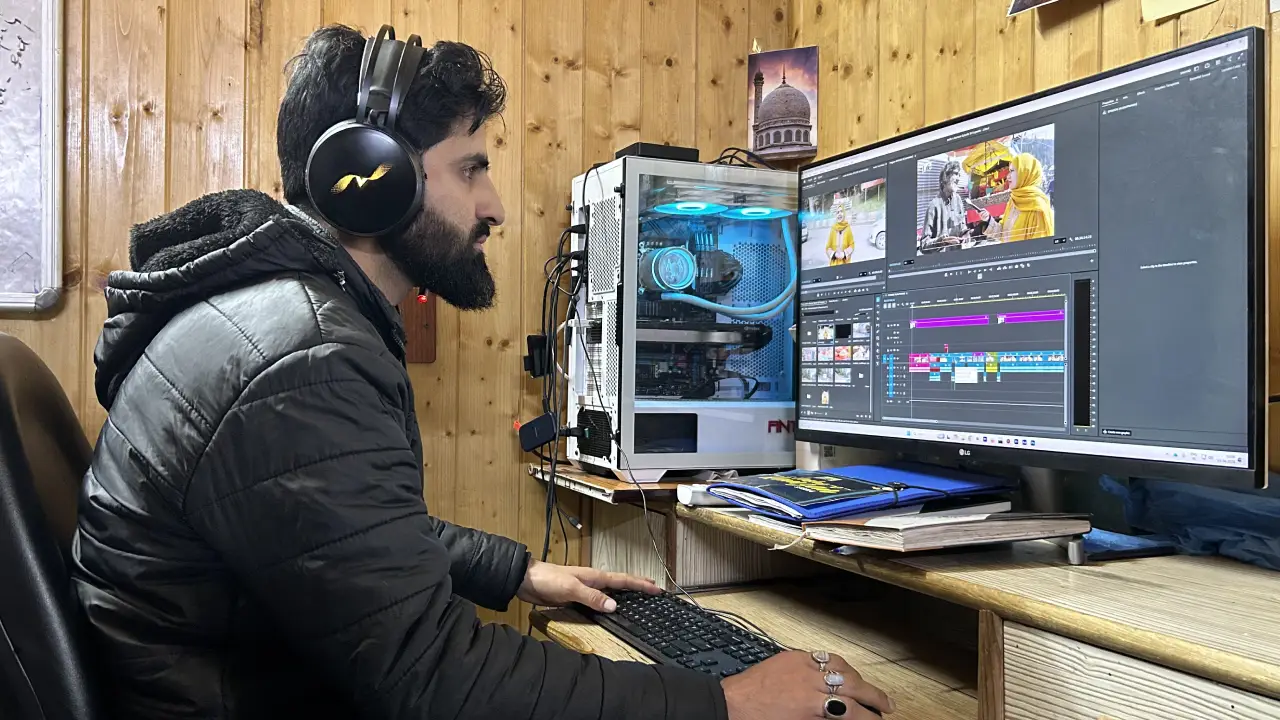
Shuaib Wani Sir, who edited this season, brought a quality to the final product that elevated everything we had shot. Editing is invisible work that carries the whole.
The contribution of Umar Dar was no less. His role extended well beyond the camera. He undertook extensive groundwork, identifying and researching locations in advance so that the audience could do more than simply watch; they could understand the historical context, landmarks, and cultural character of each place we featured. That quiet, consistent effort added a depth to the series that would not have been possible otherwise.
Umaima Rishi, my friend, joined us for three days despite a schedule that had no room for it. She came because she knew I needed company on the harder stretches of the journey. That kind of friendship does not need explaining; it only needs acknowledging.
And then there is Babra Wani. My classmate, my collaborator, the person who, for three years, apparently never stopped believing that I would come back to this show. When I completed 30 episodes, she was happier than I was. She has written about Jashn-e-Ramzan Season 1 with more honesty and beauty than I could manage about my own experience.
Thank you, Babra, for the message that changed everything. Thank you for waiting.
A series like this does not happen without people who believe in it before it proves itself. Our eight partners this season placed their trust in us, and what they contributed went beyond sponsorship. The prizes we gave away to participants were generous enough that when we handed them over, people would look at us with expressions that were less excitement and more gratitude, a quiet, sincere kind of joy that stayed with us long after we had driven to the next location. More than once, an elder receiving a gift would hold our hands and make dua for us, and in that moment, the kilometres and the fatigue and the early mornings felt like nothing at all.
Seasons 2 and 3 of Jashn-e-Ramzan were presented by Syed Shadab Ali Gilani, whose work sustained and expanded the series during those years when I was delinked from the newsroom. Season 4 built upon the foundation laid by him and by everyone who contributed before, carrying the series forward with that legacy intact.
When the Pages Went Dark
On March 2, in the middle of our season, the verified Facebook and Instagram pages of Kashmir Life became inaccessible in India after Meta restricted access at the request of law enforcement authorities. Our primary audience had been on Facebook. Suddenly, that audience could not reach us.
We continued. YouTube remained. The episodes went out. But it was a loss, and we all felt it. The show had been building momentum and community, and an interruption like that, mid-season, mid-Ramzan, is difficult to absorb. We absorbed it anyway.
It makes what came next even more meaningful. When the season ended, Kashmir Life’s Chief Editor sent me a message: “Your series has done better than the three preceding seasons.”
I read those words several times. After everything, the fear of returning, the changed newsroom, the technical disruptions, the quiet internal battles, that one line was enough.
My Father’s Eyes
There is one evening I keep returning to in my memory. It was around the sixteenth episode. My father came home after Isha prayer with a look on his face I recognised – the look of someone who has just been stopped in the street and told something that moved him. He said that the men in the neighbourhood had gathered around him and told him they watched his daughter’s programme every evening. That she was lucky, they said, to have visited places they had spent their whole lives wishing they could see.
My father has never been an effusive man. But that evening, when he looked at me, there was something in his eyes, pride, yes, but also wonder. As if he was seeing something in me, he had not quite seen before. I looked at him and thought: all of it, the exhaustion, the ten districts, the 30 shooting days, the doubts, the road, all of it was worth this moment.
Kupwara: The Last Episode
The final episode was shot in Kupwara. By the time we reached there, I had been carrying the weight of the entire season, every late night, every difficult location, every moment of self-doubt, in my body. I was tired in the way that goes all the way down.
And then I looked up and saw Hilal Shah Sir and Tahir Bhat Sir. The two people who had been part of my very first steps at Kashmir Life. The two people who had been there at the beginning of everything.
In that moment, something let go. I felt, briefly, like the Sabreen who had first walked into that newsroom, young, uncertain, burning to do something real. For a few hours, in Kupwara, I did not have to carry the three years of distance or the weight of return. I just had to do the work I loved, with people who had known me before I had to prove anything.
That is the gift I did not expect this season to give me.
What the Road Gave Back
I began this journey needing something I could not name. I knew, somewhere deep, that leaving Kashmir Life the way I had, without closure, without goodbye, had left an open door inside me that the wind kept coming through.
Thirty episodes. Ten districts. One holy month. Thousands of kilometres of Kashmir road.
And at the end of it: closure.
The shrines I visited, the elders who blessed me, the children who ran towards the camera, the stone carver who worked in silence, the father who waited for his daughter to come home from somewhere beautiful, I want to keep all of those memories. It is not an open wound anymore. It is a story I can hold.
I do not know where my path goes from here. But I know this: I was given a second chance at something I loved, and I did not waste it. I showed up, all thirty times, across every district, through every difficulty, and I was present for it.
Jashn-e-Ramzan taught me, the first time, that Kashmir is more beautiful and more complicated than any one of us can hold. It taught me, this time, that so am I.
And for that, for all of it, I am grateful.